Pearl Necklace Styles Discover Different Designs, Pearl Shapes, Necklace Lengths, and Looks
Pearl necklace styles include a wide range of jewelry designs built around pearls arranged on one or more strands. Differences in pearl type, shape, size, surface appearance, necklace length, clasp design, and metal details can create very different looks.
Understanding these features makes it easier to recognize why two pearl necklaces may have distinct visual characteristics even when both use similar materials.
Pearls are organic gemstones formed when layers of nacre develop around an irritant or implanted nucleus within certain mollusks. Natural pearls form without deliberate human intervention, while cultured pearls develop through managed cultivation. Freshwater, Akoya, South Sea, and Tahitian pearls are among the commonly recognized cultured pearl categories.
Pearl jewelry has a long history across many cultures. Pearls have been used in necklaces, earrings, bracelets, hair ornaments, and ceremonial jewelry. Their smooth surface, rounded forms, and soft luster have made them recognizable materials within traditional and contemporary jewelry design.
Modern pearl necklaces can range from simple single-strand designs to elaborate multi-strand pieces. Some use evenly matched pearls, while others intentionally combine different shapes or sizes. The final appearance depends on how the pearls, spacing, strand structure, clasp, and supporting materials are combined.
Pearl Types Used in Necklaces
Pearl type is one of the main factors influencing a necklace's appearance. Freshwater pearls can occur in many shapes and colors, while Akoya pearls are commonly associated with relatively uniform round forms and reflective luster.
South Sea pearls are known for larger pearl sizes and can occur in white, cream, silver, and golden tones. Tahitian pearls are associated with naturally dark body colors that can include gray, green, peacock, and other overtones.
Natural pearls are formed without human implantation, while cultured pearls involve human-controlled cultivation. Both categories are genuine pearls, but their formation processes are different.
Pearl Shapes
Round pearls are traditionally associated with classic necklace designs because their consistent shape creates an even visual line. However, pearls can occur in several other forms.
Common shapes include:
Round pearls
Near-round pearls
Button pearls
Oval pearls
Drop pearls
Baroque pearls
Semi-baroque pearls
Baroque pearls have irregular or non-symmetrical forms. Their natural variations can create a more individual appearance, while round pearls generally create a more uniform visual pattern.
Importance
Pearl necklace styles matter because necklace length, pearl shape, size, color, and arrangement influence how a piece appears when worn. Understanding these differences can help readers describe jewelry accurately and recognize the characteristics of different designs.
Pearl necklaces can also have cultural, formal, historical, and everyday associations. A short necklace may create a different visual effect from a long strand, while a multi-strand design can create greater visual complexity.
Understanding Pearl Luster
Luster is one of the defining visual characteristics of a pearl. It describes the quality and intensity of light reflected from the pearl's surface and the layers beneath it.
Pearl luster is different from simple surface shine. Nacre thickness, layering, surface condition, and the structure of the pearl can all influence how light interacts with it.
A pearl with strong reflective qualities can appear visually sharper, while another may have a softer or more diffuse appearance. Luster should therefore be considered separately from pearl size and shape.
Pearl Surface and Color
Pearl surfaces can contain natural characteristics such as small marks, pits, ridges, or irregularities. These features vary according to the pearl type and formation process.
Pearl color can range from white and cream to pink, silver, gray, green, blue, golden, and darker tones. Some colors are natural, while others may result from treatments or dyeing processes.
Overtones are subtle colors that appear across a pearl's primary body color. A white pearl, for example, may show pink, silver, or cream overtones depending on its characteristics.
Necklace Lengths
Necklace length affects where the necklace sits around the neck and how it interacts with clothing. Jewelry terminology can vary between manufacturers and regions, but several commonly recognized length categories are used.
| Necklace Style | Approximate Length | General Position |
|---|---|---|
| Collar | 12–14 inches | Closely around the neck |
| Choker | 14–16 inches | Near the base of the neck |
| Princess | 17–19 inches | Around the upper chest |
| Matinee | 20–24 inches | Lower on the chest |
| Opera | 28–36 inches | Around the upper or middle torso |
| Rope | Over 36 inches | Long, flexible arrangement |
These ranges are general descriptions rather than universal standards. Actual sizing can vary according to the design, clasp, pearl diameter, and manufacturer.
Classic Single-Strand Designs
A single-strand pearl necklace contains one continuous row of pearls. This structure emphasizes the individual pearls while maintaining a relatively simple overall arrangement.
Single-strand necklaces can use pearls of consistent size or gradual size changes. Graduated designs typically place smaller pearls toward the ends and larger pearls toward the center.
Multi-Strand Designs
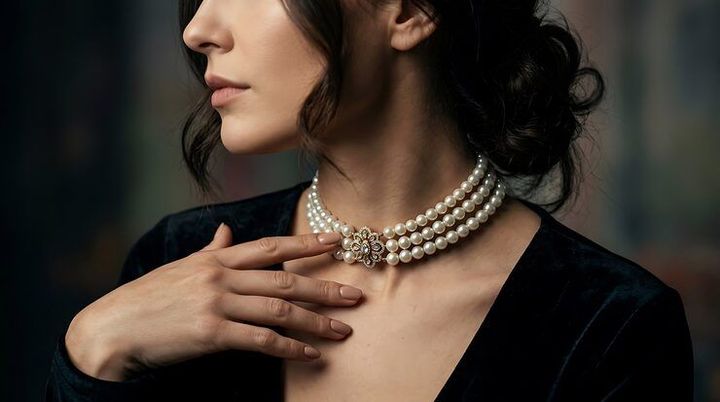
Multi-strand necklaces contain two or more rows of pearls. The strands may have matching pearl sizes or intentionally contrasting arrangements.
Different strand lengths can create layered visual effects. Multi-strand designs may also incorporate beads, gemstones, metal elements, or decorative clasps.
Pendant and Drop Designs
Pendant pearl necklaces combine one or more pearls with a decorative centerpiece. A pendant can use a round pearl, drop pearl, baroque pearl, or another shape.
Drop designs often emphasize the natural form of the pearl. They can be incorporated into necklaces with chains, pearl strands, or combinations of metal and gemstones.
Recent Updates
From 2024 through 2026, pearl jewelry has continued to include both traditional designs and contemporary interpretations. Current design trends include irregular baroque pearls, mixed materials, layered necklaces, varied pearl colors, and combinations of pearls with modern metal structures.
Baroque Pearl Designs
Baroque pearls have remained relevant in contemporary jewelry because their irregular forms create visual differences between individual pieces. Designers may use these pearls in necklaces where variation is intentionally part of the design.
Instead of arranging every pearl to appear identical, some modern styles emphasize differences in shape, size, surface texture, and color.
Layered Pearl Necklaces
Layering has become a common styling approach for necklaces. A wearer may combine pearl strands of different lengths or place a pearl necklace alongside a metal chain or gemstone necklace.
The overall appearance depends on spacing, necklace thickness, pearl size, and the relationship between colors. Layering can also involve mixing traditional pearl strands with more minimal contemporary pieces.
Mixed Materials
Contemporary pearl jewelry can combine pearls with gold-colored or silver-colored metals, diamonds, colored gemstones, beads, leather elements, or other decorative materials.
These combinations create designs that move beyond the traditional single-material pearl strand. The choice of supporting material can change the visual character of the necklace without changing the fundamental pearl component.
Sustainable Cultivation and Traceability
Pearl cultivation practices have also received attention within discussions about environmental management and supply-chain transparency. Cultured pearl production depends on aquatic environments, so water conditions and farming practices can influence cultivation.
Traceability information can vary considerably between pearl producers and jewelry businesses. Claims about geographic origin or cultivation practices should be supported by appropriate documentation.
Laws or Policies
Pearl necklaces are influenced by jewelry labeling requirements, consumer protection rules, gemstone disclosure standards, precious-metal regulations, and trade requirements. The applicable rules depend on the country and the materials used.
Pearl Disclosure
Jewelry descriptions may distinguish between natural pearls, cultured pearls, imitation pearls, and treated pearls. These terms describe different materials or formation processes and should not be used interchangeably.
Imitation pearls can be made from glass, plastic, shell, ceramic, or other materials designed to resemble pearls. Clear identification helps distinguish these materials from actual pearls.
Treatments and Dyes
Some pearls may undergo treatments that alter their color, surface appearance, or other characteristics. Dyeing and other treatments can be used for particular colors or design purposes.
Disclosure requirements vary by jurisdiction and industry standards. Descriptions should accurately identify relevant treatments when disclosure is required.
Precious-Metal Requirements
Pearl necklaces may incorporate gold, silver, platinum, or other metals. Depending on the jurisdiction, these metals can be subject to fineness marks, hallmarking rules, or other identification requirements.
The metal structure can include clasps, chains, caps, links, or decorative components. Each component may have different material characteristics.
Tools and Resources
Several tools can help readers understand pearl necklace styles and characteristics. Pearl measurement guides can explain diameter in millimeters, while necklace sizing charts can help readers understand common length categories.
Jewelry magnification tools can help examine surface characteristics, luster, shape, and drilled areas. Digital jewelry visualization platforms can also show how different necklace lengths and pearl sizes appear together.
Useful resources include:
Pearl identification guides
Pearl size charts
Necklace length charts
Jewelry measurement templates
Pearl care instructions
Gemstone identification references
Jewelry design software
Digital jewelry visualization tools
Metal purity reference charts
Jewelry storage guides
Clasp inspection checklists
Pearl Size and Necklace Appearance
Pearl diameter is commonly measured in millimeters. Even a small change in diameter can affect the visual weight of a necklace because larger pearls occupy more space along the strand.
A necklace may use pearls of consistent diameter or combine multiple sizes. Graduated necklaces create a gradual transition, while uniform strands maintain similar proportions throughout.
Clasp Styles
The clasp is both a functional and decorative part of a pearl necklace. Common clasp forms include box clasps, fishhook clasps, lobster-style clasps, magnetic designs, and other mechanisms.
Traditional pearl necklaces may use decorative clasps made from precious metals or incorporate gemstones. Modern designs can use simpler structures that place more visual attention on the pearls.
Pearl Care
Pearls are organic materials and require different care from many harder gemstones. Their nacre can be affected by chemicals, cosmetics, perfumes, prolonged moisture, abrasion, and inappropriate cleaning methods.
A soft cloth can be used for routine surface cleaning. Pearls are generally stored separately from harder jewelry materials to reduce scratching and physical contact.
FAQs
What are the main pearl necklace styles?
Common pearl necklace styles include single-strand, multi-strand, graduated, pendant, choker, princess, matinee, opera, and rope-length designs. Baroque pearl necklaces provide another style based on irregular pearl shapes.
What pearl shapes are used in pearl necklaces?
Round, near-round, button, oval, drop, semi-baroque, and baroque pearls are commonly used. Shape affects the visual pattern and overall character of the necklace.
What are the common pearl necklace lengths?
Common length categories include collar, choker, princess, matinee, opera, and rope. The exact measurement ranges can vary between jewelry makers and regions.
What is the difference between natural and cultured pearls?
Natural pearls form without deliberate human implantation, while cultured pearls develop through controlled cultivation in which an intervention is used to begin the pearl-forming process. Both are genuine pearls, but their formation processes differ.
How should a pearl necklace be cared for?
Pearls should generally be protected from harsh chemicals, excessive moisture, abrasion, and direct contact with cosmetics or perfumes. Gentle cleaning and separate storage can help protect the nacre surface.
Conclusion
Pearl necklace styles vary according to pearl type, shape, size, color, luster, necklace length, setting details, and strand arrangement. Round pearls create a relatively uniform appearance, while baroque and other irregular shapes introduce natural variation. Modern designs increasingly combine traditional pearl strands with layered arrangements, mixed materials, and contemporary jewelry structures. Understanding pearl characteristics, necklace lengths, treatments, and care requirements provides useful context for interpreting different pearl jewelry designs.