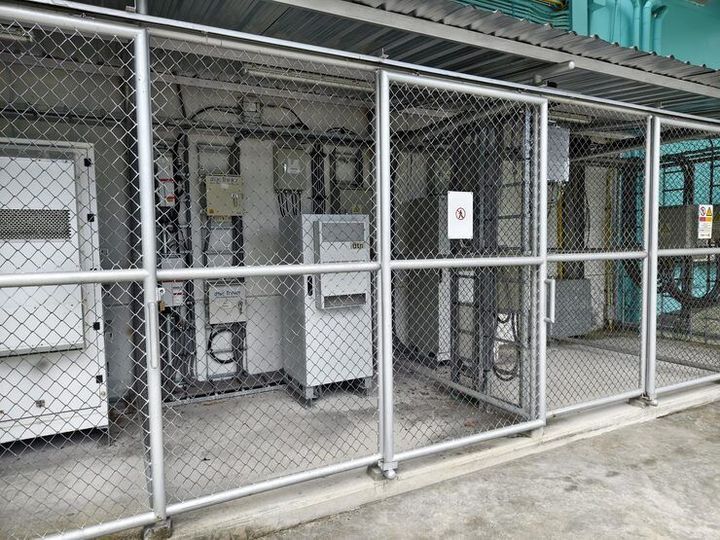
Learn How Faraday Cages Block Electromagnetic Interference and Signals
A Faraday cage is an enclosure made from conductive material that reduces the influence of external electric fields and electromagnetic signals on the space inside it. It can be constructed from metal sheets, conductive mesh, or other materials that allow electric charges to move across their surfaces.
The basic principle explains how Faraday cages block electromagnetic interference (EMI) and why they are used in electronics, scientific experiments, communications, and equipment protection.
The concept is associated with scientist Michael Faraday, who demonstrated how conductive enclosures could shield their interiors from external electrical effects. When an external electric field reaches a conductive enclosure, charges within the material redistribute themselves. This redistribution creates an opposing electric field that reduces the field inside the enclosure under suitable conditions.
How a Faraday Cage Works
The operation of a Faraday cage depends on the interaction between conductive materials and electromagnetic fields. When electromagnetic energy reaches the enclosure, several effects can occur, including reflection, absorption, and redistribution of electrical charges. The degree of shielding depends on the signal frequency, enclosure design, material properties, and the presence of openings.
A continuous metal enclosure can provide substantial shielding against many electromagnetic signals. Conductive mesh can also work when its openings are sufficiently small relative to the wavelengths being blocked. However, a cage does not automatically block every frequency or eliminate every type of electromagnetic interference.
The main mechanisms include:
Reflection: Some incoming electromagnetic energy reflects from the conductive surface.
Absorption: Part of the energy travels into the material and is converted into heat.
Charge redistribution: Electric charges move across the conductor to counter external electric fields.
Reduced signal penetration: A properly designed enclosure limits the amount of electromagnetic energy reaching its interior.
Types of Faraday Cages
Faraday cages come in several forms, depending on their intended purpose and operating environment. A metal cabinet may shield sensitive electronics, while a conductive fabric enclosure may be used for experiments or specialized storage.
Common types include solid metal enclosures, conductive mesh cages, shielded rooms, and flexible conductive-fabric covers. Each design has different limitations related to durability, electrical continuity, ventilation, and the range of frequencies it can attenuate.
Importance
Why Electromagnetic Shielding Matters Today
Electronic devices constantly interact with electromagnetic energy. Mobile phones, wireless routers, computers, industrial controllers, and communication equipment transmit or receive signals that can interfere with other electronic systems under certain conditions.
Electromagnetic interference can cause unwanted noise, communication errors, measurement inaccuracies, or disruptions in sensitive equipment. Faraday cages help control these effects by reducing electromagnetic coupling between a protected space and its surroundings.
Shielding is especially relevant in laboratories, medical equipment environments, manufacturing facilities, research centers, and testing rooms. Engineers use conductive enclosures to create controlled electromagnetic conditions when evaluating how electronic devices behave.
Everyday Applications of Faraday Cages
Faraday cage principles appear in several familiar technologies. Microwave ovens use conductive metal walls and a perforated door screen to contain microwave energy during normal operation. The openings in the screen are designed to limit leakage while allowing users to see inside.
Other applications include:
Electronics testing: Shielded enclosures help isolate devices from external radio-frequency signals.
Automotive electronics: Shielding can reduce unwanted interference affecting sensors, communication modules, and control systems.
Medical environments: Electromagnetic shielding may help control interference in specialized imaging and testing rooms.
Industrial facilities: Shielded cabinets can protect sensitive measurement equipment from nearby electrical machinery.
Security and communications research: Controlled enclosures help researchers study signal transmission and electromagnetic compatibility.
What Faraday Cages Can and Cannot Block
A Faraday cage is not a universal barrier against every signal or field. Its effectiveness depends on frequency, material thickness, conductivity, enclosure geometry, and how carefully its seams and openings are constructed.
Signal or field | Typical shielding behavior |
|---|---|
Static electric fields | A continuous conductor can substantially shield the interior |
Radio-frequency signals | Attenuation depends on frequency, enclosure design, and openings |
Mobile and Wi-Fi signals | May be weakened substantially, but leakage can occur |
Low-frequency magnetic fields | Often difficult to shield with ordinary conductive materials |
High-frequency electromagnetic interference | Conductive enclosures can provide effective attenuation when properly designed |
Signals entering through cables | May penetrate through poorly shielded wiring or enclosure connections |
A Faraday cage also does not inherently block every magnetic field. Static and low-frequency magnetic fields can pass through many common conductive materials, so specialized magnetic shielding materials or different engineering approaches may be necessary.
Recent Updates
Trends in Electromagnetic Shielding Technology
Recent developments in electromagnetic compatibility have focused on increasingly compact electronics, higher-frequency communications, and more complex electronic systems. Devices now contain multiple wireless radios, digital processors, sensors, and switching circuits within small spaces, making electromagnetic interference management an important design consideration.
Shielding solutions are consequently being integrated into smaller electronic enclosures, circuit boards, connectors, and flexible materials. Conductive coatings, metalized fabrics, engineered composites, and specialized shielding gaskets allow manufacturers to address different design requirements without relying exclusively on heavy metal enclosures.
Developments in Testing and Materials
Modern electromagnetic shielding research also examines how materials perform across a broad range of frequencies. Engineers may compare shielding effectiveness, electrical conductivity, weight, durability, and resistance to environmental conditions when selecting materials.
Computer simulations and laboratory measurements help evaluate enclosure designs before they are incorporated into finished products. These methods can identify weak points around seams, ventilation openings, display panels, and cable connections.
Another relevant trend is the growth of wireless infrastructure and advanced electronic systems. As communication technologies develop, shielding requirements can change, particularly when equipment operates across multiple frequency bands. These developments represent continuing engineering trends rather than evidence that every new material or enclosure provides superior protection.
Laws or Policies
Electromagnetic Compatibility Requirements
Rules concerning electromagnetic interference differ by country and product category. Many regulatory frameworks establish electromagnetic compatibility (EMC) requirements intended to limit unwanted emissions from electronic equipment and ensure that devices can operate in their expected electromagnetic environments.
Manufacturers may need to test equipment against applicable emission and immunity requirements before placing it on a market. Emission testing measures electromagnetic energy produced by a device, while immunity testing evaluates how the device responds to external interference.
In India, relevant requirements may involve the Bureau of Indian Standards, the Department of Telecommunications, and other authorities depending on the equipment and its intended use. Specific obligations vary by product type, applicable technical standards, and the regulatory framework governing that equipment.
Safety and Compliance Considerations
A Faraday cage does not automatically make a product compliant with electromagnetic compatibility or electrical safety requirements. Compliance depends on the complete device, its operating conditions, applicable standards, and the results of appropriate testing.
Important considerations include:
Electromagnetic emissions: Whether equipment produces interference above applicable limits.
Electromagnetic immunity: Whether equipment continues to operate as required when exposed to external disturbances.
Electrical safety: Whether conductive enclosures introduce grounding, insulation, or shock hazards.
Radio equipment requirements: Whether the complete product meets relevant rules for wireless transmission and reception.
People designing or evaluating electronic equipment should distinguish between general shielding principles and formal compliance testing. Applicable standards and approval requirements must be determined for the particular product and jurisdiction.
Tools and Resources
Tools for Evaluating Faraday Cage Effectiveness
Several technical tools help explain or measure electromagnetic shielding. The appropriate method depends on whether the objective is to understand basic physics, compare materials, or evaluate a finished enclosure.
Common tools include:
Spectrum analyzers: Display signal strength across selected frequency ranges and help identify radio-frequency emissions.
RF signal generators: Produce controlled signals for shielding experiments and laboratory testing.
Electromagnetic field meters: Measure selected electric or magnetic field characteristics within their operating ranges.
Shielding effectiveness test equipment: Compares signal levels outside and inside an enclosure under defined test conditions.
Electromagnetic simulation software: Models how electromagnetic fields interact with materials, enclosure shapes, and openings.
Conductivity meters: Help characterize the electrical properties of conductive materials.
Measurement equipment must be suitable for the frequencies and field strengths involved. A basic field meter may not accurately measure all signal types, and readings from consumer devices alone cannot establish formal shielding performance.
Practical Factors for Comparing Shielding Materials
When evaluating a Faraday cage, engineers consider the material, enclosure structure, and intended signal range. Material conductivity is important, but enclosure continuity and construction quality can be equally significant.
Evaluation factor | Why it matters |
|---|---|
Electrical conductivity | Influences how charges move and how electromagnetic energy interacts with the surface |
Material thickness | Affects absorption, depending on frequency and material properties |
Mesh opening size | Influences how much electromagnetic energy can pass through an opening |
Seams and joints | Gaps can create leakage paths |
Cable penetrations | Unshielded connections may allow interference to enter |
Frequency range | Determines which shielding characteristics need evaluation |
Grounding arrangement | Can affect safety and system performance, depending on the design |
For educational experiments, a controlled comparison between a signal measured inside and outside an enclosure can demonstrate attenuation. Reliable conclusions require consistent measurement conditions and equipment suited to the signal being examined.
FAQs
How does a Faraday cage block electromagnetic interference?
A Faraday cage uses conductive material to redistribute electrical charges and reduce electromagnetic energy entering its interior. Reflection and absorption also contribute to shielding, depending on the frequency and enclosure design.
Can a Faraday cage block mobile phone and Wi-Fi signals?
Yes, a properly constructed Faraday cage can weaken mobile phone and Wi-Fi signals. However, performance depends on the material, frequency, openings, seams, and cable connections, so complete signal isolation should not be assumed.
What materials are used to make a Faraday cage?
Common materials include copper, aluminum, steel, conductive mesh, and specialized conductive fabrics. The appropriate choice depends on the required shielding range, mechanical strength, enclosure design, and environmental conditions.
Do Faraday cages block all electromagnetic waves?
No. Their effectiveness varies with frequency, material properties, and construction. Ordinary conductive enclosures are generally less effective against static and low-frequency magnetic fields than against many electric fields and higher-frequency electromagnetic signals.
How is Faraday cage shielding effectiveness measured?
Shielding effectiveness is commonly expressed in decibels (dB), based on the reduction in signal level between reference measurements made without and with the shielding enclosure under defined conditions. Higher attenuation indicates less signal transmission through the tested enclosure.
Conclusion
Faraday cages reduce electromagnetic interference by using conductive enclosures to reflect, absorb, and redistribute electromagnetic energy. Their applications range from electronics testing and industrial equipment protection to specialized research environments. Shielding performance depends on frequency, material properties, enclosure continuity, and openings, so no single design blocks every signal equally. Understanding these principles helps explain how electromagnetic compatibility is managed in modern electronic systems.