Intelligent Production Lines Guide With Smart Manufacturing and Automation Insights
Intelligent production lines are manufacturing systems that combine machines, sensors, software, robotics, and data analysis to coordinate production activities. Instead of relying only on manual monitoring, these systems can collect information from equipment and use it to support decisions about production flow, quality, maintenance, and resource use.
The development of intelligent production lines comes from the wider growth of industrial automation. Traditional assembly lines introduced mechanical equipment to perform repeated activities, while modern systems connect machines through digital networks. This progression has created smart manufacturing environments where production equipment can communicate with control systems and provide information about operating conditions.
How Smart Manufacturing Developed
Smart manufacturing connects physical production equipment with digital technologies. Programmable controllers, industrial robots, machine vision, sensors, manufacturing software, and industrial communication networks can work together as part of an integrated production environment.
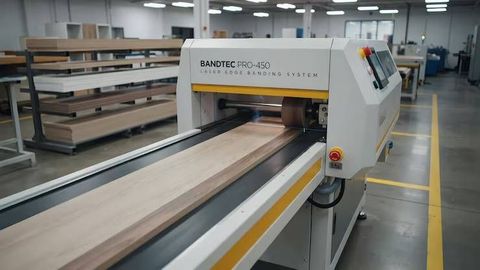
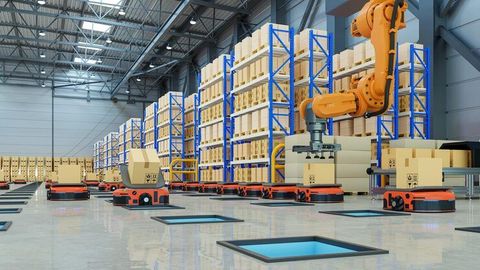
An intelligent production line may include automated material handling, robotic assembly, automated inspection, packaging equipment, and data collection systems. Each component can contribute information that helps operators understand how the production process is performing.
Main Components
Common elements include:
- Industrial sensors that monitor temperature, pressure, position, speed, vibration, or other operating conditions.
- Programmable logic controllers that coordinate machine functions.
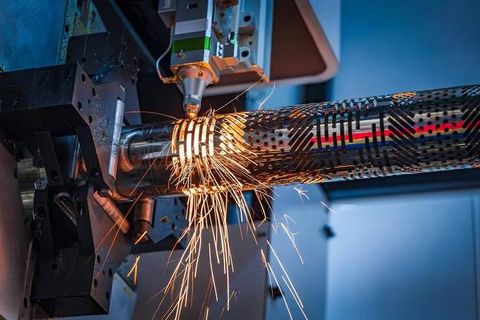
- Industrial robots that perform repetitive handling, assembly, welding, or movement tasks.
- Machine vision systems that inspect products using cameras and image-processing software.
- Manufacturing execution systems that organize production information and operational activities.
- Industrial networks that allow machines and software platforms to exchange information.
- Data analytics platforms that identify patterns in production information.
These components can be configured differently depending on the type of manufacturing process, production volume, product design, and operational requirements.
Importance
Why Intelligent Production Lines Matter
Manufacturing environments face challenges such as changing product designs, complex supply chains, equipment downtime, quality variation, and pressure to use materials and energy efficiently. Intelligent production lines are designed to provide greater visibility into these processes.
For everyday consumers, the effects may appear indirectly through product consistency, availability, manufacturing efficiency, and shorter production cycles. For manufacturers, the technology affects production planning, equipment monitoring, quality control, and workforce coordination.
Who Uses These Systems
Intelligent production lines can be found across many industries. Examples include:
- Automotive manufacturing
- Electronics production
- Food and beverage processing
- Pharmaceutical manufacturing
- Consumer goods
- Packaging
- Metal fabrication
- Plastics processing
- Industrial equipment manufacturing
The level of automation differs between facilities. Some production lines use robots for selected activities, while more integrated facilities connect many stages through centralized software and industrial communication systems.
Production Visibility and Quality
One important advantage of connected manufacturing is production visibility. Sensors and control systems can continuously record operating information, allowing personnel to identify unusual conditions.
Automated inspection can also support quality control. For example, machine vision may examine dimensions, surface characteristics, labels, positioning, or assembly conditions. Human personnel can then review exceptions rather than manually checking every item in the same way.
Data Table for Intelligent Production Systems
| Technology | Primary Function | Typical Production Role |
|---|---|---|
| Industrial Sensors | Collect operating data | Condition monitoring |
| Robotics | Perform programmed movements | Assembly and handling |
| Machine Vision | Analyze images | Automated inspection |
| PLC Systems | Control equipment | Machine coordination |
| MES Platforms | Organize production information | Production management |
| Industrial IoT | Connect equipment and data | Monitoring and integration |
| Data Analytics | Analyze operational information | Performance analysis |
| Digital Twins | Model production processes | Planning and simulation |
Recent Updates
Greater Industrial Connectivity
Recent developments from 2024 through 2026 have continued the movement toward connected production environments. Manufacturers are increasingly combining industrial automation with Industrial Internet of Things technologies, allowing equipment data to move between machines, control systems, and analytical platforms.
This development is also changing how factories approach production monitoring. Instead of collecting information only at individual machines, connected systems can provide a broader view across multiple production stages.
Artificial Intelligence in Manufacturing
Artificial intelligence is becoming more visible within smart manufacturing. AI-based analytical systems can examine large volumes of production data and identify patterns that may be difficult to detect manually.
One area receiving attention is predictive maintenance. Equipment data such as vibration, temperature, pressure, and operating cycles can be analyzed to identify unusual patterns. Such systems support maintenance planning, although their accuracy depends on data quality, sensor configuration, system design, and operating conditions.
Edge Computing and Real-Time Processing
Edge computing is another important development. Instead of sending every piece of equipment data to a distant computing environment, some processing can take place closer to the machines.
This approach can reduce communication delays and allow certain production decisions to be processed locally. It can be particularly useful where rapid responses are important, such as automated inspection and machine control.
Digital Twins
Digital twin technology is also becoming part of industrial planning. A digital twin represents a physical machine, production cell, or process in a digital environment.
Manufacturers can use these models to examine process changes, production layouts, equipment behavior, and potential bottlenecks before applying changes to physical equipment. The usefulness of a digital twin depends on how accurately the digital model represents the real production environment.
Laws or Policies
Industrial Safety Requirements
Intelligent production lines are affected by workplace safety rules, machinery requirements, electrical standards, and equipment-specific regulations. The exact requirements differ between countries and industries.
Automated machinery generally requires attention to physical guarding, emergency stopping mechanisms, safe access, electrical protection, and appropriate risk assessment. Robotics can introduce additional considerations because robotic movements may occur rapidly and across defined working areas.
Data and Cybersecurity Policies
Connected factories also create cybersecurity responsibilities. Production systems can contain operational data and communicate across internal networks or external systems.
Organizations therefore commonly establish access controls, authentication procedures, network segmentation, software update processes, backup practices, and incident response plans. Applicable data protection and cybersecurity requirements depend on the jurisdiction and the type of information being processed.
Environmental and Energy Considerations
Manufacturing policies may also address energy consumption, emissions, waste management, and resource efficiency. Intelligent monitoring can help facilities understand how equipment uses electricity, compressed air, water, raw materials, and other resources.
Specific environmental requirements vary considerably by industry and jurisdiction, so production operators generally need to follow the rules applicable to their facility and manufacturing process.
Tools and Resources
Production Planning Tools
Manufacturing organizations use different digital tools to plan and monitor production. Manufacturing execution systems can connect production schedules with machine information, quality records, material movements, and operational activities.
Enterprise resource planning platforms may provide broader business and production information, while specialized manufacturing applications can focus on individual production processes.
Monitoring and Analytics Platforms
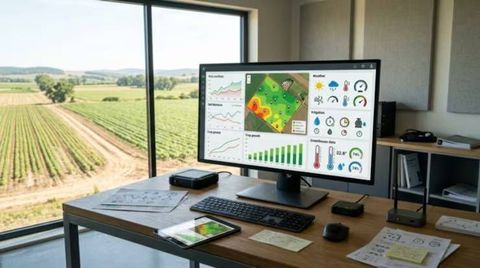
Industrial monitoring platforms can display information from connected machines through dashboards. Common measurements include equipment status, production counts, cycle information, operating conditions, and alerts.
Data analytics tools can then be used to examine historical information. Spreadsheet applications, database systems, business intelligence platforms, and industrial analytics software can all support different levels of analysis.
Simulation and Digital Twin Resources
Production simulation software can help users examine layouts, process sequences, machine utilization, and material movement. Digital twin platforms extend this concept by connecting digital models with information from physical systems.
Useful resources for learning about intelligent production lines include industrial automation documentation, equipment manuals, technical standards, manufacturing textbooks, cybersecurity frameworks, and educational materials from engineering organizations.
Implementation Considerations
When evaluating an intelligent production environment, several areas commonly require attention:
- Existing machine compatibility
- Industrial communication protocols
- Sensor requirements
- Data quality
- Cybersecurity controls
- Operator interaction
- Equipment maintenance
- Production scalability
- Safety requirements
- Training and documentation
A connected system does not automatically improve every production process. Its effectiveness depends on appropriate system design, accurate data, suitable equipment, and proper operational management.
FAQs
What are intelligent production lines?
Intelligent production lines are connected manufacturing systems that use automation, sensors, software, robotics, and data analysis to coordinate and monitor production activities.
How does smart manufacturing work?
Smart manufacturing connects production equipment with digital systems that collect and analyze operational information. This information can support production planning, quality monitoring, equipment maintenance, and process analysis.
What technologies are used in intelligent production lines?
Common technologies include industrial sensors, robotics, machine vision, programmable logic controllers, Industrial IoT systems, manufacturing execution systems, data analytics, edge computing, and digital twins.
What are the benefits of automation in manufacturing?
Automation can perform repetitive activities consistently, collect production information, support quality inspection, and reduce the need for manual monitoring of certain processes. Results depend on system design and operating conditions.
Are intelligent production lines affected by cybersecurity policies?
Yes. Connected manufacturing equipment can create digital access points that require appropriate cybersecurity controls. Organizations may need to follow applicable cybersecurity, data protection, machinery safety, and industry-specific requirements.
Conclusion
Intelligent production lines combine automation, connected equipment, sensors, software, and data analysis within modern manufacturing environments. Smart manufacturing continues to develop through technologies such as artificial intelligence, edge computing, Industrial IoT, machine vision, and digital twins. Safety, cybersecurity, data management, and environmental requirements remain important considerations for connected production systems. The overall structure and technology used in an intelligent production line depend on its manufacturing process, equipment, operational objectives, and applicable rules.