Industrial Leak Testing Machines Guide With Precision Testing and Quality Control Insights
Industrial leak testing machines are used to identify unwanted openings, weak seals, cracks, or pressure losses in manufactured components and assembled products. These systems are common in automotive components, packaging, medical equipment, electronics, appliances, industrial containers, and fluid-handling equipment.
An industrial leak testing machine can use pressure decay, vacuum testing, mass flow measurement, tracer gas, or other detection methods depending on the application. The main purpose is to determine whether a component meets its defined leakage limits before it moves into the next production stage.
Context
What Industrial Leak Testing Machines Do
A leak occurs when gas or liquid passes through a path that should normally remain sealed. The path may result from a damaged surface, an incomplete joint, a sealing problem, a microscopic opening, or an assembly variation. Industrial leak testing machines are designed to detect these conditions under controlled testing circumstances.
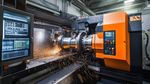
A typical leak testing system includes a test fixture, pressure or vacuum source, sensors, valves, a measurement unit, and control software. The component is placed into the fixture and isolated from the surrounding environment. The machine then applies a specified test condition and measures changes over a defined period.
Different industrial leak testing machines are designed for different sensitivity levels. A pressure decay system may measure changes in internal pressure, while a mass flow system can determine how much air or another test medium passes through a component. Tracer-gas systems can detect very small leakage paths when higher sensitivity is required.
Where Leak Testing Comes From
Leak testing developed alongside industries that needed sealed containers, pressure equipment, fuel systems, hydraulic assemblies, and other enclosed products. Earlier inspection methods often relied heavily on visual checks, immersion testing, or manual pressure observation.
Modern production environments increasingly use automated measurement because manufacturing processes can produce thousands of similar components. Automated industrial leak testing machines allow test conditions to remain consistent and provide electronic records that can be reviewed later.
Main Testing Methods
Several methods are used in industrial environments:
- Pressure decay testing measures a change in pressure inside a sealed component.
- Vacuum decay testing observes changes in vacuum level after a test chamber is evacuated.
- Mass flow testing measures the quantity of test gas passing through a controlled leakage path.
- Tracer gas testing uses a detectable gas to identify very small leakage paths.
- Bubble testing uses visible bubbles to locate leakage in certain applications.
The appropriate method depends on the component design, acceptable leakage limit, material, production speed, and required measurement sensitivity.
Importance
Why Leak Detection Matters
Leakage can affect product operation, durability, cleanliness, environmental performance, and process consistency. A sealed component used for fluid containment, for example, may behave differently if an unintended opening allows pressure or liquid to escape.
Industrial leak testing machines help manufacturers identify these conditions before products progress through additional production stages. Testing can also provide measurable information rather than relying entirely on visual inspection.
The importance of leak detection extends beyond manufacturing facilities. Components used in transportation, appliances, electronics, packaging, and industrial equipment can depend on controlled pressure or sealed internal spaces.
Who Uses Leak Testing Equipment
Leak testing equipment is used across many manufacturing sectors. Common applications include:
- Automotive fuel, cooling, braking, and air-conditioning components
- Pumps, valves, pipes, and fluid-handling assemblies
- Batteries and electrical enclosures
- Medical and laboratory equipment
- Refrigeration and air-conditioning components
- Plastic containers and packaging
- Hydraulic and pneumatic components
- Household appliances
- Industrial tanks and pressure-related assemblies
Each application can require a different testing range and acceptance threshold. A test intended for a large container may use a different technique from one designed to detect microscopic leakage in a compact component.
Quality Control and Production
Leak testing is often included as one part of a broader quality control process. Other checks may include dimensional inspection, material testing, visual examination, pressure testing, and functional testing.
A useful leak testing system should provide repeatable measurements under defined conditions. Environmental factors such as temperature, component temperature, fixture condition, and test-medium stability can influence measurements, so these factors are often controlled during testing.
Example Testing Parameters
| Testing Factor | Typical Purpose |
|---|---|
| Test pressure | Establishes the pressure condition used during measurement |
| Test time | Defines how long the component is monitored |
| Stabilization time | Allows pressure and temperature conditions to settle |
| Leakage limit | Defines the permitted measured leakage |
| Fixture condition | Helps isolate the component during testing |
| Measurement resolution | Indicates the level of change the system can detect |
| Temperature condition | Helps maintain consistent measurement conditions |
These parameters are normally established according to component specifications, engineering requirements, and applicable testing procedures.
Recent Updates
Automation and Digital Measurement
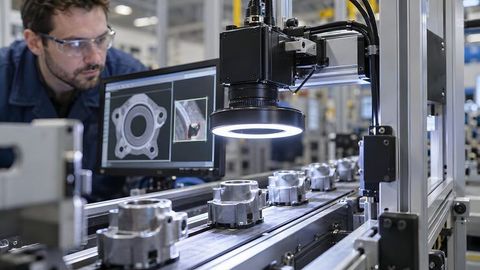
Recent developments in industrial leak testing machines have focused on automation, faster measurement, improved sensor technology, and integration with production control systems. Digital controllers can coordinate valves, pressure regulation, measurement cycles, and test results within one automated sequence.
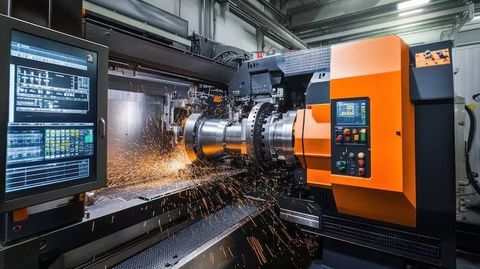
Machine interfaces have also become more accessible for operators. Touchscreen controls, programmable test recipes, status indicators, and electronic result storage can simplify production monitoring.
Data Collection and Traceability
Modern quality systems increasingly connect testing equipment with manufacturing databases. Test results can be associated with production batches, component identifiers, test programs, and machine conditions.
This approach creates a more structured record of inspection activity. Data can also help identify recurring variations in a manufacturing process when multiple test results are reviewed together.
Improved Sensor Technology
Sensor development continues to influence leak detection equipment. Pressure sensors, flow sensors, vacuum measurement systems, and tracer-gas detectors can provide increasingly detailed measurements for different applications.
Another trend is the development of more compact automated systems. Smaller testing units can be integrated directly into production cells alongside assembly, robotic handling, or other inspection equipment.
Integration With Smart Manufacturing
Industrial leak testing machines are increasingly connected with automated production environments. Communication interfaces can allow testing equipment to exchange information with programmable logic controllers, manufacturing execution systems, robotic cells, and quality databases.
This integration supports automatic test sequencing and helps reduce manual data entry. It also makes it possible to identify a component according to its production information and associate the test result with that specific unit.
Laws or Policies
Manufacturing Safety Requirements
Rules governing leak testing vary according to the equipment, industry, location, and intended application. Pressure-related equipment can be subject to specific safety requirements because stored pressure can create physical hazards if testing is performed incorrectly.
Manufacturers generally establish test procedures that specify pressure levels, test duration, equipment limitations, protective measures, and acceptance criteria. The exact requirements depend on the product and regulatory framework involved.
Environmental and Containment Considerations
Leak testing can also relate to environmental containment. Systems handling refrigerants, industrial gases, fuels, chemicals, or other controlled substances may be subject to additional requirements concerning containment and emissions.
For these applications, testing procedures can be designed around the characteristics of the contained material and the applicable environmental or industrial rules. Regulations can differ substantially between jurisdictions, so organizations normally use the requirements applicable to their operating location and product category.
Calibration and Measurement Control
Measurement equipment used for quality control may require calibration or verification according to an organization's quality system and applicable technical requirements. Calibration helps establish whether measurement instruments continue to operate within their defined accuracy range.
Records may include calibration information, test conditions, equipment identification, and measurement results. These records can support internal quality processes and technical audits.
Tools and Resources
Leak Testing Equipment
Industrial leak testing machines can include pressure decay testers, vacuum testers, mass flow testers, helium or tracer-gas systems, and automated integrated testing stations. The equipment type depends on the required sensitivity and component characteristics.
Test Fixtures
A fixture holds and seals the component during measurement. Fixture design is important because leakage from the fixture itself can interfere with the measurement of the component.
Fixtures may use seals, clamps, adapters, pressure connections, and automated loading mechanisms. Their design is normally matched to the geometry and testing requirements of the component.
Calibration Equipment
Pressure references, flow references, vacuum measurement instruments, and other calibration equipment can be used to verify measurement systems. Regular verification helps identify changes in instrument performance.
Digital Monitoring Platforms
Production monitoring platforms can collect test results, production identifiers, equipment status, and process information. These systems can support traceability and data analysis when integrated with industrial testing equipment.
Technical Documentation
Useful resources include equipment manuals, test procedures, calibration records, engineering specifications, quality-control templates, and applicable technical standards. These documents help define consistent testing conditions and acceptance criteria.
FAQs
What are industrial leak testing machines?
Industrial leak testing machines are automated or semi-automated systems used to identify unwanted leakage in components and assemblies. They can use pressure, vacuum, flow, or tracer-gas measurement methods.
How do industrial leak testing machines detect leaks?
The machine creates a controlled testing condition and measures a change associated with leakage. Depending on the system, this may involve pressure loss, vacuum change, gas flow, or detection of a tracer gas.
Which leak testing method is used for small leaks?
Small leakage paths may require a more sensitive method than standard pressure testing. Tracer-gas and specialized mass-flow techniques can be used when the required leakage threshold is very low.
Why is calibration important for leak testing equipment?
Calibration helps verify that sensors and measurement systems continue to operate within their specified measurement range. It supports consistent testing and reliable interpretation of test results.
Can leak testing machines be integrated into automated production?
Yes. Many industrial leak testing machines can communicate with production controllers and automated inspection systems. Integration can coordinate test cycles, record results, and associate measurements with production information.
Conclusion
Industrial leak testing machines provide controlled methods for identifying unwanted leakage in manufactured components and assemblies. Pressure decay, vacuum, mass flow, and tracer-gas techniques address different testing requirements and sensitivity levels. Modern systems increasingly combine automated measurement, digital records, sensor technology, and production-line integration. Their role within quality control depends on defined testing conditions, appropriate equipment, measurement control, and applicable technical requirements.