Industrial IoT Machine Systems Guide With Smart Manufacturing Insights
Industrial IoT machine systems connect physical equipment, sensors, control devices, software, and communication networks so that industrial operations can collect and exchange information. Industrial Internet of Things, commonly called IIoT, developed from the wider Internet of Things concept as manufacturers began connecting production equipment to digital monitoring and control environments.
Traditional machines often operated independently, with information displayed through local panels or recorded manually. Industrial IoT machine systems add connected sensors and communication technologies that can capture information such as temperature, vibration, pressure, energy use, production speed, and equipment status.
How Industrial IoT Machine Systems Work
An IIoT machine system generally contains several layers that work together. Sensors collect information from machines, controllers process operating signals, communication networks transfer information, and software converts the collected information into dashboards, reports, alerts, or analytical models.
A simplified system can include:
- Sensors that measure physical operating conditions
- Programmable controllers that manage machine functions
- Industrial gateways that connect equipment to networks
- Edge computing devices that process information near the machine
- Cloud or local platforms that store and analyze information
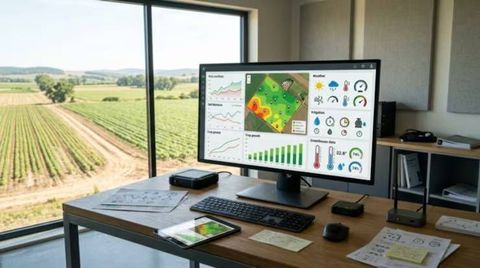
- Dashboards that display operating conditions
- Analytics tools that identify patterns in machine information
The technology exists because modern manufacturing environments generate large amounts of operational information. Connecting this information can help organizations understand equipment behavior without relying entirely on manual inspection.
Main Components
Industrial IoT machine systems can be configured in different ways depending on the equipment and production environment. A small installation may connect a few machines, while a larger system can connect entire production areas.
| Component | Main Function | Typical Information |
|---|---|---|
| Industrial sensors | Capture machine conditions | Temperature, pressure, vibration |
| PLCs | Control equipment processes | Machine states and signals |
| Edge devices | Process information locally | Events and machine data |
| Gateways | Connect equipment and networks | Communication traffic |
| IIoT platforms | Organize and analyze information | Trends and performance |
| Dashboards | Present information visually | Status and measurements |
| Data storage | Preserve historical information | Machine records |
Communication can use industrial Ethernet, wireless networks, fieldbus technologies, or other industrial communication protocols. The appropriate arrangement depends on machine age, network architecture, data requirements, and operational conditions.
Importance
Industrial IoT machine systems matter because manufacturing environments increasingly depend on connected equipment and continuous information. A machine problem can affect production schedules, material usage, quality checks, energy consumption, and equipment availability.
Who Uses Industrial IoT Systems
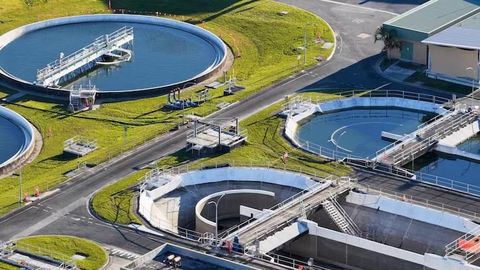
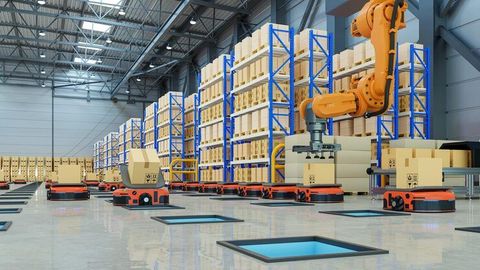
Manufacturers, plant operators, maintenance teams, engineers, equipment designers, and facility managers can interact with IIoT technologies. The same principles can also apply to utilities, warehouses, processing facilities, and other industrial environments.
For general users, the effects may appear indirectly. Connected manufacturing can influence how products are produced, inspected, packaged, monitored, and transported through industrial processes.
Problems Addressed by Connected Machines
One important application is equipment monitoring. Sensors can continuously observe operating conditions instead of depending only on periodic manual checks.
Another application is predictive maintenance. Historical machine information can be examined for unusual patterns that may indicate changing equipment conditions. This does not mean that an IIoT system can always predict a failure accurately; sensor quality, machine complexity, data history, and analytical methods all affect results.
Energy monitoring is another area of interest. Connected meters and machine sensors can show how much energy different processes consume, helping organizations understand changes in usage over time.
Operational Visibility
Connected systems can also create a shared view of production information. Instead of gathering records from separate machines, software can bring information into a centralized interface.
Common measurements may include:
- Machine operating and idle periods
- Production quantities
- Temperature changes
- Motor vibration
- Pressure levels
- Energy consumption
- Error conditions
- Maintenance records
This information can support analysis by technical teams while also giving non-technical personnel a clearer understanding of industrial processes.
Recent Updates
From 2024 through 2026, Industrial IoT machine systems have increasingly developed around edge computing, artificial intelligence, cybersecurity, interoperability, and more flexible industrial networks. The general direction has been toward processing more information closer to machines while still using centralized platforms for broader analysis.
Edge Computing and AI
Edge computing allows some information processing to occur near the equipment rather than sending every measurement to a distant platform. This can reduce communication requirements and allow certain monitoring functions to continue even when external connectivity is limited.
Artificial intelligence is also being integrated into industrial analytics. AI models can examine historical sensor information and identify patterns that may be difficult to detect manually. However, AI outputs still require appropriate validation because inaccurate data can produce unreliable conclusions.
Digital Twins
Digital twin technology is another developing area. A digital twin represents a physical machine, process, or facility within a digital environment. Information from connected equipment can be used to update the digital representation, supporting analysis, simulation, and operational understanding.
Stronger Cybersecurity Focus
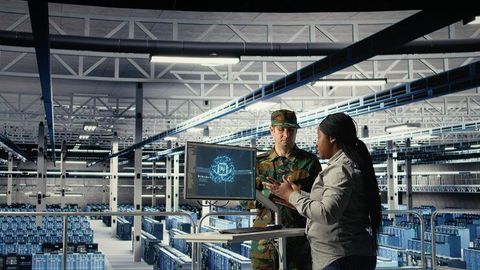
Greater connectivity also increases the importance of industrial cybersecurity. Modern IIoT environments may involve operational technology networks, enterprise systems, cloud platforms, remote connections, and multiple types of equipment.
Security approaches increasingly emphasize network segmentation, access control, authentication, software updates, asset inventories, monitoring, and incident response planning.
Interoperability
Manufacturing facilities often contain equipment from different generations and manufacturers. Current IIoT development therefore places significant attention on interoperability, standardized communication, data models, and integration methods that allow different systems to exchange information.
Laws or Policies
Industrial IoT machine systems are influenced by several categories of rules, although exact requirements depend on the country, industry, equipment, and type of information being processed. Because no specific target country was provided, the following describes the general international regulatory landscape rather than a country-specific legal framework.
Industrial Safety Requirements
Industrial equipment is commonly subject to workplace safety requirements covering machine operation, electrical systems, guarding, emergency controls, maintenance, and risk management. Adding sensors or network connections does not remove the underlying safety responsibilities associated with the physical machine.
Safety-related control systems may also require additional validation when connected technologies can influence machine operation.
Cybersecurity Requirements
Connected industrial environments are increasingly affected by cybersecurity frameworks and regulations. Organizations may need to address access management, security monitoring, vulnerability handling, incident response, and protection of operational technology.
International standards such as the IEC 62443 family are widely associated with industrial automation and control-system cybersecurity. Other cybersecurity frameworks may also be relevant depending on the organization and jurisdiction.
Data and Privacy Rules
Machine information is generally different from personal information, but an IIoT platform can sometimes process information associated with employees, operators, contractors, or other individuals. In such situations, applicable privacy and data-protection requirements may become relevant.
Organizations therefore need to understand what information is collected, where it is stored, who can access it, and how long it is retained.
Tools and Resources
Several categories of tools can help people understand, design, monitor, and analyze Industrial IoT machine systems.
Monitoring and Analytics Tools
IIoT platforms can provide dashboards for machine conditions, production information, alerts, and historical trends. Data visualization platforms can also organize measurements into charts, tables, and operational reports.
Edge gateways are useful where machines use different communication methods. They can act as an intermediate layer between equipment and higher-level software.
Planning Resources
Useful planning resources include:
- Machine connectivity assessment templates
- Industrial network diagrams
- Sensor selection guides
- Equipment data dictionaries
- Cybersecurity assessment checklists
- Maintenance history templates
- Energy monitoring worksheets
- Asset inventory spreadsheets
- Industrial communication protocol documentation
Simulation and digital-twin platforms can also help teams examine equipment behavior in a digital environment before making changes to physical processes.
Measurement and Evaluation
Common IIoT measurements include machine availability, production output, cycle duration, energy consumption, sensor readings, and downtime categories. These measurements should be interpreted within the context of the specific equipment because identical measurements can have different meanings across industries.
FAQs
What are Industrial IoT machine systems?
Industrial IoT machine systems connect industrial equipment with sensors, controllers, networks, and software so that machine information can be collected, transferred, monitored, and analyzed.
How do Industrial IoT machine systems support smart manufacturing?
Industrial IoT machine systems provide connected information about equipment and production processes. Smart manufacturing environments can use this information for monitoring, analysis, maintenance planning, quality evaluation, and process management.
What sensors are commonly used in IIoT machine systems?
Common sensors measure temperature, vibration, pressure, current, humidity, position, speed, flow, and other physical conditions. Sensor selection depends on the machine and the information required.
What is predictive maintenance in Industrial IoT?
Predictive maintenance uses equipment information and analytical methods to identify patterns associated with changing machine conditions. It can support maintenance planning, but its accuracy depends on data quality, sensor placement, machine characteristics, and analytical models.
Is Industrial IoT cybersecurity important?
Yes. Connected machines can create additional network pathways and digital dependencies. Access controls, network separation, monitoring, secure configurations, software updates, and incident-response procedures are important parts of an industrial cybersecurity approach.
Conclusion
Industrial IoT machine systems connect physical equipment with sensors, networks, computing resources, and analytical software. Their importance has grown as manufacturing environments increasingly use connected information for monitoring, maintenance planning, energy analysis, and operational visibility. Recent development has emphasized edge computing, AI-assisted analytics, digital twins, interoperability, and industrial cybersecurity. Regulatory requirements vary by jurisdiction and industry, making safety, cybersecurity, and data-management considerations important parts of connected industrial environments.