Industrial Engineering Components: Advanced Manufacturing Technology Guide
Industrial engineering components are the mechanical, electrical, electronic, and structural elements used to create reliable manufacturing equipment and production systems. They include gears, bearings, shafts, couplings, fasteners, linear motion systems, sensors, actuators, control components, machine frames, and precision-machined parts.
Modern manufacturing depends on these components because individual machines rarely work as isolated units. A CNC machine, automated assembly line, packaging system, robotic cell, or material-handling system contains many interconnected components that must operate accurately and consistently.
The development of industrial engineering components has progressed alongside manufacturing technology. Traditional mechanical parts are now increasingly combined with sensors, electronic controls, software, and data monitoring.
Advanced manufacturing therefore focuses not only on producing strong physical components but also on improving accuracy, energy efficiency, automation, reliability, and operational visibility.
Major Types of Industrial Engineering Components
Industrial systems can contain thousands of individual parts. Common categories include:
- Bearings and bushings for controlled movement
- Gears and gearboxes for power transmission
- Shafts and couplings for mechanical connections
- Hydraulic and pneumatic components
- Linear guides and motion-control systems
- Fasteners and structural hardware
- Electric motors and drive components
- Sensors and measurement devices
- Programmable control components
- Machine frames and structural assemblies
- Cutting, forming, and machining components
- Safety-related mechanical and electronic components
Each component has a specific function. The correct combination determines how accurately and reliably a complete industrial system performs.
Why Advanced Manufacturing Components Matter Today
Manufacturing industries are under continuous pressure to improve productivity, quality, energy efficiency, and operational reliability. This has increased the importance of precision-engineered components.
A small mechanical error can affect an entire production process. For example, inaccurate alignment in a rotating system can increase vibration and accelerate component wear. A poorly calibrated sensor can produce incorrect production data. An unsuitable bearing can influence machine performance and maintenance requirements.
Advanced components help address these challenges through better materials, tighter manufacturing tolerances, improved designs, and digital monitoring.
Industries Using Advanced Engineering Components
These components are found across many industrial sectors, including:
- Automotive manufacturing
- Aerospace production
- Semiconductor manufacturing
- Renewable energy equipment
- Food and beverage processing
- Pharmaceutical production
- Construction equipment
- Electronics manufacturing
- Industrial robotics
- Chemical processing
- Packaging machinery
- Material-handling systems
The growing use of robotics and industrial automation has further increased demand for components that can support precise, repeatable motion.
Precision and Quality Considerations
Several technical characteristics influence component performance:
| Characteristic | Manufacturing Importance |
|---|---|
| Dimensional accuracy | Supports proper assembly and alignment |
| Material strength | Helps withstand mechanical loads |
| Surface finish | Can influence friction and wear |
| Thermal stability | Supports operation under temperature changes |
| Corrosion resistance | Helps in demanding environments |
| Tolerance control | Supports accurate component interaction |
| Fatigue resistance | Helps withstand repeated loading |
Component selection should therefore consider the complete operating environment rather than a single specification.
Recent Developments in Advanced Manufacturing Technology
Manufacturing technology has continued to evolve during 2025 and 2026, particularly around automation, artificial intelligence, digital monitoring, additive manufacturing, and connected production systems.
Artificial Intelligence in Manufacturing
AI is increasingly being integrated into industrial production for pattern recognition, quality inspection, process monitoring, and predictive analysis.
Computer vision systems can identify dimensional or surface irregularities during production. Data-based models can also help identify unusual machine behavior before a major equipment problem occurs.
AI does not replace the need for engineering knowledge. Instead, it can provide additional information that engineers and operators can use when making technical decisions.
Industrial Internet of Things
Connected sensors are becoming an important part of modern manufacturing equipment. These sensors can monitor variables such as:
- Temperature
- Vibration
- Pressure
- Speed
- Position
- Energy consumption
- Machine operating conditions
During 2025–2026, the wider adoption of connected manufacturing has strengthened interest in real-time monitoring and data-driven maintenance strategies.
Digital Twins
Digital twin technology creates a digital representation of a physical machine, production system, or process. Engineers can use these models to study operating conditions, evaluate changes, and understand equipment behavior.
Digital twins are particularly useful when complex machinery contains many interacting components.
Additive Manufacturing
Additive manufacturing continues to expand beyond prototyping into selected industrial production applications. It can create complex geometries that may be difficult to produce through conventional machining.
Metal additive manufacturing is especially relevant to aerospace, tooling, medical equipment, and specialized engineering applications where geometry and material performance are important.
Robotics and Collaborative Automation
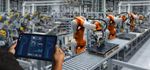
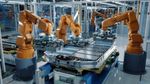
Industrial robots continue to support repetitive, precise, and physically demanding production tasks. Collaborative robotic systems are also being developed for applications where people and machines operate within shared work areas under appropriate safety controls.
These technologies increase the importance of precision gears, motors, sensors, actuators, bearings, controllers, and motion systems.
Laws, Standards, and Manufacturing Policies
Industrial engineering components are affected by safety, environmental, machinery, electrical, and product-quality requirements. The exact rules depend on the country and the type of equipment.
European Union Requirements
The European Union has introduced the Machinery Regulation (EU) 2023/1230, which replaces the older Machinery Directive framework. The regulation is scheduled to become applicable on 20 January 2027.
The framework addresses machinery safety and related requirements, including emerging technologies associated with modern machinery.
Manufacturers and engineering teams working with machinery intended for the European market should monitor the transition and assess how applicable requirements affect equipment design and documentation.
United States Requirements
In the United States, industrial machinery can be affected by workplace safety requirements, electrical rules, environmental regulations, and technical standards. Requirements can vary according to the equipment, industry, workplace, and application.
International Standards
International engineering standards can address subjects such as:
- Machine safety
- Electrical safety
- Quality management
- Dimensional specifications
- Material properties
- Testing procedures
- Risk assessment
- Industrial automation
Standards should be checked against the specific component and application because not every standard applies to every industrial product.
Tools and Resources for Engineering Components
Engineers, technicians, students, and manufacturers can use a range of digital and technical resources when studying or designing industrial components.
Useful Engineering Tools
Common resources include:
- CAD software for mechanical design
- 3D modeling platforms
- Finite element analysis tools
- Engineering calculators
- Tolerance calculators
- Gear ratio calculators
- Bearing selection references
- Material property databases
- Technical drawing templates
- Preventive maintenance checklists
- Sensor monitoring dashboards
- Production data analysis tools
Useful Technical Information
Engineering teams may also consult:
- Machinery standards
- Material datasheets
- Component specifications
- Technical drawings
- Installation manuals
- Maintenance documentation
- Safety assessment templates
- Calibration records
- Quality inspection procedures
Using accurate technical information is important because component specifications can vary significantly between applications.
Frequently Asked Questions
What are industrial engineering components?
Industrial engineering components are individual mechanical, electrical, electronic, and structural parts used within machines, production equipment, automation systems, and industrial processes.
Why is precision important for industrial components?
Precision helps components fit and operate correctly within a larger system. Proper dimensions, tolerances, alignment, and surface characteristics can influence machine performance and reliability.
How is AI changing industrial component manufacturing?
AI can support automated inspection, production monitoring, pattern recognition, predictive analysis, and process optimization. Its usefulness depends on the quality of available data and the engineering application.
What is the role of sensors in modern manufacturing?
Sensors collect information about conditions such as temperature, vibration, pressure, position, and speed. This information can help engineers monitor equipment and identify unusual operating conditions.
What standards affect industrial engineering components?
Requirements vary by country, industry, component, and application. Machinery safety, electrical safety, quality management, material specifications, and testing standards are among the areas that may apply.
Conclusion
Industrial engineering components form the foundation of modern manufacturing equipment. From basic mechanical elements such as bearings and gears to advanced sensors, actuators, control systems, and precision-machined parts, each component contributes to the performance of a larger industrial system.