Industrial Blowers Guide: Designs, Working Principles, Airflow Systems and Industrial Uses
Industrial blowers are mechanical devices that move air or gas through industrial equipment, ventilation networks, and production systems. An Industrial Blowers Guide explains their designs, working principles, airflow systems, and industrial uses. These machines are found in manufacturing plants, wastewater treatment facilities, power stations, food-processing units, and buildings that require controlled air movement.
Context
Industrial blowers are mechanical devices that move air or gas through industrial equipment, ventilation networks, and production systems. An Industrial Blowers Guide explains their designs, working principles, airflow systems, and industrial uses. These machines are found in manufacturing plants, wastewater treatment facilities, power stations, food-processing units, and buildings that require controlled air movement.
The development of industrial blowers followed the growth of mechanical ventilation, combustion systems, and factory production. As industrial processes became more complex, equipment was needed to supply air, remove fumes, support drying, and transport lightweight materials. Modern blowers use electric motors, rotating impellers, and carefully designed housings to create airflow or pressure differences.
Although blowers and fans are sometimes discussed together, they are not always interchangeable. Fans generally move large volumes of air at relatively low pressure, while blowers are commonly designed for applications that require a more noticeable pressure increase. The exact distinction depends on the classification system and equipment specifications.
Main Designs of Industrial Blowers
Industrial blower designs differ according to how they move air, generate pressure, and handle operating conditions. The main categories include centrifugal, axial, regenerative, and positive-displacement blowers.
Centrifugal blowers: These use a rotating impeller to accelerate air outward. A housing converts part of the air's velocity into pressure, making this design suitable for duct networks, dust collection, combustion air, and industrial drying.
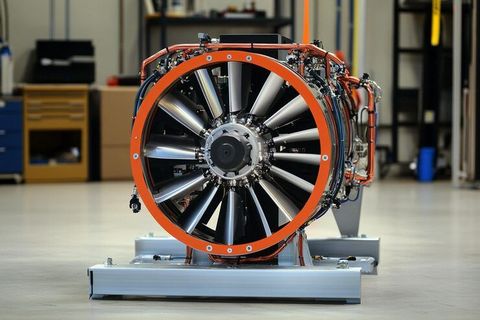
Axial blowers: These move air mainly along the axis of a rotating shaft. They are used in ventilation, cooling, and applications that require substantial airflow with relatively low pressure resistance.
Regenerative blowers: Also called side-channel blowers, these repeatedly accelerate air within a side channel to develop pressure or vacuum. They are used in aeration, pneumatic handling, and certain packaging processes.
Positive-displacement blowers: These trap and move defined volumes of gas through a housing. Rotary lobe designs are common in wastewater aeration and pneumatic conveying systems.
Each design has different airflow characteristics, pressure capabilities, noise levels, and maintenance requirements. Selection depends on the process rather than the machine's name alone.
Basic Working Principles
Most industrial blowers operate through an electric motor or another mechanical power source. The motor rotates an impeller, rotor, or other moving element, transferring energy to the air or gas and creating a pressure difference that drives movement through the connected system.
In a centrifugal blower, air enters near the center of the impeller and moves outward as the impeller rotates. In an axial blower, angled blades push air mainly in the direction of the shaft. Positive-displacement designs instead move gas through repeated trapping and release, while regenerative blowers circulate air through a channel to increase its energy.
The resulting airflow depends on factors such as rotational speed, impeller geometry, gas density, inlet conditions, and resistance within the ductwork. A blower's actual performance therefore depends on the complete installation, not only its rated capacity.
Importance
Industrial blowers support processes that depend on controlled air movement, ventilation, cooling, drying, combustion, or gas transfer. They influence production consistency, indoor air conditions, equipment temperature, and the movement of particles or gases through industrial facilities.
In manufacturing environments, inadequate airflow can affect product quality, equipment operation, and worker comfort. For example, a drying line may require a consistent air supply, while a dust collection system needs sufficient airflow to carry particles toward filters. Wastewater treatment plants use blowers to supply oxygen to biological treatment processes.
Industrial Applications
Industrial blower uses vary across industries and operating conditions.
Manufacturing: Supplying combustion air, cooling machinery, drying materials, and moving lightweight particles.
Wastewater treatment: Delivering air to aeration tanks where microorganisms help break down organic matter.
Food processing: Supporting drying, cooling, product handling, and ventilation in suitable hygienic environments.
Chemical and pharmaceutical production: Moving process gases or supporting ventilation where compatible equipment and materials are required.
Power generation: Supplying combustion air and supporting ventilation or other plant processes.
Cement and metal production: Supporting furnace operations, dust collection, cooling, and material handling.
Building ventilation: Moving air through industrial buildings, workshops, and enclosed production spaces.
The required blower type depends on the material being handled, operating temperature, moisture level, pressure requirement, and any corrosive or combustible properties of the gas.
Airflow, Pressure, and Energy Use
Three factors help explain industrial blower performance. Airflow describes the volume of gas moved during a given period, usually expressed in cubic metres per hour (m³/h) or cubic feet per minute (CFM). Static pressure describes the pressure difference needed to overcome resistance in ducts, filters, pipes, and process equipment.
Power consumption is influenced by airflow, pressure rise, operating efficiency, and motor performance. As a general engineering relationship, the air power required for a gas-moving system can be approximated by multiplying volumetric flow rate by pressure rise. Actual electrical input is higher because motors and blowers experience energy losses.
For example, a filter system that becomes clogged may create additional resistance. The blower's airflow can then change, and the motor may operate differently depending on its design and control method. Regular inspection of filters, ducts, bearings, and operating readings helps identify these changes.
Comparison of Blower Designs
| Blower type | Air movement principle | Common applications |
|---|---|---|
| Centrifugal | Air accelerates outward from an impeller | Dust collection, drying, combustion |
| Axial | Air moves along the shaft | Ventilation, equipment cooling |
| Regenerative | Air circulates through a side channel | Aeration, light pneumatic handling |
| Positive-displacement | Defined gas volumes are moved mechanically | Wastewater aeration, pneumatic conveying |
These categories contain many variations. Operating limits, pressure ranges, efficiency, and compatibility must be checked against the manufacturer's technical documentation.
Recent Updates
Industrial blower development increasingly focuses on energy management, variable-speed operation, digital monitoring, and improved system integration. These trends have continued through 2024–2026 as industrial facilities assess electricity use, production reliability, and environmental performance. The availability of particular technologies varies by equipment model and industry.
Energy Efficiency and Variable-Speed Control
Variable-frequency drives adjust motor speed according to process demand. Instead of operating continuously at one speed, a compatible blower can change output as airflow requirements change. The amount of energy saved depends on the blower design, operating profile, system resistance, and control strategy.
Impeller design, motor efficiency, sealing, and duct layout also affect performance. A blower operating against unnecessary restrictions may consume more energy than expected, even if its motor is efficient. Evaluating the complete airflow system is therefore important when reviewing energy performance.
Digital Monitoring and Predictive Maintenance
Some industrial blowers incorporate sensors that monitor vibration, temperature, pressure, airflow, or motor conditions. Connected monitoring systems can help operators identify changes that may indicate bearing wear, imbalance, blockage, or other developing problems.
Predictive maintenance uses operating data to estimate when inspection or repair may be needed. It does not eliminate equipment failures, and readings require proper interpretation. Smaller facilities may continue to rely on scheduled inspections and manual measurements, depending on their operating requirements.
Noise Reduction and Environmental Considerations
Manufacturers also address noise, vibration, leakage, and the handling of contaminated air. Acoustic enclosures, vibration isolation, suitable silencers, and properly designed ductwork may help control noise when correctly selected and installed.
Environmental performance depends on the application. A blower used for dust extraction, for example, must work with compatible collection and filtration equipment to control particles. Equipment selection must also account for process emissions, temperature, and the properties of the gas being moved.
Laws or Policies
Industrial blower installations may be affected by workplace safety requirements, electrical regulations, environmental rules, energy-efficiency standards, and industry-specific operating requirements. Applicable provisions depend on the equipment, facility, process, and country.
Industrial Equipment Rules in India
In India, industrial blower installations may fall under applicable occupational safety, factory, electrical, environmental, and state-level requirements. The Occupational Safety, Health and Working Conditions Code, 2020, forms part of India's occupational safety framework, with practical obligations depending on the provisions brought into force and the relevant rules.
Electrical motors and control panels must be appropriate for their installation conditions. Equipment operating in areas with flammable gases, vapours, or combustible dust may require suitable hazardous-area protection. Pressure equipment and associated piping may also be subject to additional requirements depending on the system.
Environmental and Energy Requirements
Industrial facilities may need to comply with applicable pollution-control requirements when blowers support exhaust extraction, dust collection, or process-emission control. The Central Pollution Control Board and relevant State Pollution Control Boards provide regulatory information and guidance for applicable environmental requirements.
Energy-performance programs and standards may also influence motor and equipment selection. The Bureau of Energy Efficiency publishes information about energy conservation and efficiency initiatives in India. The exact requirements applicable to a blower installation should be confirmed for the relevant equipment category and facility.
Workplace Safety
Industrial blowers contain rotating parts and may operate with hot gases, high noise levels, or hazardous materials. Appropriate guards, electrical isolation, maintenance procedures, ventilation design, and personal protective equipment can reduce exposure to identified hazards.
Before maintenance, equipment should be isolated from its energy sources according to the site's safety procedures. Workers should not remove protective guards or operate equipment outside its specified limits.
Tools and Resources
Technical documents and measurement tools help engineers, maintenance teams, and facility managers understand blower requirements. The appropriate resources depend on whether the task involves initial selection, troubleshooting, energy evaluation, or routine inspection.
Blower Selection and Performance Tools
Manufacturer selection software and performance charts can help compare airflow, pressure, speed, motor power, and operating limits. Common information required for a selection assessment includes:
Required airflow and operating pressure.
Gas temperature, density, and composition.
Duct dimensions and estimated system resistance.
Operating schedule and control requirements.
Installation space, noise limits, and environmental conditions.
A blower performance curve shows how airflow and pressure relate under specified operating conditions. Comparing this curve with the system's resistance characteristics helps determine whether the equipment can meet process requirements.
Monitoring and Maintenance Resources
Pressure gauges, airflow meters, vibration meters, temperature sensors, and electrical power meters can help assess operating conditions. Their accuracy, measurement range, and installation method influence the reliability of the readings.
Manufacturer manuals provide information about lubrication, inspection intervals, allowable operating conditions, spare parts, and troubleshooting. Technical resources from the Bureau of Energy Efficiency and the Central Pollution Control Board can also help users understand relevant Indian energy and environmental requirements.
FAQs
What is an industrial blower used for?
An industrial blower moves air or gas for ventilation, cooling, drying, combustion, dust collection, wastewater aeration, and pneumatic material handling. Its application depends on airflow, pressure, gas properties, and operating conditions.
What are the main types of industrial blowers?
The main categories include centrifugal, axial, regenerative, and positive-displacement blowers. They differ in how they move gas and in their typical pressure and airflow characteristics.
How does an industrial blower working principle differ by design?
Centrifugal blowers accelerate air outward from an impeller, while axial blowers push air along a shaft. Regenerative blowers circulate air through a side channel, and positive-displacement blowers move trapped volumes of gas.
How is industrial blower capacity measured?
Capacity is generally expressed as volumetric airflow, such as m³/h or CFM. Pressure rise, gas density, operating temperature, and system resistance are also important when evaluating performance.
What factors affect industrial blower energy efficiency?
Motor efficiency, blower design, airflow demand, pressure requirements, maintenance condition, and duct resistance all affect energy use. Variable-speed controls may reduce consumption when the system can operate effectively at lower output.
Conclusion
Industrial blowers support a wide range of manufacturing, ventilation, cooling, and environmental processes. Their designs differ in working principles, pressure capabilities, airflow characteristics, and suitable applications. Energy efficiency, digital monitoring, maintenance, and workplace safety are important considerations in modern installations. Understanding system requirements and applicable regulations provides a sound foundation for evaluating industrial blower operation.

You May Also Like