Automatic Labeling Machines Guide: Designs, Working Principles, Features and Industrial Uses
Automatic labeling machines are industrial systems designed to apply labels to products, containers, packages, and other items with limited manual involvement. An Automatic Labeling Machines Guide explains their designs, working principles, features, and industrial uses, helping readers understand how these machines fit into modern manufacturing and packaging operations.
Context
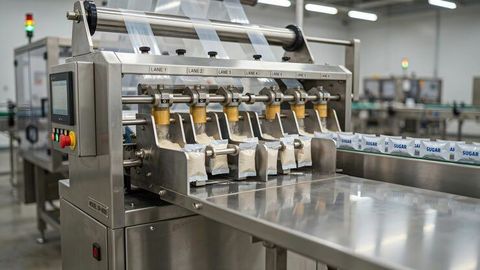
Automatic labeling machines are industrial systems designed to apply labels to products, containers, packages, and other items with limited manual involvement. An Automatic Labeling Machines Guide explains their designs, working principles, features, and industrial uses, helping readers understand how these machines fit into modern manufacturing and packaging operations. They are commonly found in food processing, beverage production, pharmaceuticals, cosmetics, chemicals, and consumer goods manufacturing.
Product labeling developed from manual methods in which workers attached printed paper labels to containers individually. As production volumes increased, manufacturers began using mechanical applicators, conveyor systems, sensors, and automated controls to improve the consistency and speed of labeling operations. Modern systems can handle different product shapes, label materials, and application positions according to their design.
What Is an Automatic Labeling Machine?
An automatic labeling machine applies a prepared label to an item as it moves through a production or packaging line. Depending on the equipment, labels may contain product names, ingredients, batch information, barcodes, instructions, symbols, or regulatory details.
These machines may operate independently or as part of an integrated packaging system. Some are designed for cylindrical bottles, while others handle flat cartons, jars, boxes, pouches, and irregularly shaped containers. The machine configuration depends on the product dimensions, label type, production requirements, and available space.
Main Components of an Automatic Labeling System
A typical system includes several coordinated components:
Conveyor: Moves products through the labeling area at a controlled speed.
Label dispenser: Separates labels from their backing material and presents them for application.
Application mechanism: Uses rollers, belts, pads, or other devices to attach labels to products.
Sensors: Detect product positions, container presence, or label movement.
Control system: Coordinates machine operations, timing, and settings.
Label roll holder: Supports the roll of prepared labels during operation.
Inspection equipment: Checks label presence, position, or printed information when included in the system.
Not every machine contains all these components. Equipment designs vary according to the application method, level of automation, and inspection requirements.
Importance
Automatic labeling machines play an important role in manufacturing because product identification must remain consistent throughout production and distribution. Labels help workers, retailers, distributors, and consumers identify products and understand their contents, handling requirements, and traceability information.
Manual labeling can become difficult when a facility processes large quantities of products or handles several packaging formats. Differences in label position, wrinkles, missing labels, and incorrect product information can create operational difficulties. Automation helps manage repetitive tasks, although the actual results depend on machine setup, maintenance, product consistency, and inspection procedures.
Benefits for Industrial Operations
Automatic labeling systems can support several operational requirements. Their usefulness depends on the production environment and the characteristics of the products being handled.
Consistent application: Controlled positioning helps maintain a uniform label location across similar products.
Production coordination: Conveyor-based systems can work alongside filling, capping, coding, and packaging equipment.
Reduced repetitive handling: Workers may spend less time manually applying individual labels.
Product identification: Labels can display barcodes, batch numbers, product details, and other identifying information.
Format flexibility: Some machines accommodate different container sizes and label dimensions through adjustments or changeover components.
Inspection support: Integrated cameras and sensors can identify selected labeling defects before products move further along the line.
Industries That Use Automatic Labeling Machines
The same basic labeling principles apply across different industries, but each sector has specific requirements.
Food and beverage manufacturers label bottles, jars, cans, cartons, and packaged foods. Pharmaceutical manufacturers may require precise label placement, readable batch information, and verification procedures. Cosmetics producers often work with small containers, curved surfaces, and varied packaging designs.
Chemical manufacturers may need labels that remain readable under the intended storage and handling conditions. Warehousing and logistics operations use labels for product identification, inventory tracking, and barcode scanning. In each case, the label material, adhesive, printing method, and application process must suit the product and its environment.
Recent Updates
Developments in automatic labeling technology increasingly focus on digital controls, inspection systems, production data, and flexible packaging formats. Across the 2024–2026 period, manufacturers have continued exploring ways to connect labeling equipment with broader automated production systems. The availability of these features varies by machine type, manufacturer, and facility requirements.
Smart Controls and Machine Integration
Modern labeling equipment may use programmable logic controllers (PLCs), touchscreen interfaces, and electronic sensors to coordinate machine functions. Operators can adjust parameters such as conveyor speed, label position, and product timing through the control interface.
Some systems connect with manufacturing execution systems or production monitoring platforms. These connections can help record operating information, identify interruptions, and coordinate labeling with other packaging stages. However, the depth of integration depends on the equipment's communication capabilities and the facility's existing software.
Vision Inspection and Product Verification
Machine vision systems use cameras and image-processing software to inspect labels. Depending on their configuration, they can check whether a label is present, whether it is positioned correctly, and whether selected text or codes are readable.
Barcode readers and optical character recognition systems can support additional verification tasks. These technologies require suitable lighting, appropriate camera settings, and clearly defined inspection criteria. They can detect certain errors, but their performance should be assessed under actual operating conditions.
Flexible and Sustainable Labeling Materials
Manufacturers increasingly consider how labeling systems handle different materials, including paper labels, plastic films, and pressure-sensitive label constructions. Packaging changes can affect adhesive performance, label stiffness, surface contact, and dispenser settings.
Sustainability initiatives may involve reducing packaging waste, using thinner label materials, or selecting materials compatible with a particular recycling process. Such changes require technical evaluation because a material that works with one container or application method may not perform the same way with another.
Laws or Policies
Automatic labeling machines must operate within the regulatory requirements that apply to the products being manufactured and the facility in which the equipment is installed. In India, these requirements may involve product labeling, food safety, pharmaceutical packaging, industrial machinery safety, electrical installations, and workplace protection.
Product Labeling Requirements in India
The Legal Metrology Act, 2009, and the Legal Metrology (Packaged Commodities) Rules, 2011, establish requirements for specified packaged commodities. Depending on the product and applicable exemptions, declarations may include the manufacturer's or packer's details, net quantity, maximum retail price, and consumer contact information.
Food labeling is also governed by applicable provisions of the Food Safety and Standards Authority of India (FSSAI). These requirements may cover ingredients, allergens, nutritional information, product identification, and other declarations according to the food category and applicable rules. Pharmaceutical products are subject to relevant provisions of India's Drugs and Cosmetics Act, 1940, associated rules, and applicable labeling requirements.
The exact declarations depend on the product category, packaging format, and rules in force. Automatic labeling equipment does not itself establish legal compliance; manufacturers must ensure that the label content, placement, readability, and packaging process satisfy applicable requirements.
Machinery Safety and Workplace Practices
Industrial labeling equipment may contain moving conveyors, rollers, cutting mechanisms, and electrical components. Facilities should consider machine guarding, emergency stops, electrical safety, operator training, and maintenance procedures appropriate to the equipment.
Where applicable, machinery and workplace operations must follow relevant Indian occupational safety requirements, including the Occupational Safety, Health and Working Conditions Code, 2020, and other provisions in force. Actual obligations depend on implementation status, applicable rules, industry, and facility circumstances.
Tools and Resources
Selecting and operating an automatic labeling machine involves understanding product dimensions, label specifications, production targets, and inspection needs. Technical documents and measurement tools help manufacturers evaluate whether a system matches their requirements.
Equipment Selection and Setup Tools
Common resources include:
Product specification sheets: Record container shape, dimensions, material, and surface characteristics.
Label specification sheets: Describe label width, length, backing material, adhesive, and roll dimensions.
Production calculators: Estimate the required labeling rate from planned output and operating time.
Machine manuals: Explain setup procedures, adjustment points, safety controls, and maintenance intervals.
Line layout drawings: Show equipment positions, conveyor direction, and available floor space.
Inspection checklists: Record label alignment, adhesion, readability, barcode accuracy, and missing-label checks.
A basic production calculation can help establish an initial machine capacity requirement. For example, if a line must process 6,000 containers in 60 minutes, its average required throughput is 100 containers per minute. Actual equipment selection must also account for product spacing, changeovers, downtime, and inspection requirements.
Technical Standards and Industry Resources
The Bureau of Indian Standards (BIS) provides information about Indian standards relevant to applicable industrial products and safety requirements. FSSAI publishes food-related regulations and labeling guidance, while the Department of Consumer Affairs provides information concerning Legal Metrology requirements.
Equipment manuals and technical documentation from machine manufacturers can clarify supported container sizes, label materials, adjustment ranges, and maintenance needs. Production teams should also document approved label designs, product changeovers, inspection results, and recurring machine faults.
FAQs
How does an automatic labeling machine work?
An automatic labeling machine detects or receives a product, coordinates its movement, dispenses a label, and applies it using a suitable mechanism. Sensors and control systems manage timing and positioning, while inspection devices may verify the completed label.
What are the main types of automatic labeling machines?
Common types include wrap-around labeling machines, front-and-back labeling machines, top labeling machines, side labeling machines, and systems designed for cylindrical containers. The appropriate configuration depends on the product shape and required label position.
Which industries use automatic labeling machines?
Food and beverages, pharmaceuticals, cosmetics, chemicals, consumer goods, and logistics operations use automatic labeling equipment. Each industry has different requirements for label content, material compatibility, traceability, and inspection.
What factors affect automatic labeling machine selection?
Important factors include production speed, container dimensions, label material, adhesive type, application position, changeover requirements, available floor space, and inspection needs. Compatibility with existing filling and packaging equipment is also relevant.
What regulations apply to automatic product labeling in India?
Applicable rules depend on the product. Packaged commodities may fall under Legal Metrology requirements, food products under FSSAI regulations, and pharmaceutical products under relevant drug laws and labeling rules. Manufacturers must identify the requirements applicable to their specific products.
Conclusion
Automatic labeling machines apply product labels through coordinated mechanical systems, sensors, and electronic controls. Their designs vary according to container shape, label position, production needs, and industry requirements. Digital inspection, production integration, and material compatibility are important considerations in modern labeling operations. In India, product labeling rules and workplace safety requirements also influence how these systems are configured and operated.