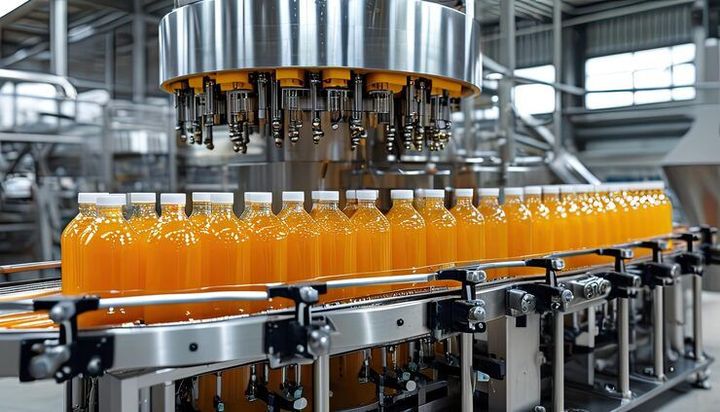
Food and Beverage Manufacturing Insights: Industrial Equipment, Technologies, Packaging and Production
Food and beverage manufacturing is the process of converting agricultural ingredients and raw materials into products that can be prepared, packaged, stored, and distributed for consumption. It includes activities such as cleaning, grinding, mixing, cooking, pasteurization, fermentation, drying, filling, and packaging.
Context
The industry covers a wide range of products, including dairy products, bakery items, canned foods, frozen meals, snacks, bottled drinks, sauces, and packaged ingredients. Each category requires different equipment and processing conditions according to its ingredients, physical properties, and intended storage requirements.
Food production has developed from small-scale manual preparation into integrated manufacturing operations. Improvements in mechanical engineering, refrigeration, temperature control, material handling, and automated monitoring have enabled production lines to handle larger volumes while maintaining defined product specifications.
Modern food and beverage manufacturing combines machinery, trained personnel, quality checks, packaging systems, and production planning. The overall process depends on coordination between these elements rather than on a single machine or technology.
Main stages of food and beverage production
Although individual processes vary, many manufacturing operations follow a similar sequence. Raw materials are received and inspected, prepared for processing, transformed into the intended product, checked for quality, and packaged for storage or distribution.
Common production stages include:
Raw material handling: Ingredients are received, weighed, sorted, and transferred to processing areas.
Preparation: Materials may be washed, peeled, cut, milled, filtered, or blended.
Processing: Heating, cooling, mixing, fermentation, or other operations develop the required product characteristics.
Filling and packaging: Products are placed into suitable containers, sealed, labeled, and coded.
Inspection and storage: Finished goods are checked and held under appropriate environmental conditions before distribution.
The sequence depends on the product. For example, a bottled beverage may require filtration and pasteurization, while frozen vegetables may need washing, blanching, rapid freezing, and protective packaging.
Importance
Food and beverage manufacturing plays an important role in making food products available beyond the locations where their ingredients are produced. Processing can help improve consistency, extend storage life when suitable methods are used, and make products easier to transport and prepare.
Industrial machinery also helps manage repetitive operations. Automated conveyors, mixers, dosing systems, filling machines, and inspection equipment can reduce manual handling and support consistent production procedures. However, automation does not eliminate the need for supervision, maintenance, sanitation, and quality checks.
Production efficiency and product consistency
Manufacturers must coordinate ingredient quantities, processing temperatures, mixing times, line speeds, and packaging conditions. Variations in any of these factors can affect texture, flavor, appearance, product weight, or storage stability.
For instance, an incorrectly calibrated filling machine may place inconsistent quantities into containers. A temperature-control problem may affect a heat-treated product, while poor sealing may allow air or moisture to enter packaging.
Production monitoring helps identify deviations before they affect larger quantities of products. It also creates records that can support process reviews, equipment maintenance, and investigations into quality problems.
Common industrial equipment
Different production stages rely on specialized machinery. The following table summarizes several common equipment categories and their functions.
| Equipment | Main function | Typical applications |
|---|---|---|
| Industrial mixers | Combine ingredients | Sauces, dough, beverages |
| Grinders and mills | Reduce particle size | Grains, spices, dry ingredients |
| Heat exchangers | Transfer heat between materials | Dairy products, liquid foods |
| Pasteurization systems | Apply controlled heat treatment | Certain beverages and dairy products |
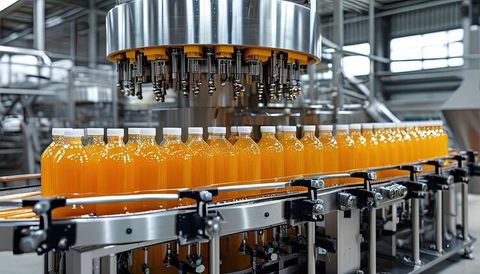
| Filling machines | Dispense products into containers | Bottled drinks, sauces, liquid foods |
| Packaging machines | Form, fill, seal, or wrap packages | Snacks, powders, prepared foods |
| Refrigeration systems | Remove heat and maintain cold conditions | Chilled and frozen products |
| Inspection systems | Identify selected defects or deviations | Packaged foods and containers |
Equipment selection depends on product characteristics, production volume, sanitation requirements, operating conditions, and compatibility with other machinery. A machine designed for dry powders, for example, may not be suitable for handling sticky liquids or fragile solid products.
Recent Updates
Food and beverage manufacturing continues to evolve through automation, digital monitoring, packaging improvements, and resource-management technologies. Across the industry, manufacturers are increasingly examining how equipment data, production records, and integrated control systems can help them understand operating conditions and identify process variations.
Automation and digital production monitoring
Programmable logic controllers, sensors, and supervisory control systems can coordinate equipment and monitor variables such as temperature, pressure, flow rate, filling level, and conveyor speed. Manufacturing execution systems may connect production records with scheduling, inventory information, and quality documentation.
These technologies can help operators identify interruptions and compare actual production conditions with established process parameters. Their usefulness depends on sensor calibration, reliable data, suitable system configuration, and staff understanding of the information being displayed.
Artificial intelligence and machine-learning tools are also being explored for tasks such as equipment fault detection, visual inspection, production forecasting, and process analysis. Their results require evaluation because incomplete data, changing production conditions, or incorrectly configured models can affect performance.
Packaging and material developments
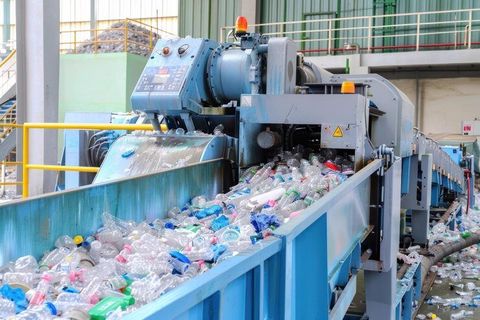
Packaging technology increasingly focuses on material efficiency, product protection, and compatibility with collection or recycling systems. Examples include lightweight containers, packaging made with recycled content where appropriate, and designs that use fewer material combinations.
However, packaging decisions involve trade-offs. A thinner package may reduce material use but still needs adequate strength and barrier properties to protect the product. Packaging changes must also account for food contact, sealing performance, shelf-life requirements, transport conditions, and the capabilities of existing machinery.
Energy, water, and resource management
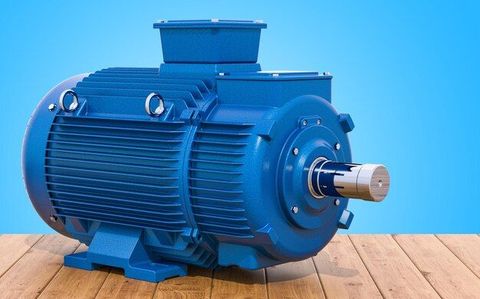
Manufacturers are examining energy use in refrigeration, heating, compressed air, pumping, and cleaning operations. Heat recovery, improved insulation, efficient motors, and process monitoring can help identify opportunities to reduce unnecessary energy use.
Water management is also important, particularly in operations involving washing, ingredient preparation, cooling, and sanitation. Water reuse requires suitable treatment and controls so that reused water does not introduce contamination or compromise product safety.
Laws or Policies
Food and beverage manufacturing is shaped by rules concerning food safety, hygiene, product composition, labeling, packaging materials, and traceability. Requirements vary between jurisdictions and according to the type of product, manufacturing activity, and distribution market.
Many food safety systems use the principles of Hazard Analysis and Critical Control Points, commonly called HACCP. This approach identifies potential biological, chemical, and physical hazards, assesses where controls are needed, and establishes procedures for monitoring and corrective action.
International references include the Codex Alimentarius food hygiene principles and the General Principles of Food Hygiene. These provide guidance for hygienic food handling and preventive food safety practices, but their legal status depends on how individual jurisdictions adopt or apply them.
Equipment hygiene and operational controls
Manufacturing facilities commonly need documented procedures for cleaning, sanitation, pest management, employee hygiene, equipment maintenance, and prevention of cross-contamination. Equipment surfaces that contact food must be appropriate for the intended application and capable of being cleaned effectively.
Packaging materials that contact food may also be subject to requirements governing material composition, migration, labeling, and suitability for particular food types or processing conditions. Temperature-sensitive products may require additional controls during processing, storage, and transport.
In India, the Food Safety and Standards Authority of India establishes food safety requirements under the applicable food safety framework. Relevant provisions may cover licensing or registration, hygiene practices, product standards, labeling, and packaging. The precise obligations depend on the business activity and current applicable rules.
Manufacturers operating across borders may need to meet additional requirements in the destination market. Regulatory details should be checked against current official publications rather than inferred from another manufacturer's practices.
Tools and Resources
Several technical resources help explain food processing, equipment performance, production control, and food safety principles.
Food safety guidance
The Codex Alimentarius website contains international food standards and guidance, including material on food hygiene and HACCP principles. It can help readers understand the preventive controls used in food manufacturing.
The relevant national food safety authority is another important source for current rules on manufacturing facilities, food labeling, packaging, hygiene, and product categories.
Production monitoring tools
Digital production dashboards can display line output, downtime, temperature readings, filling accuracy, and equipment status. These records can help operators compare production performance across shifts and identify recurring interruptions.
Maintenance and quality records
Common manufacturing documents include equipment inspection checklists, cleaning schedules, calibration records, batch production sheets, and packaging inspection logs. A structured record system can help teams identify recurring deviations and document how they were handled.
Packaging and process evaluation
Packaging specifications, equipment manuals, material compatibility documents, and process-validation records help determine whether a packaging line is suitable for a particular product. Relevant factors include container dimensions, sealing conditions, product viscosity, processing temperature, and required storage environment.
FAQs
What equipment is used in food and beverage manufacturing?
Common equipment includes mixers, grinders, conveyors, heat exchangers, pasteurization systems, filling machines, packaging machines, refrigeration units, and inspection systems. The combination depends on the product and the sequence of manufacturing operations.
How does automation improve food production?
Automation can coordinate repetitive operations, maintain selected process settings, record production data, and identify certain deviations. Human oversight remains important for sanitation, equipment maintenance, quality assessment, and responses to abnormal conditions.
What packaging technologies are used in food manufacturing?
Common technologies include filling and sealing machines, form-fill-seal systems, vacuum packaging, modified-atmosphere packaging, labeling equipment, and coding systems. Their suitability depends on product characteristics, storage needs, packaging materials, and food safety requirements.
Why is quality control important in food and beverage production?
Quality control helps manufacturers check product characteristics, monitor processing conditions, and identify deviations. Food safety controls also address hazards that may not be visible, including certain microorganisms, chemical contaminants, and foreign materials.
What regulations affect food and beverage manufacturing?
Requirements may cover food hygiene, hazard control, ingredient standards, labeling, packaging materials, traceability, and facility licensing. The applicable rules depend on the jurisdiction, product category, and manufacturing activity.