Insights of Wire Manufacturing Industry: Machinery, Production, Wire Types and Technology
The wire manufacturing industry produces the conductors and wire-based products used across electrical, electronic, construction, automotive, energy, communication, and industrial applications. Wire can be made from materials such as copper, aluminium, steel, or specialized alloys, with the final structure depending on its intended use.
Context
Wire manufacturing generally begins with metal preparation and continues through processes such as drawing, annealing, stranding, insulation, coating, twisting, testing, and winding. Different products require different combinations of these processes. A simple solid conductor may involve fewer production stages than a flexible multi-strand cable with insulation and protective layers.
The development of wire manufacturing is closely connected with the expansion of electrical systems and industrial production. As electrical equipment became more widespread, manufacturers developed machinery capable of producing conductors with controlled diameter, mechanical properties, electrical resistance, and surface quality.
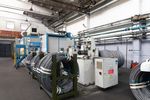
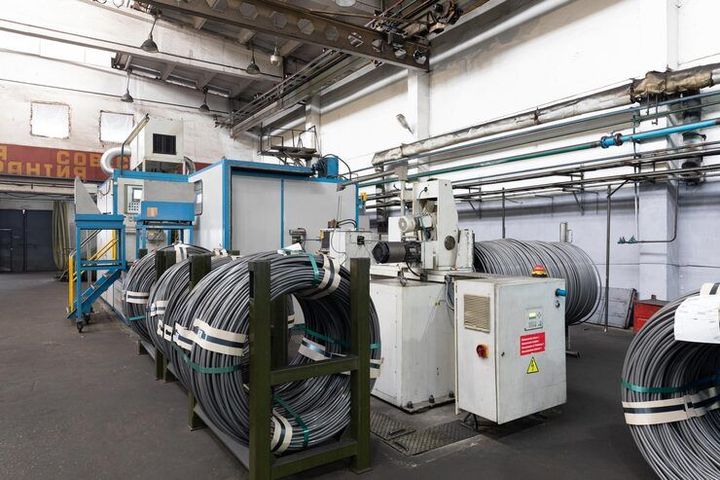
Modern wire manufacturing combines mechanical equipment with electronic controls and measurement systems. Production lines can continuously monitor dimensions, tension, temperature, speed, and other parameters while processing large quantities of material.
How wire production works
A typical production sequence can include several stages:
- Rod preparation: Copper, aluminium, steel, or another suitable material is prepared in an appropriate starting form.
- Wire drawing: The material passes through dies that progressively reduce its diameter.
- Annealing: Controlled heating can restore ductility after mechanical deformation.
- Stranding: Several individual wires may be combined to create a conductor with specific flexibility and construction.
- Insulation: A polymeric material can be applied around the conductor when electrical separation is required.
- Twisting or cabling: Multiple insulated conductors can be arranged into a larger cable structure.
- Testing and winding: Finished material is inspected and wound onto reels or other handling systems.
The exact sequence varies according to the wire type, conductor material, diameter, insulation system, and intended application.
Importance
Wire manufacturing matters because electrical power, signals, data, control systems, vehicles, machines, buildings, and industrial equipment all depend on conductors or wire-based products. The characteristics of the wire influence electrical performance, mechanical strength, flexibility, heat management, and durability within its intended application.
The industry is also adapting to changing requirements in energy infrastructure, electric transportation, renewable-energy systems, industrial automation, and digital infrastructure. These applications can require different combinations of conductivity, flexibility, insulation performance, temperature resistance, and mechanical strength.
Major wire types
Wire types are commonly distinguished by conductor material, construction, insulation, geometry, and intended application.
| Wire type | Typical material | General characteristic | Common applications |
|---|---|---|---|
| Solid wire | Copper or aluminium | Single continuous conductor | Fixed electrical installations |
| Stranded wire | Copper or aluminium | Multiple individual wires | Flexible electrical connections |
| Enamelled wire | Copper or aluminium | Thin insulating enamel coating | Motors, transformers, generators |
| Steel wire | Carbon or alloy steel | High mechanical strength | Ropes, reinforcement, structural applications |
| Communication wire | Copper or optical materials | Designed for signal transmission | Data and communication systems |
| Special-alloy wire | Various alloys | Specific electrical or mechanical properties | Industrial and specialized equipment |
Copper is widely used where electrical conductivity and flexibility are important. Aluminium is also used in many electrical applications because of its combination of conductivity and lower density. Steel wire is commonly associated with mechanical applications where strength is a major consideration.
Machinery used in wire manufacturing
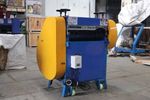
Wire production depends on machinery designed for individual stages of the process. A wire drawing machine reduces conductor diameter by pulling material through one or more dies. Multiple drawing stages may be arranged in sequence when a substantial reduction in diameter is required.
Annealing equipment applies controlled heat to modify the mechanical properties of drawn wire. This process can be integrated into continuous production lines so that drawing and annealing occur as connected operations.
Stranding machines combine individual wires into a defined conductor arrangement. Depending on the construction, machinery can control wire tension, laying pattern, pitch, and line speed.
Other common equipment includes:
- Pay-off systems for feeding incoming material
- Take-up systems for collecting finished wire
- Extrusion lines for applying insulation
- Twisting machines for combining conductors
- Cabling equipment for assembling multiple components
- Rewinding machines for transferring material between reels
- Spark testers for detecting insulation defects
- Diameter measurement systems for dimensional control
- Resistance-testing equipment for electrical verification
The machinery configuration depends on the production requirements rather than following one universal layout.
Recent Updates
Recent developments in the wire manufacturing industry have been influenced by electrification, grid expansion, renewable energy, electric transportation, digital infrastructure, automation, and environmental considerations. Industry discussions in 2026 have also identified artificial intelligence, connected manufacturing, advanced materials, and digitalization as areas receiving increasing attention.
Automation and digital monitoring
Modern production lines increasingly combine mechanical equipment with sensors, programmable controls, data collection, and automated inspection. These technologies can monitor production parameters continuously and help operators identify deviations during manufacturing.
Automated diameter measurement, tension monitoring, temperature control, and surface inspection can reduce reliance on manual observation. Data from production equipment can also be used to identify recurring process variations and support maintenance planning.
Artificial intelligence is being explored for applications such as visual inspection, process analysis, anomaly detection, and production-data interpretation. Its practical usefulness depends on data quality, system design, and appropriate human oversight.
Materials and sustainability
Material efficiency and recycling have become increasingly relevant to wire and cable production. Copper and aluminium can be recovered from discarded electrical products, while manufacturing processes can also focus on reducing material waste.
Environmental assessment is becoming more structured in some parts of the industry. IEC TR 62839-1:2025 establishes product-specific rules for environmental declarations covering communication, data, control, and command wires and cables. The document is intended for life-cycle assessment results used in environmental product declarations.
Developments in wire standards
Technical standards also continue to evolve. IEC 60228:2023 covers conductor sizes, wire configurations, and resistance requirements for various electrical cable conductors, including copper, aluminium, and aluminium-alloy conductors.
Recent revisions have also addressed winding-wire requirements. IEC 60317-0-3:2024 specifies general requirements for enamelled round aluminium winding wires, while a 2026 consolidated edition of IEC 60317-0-1 incorporates updated requirements for enamelled round copper winding wires.
These developments illustrate how wire manufacturing increasingly depends on defined technical characteristics rather than simply producing a particular diameter of metal wire.
Laws or Policies
Wire manufacturing is affected by several layers of rules, including electrical safety requirements, environmental regulations, material restrictions, workplace requirements, product standards, and conformity-assessment procedures. The exact legal framework varies according to the country, product category, intended application, and market in which the wire is placed.
International standards are frequently used as technical references. IEC 60228:2023, for example, specifies nominal conductor cross-sectional areas and requirements related to conductor dimensions, construction, and resistance for covered electrical cable applications.
Environmental rules can also influence the selection of insulation materials, restricted substances, manufacturing processes, and end-of-life handling. Requirements may differ substantially between jurisdictions, so manufacturers generally need to determine which rules apply to the particular product and destination market.
Quality-management frameworks are another part of the manufacturing environment. ISO 9001:2026 defines requirements for establishing, implementing, maintaining, and continually improving a quality-management system. Certification under the standard is not mandatory in itself, although organizations may choose to pursue certification where relevant to their operations or contractual requirements.
Product-specific standards may apply in addition to general quality-management frameworks. For example, IEC standards address particular conductor, winding-wire, connector, and cable applications. The relevant technical standard depends on the type and intended use of the finished product.
Tools and Resources
Several technical resources can help readers understand wire manufacturing, product specifications, and production requirements.
Standards databases
The IEC webstore provides information about international standards covering electrical conductors, winding wires, connectors, cables, and related technologies. Standards documents can help manufacturers and technical readers understand dimensional, testing, material, and performance requirements.
Engineering calculators
Wire-related calculations commonly involve conductor resistance, cross-sectional area, voltage drop, current capacity, mass, and length. These calculations require appropriate material properties and application conditions, so a calculator should be treated as a technical aid rather than a substitute for applicable engineering requirements.
Production monitoring systems
Manufacturing execution systems, programmable controllers, sensor platforms, and industrial data systems can be used to collect information from wire-production equipment. Depending on the production line, collected information may include drawing speed, tension, temperature, diameter, line status, and inspection results.
Testing equipment
Testing resources used in wire production can include:
- Electrical resistance measurement equipment
- Diameter and dimensional gauges
- Tensile-testing equipment
- Insulation resistance testers
- Spark testers
- High-voltage testing equipment where applicable
- Surface inspection systems
- Temperature and environmental testing equipment
The appropriate test depends on the wire construction and applicable technical requirements.
FAQs
What machinery is used in wire manufacturing?
Common machinery includes wire drawing machines, annealing equipment, stranding machines, extrusion lines, twisting and cabling equipment, pay-off and take-up systems, rewinding equipment, and inspection systems. The machinery arrangement varies according to the type of wire being produced.
What are the main types of wire manufactured?
Common categories include solid wire, stranded wire, enamelled winding wire, steel wire, communication wire, and specialized alloy wire. Copper and aluminium are widely used for electrical conductors, while steel and other alloys are used where different mechanical or electrical properties are required.
How does a wire drawing machine work?
A wire drawing machine pulls metal through dies that progressively reduce its diameter. Multiple drawing stages may be used to achieve the required dimensions while controlling tension and production speed. Annealing may be incorporated to adjust the material's mechanical properties.
What technology is changing the wire manufacturing industry?
Automation, digital monitoring, machine vision, data analysis, connected equipment, and artificial intelligence are among the technologies being explored or implemented. These technologies can support dimensional monitoring, defect detection, process analysis, and production-data management.
Which standards apply to wire manufacturing?
The applicable standard depends on the wire type and its intended application. IEC 60228:2023 covers specified conductors for electrical cables and cords, while IEC 60317 standards address particular types of winding wires. Other standards may apply to communication cables, steel wire products, connectors, environmental declarations, or specialized applications.
Conclusion
The wire manufacturing industry combines material processing, precision machinery, electrical testing, insulation technology, and production controls to create products for many industrial and electrical applications. Wire drawing, annealing, stranding, extrusion, twisting, and inspection are among the major stages used across different production lines. Recent developments are placing greater emphasis on automation, digital monitoring, electrification, material efficiency, and updated technical standards. The applicable manufacturing process and regulatory requirements ultimately depend on the material, construction, dimensions, and intended application of the wire.