AI-Powered Digital Signage Explained: Screens That Change Content Based on Who’s Watching
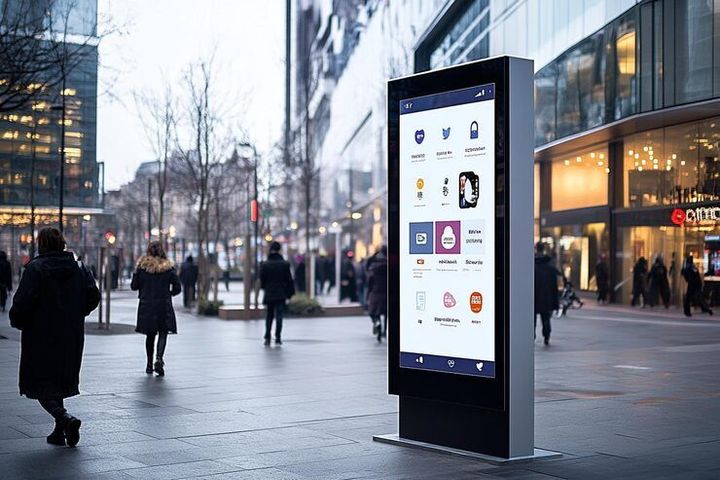
AI-powered digital signage combines electronic displays, content management software, sensors, and artificial intelligence to change what appears on a screen according to available information about the viewing situation.
Context
Digital signage has developed from static printed notices and basic electronic displays into networked systems that can manage content across multiple screens. Earlier digital signage platforms generally relied on predetermined playlists. Newer systems can introduce automated decision-making, allowing content to respond to changing conditions.
The phrase "who’s watching" can be misleading if interpreted as personal identification. In many implementations, AI does not need to identify a particular individual. A camera or sensor may instead estimate broad characteristics such as the number of people present, approximate age group, viewing direction, or dwell time. Depending on the system, these signals can be processed without creating a personal identity profile.
How AI-powered digital signage works
A typical system contains several connected components:
Display: A commercial screen or other digital panel presents visual content.
Media player: A computer or dedicated device delivers content to the display.
Content management platform: Software organizes images, videos, messages, schedules, and screen groups.
Sensors or cameras: These can provide information about audience presence or environmental conditions.
AI software: Algorithms analyze available signals and determine which content rule or content category should apply.
Network connection: A network can allow content and configuration information to move between the central platform and individual displays.
The exact configuration varies by application. Some systems use only contextual information such as time and location, while others incorporate audience analytics or interactive sensors.
Types of content adaptation
AI-powered digital signage can respond to several types of conditions. Time-based adaptation can change messages according to morning, afternoon, evening, or another schedule. Location-based adaptation can display different information on screens positioned in different areas.
Audience-based adaptation can use non-identifying estimates to select content categories. For example, a system could detect that several people are nearby and switch from a low-priority background message to content designed for active viewing.
| Input | Possible signage response |
|---|---|
| Time of day | Change scheduled content |
| Number of viewers | Adjust content priority |
| Estimated audience characteristics | Select an appropriate content category |
| Dwell time | Change the sequence or presentation |
| Weather information | Adjust contextual messaging |
| Location | Display area-specific information |
| Interaction | Respond to user selections or movement |
Importance
AI-powered digital signage matters because people encounter digital displays in many environments, including transportation areas, retail environments, workplaces, educational facilities, entertainment venues, and public spaces. A screen that responds to its surroundings can provide information that is more relevant to the immediate context than a fixed playlist.
For organizations managing many displays, automated content selection can also reduce the need to manually change every screen whenever circumstances change. A central platform may apply rules to groups of displays while allowing individual screens to retain their own settings.
Improving contextual communication
Traditional signage often depends on a predetermined sequence. If circumstances change, the content may remain unchanged until someone modifies the schedule.
AI-enabled systems can introduce another layer of decision-making. A screen may select from approved content according to factors such as:
Current time
Screen location
Audience presence
Environmental information
Queue or occupancy conditions
Previously displayed content
Interaction with the display
This approach can be useful when information changes frequently. However, automated selection still depends on the quality of the underlying data and the rules established by the system.
Privacy and transparency
Audience-aware signage also introduces privacy considerations. A camera capable of detecting people does not necessarily need to identify them, but the distinction between anonymous analysis and personal identification depends on the technology and configuration.
Systems that collect, retain, transmit, or analyze identifiable information may create additional privacy obligations. Organizations therefore need to understand what information is being processed, why it is collected, how long it is retained, and who can access it.
Recent Updates
From 2024 through 2026, AI-powered digital signage has increasingly incorporated generative AI, computer vision, cloud management, and real-time data integration. These technologies have expanded the range of content that can be created, categorized, scheduled, and adapted automatically.
One noticeable trend is the combination of digital signage with computer vision. Instead of relying only on a timetable, a system can interpret visual conditions around a screen and use those observations as inputs for content selection.
Generative AI and content workflows
Generative AI can assist with tasks such as creating draft text, adapting messages to different screen dimensions, generating content variations, and organizing large libraries of media. Human review can remain part of the workflow because automatically generated content may contain factual, contextual, or formatting errors.
Another development is the integration of external data. Digital signage platforms can connect with information such as weather conditions, transportation information, calendars, inventory systems, or building data. The screen can then select content based on current conditions rather than relying solely on fixed schedules.
Edge processing
Some AI-powered signage systems process information locally on or near the display rather than transmitting all camera or sensor data to a remote platform. This approach is known as edge processing.
Local processing can reduce the amount of raw information that needs to travel across a network. It does not, by itself, determine whether a system complies with privacy requirements, because the overall data practices and applicable rules still matter.
More emphasis on validation
As AI becomes more involved in signage decisions, organizations are also paying greater attention to content accuracy, system reliability, data governance, and human oversight. A screen that changes automatically needs clearly defined rules so that unexpected data does not result in confusing or inappropriate information.
Laws or Policies
AI-powered digital signage can be affected by several areas of law and organizational policy, particularly when cameras, audience analytics, personal information, or automated decision-making are involved. The exact requirements depend on the jurisdiction, the technology used, the type of information processed, and the purpose of processing.
Privacy rules may apply when a system collects or processes information that can identify individuals. Requirements can relate to transparency, lawful processing, data minimization, retention, access controls, and security.
In India, the Digital Personal Data Protection Act, 2023 establishes a framework concerning the processing of digital personal data. Its relevance to AI-powered signage depends on whether the system processes personal data and how the organization operates the system. The Digital Personal Data Protection Rules have also been part of the evolving regulatory framework.
Other jurisdictions have their own privacy and AI-related requirements. A system that only counts people without identifying or retaining them can raise different legal questions from one that stores identifiable images or links audience observations to individual profiles.
Organizations deploying AI-powered digital signage should therefore distinguish between anonymous audience measurement and systems involving identifiable personal data. Legal obligations should be assessed according to the actual technology and data practices rather than simply the presence of the word "AI."
Tools and Resources
Several categories of tools can support the planning, operation, and evaluation of AI-powered digital signage.
Content management platforms
Digital signage content management platforms provide functions for organizing media, scheduling content, grouping screens, monitoring playback, and managing permissions. Cloud-based platforms can allow multiple displays to be managed from a central interface.
Audience analytics tools
Computer-vision analytics can estimate information such as viewer count, dwell time, or approximate audience characteristics. The capabilities and privacy implications vary considerably between systems.
Digital signage design tools
Design software can help create layouts for landscape displays, portrait screens, video walls, kiosks, and interactive panels. Templates can help maintain consistent dimensions and visual structure across different displays.
Data and integration tools
Application programming interfaces and data connectors can allow signage systems to receive information from external platforms. Examples include weather data, scheduling systems, building information, and transportation feeds.
Evaluation checklists
A basic evaluation checklist can examine:
Screen resolution and viewing distance
Content dimensions and file formats
Network requirements
Playback reliability
Data collection practices
Privacy controls
User permissions
Content approval processes
Hardware maintenance requirements
Emergency content procedures
These considerations help separate the display hardware from the software, data, and governance requirements surrounding an AI-enabled signage system.
FAQs
What is AI-powered digital signage?
AI-powered digital signage is a digital display system that uses artificial intelligence or related automated analysis to select, organize, or adapt content according to available contextual information. The system may use time, location, audience presence, environmental data, or interaction signals.
How does AI digital signage know who is watching?
AI digital signage does not necessarily identify individual viewers. Some systems use cameras or sensors to estimate factors such as viewer count, approximate audience characteristics, or attention patterns. The specific method depends on the hardware, software, and configuration.
Can AI-powered digital signage recognize individual people?
Some computer-vision technologies can perform identification, but audience-aware signage does not inherently require individual identification. A system can be designed around anonymous measurements such as presence, approximate audience size, or viewing direction.
Is AI-powered digital signage affected by privacy laws?
It can be, particularly when personal data is collected, processed, stored, or linked to identifiable individuals. The applicable requirements depend on the jurisdiction and the actual data practices of the signage system.
What are the main uses of AI-powered digital signage?
Common applications include contextual information displays, public information screens, workplace communications, interactive kiosks, transportation information, venue displays, and audience-aware content scheduling. The specific use depends on the environment and the information available to the system.