Construction Materials Explored: Cement, Concrete, Steel, Bricks, Wood and other Building Material
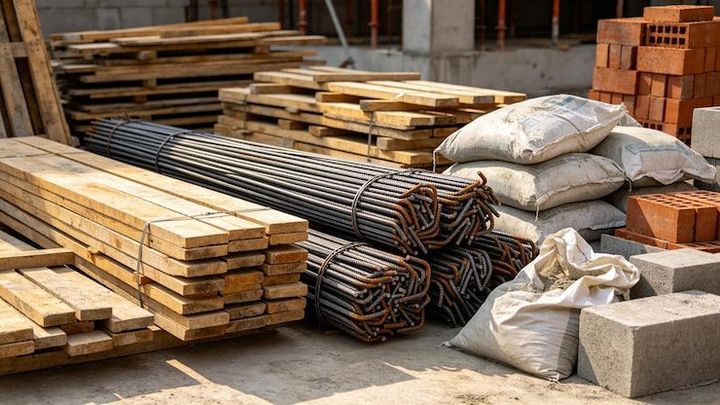
Construction materials are the physical substances used to create buildings, roads, bridges, foundations, walls, roofs, floors, and other structures. Common examples include cement, concrete, steel, bricks, wood, stone, glass, gypsum, aggregates, and insulation materials. Each material has different physical characteristics, making it suitable for particular parts of a structure.
Context
The history of construction materials extends from naturally available earth, stone, timber, and plant-based materials to manufactured products such as reinforced concrete, structural steel, engineered wood, glass, and composite materials. Modern construction commonly combines several materials because no single material provides every property required for a complete building.
Cement and concrete are often discussed together, but they are not the same material. Cement is a binding ingredient that reacts with water, while concrete is a mixture generally containing cement, water, fine aggregate, and coarse aggregate. Steel is frequently incorporated into concrete structures because it can provide reinforcement where structural design requires it.
Bricks, blocks, wood, and stone can be used for walls, partitions, finishes, structural elements, or architectural features, depending on the design. Other materials, including glass, gypsum products, insulation, polymers, and waterproofing materials, contribute to functions such as enclosure, thermal control, moisture protection, and interior finishing.
Main categories of construction materials
Construction materials can be grouped according to their composition and function. A simplified classification is shown below.
| Material | Common role | General characteristics |
|---|---|---|
| Cement | Binder in concrete and mortar | Sets and hardens when combined with water |
| Concrete | Foundations, frames, slabs and other elements | Composite material with compressive strength |
| Steel | Structural frames and reinforcement | High strength and useful for structural applications |
| Bricks | Walls and masonry | Durable masonry units with varied properties |
| Wood | Frames, floors, roofs and finishes | Renewable material when responsibly sourced |
| Stone | Walls, foundations, cladding and finishes | Natural material with varied density and strength |
| Glass | Windows, façades and partitions | Allows light transmission and enclosure |
| Gypsum products | Interior walls and ceilings | Used for lightweight interior construction |
| Insulation | Walls, roofs and floors | Helps control heat transfer |
Importance
The selection of construction materials affects how a building is designed, constructed, occupied, maintained, and eventually renovated or dismantled. Material properties influence structural behavior, thermal performance, moisture resistance, fire performance, durability, appearance, and environmental impact.
Material selection is therefore not simply a matter of choosing one substance over another. Designers and engineers generally consider the function of each building element, environmental conditions, structural requirements, construction methods, and applicable technical requirements.
Why cement and concrete matter
Cement is a binding material used in concrete, mortar, grout, and other construction products. Concrete combines cement with aggregates and water, and its properties can be modified through mix proportions and approved additives.
Concrete is widely used for foundations, columns, beams, slabs, pavements, retaining structures, and other applications. Its performance depends on factors such as mixture composition, placement, compaction, curing, exposure conditions, and structural design.
The role of steel
Steel is used in structural frames, reinforcement bars, roof systems, connections, fasteners, and other building components. Its mechanical properties allow it to perform in applications where substantial structural loads need to be carried.
Steel can also be combined with concrete in reinforced or composite construction. The two materials behave differently under various types of loading, so their use together requires appropriate structural design and detailing.
Bricks, blocks and masonry
Bricks and masonry blocks are used extensively for walls, partitions, façades, and other building components. Their characteristics vary according to the raw materials, manufacturing process, dimensions, density, and intended application.
Masonry construction also depends on mortar, joint design, workmanship, moisture management, and structural requirements. Different masonry units can provide different levels of thermal, acoustic, and structural performance.
Wood and engineered timber
Wood is a naturally occurring construction material used in framing, floors, roofs, doors, furniture, finishes, and architectural elements. Its properties vary according to species, moisture content, grain direction, treatment, and processing.
Engineered wood products are manufactured by bonding or mechanically assembling wood components into products with more controlled dimensions and properties. Examples include plywood, oriented strand board, laminated veneer lumber, and cross-laminated timber.
Proper moisture control is particularly important because prolonged exposure to moisture can affect wood and contribute to biological deterioration.
Recent Updates
From 2024 through 2026, construction material discussions have increasingly focused on material efficiency, lower-emission production, reuse, recycling, and whole-life assessment. International reports have continued to identify cement and steel among materials associated with substantial embodied emissions in the built environment.
Embodied emissions refer broadly to emissions associated with processes such as extracting raw materials, manufacturing products, transporting them, constructing buildings, and eventually processing or disposing of materials. This has increased interest in evaluating a material over its complete life rather than considering only its performance after installation.
Lower-emission material development
Research and industrial development are exploring ways to reduce the environmental impact of conventional materials. Areas of attention include alternative cementitious materials, improved production processes, recycled steel, material-efficient structural design, lower-carbon concrete mixtures, and greater use of renewable or bio-based materials.
The construction sector is also examining materials such as engineered timber, bamboo, recycled aggregates, and other alternatives. Their suitability depends on structural requirements, climate, durability, availability, and applicable technical standards rather than environmental characteristics alone.
Circular construction
Reuse and recycling are becoming more prominent in discussions about construction materials. Circular approaches can include designing buildings for adaptation, recovering components during renovation or demolition, reusing materials, and reducing unnecessary material consumption.
Recent UNEP reporting also identifies material reuse, modular construction, and recycled inputs as areas receiving increasing attention within the built environment.
These developments do not mean conventional materials are disappearing. Cement, concrete, steel, bricks, and other established materials remain important, while their production, specification, reuse, and environmental performance are being examined more closely.
Laws or Policies
Construction materials are commonly affected by building regulations, product standards, structural design codes, fire-safety requirements, environmental rules, and local planning requirements. The exact requirements vary by jurisdiction, building type, material, location, and intended use.
Building codes commonly address subjects such as structural safety, fire resistance, material performance, accessibility, energy efficiency, moisture protection, and construction practices. Product standards can define characteristics, testing methods, dimensions, classification systems, or conformity requirements for particular materials.
For example, national and regional standards may specify requirements for cement, concrete, reinforcing steel, masonry units, timber, glass, insulation, and other products. A construction project may also have additional requirements relating to seismic conditions, wind loads, fire exposure, or environmental performance.
Internationally, organizations such as ISO and other standards bodies publish technical standards covering materials, testing, environmental assessment, and construction processes. These documents are technical references rather than universal building permissions, because local authorities determine which requirements apply to a particular project.
Because regulations change and differ between locations, this article should not be treated as legal, engineering, architectural, or regulatory advice. Project-specific requirements should be checked against the applicable current rules and qualified professionals where necessary.
Tools and Resources
Several resources can help readers understand construction materials and compare their characteristics without relying on promotional claims.
Material datasheets
A material datasheet can provide information such as dimensions, density, strength classifications, moisture characteristics, thermal properties, handling requirements, and applicable standards. The exact information varies according to the material and its intended application.
Construction calculators
Digital calculators can help with basic quantity estimates for concrete volume, wall area, floor area, aggregate quantities, or material dimensions. These calculations are useful for understanding quantities, but structural design calculations require appropriate engineering methods.
Building codes and standards databases
Official standards databases provide information about technical requirements, testing procedures, terminology, and construction practices. They are particularly useful when determining whether a particular material has a relevant specification or code reference.
Environmental assessment tools
Life-cycle assessment tools can examine environmental impacts associated with materials and buildings across different stages. Environmental product declarations can also provide standardized environmental information for particular products when an applicable declaration exists.
Material comparison checklist
A simple comparison can consider:
- Structural requirements
- Density and weight
- Moisture exposure
- Thermal performance
- Fire characteristics
- Expected durability
- Installation method
- Maintenance requirements
- Reuse and recycling potential
- Environmental impacts across the material life cycle
FAQs
What are the main construction materials used in buildings?
Common construction materials include cement, concrete, steel, bricks, blocks, wood, stone, glass, gypsum products, aggregates, insulation, and various finishing materials. Their roles differ according to structural, environmental, architectural, and functional requirements.
What is the difference between cement and concrete?
Cement is a binding ingredient, while concrete is a composite mixture that generally contains cement, water, aggregates, and sometimes other approved components. Cement helps bind the ingredients together as the concrete hardens.
Why is steel used with concrete?
Steel reinforcement can provide tensile resistance in reinforced concrete structures, while concrete provides substantial resistance to compression. Their combined behavior allows engineers to design structural elements for different loading conditions.
Is wood a construction material?
Yes. Wood can be used for structural framing, floors, roofs, doors, finishes, and other building components. Engineered wood products are also used where manufactured dimensions and controlled properties are required.
What are sustainable construction materials?
The term can refer to materials or material systems that may reduce environmental impacts through factors such as responsible sourcing, lower embodied emissions, efficient resource use, durability, reuse, or recycling. No material has the same environmental profile in every application, so assessment depends on the complete building context.
Conclusion
Construction materials include cement, concrete, steel, bricks, wood, stone, glass, insulation, gypsum products, and many other materials used for different building functions. Their selection involves considerations such as structural performance, durability, moisture, fire behavior, thermal properties, construction methods, and environmental impact. Recent developments have increased attention toward lower-emission production, recycled inputs, material efficiency, reuse, and whole-life assessment. Applicable building codes and material standards remain important references because technical requirements vary according to location and project conditions.