Explore Precision Metal Stamping Equipment With Automated Production and Process Insights
Precision metal stamping equipment is used to shape metal sheets, strips, and coils into specific components through controlled forming operations. The process combines presses, dies, feeding systems, sensors, and automation technologies to create repeatable parts for industries such as automotive, electronics, appliances, construction, medical equipment, and industrial machinery.
Modern precision metal stamping equipment can integrate automated material handling and digital monitoring to improve production consistency while reducing manual intervention.
Understanding metal stamping equipment is useful for anyone interested in modern manufacturing, industrial automation, or production engineering. The technology has developed from mechanically operated presses into connected production systems capable of monitoring operating conditions, controlling material movement, and identifying process variations.
Context
What Precision Metal Stamping Means
Metal stamping is a manufacturing process in which a sheet or strip of metal is placed between specially shaped tooling and formed under pressure. Depending on the tooling arrangement, the operation can produce bends, holes, embossed features, drawn shapes, or separated components.
A stamping press supplies the mechanical force required for the operation. The die determines the shape and dimensions of the resulting component. Depending on production requirements, a process can use individual stamping operations or several forming stages within one production sequence.
Common operations include:
- Blanking, which separates a shaped piece from sheet material
- Punching, which creates holes or openings
- Bending, which changes the angle or profile of a material
- Drawing, which forms deeper three-dimensional shapes
- Embossing, which creates raised or recessed features
- Coining, which applies controlled pressure to refine specific areas
Main Equipment Components
A precision metal stamping system usually contains several interconnected elements. The press generates force, while the die controls the material-forming geometry. Feeders move material into the working area at controlled intervals.
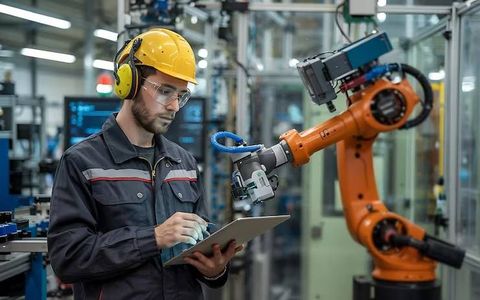
Automation can include coil handling equipment, straighteners, robotic transfer systems, sensors, vision inspection equipment, programmable controllers, and production monitoring software. These components allow the production line to operate as a coordinated system rather than as a collection of separate machines.
Common Press Types
Mechanical presses use rotating mechanisms to generate rapid and repeatable movement. Hydraulic presses use fluid pressure and can provide controlled force throughout portions of the stroke. Servo presses use electronically controlled motion profiles, allowing manufacturers to adjust speed, position, and movement patterns for particular forming operations.
The appropriate press configuration depends on material thickness, component geometry, production volume, dimensional requirements, and the type of forming operation.
Importance
Supporting Consistent Component Production
Precision metal stamping equipment is important because many manufactured products contain components that must maintain consistent dimensions. Small variations in holes, bends, edges, or formed surfaces can affect how parts fit together during later assembly.
Automated feeding and controlled press movement can reduce variation caused by inconsistent manual handling. Sensors can also monitor selected production conditions and identify deviations before they affect a larger quantity of components.
Reducing Manual Material Handling
Material handling can involve repetitive movements when sheets or coils need to be positioned for successive operations. Automated feeders, conveyors, and robotic systems can transfer materials between production stages.
This can change the role of human workers from repeated material movement toward equipment monitoring, setup, inspection, maintenance, and process control. Appropriate guarding and safety procedures remain essential around automated machinery.
Applications Across Industries
Precision metal stamping is used for many types of components. Examples include electrical terminals, brackets, clips, structural parts, housings, connectors, panels, and small mechanical components.
The following table shows common applications and related production requirements:
| Industry | Typical Components | Common Process Requirements |
|---|---|---|
| Automotive | Brackets, clips, structural parts | Repeatability and dimensional control |
| Electronics | Terminals, contacts, shields | Fine features and accurate forming |
| Appliances | Panels, brackets, internal parts | Consistent shape and surface quality |
| Construction | Fittings, brackets, hardware | Material strength and durability |
| Industrial Machinery | Frames, covers, mounting parts | Controlled dimensions and robust forming |
| Medical Equipment | Small metal components | Controlled production and inspection |
Addressing Material Efficiency
Material utilization is another important consideration. Poorly planned layouts can create unnecessary scrap when multiple shapes are cut from a sheet or coil.
Modern software can help engineers analyze nesting arrangements, feed direction, and material usage before production begins. Better planning can help manufacturers understand material requirements and production characteristics before tooling is placed into operation.
Recent Updates
Growth of Automated Stamping Systems
Recent developments in precision metal stamping equipment have focused on automation, connectivity, and process monitoring. Production systems increasingly combine presses with automated feeders, robotic handling, sensors, and digital controllers.
These technologies allow multiple production stages to communicate through integrated control systems. Operators can observe selected machine conditions and production information from centralized interfaces.
Servo Press Technology
Servo-driven presses have received increasing attention because their motion can be electronically controlled. Instead of relying on one fixed movement pattern, servo systems can adjust portions of the press cycle according to the forming process.
This flexibility can be useful when working with materials that require controlled forming speeds. Servo technology can also support changes between different production programs when the equipment configuration permits it.
Sensor-Based Process Monitoring
Sensors are increasingly used to monitor factors such as press force, position, vibration, temperature, material movement, and tooling conditions. Data from these sensors can help identify unusual process behavior.
When integrated with production software, sensor information can support trend analysis and maintenance planning. The objective is not simply to collect data but to make production conditions easier to observe and understand.
Vision Inspection and Digital Quality Control
Camera-based inspection systems are becoming more common in automated production environments. These systems can examine selected component characteristics such as shape, orientation, holes, edges, or visible defects.
Artificial intelligence and machine learning techniques can also be incorporated into some inspection systems. Their effectiveness depends on image quality, training data, lighting conditions, component variation, and system configuration.
Connected Manufacturing
Industrial connectivity is another current development. Modern stamping lines may connect programmable logic controllers, sensors, production software, and manufacturing execution systems.
This creates opportunities for production records to be collected digitally. Information can include cycle counts, machine conditions, downtime events, inspection results, and production parameters.
Laws or Policies
Machinery Safety Requirements
Precision metal stamping equipment is subject to machinery safety requirements in many jurisdictions. Regulations commonly address machine guarding, emergency stopping systems, electrical safety, operator access, maintenance procedures, and workplace risk management.
The exact requirements vary according to the country, industry, equipment configuration, and intended use. Manufacturers and facility operators generally need to identify the regulations applicable to their operating environment.
Worker Protection
Stamping presses can involve significant mechanical force and moving components. Safety measures may include physical guards, interlocking systems, emergency controls, safe operating procedures, training, and lockout procedures during maintenance.
Automated equipment does not remove the need for safety controls. Robots, feeders, conveyors, and presses can create different hazards when operating together, so the complete production cell should be considered during risk assessment.
Environmental Considerations
Metal stamping can generate scrap material, lubricants, noise, and energy demand. Environmental rules may regulate waste handling, industrial emissions, chemical management, and disposal practices depending on the location.
Manufacturers increasingly track material utilization and energy consumption as part of broader production management. Recycling metal scrap can also be incorporated into material management programs where appropriate.
Tools and Resources
Design and Simulation Software
Computer-aided design software is commonly used to develop component geometry and stamping dies. Simulation tools can help engineers examine material deformation, forming behavior, potential thinning, and other process characteristics before physical production.
These tools are particularly useful for complex components because design changes can be evaluated digitally before tooling is manufactured.
Production Monitoring Platforms
Manufacturing monitoring platforms can collect information from connected equipment. Typical information includes:
- Press cycle counts
- Production quantities
- Machine status
- Downtime events
- Sensor readings
- Inspection results
- Maintenance records
The usefulness of these systems depends on sensor configuration, data quality, system integration, and how production teams interpret the information.
Measurement Equipment
Precision measurement tools can verify dimensions after stamping. Depending on component requirements, manufacturers may use calipers, micrometers, gauges, coordinate measuring machines, optical measurement systems, and surface inspection equipment.
Measurement methods should correspond to the dimensional tolerances and characteristics defined for each component.
Maintenance and Process Templates
Digital maintenance schedules, inspection checklists, tooling records, setup sheets, and production parameter templates can help organize recurring activities. These resources create structured records that can be reviewed when process conditions change.
FAQs
What is precision metal stamping equipment?
Precision metal stamping equipment includes presses, dies, feeders, sensors, controllers, and related systems used to form metal sheets or coils into controlled component shapes. Automation can be added for material movement, inspection, and process monitoring.
How does automated metal stamping work?
Automated metal stamping uses equipment such as feeders, robotic handlers, sensors, and programmable controllers to coordinate material movement and press operations. Depending on the production line, inspection systems can also check selected component characteristics.
What types of presses are used in precision metal stamping?
Common types include mechanical, hydraulic, and servo presses. Their characteristics differ in areas such as movement control, operating speed, force behavior, and suitability for particular forming processes.
Why are sensors used in metal stamping equipment?
Sensors can monitor conditions such as force, position, vibration, temperature, and material movement. The resulting information can help production teams identify changes in operating conditions and investigate process variations.
What industries use precision metal stamping?
Precision metal stamping is used in automotive, electronics, appliances, construction, medical equipment, industrial machinery, and other manufacturing sectors. The exact process depends on the material, component geometry, tolerance requirements, and production volume.
Conclusion
Precision metal stamping equipment combines forming presses, dies, material handling systems, sensors, inspection technologies, and digital controls to produce metal components with controlled characteristics. Automation is increasingly connecting these elements into integrated production environments that can monitor equipment conditions and production data. Recent developments include servo press technology, sensor-based monitoring, machine vision, and connected manufacturing systems. Safety regulations, worker protection requirements, environmental considerations, and measurement practices remain important parts of modern stamping operations.