Explore Industrial Screws With Precision Fastening and Engineering Details
Industrial screws are mechanical fasteners designed to join, secure, position, or adjust components in machinery, construction systems, electronic equipment, and manufacturing assemblies.
They generally have a threaded body that engages with a matching thread or material, allowing components to remain connected under different operating conditions. Industrial screws are manufactured in various sizes, shapes, materials, and thread configurations to accommodate different engineering requirements.
The development of screw fastening is closely connected to the history of mechanical engineering. Early threaded mechanisms helped transform rotational movement into controlled linear movement, making them useful in presses, lifting devices, and precision instruments. As manufacturing technologies developed, screws became standardized components used in equipment ranging from household appliances to heavy industrial machinery.
Industrial screws are distinct from bolts in some applications, although the terms sometimes overlap. Screws may fasten directly into threaded holes or materials, while bolts commonly work with nuts to hold components together. However, the distinction depends on the design, industry, and applicable technical standards.
How Industrial Screws Work
A screw converts rotational force into axial movement or clamping force. When a screw turns inside a matching thread, its helical shape moves the fastener forward, drawing components together or positioning a machine element.
The performance of this mechanism depends on several characteristics, including thread pitch, diameter, material strength, surface condition, and installation torque. Correctly matched components help distribute loads and reduce the possibility of loosening, thread damage, or excessive deformation.
Common Types of Industrial Screws
Different screw designs address different fastening requirements. Common categories include:
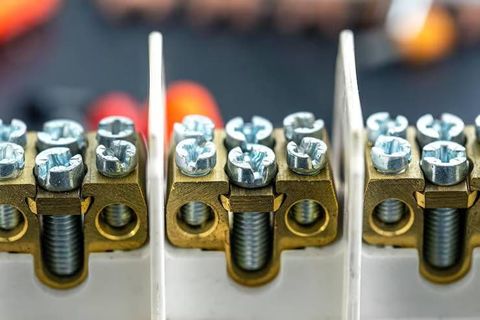
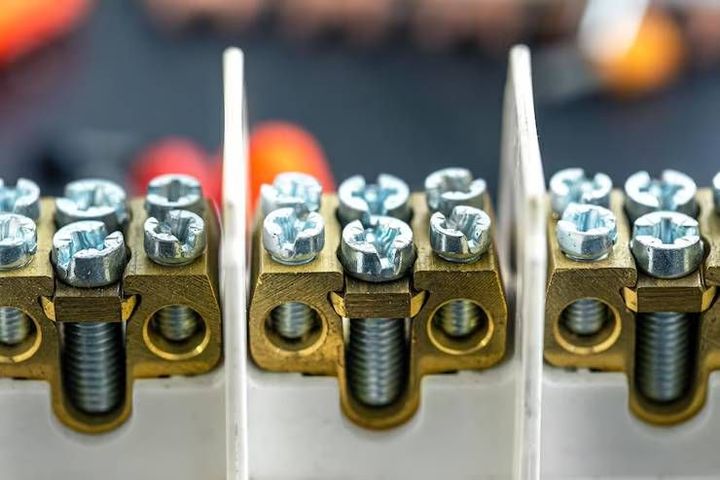
Machine screws: Used with threaded holes or nuts in machinery, electrical equipment, and metal assemblies.
Self-tapping screws: Form or cut threads in suitable materials during installation.
Set screws: Secure components such as gears, pulleys, or collars against shafts.
Wood screws: Feature thread designs suited to timber and related materials.
Socket-head screws: Use an internal hexagonal drive that supports installation in compact spaces.
Self-drilling screws: Incorporate a drilling point for particular sheet-metal and structural applications.
Lead screws: Convert rotary movement into linear motion in positioning systems and machine tools.
Each type has specific dimensional and load limitations. Selecting a screw requires understanding the materials being joined, the expected forces, and the surrounding operating environment.
Importance
Industrial screws play an essential role in manufacturing, infrastructure, transportation, electronics, and equipment maintenance. They allow assemblies to be constructed from separate components, inspected when necessary, and disassembled for repair or replacement. This flexibility is particularly useful for equipment that requires regular inspection or adjustment.
Fastening quality also influences structural stability and machine performance. An incorrectly selected screw can loosen under vibration, corrode in humid conditions, damage softer materials, or fail under repeated loading. Such problems can interrupt production, increase maintenance requirements, and create safety concerns.
Industries That Use Precision Fastening
Industrial screws appear in numerous applications across different sectors.
Manufacturing: Machine enclosures, production lines, fixtures, robotic equipment, and tooling systems.
Construction: Metal frameworks, building components, timber assemblies, and mechanical installations.
Automotive engineering: Interior assemblies, engine accessories, brackets, and electronic modules.
Electronics: Circuit-board supports, device housings, control panels, and compact instruments.
Medical equipment manufacturing: Equipment housings, adjustable mechanisms, and precision assemblies, subject to applicable material and cleanliness requirements.
Renewable energy: Mounting systems, electrical enclosures, and selected components in wind and solar installations.
The required fastening properties vary considerably between these applications. A screw used inside a small electronic enclosure may prioritize compact dimensions, while an industrial machine fastener may require fatigue resistance, controlled preload, and protection against environmental exposure.
Factors That Affect Fastening Performance
Several engineering factors determine whether an industrial screw performs as intended.
Material compatibility matters because different metals and polymers respond differently to pressure, temperature, and chemical exposure. Stainless steel may be appropriate for many corrosive environments, while alloy steel may be selected for applications requiring particular strength characteristics.
Thread geometry affects engagement, load distribution, and installation behavior. Thread pitch refers to the distance between corresponding points on adjacent threads. Fine and coarse threads have different characteristics, and neither is suitable for every application.
Installation torque is the rotational force applied during tightening. Excessive torque can stretch or break a fastener, damage threads, or deform the connected material. Insufficient tightening can allow movement between components.
Environmental conditions also matter. Moisture, vibration, temperature changes, dust, and chemical exposure can influence fastening reliability over time.
Industrial Screw Characteristics at a Glance
Characteristic | Common options | Engineering purpose |
|---|---|---|
Material | Carbon steel, alloy steel, stainless steel, brass | Strength, corrosion resistance, and compatibility |
Drive type | Slotted, Phillips, Torx, hex socket | Tool engagement and installation access |
Head design | Flat, pan, socket, countersunk | Clearance, seating, and load distribution |
Thread type | Metric, unified, coarse, fine | Compatibility and engagement |
Surface treatment | Zinc plating, oxide coatings, specialized finishes | Corrosion protection or surface performance |
Screw function | Machine, tapping, set, lead | Joining, positioning, or motion conversion |
These characteristics are considered together rather than independently. A suitable combination depends on the assembly design, operating loads, manufacturing process, and maintenance requirements.
Recent Updates
Industrial fastening technology continues to evolve alongside automation, digital manufacturing, materials engineering, and quality-control systems. Recent developments generally focus on dimensional consistency, production traceability, reduced assembly errors, and improved performance in demanding environments.
Automation and Digital Manufacturing
Automated assembly systems increasingly use programmable screwdriving equipment to control rotational speed, tightening torque, and fastening sequences. Some systems also monitor the torque-angle relationship, helping identify unusual tightening patterns that may indicate a damaged thread, missing component, or incorrect assembly.
Digital manufacturing systems can associate fastening records with individual assemblies or production batches. This information helps manufacturers investigate quality issues and understand whether fastening procedures remain consistent across production runs.
Advanced Materials and Protective Coatings
Material selection continues to reflect the requirements of particular applications. Stainless steel, engineered alloys, and specialized coatings are used where corrosion resistance, strength, weight, or environmental exposure are important considerations.
Coating selection requires attention to more than appearance. Surface treatments can influence friction, tightening torque, electrical conductivity, and dimensional fit. Compatibility with the base material and surrounding components is therefore important.
Precision Inspection and Traceability
Manufacturers increasingly use optical measurement equipment, automated inspection systems, and digital documentation to assess screw dimensions and production quality. These methods can help identify variations in thread geometry, head dimensions, coating coverage, and other measurable characteristics.
Traceability is also relevant in industries where fastening failures could affect operational safety. Material certificates, batch identification, inspection records, and controlled assembly procedures can support investigations and maintenance planning.
These developments do not eliminate the need for engineering assessment. Fastener performance still depends on suitable design, verified specifications, correct installation, and operating conditions.
Laws or Policies
Industrial screws are affected by technical standards, product-safety requirements, workplace rules, and material restrictions. The exact requirements depend on the country, intended application, industry, and whether the fastener forms part of a regulated product or structure.
Technical Standards and Dimensional Compatibility
Standards organizations publish specifications covering screw dimensions, thread profiles, mechanical properties, testing methods, and identification systems. ISO standards are widely used internationally, while organizations such as ASTM and other national standards bodies publish additional requirements for particular materials and applications.
Metric thread systems are common in international manufacturing. However, metric and inch-based thread systems are not automatically interchangeable, even when their nominal diameters appear similar. Engineers must verify thread pitch, tolerance, strength class, and other relevant specifications before assembly.
Product Safety and Material Requirements
Fasteners incorporated into machinery, vehicles, electrical equipment, and structural assemblies may need to comply with applicable product-specific regulations. Manufacturers and engineering teams should determine which requirements apply to the complete product rather than assuming that one general screw specification covers every use.
Material and coating requirements can also affect compliance. Certain applications may restrict particular substances or require documented mechanical properties, corrosion performance, or material composition.
Workplace and Quality Procedures
Industrial facilities commonly establish procedures for fastening operations, tool calibration, inspection, and maintenance. These procedures help reduce assembly errors and provide consistent records of work performed.
Relevant requirements may include machine-safety rules, workplace risk assessments, quality-management systems, and sector-specific technical codes. Compliance depends on the actual application and jurisdiction, so specifications should be checked against the current requirements governing the equipment or structure.
Tools and Resources
Industrial screw selection involves identifying compatible dimensions, understanding mechanical requirements, and verifying that the chosen fastener suits its environment. Several technical resources support these tasks.
Screw Measurement and Selection Tools
Thread gauges help identify thread pitch and profile, while calipers and micrometers measure dimensions such as diameter, length, and head thickness. Reference charts can help distinguish metric threads from inch-based systems and identify standard head and drive configurations.
Digital fastener-selection tools may also allow users to filter components by material, diameter, thread type, strength class, and application. Their results should be checked against technical drawings and applicable standards.
Torque and Engineering Calculations
Torque tools help apply controlled tightening force during assembly. Electronic torque analysers and calibrated torque wrenches are used in settings where fastening consistency is important.
Engineering calculations may consider preload, tensile stress, shear loading, joint stiffness, and fatigue. Online calculators can support preliminary estimates, but their results depend on the accuracy of the inputs and assumptions. Critical assemblies require appropriate engineering verification.
Technical Documentation
Useful resources include:
Fastener dimensional charts for identifying standard sizes and thread configurations.
Manufacturer datasheets describing material grades, mechanical properties, coatings, and tolerances.
Engineering drawings specifying screw dimensions, engagement depth, and installation requirements.
Standards catalogues identifying relevant ISO, ASTM, and national specifications.
Inspection records documenting torque checks, material identification, and quality-control results.
These resources help connect the physical fastener with the engineering requirements of the complete assembly.
FAQs
What are industrial screws used for?
Industrial screws join components, secure machine parts, position mechanical elements, and support adjustable assemblies. They are used in manufacturing equipment, construction, electronics, transportation, and many other industries.
What is the difference between machine screws and self-tapping screws?
Machine screws generally engage with an existing threaded hole or a compatible nut. Self-tapping screws create or cut threads in suitable materials during installation, depending on their design.
How do engineers select industrial screws for precision fastening?
Engineers evaluate material compatibility, thread dimensions, load requirements, installation torque, environmental conditions, and applicable standards. They also consider vibration, corrosion exposure, and whether the assembly needs periodic disassembly.
Which materials are commonly used for industrial screws?
Carbon steel, alloy steel, stainless steel, and brass are common materials. The selection depends on strength requirements, corrosion exposure, electrical properties, temperature, and compatibility with the connected components.
Why are torque specifications important for industrial screw fastening?
Torque specifications help control tightening and achieve the intended joint condition. Incorrect torque can cause thread damage, fastener failure, excessive deformation, or loosening during operation.
Conclusion
Industrial screws are essential mechanical components that support fastening, positioning, and controlled movement across many engineering applications. Their performance depends on material selection, thread geometry, dimensional compatibility, installation procedures, and environmental conditions. Advances in automated assembly, digital traceability, and precision inspection are improving how fastening operations are monitored and documented. Technical standards and application-specific requirements remain important for maintaining assembly quality and operational safety.