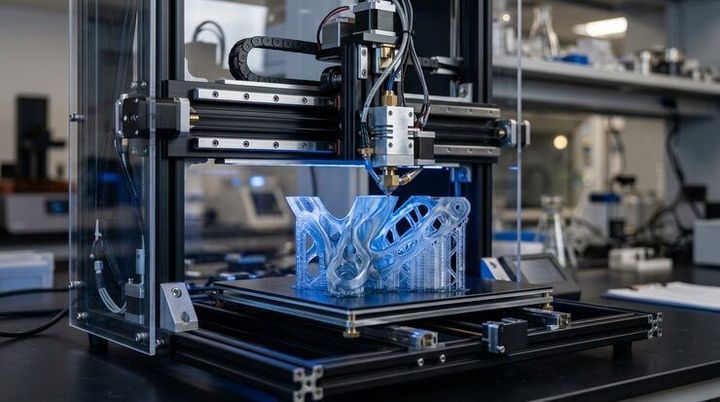
Explore Industrial 3D Printing Machines With Precision Engineering and Production Details
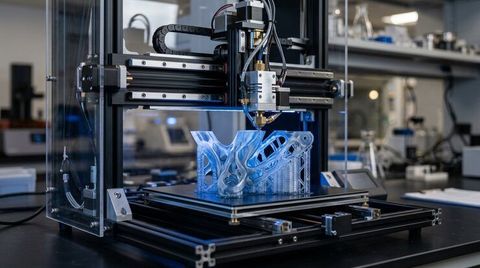
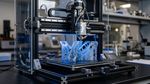
Industrial 3D printing machines are manufacturing systems that create physical objects by building material layer by layer from a digital design. Unlike conventional machining, which removes material from a larger block, additive manufacturing places material only where it is required according to a programmed geometry.
This approach is used for prototypes, tooling, components, fixtures, production parts, and specialized engineering applications.
Industrial 3D printing developed from early additive manufacturing technologies used primarily for rapid prototyping. As machine accuracy, material choices, software, and process control developed, additive manufacturing expanded into industrial production environments. Current systems can work with polymers, metals, ceramics, composites, and other specialized materials.
An industrial 3D printing machine generally includes a build chamber, material delivery system, motion mechanism, print head or energy source, control electronics, sensors, and software. Depending on the technology, material may be deposited through a nozzle, selectively cured with light, fused using thermal energy, or consolidated with another controlled process.
The complete workflow normally begins with a three-dimensional computer model. Specialized software converts the model into layers and machine instructions. The printer then builds the component according to those instructions, after which post-processing may be required to achieve the required dimensions, surface characteristics, or mechanical properties.
Main Industrial 3D Printing Technologies
Industrial additive manufacturing includes several process families. Fused filament fabrication and related extrusion processes melt or soften polymer material and deposit it through a controlled nozzle.
Powder-bed fusion uses a powder material that is selectively fused or melted using a controlled energy source. Depending on the process, the material can include polymers or metals.
Vat photopolymerization uses light to selectively cure liquid resin. Other processes use material jetting, binder jetting, directed energy deposition, or specialized ceramic and composite approaches.
Each technology has different requirements for material handling, machine calibration, environmental control, post-processing, and production planning.
Main Machine Components
An industrial 3D printing system can contain:
Build platform for supporting the component
Material delivery system
Print head or energy source
Motion-control system
Heating or environmental-control equipment
Sensors for process monitoring
Control electronics
Software for slicing and machine operation
Filtration or ventilation equipment where applicable
Post-processing equipment
The configuration depends on the printing technology and material being processed.
Importance
Industrial 3D printing machines have become relevant to manufacturing because they can create complex geometries that may be difficult to produce through conventional methods. Internal channels, lattice structures, lightweight forms, and customized components can be incorporated into a digital design.
The technology can also support shorter development cycles for certain applications. Engineers can modify a digital model and produce another physical iteration without creating an entirely new conventional tooling arrangement.
Precision Engineering
Precision is an important consideration in industrial additive manufacturing. Machine movement, material characteristics, layer thickness, thermal conditions, calibration, and software parameters can all influence the final component.
Dimensional accuracy does not depend only on the printer. Post-processing, material shrinkage, thermal expansion, support removal, surface finishing, and measurement methods can also influence the final result.
Engineering teams may therefore define dimensional tolerances and inspection procedures before production begins.
Industrial Applications
Industrial 3D printing is used in a range of applications, including:
Engineering prototypes
Production fixtures
Assembly aids
Tooling components
Customized machine parts
Aerospace components
Automotive development
Medical-device components
Industrial equipment parts
Architectural models
Research and development components
The appropriate process depends on the material, geometry, mechanical requirements, production quantity, dimensional requirements, and post-processing needs.
Production Workflow
A typical industrial 3D printing workflow includes several connected stages:
Digital modeling
Design verification
Build preparation
Material preparation
Machine setup
Layer-by-layer production
Part removal
Post-processing
Dimensional inspection
Documentation
Digital preparation is particularly important because orientation, support structures, layer strategy, and process parameters can influence production results.
Recent Updates
From 2024 through 2026, industrial 3D printing has continued developing through improvements in machine monitoring, multi-material processing, metal additive manufacturing, software automation, production-scale systems, and process qualification.
Increased Process Monitoring
Industrial printers increasingly use sensors and cameras to monitor conditions during production. Depending on the machine, monitoring may include temperature, chamber conditions, material flow, layer appearance, energy delivery, or machine movement.
Process data can be recorded for later analysis. This can support quality documentation and help identify abnormal conditions during production.
Automation and Production Integration
Industrial additive manufacturing is increasingly being connected with automated material handling, robotic part removal, inspection equipment, and manufacturing-management systems.
Automation can reduce the number of manual steps between printing and subsequent processing. Robotic systems may remove completed components, transfer them to finishing equipment, or position them for inspection.
Metal Additive Manufacturing
Metal 3D printing continues to be an important area of industrial development. Technologies such as powder-bed fusion and directed energy deposition can produce metal components with complex geometries.
Metal additive manufacturing requires careful management of powder, energy input, thermal conditions, part orientation, support structures, and post-processing. Applications can include specialized aerospace, automotive, energy, tooling, and engineering components.
Software and Simulation
Software has become increasingly important in additive manufacturing. Slicing programs translate digital models into machine instructions, while simulation tools can identify potential deformation, support requirements, thermal behavior, or manufacturing constraints.
Generative design and topology optimization can also create geometries based on defined engineering parameters. These tools can help explore structures that may be difficult to produce using traditional manufacturing techniques.
Production Quality Monitoring
Industrial users increasingly combine machine data with inspection systems. Optical scanning, coordinate measurement, imaging, and other inspection methods can compare produced components with digital models or specified dimensions.
This creates a connection between production and quality-control activities. The exact inspection method depends on the component and required tolerance.
Laws or Policies
Industrial 3D printing machines are influenced by machinery safety, electrical requirements, workplace regulations, material handling rules, environmental requirements, and product-specific standards. The applicable requirements vary according to the country, industry, machine type, and material.
Machine Safety
Industrial printers may contain heated surfaces, moving mechanisms, lasers or other energy sources, high-voltage components, pressurized systems, or fine powders. Safety controls therefore depend on the specific printing technology.
Potential measures can include protective enclosures, access interlocks, emergency controls, ventilation, filtration, warning systems, and controlled maintenance procedures.
Material Handling
Some additive manufacturing materials require specific storage and handling procedures. Metal and polymer powders can create particular workplace considerations because fine particles can become airborne under certain conditions.
Facilities may need suitable ventilation, filtration, housekeeping, storage, and personal protective equipment according to the material and applicable regulations.
Product and Industry Requirements
Certain industries impose additional requirements on manufactured components. Aerospace, automotive, medical, energy, and other regulated sectors can have specific qualification, traceability, testing, or documentation requirements.
The printing process alone does not establish that a component is suitable for a particular regulated application. Production methods, material specifications, inspection procedures, and qualification requirements may all need to be considered.
Tools and Resources
Industrial 3D printing relies on a combination of design, simulation, production, inspection, and maintenance tools. Computer-aided design software is used to create digital models, while slicing software converts those models into machine instructions.
Simulation platforms can examine printing orientation, support structures, thermal behavior, material deposition, or potential production issues. Measurement equipment can then verify physical dimensions after printing.
Useful resources include:
CAD software
Slicing platforms
Additive manufacturing simulation tools
Material property databases
Build-planning software
Digital inspection systems
3D scanners
Coordinate measurement systems
Preventive maintenance schedules
Process parameter records
Machine calibration documents
Production monitoring dashboards
A simplified comparison of industrial 3D printing technologies is shown below:
| Technology | Typical Material | Main Process | Common Application |
|---|---|---|---|
| Polymer Extrusion | Thermoplastics | Material deposition | Prototypes and fixtures |
| Vat Photopolymerization | Photopolymer resin | Light curing | Detailed components |
| Powder-Bed Fusion | Polymer or metal powder | Selective fusion | Complex production parts |
| Binder Jetting | Powder materials | Binder deposition | Components and models |
| Material Jetting | Polymer materials | Droplet deposition | Detailed prototypes |
| Directed Energy Deposition | Metal | Material and energy deposition | Repairs and larger components |
Design and Inspection
Design-for-additive-manufacturing principles can help engineers account for support structures, build orientation, wall thickness, thermal effects, and post-processing requirements.
Inspection tools can include digital calipers, optical measurement systems, 3D scanners, coordinate measurement machines, and specialized testing equipment. The selected method depends on the geometry and required accuracy.
Material Management
Material handling is another important part of industrial 3D printing. Facilities may need systems for tracking material batches, storage conditions, drying procedures, powder reuse where applicable, and production records.
Maintaining clear material records can support traceability and process documentation, particularly where specific material properties are required.
FAQs
What are industrial 3D printing machines?
Industrial 3D printing machines are additive manufacturing systems that create physical components layer by layer from digital designs. They can process polymers, metals, ceramics, composites, and other specialized materials.
How do industrial 3D printing machines work?
A digital model is converted into machine instructions using specialized software. The printer then deposits, cures, or fuses material layer by layer until the component is formed, followed by any required post-processing and inspection.
What materials can industrial 3D printing machines use?
Depending on the technology, industrial printers can process thermoplastics, photopolymer resins, metals, ceramics, composites, and other engineered materials. Each material requires compatible machine conditions and processing parameters.
How is precision controlled in industrial 3D printing?
Precision depends on machine calibration, motion control, material behavior, thermal conditions, layer parameters, design orientation, and post-processing. Inspection equipment can be used to measure the finished component against specified dimensions.
What industries use industrial 3D printing?
Industrial 3D printing is used in aerospace, automotive, medical-device development, engineering, tooling, energy, research, architecture, and other manufacturing environments. The appropriate technology depends on the component and application requirements.
Conclusion
Industrial 3D printing machines create components layer by layer using digital manufacturing instructions and specialized materials. Different technologies support polymers, metals, resins, ceramics, and other materials, with process selection depending on geometry, precision, material, and production requirements. Recent developments include greater process monitoring, automated handling, digital simulation, metal additive manufacturing, and integrated inspection. Machine safety, material handling, quality documentation, and industry-specific requirements remain important considerations in industrial additive manufacturing.