Discover Label Printing Machines for Packaging, Manufacturing, and Product Labeling
Label printing machines are equipment used to produce printed labels for containers, packages, products, cartons, bottles, boxes, and industrial components.
A label can contain information such as a product name, identification number, barcode, batch reference, handling instruction, material details, or other required information.
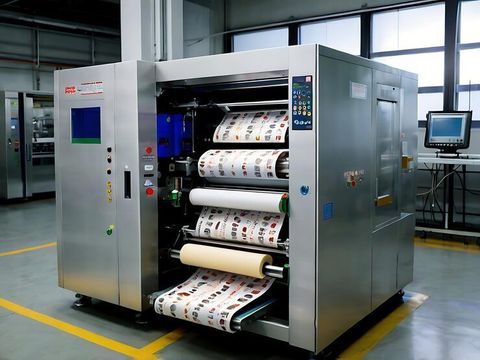
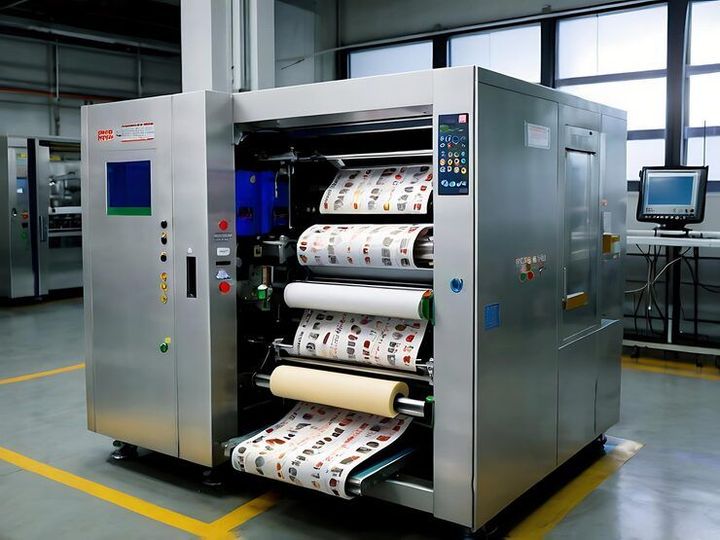
Modern label printing machines combine printing, material handling, and in some cases cutting or finishing functions. Depending on the equipment design, labels may be produced individually or in continuous rolls. Different machines are designed for different materials, production volumes, print qualities, and label sizes.
The development of label printing is closely connected with the growth of packaged goods and organized manufacturing. As products became more standardized, manufacturers needed consistent ways to identify packages and communicate information. Printing equipment gradually developed from simple mechanical systems into digital, thermal, flexographic, and hybrid technologies.
How the Process Works
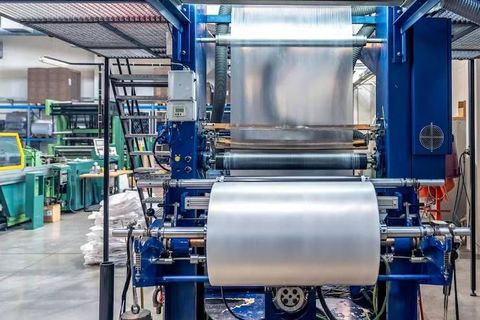
A typical label production process starts with a roll or sheet of label material. The material passes through the machine while text, graphics, symbols, or codes are applied to its surface.
Depending on the machine, additional stages can include drying, curing, laminating, cutting, slitting, rewinding, or inspection. Some systems can also connect with software that controls artwork, variable information, barcodes, and production settings.
Common label materials include:
- Paper-based label stock
- Synthetic films
- Polyester materials
- Polypropylene materials
- Adhesive-backed substrates
- Specialty industrial materials
The selected material depends on the product environment, surface, durability requirements, and intended application.
Importance
Why Product Labeling Matters
Product labeling provides information that helps identify and manage goods throughout manufacturing, storage, transportation, and distribution. A clear label can make it easier to distinguish products, batches, sizes, variants, and production runs.
For consumers, labels can communicate product information in a compact format. For manufacturers and warehouse operators, labels can support identification and tracking processes.
Label printing machines are therefore relevant to many industries, including:
- Food and beverage packaging
- Cosmetics and personal care
- Pharmaceutical packaging
- Electronics
- Automotive components
- Chemicals and industrial materials
- Retail products
- Logistics and warehouse operations
- Household products
Packaging and Manufacturing Applications
In packaging operations, labels may be applied to bottles, jars, cartons, pouches, containers, and other formats. The printing process needs to remain consistent even when production involves large quantities.
Manufacturing environments may require labels containing serial numbers, production references, barcodes, warning symbols, or inspection information. In these situations, label printing machines can be integrated with production and identification systems.
Variable-data printing is particularly useful when every label needs different information. Examples include sequential numbers, unique product identifiers, batch references, or changing codes.
Factors That Affect Machine Selection
Different applications require different machine characteristics. Important factors include:
- Label dimensions
- Printing method
- Production volume
- Material compatibility
- Color requirements
- Print resolution
- Variable-data requirements
- Cutting and finishing requirements
- Integration with existing equipment
The right combination depends on the application rather than a single machine specification.
Recent Updates
Growth of Digital Label Printing
Recent developments in label printing machines have focused strongly on digital technologies. Digital printing allows artwork and variable information to be changed through software without requiring the same physical preparation associated with some conventional printing processes.
This can be useful for products with multiple versions, changing information, shorter production runs, or frequent artwork adjustments. Digital systems also support variable-data applications where individual labels may contain different information.
Automation and Production Monitoring
Automation has become increasingly important in modern labeling operations. Machines can incorporate automated material feeding, registration control, tension management, inspection, and production monitoring.
Sensors and software can help detect certain printing or material-handling problems during production. Depending on the equipment, monitoring functions may provide information about machine status, production quantities, material movement, and detected errors.
More Flexible Label Materials
Label manufacturers are also working with a wider range of substrates and adhesive constructions. Packaging requirements can vary significantly, particularly when labels must withstand moisture, temperature changes, abrasion, or outdoor exposure.
This has increased the importance of matching printing technology with the intended label material. A printing process that works effectively with paper may require different settings or equipment when synthetic films are used.
Integration With Digital Production Systems
Modern label printing machines may connect with design software, production management platforms, barcode systems, and inspection equipment. This integration can reduce manual data entry and support consistent production workflows.
Cloud-connected and network-enabled systems are also becoming more common in industrial environments, although the exact capabilities vary by manufacturer and machine configuration.
Laws or Policies
Labeling Requirements
Label printing is influenced by product labeling rules in the market where goods are manufactured or distributed. Requirements vary by product category and jurisdiction, so manufacturers generally need to determine which information must appear on a particular label.
Depending on the product, required information may include:
- Product identification
- Manufacturer or responsible-party information
- Quantity or dimensions
- Material information
- Usage instructions
- Safety information
- Batch or lot identification
- Traceability information
- Barcode or identification codes
Not every product requires the same information. Regulations can also change according to the type of goods, packaging format, and destination market.
Accuracy and Traceability
Manufacturers must pay attention to the accuracy of printed information when labels are used for identification or regulatory purposes. Incorrect batch numbers, codes, measurements, or instructions can create operational and compliance problems.
For this reason, many production environments use proofreading procedures, barcode verification, print inspection, and controlled artwork approval. These measures help reduce errors before labels reach finished products.
Environmental Considerations
Packaging and labeling policies increasingly address material use, recyclability, waste reduction, and environmental information. Requirements vary across jurisdictions, and they can apply to packaging materials, inks, adhesives, or disposal instructions.
Manufacturers therefore need to consider both the printing process and the complete label construction when evaluating environmental requirements.
Tools and Resources
Label Design Software
Label design software is used to create layouts containing text, graphics, barcodes, symbols, and variable information. Many platforms support templates so recurring label formats can be adjusted without rebuilding the entire design.
Common functions include:
- Barcode generation
- QR code creation
- Variable-data fields
- Image placement
- Text formatting
- Template management
- Print preview
Barcode and QR Code Tools
Barcode and QR code tools help generate machine-readable information for product identification and tracking. The appropriate code format depends on the intended application and the systems that will scan it.
Testing is important because a printed code must remain readable after production, handling, transportation, and application.
Production Planning Tools
Manufacturers can use production planning software and spreadsheets to estimate material requirements, organize print runs, record production quantities, and coordinate different label versions.
A simple planning table can help compare common label printing requirements:
| Application | Typical Label Need | Important Consideration | Common Printing Approach |
|---|---|---|---|
| Retail packaging | Product identification | Appearance and readability | Digital or flexographic |
| Industrial parts | Identification codes | Durability | Thermal or industrial digital |
| Shipping labels | Tracking information | Barcode readability | Thermal printing |
| Product bottles | Brand and product details | Material compatibility | Digital or flexographic |
| Variable labels | Unique information | Data accuracy | Digital printing |
| Small production runs | Flexible artwork | Quick changeover | Digital printing |
Inspection and Measurement Tools
Inspection tools can help evaluate print quality, registration, barcode readability, and label dimensions. Measurement equipment may also be used to check substrate thickness, roll dimensions, or other physical characteristics.
These tools become more important when labels must meet specific production tolerances or identification requirements.
FAQs
What are label printing machines used for?
Label printing machines are used to produce printed labels for packaging, manufactured products, containers, cartons, components, and logistics applications. They can print product information, barcodes, identification numbers, graphics, and variable data.
How do label printing machines work?
Most label printing machines move paper, film, or another label substrate through a printing system. Depending on the machine, the process may include printing, drying or curing, cutting, slitting, inspection, and rewinding.
Which printing technology is used for product labeling?
Digital, thermal, flexographic, and other printing technologies can be used for product labeling. The appropriate technology depends on factors such as material, print volume, label design, variable information, and durability requirements.
Are label printing machines suitable for packaging?
Yes. Label printing machines are widely used for packaging applications involving bottles, cartons, containers, pouches, jars, and other formats. The machine and substrate need to be matched to the packaging application.
What information can be printed on labels?
Labels can contain text, graphics, barcodes, QR codes, product identifiers, batch references, serial numbers, handling information, and other application-specific information. Required information depends on the product and applicable labeling rules.
Conclusion
Label printing machines support product identification, packaging communication, manufacturing traceability, and logistics processes across many industries. Digital printing, automation, variable-data capabilities, inspection systems, and flexible materials are shaping current equipment development. Selecting a suitable printing approach depends on label material, production requirements, information content, and applicable labeling rules. Understanding these factors provides a clearer foundation for evaluating label production processes.