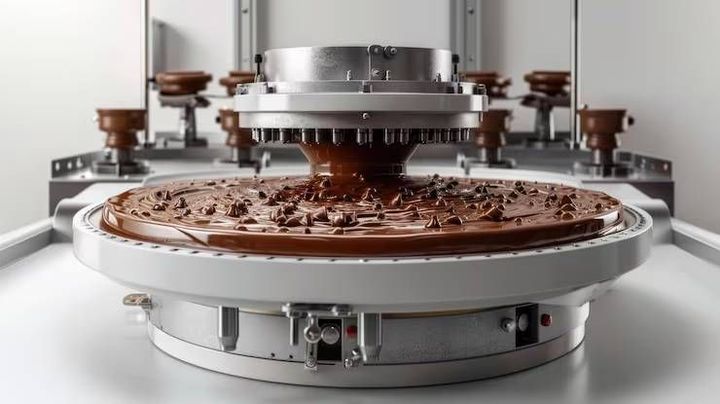
Chocolate Tempering Machines Basics With Tempering Processes, Benefits, and Industry Applications
Chocolate tempering machines are food-processing devices designed to control the heating, cooling, and reheating of melted chocolate.
This process helps cocoa butter form a stable crystal structure, allowing the finished chocolate to develop a smooth surface, a firm texture, and a clean snap when broken. Chocolate tempering machines are used in confectionery production, bakeries, chocolate workshops, and industrial food-processing facilities.
Chocolate contains cocoa solids, cocoa butter, and, depending on the formulation, sugar, milk solids, and other ingredients. Cocoa butter contains several types of fat crystals, and these crystals behave differently depending on temperature and processing conditions. Proper tempering encourages the formation of a stable crystal arrangement that supports the desired appearance and texture.
Traditional chocolate makers often temper chocolate manually by heating, cooling, and mixing it on a work surface. This method can be effective for small batches but requires experience and careful temperature control. Chocolate tempering machines automate much of this process, helping operators maintain consistent conditions during repeated production cycles.
Main Components of a Tempering Machine
A typical chocolate tempering machine includes several components that work together to control the chocolate's temperature and movement.
Heating system: Melts solid chocolate and maintains the required temperature.
Cooling system: Lowers the chocolate temperature to encourage crystal formation.
Mixing mechanism: Keeps the chocolate moving and distributes heat more evenly.
Temperature sensors: Monitor chocolate or machine temperatures.
Control panel: Allows operators to adjust settings and monitor operating conditions.
Hopper or holding tank: Contains melted chocolate during processing.
Discharge outlet: Directs tempered chocolate toward moulds, coating equipment, or other production stages.
Machine designs vary according to production capacity, chocolate formulation, automation level, and intended application.
How Chocolate Tempering Works
Tempering generally involves three stages. First, chocolate is heated sufficiently to melt existing cocoa butter crystals. Next, it is cooled under controlled conditions to encourage crystal formation. Finally, it is warmed slightly to remove less stable crystals while retaining the desired stable crystal structure.
The exact temperatures depend on whether the chocolate is dark, milk, or white, as well as its ingredients and formulation.
Chocolate type | Typical melting range | Approximate working range |
|---|---|---|
Dark chocolate | 45–50°C | 31–32°C |
Milk chocolate | 40–45°C | 29–30°C |
White chocolate | 38–43°C | 28–29°C |
These figures are general starting points rather than universal settings. Manufacturers should follow the formulation's technical guidance and verify the tempering result because ingredients, cocoa butter content, and equipment characteristics can affect the required temperatures.
Importance
Why Tempering Matters in Chocolate Production
Chocolate tempering is important because melted chocolate does not automatically solidify into a stable, attractive product. Without suitable crystal formation, finished chocolate may develop dull patches, streaks, a soft texture, or a whitish surface layer known as fat bloom.
Fat bloom can occur when cocoa butter crystals change structure or migrate toward the surface. It may also develop during unsuitable storage conditions or temperature fluctuations, so tempering alone cannot prevent every occurrence.
Chocolate tempering machines help address common production challenges by controlling temperature changes and maintaining movement throughout the chocolate mass. This can reduce variation between batches when the machine is operated and maintained correctly.
Benefits for Food Manufacturers
Automated tempering can support several practical production objectives.
Consistency: Controlled temperature cycles help maintain similar characteristics between batches.
Workflow efficiency: Automated heating and cooling reduce the need for continuous manual temperature adjustments.
Texture control: Proper crystal formation contributes to a firm structure and clean snap.
Surface appearance: Correctly tempered chocolate can develop a smooth, glossy finish.
Moulding performance: Tempered chocolate can flow into moulds and release more predictably under suitable conditions.
Coating performance: Stable chocolate can form a more uniform coating on confectionery, biscuits, and other foods.
These benefits depend on machine capacity, formulation, operating practices, and the condition of the chocolate ingredients.
Who Uses Chocolate Tempering Machines?
Chocolate tempering machines are used by different types of food producers. Small chocolate workshops may use compact tabletop machines, while larger confectionery facilities may use continuous tempering systems connected to moulding, enrobing, and depositing equipment.
Bakeries can use tempered chocolate for decorations, fillings, dipped products, and chocolate-covered pastries. Confectionery manufacturers use it to produce bars, pralines, truffles, and moulded shapes, while dessert manufacturers may incorporate tempered chocolate into decorative components.
Recent Updates
Automation and Temperature Monitoring
During 2024–2026, food-processing equipment continued to reflect broader interest in automation, process monitoring, and production consistency. In chocolate tempering, these developments are represented by digital temperature displays, programmable controls, improved sensor integration, and automated adjustments in some machine designs.
These functions can help operators monitor temperature changes and repeat established processing settings. However, digital controls do not eliminate the need to check chocolate quality, maintain equipment, and confirm that the formulation responds correctly to the selected process.
Compact Equipment and Flexible Production
Compact tempering machines remain relevant to small confectionery operations, demonstration kitchens, and specialist chocolate workshops. Larger facilities generally require equipment that can support higher throughput and integrate with moulding or coating lines.
Manufacturers may select machines according to batch size, available workspace, cleaning requirements, and the number of chocolate varieties produced. Flexible production arrangements can be useful when switching between different recipes or product formats.
Energy and Material Management
Food-processing facilities increasingly consider energy consumption, heat management, and equipment downtime when evaluating production systems. Insulated tanks, appropriately sized heating systems, and controlled operating cycles can contribute to more efficient equipment use.
Chocolate handling practices also matter. Excessive reheating, moisture contamination, and poorly controlled holding temperatures can affect processing quality and increase waste. Equipment selection and operator training therefore remain important alongside automation.
Laws or Policies
Food Safety and Hygiene Requirements
Chocolate tempering machines operate within the broader framework of food manufacturing and hygiene requirements. Applicable rules vary by country, but facilities commonly need to manage equipment cleanliness, ingredient handling, contamination risks, and production records.
Food-contact surfaces should be made from appropriate materials and designed to permit effective cleaning. Operators should also follow procedures that prevent water, cleaning chemicals, foreign objects, and other contaminants from entering the chocolate.
Equipment Safety and Electrical Compliance
Commercial tempering machines may be subject to electrical safety, machinery safety, workplace safety, and food-contact material requirements. Applicable standards depend on the jurisdiction, installation environment, and equipment configuration.
Operators should follow the manufacturer's instructions for electrical connections, hot surfaces, moving parts, maintenance, and emergency shutdown procedures. Guards and protective devices should remain in place during operation.
Temperature Control and Quality Documentation
Food manufacturers often maintain records of processing conditions, sanitation activities, ingredient batches, and finished-product checks. These records can help identify production variations and support traceability when a quality issue occurs.
Tempering temperature should be monitored alongside other relevant factors, including chocolate formulation, holding time, humidity, and storage conditions. The required documentation and verification procedures depend on the facility's food safety system and applicable regulations.
Tools and Resources
Temperature Measurement and Temper Testing
Digital thermometers and calibrated temperature sensors help operators check chocolate temperature throughout the tempering process. Infrared thermometers can provide quick surface readings, although they do not always represent the temperature throughout a chocolate mass.
A temper meter or suitable crystallization-testing instrument can provide additional information about crystal formation. Manufacturers may also use a simple test strip of chocolate to observe whether it sets evenly, develops a consistent finish, and shows signs of streaking or bloom.
Machine Selection and Capacity Planning
Selecting a chocolate tempering machine involves comparing the expected production volume with the machine's practical operating capacity. A machine designed for small batches may not support continuous industrial production, while an oversized system may be unsuitable for occasional or low-volume use.
Important factors include:
Processing capacity per hour or batch.
Chocolate types and formulations supported.
Heating and cooling performance.
Mixing and temperature-control functions.
Cleaning and maintenance requirements.
Available floor or workbench space.
Compatibility with moulding or coating equipment.
The following table shows how machine categories generally relate to different production environments.
Machine category | Typical application | Main consideration |
|---|---|---|
Tabletop tempering machine | Small workshops and kitchens | Batch size and workspace |
Batch tempering machine | Small and medium production | Heating and cooling cycle |
Continuous tempering machine | Larger confectionery facilities | Throughput and process stability |
Integrated tempering system | Automated moulding or coating lines | Equipment coordination |
Actual capacity varies by model, chocolate type, and operating conditions.
Cleaning and Preventive Maintenance
Routine cleaning helps prevent the accumulation of hardened chocolate and reduces the risk of contamination between production runs. Cleaning procedures should follow the machine manufacturer's instructions, particularly when electrical components, sensors, and temperature-control systems are involved.
Preventive maintenance may include inspecting seals, checking temperature sensors, examining mixing mechanisms, and confirming that heating and cooling functions operate correctly. Maintenance records can help operators identify recurring faults and plan equipment downtime.
FAQs
What is a chocolate tempering machine used for?
A chocolate tempering machine controls heating, cooling, and mixing to encourage stable cocoa butter crystals. This helps chocolate develop a smooth finish, firm texture, and suitable setting characteristics.
What are the main chocolate tempering processes?
The main stages are melting, controlled cooling to encourage crystal formation, and slight reheating to retain the desired stable crystals. The temperature profile depends on the chocolate formulation.
What are the benefits of automatic chocolate tempering machines?
Automatic machines can improve temperature control, reduce repetitive manual adjustments, and support consistent production. Results depend on correct settings, maintenance, and operator monitoring.
Which industries use chocolate tempering equipment?
Common applications include confectionery manufacturing, bakeries, chocolate workshops, dessert production, and facilities that mould or coat food products with chocolate.
How should a chocolate tempering machine be maintained?
Maintenance generally includes appropriate cleaning, temperature sensor checks, inspection of moving parts, and following the manufacturer's maintenance schedule. Procedures should account for food hygiene and equipment safety requirements.
Conclusion
Chocolate tempering machines control the temperature and movement needed to encourage stable cocoa butter crystal formation. They support chocolate moulding, coating, confectionery production, and bakery applications by helping maintain consistent texture and appearance. Machine selection depends on production volume, chocolate formulation, process requirements, and cleaning needs. Proper operation, hygiene, temperature verification, and preventive maintenance remain important for reliable production.