Pipe Rounding Machines Guide With Pipe Forming Technology and Industrial Applications
Pipe Rounding Machines are industrial machines designed to restore or maintain the circular shape of pipes and tubes. During cutting, transportation, storage, welding, or other manufacturing operations, pipe ends can become oval, flattened, or slightly deformed.
A pipe rounding machine applies controlled mechanical pressure to correct these shape variations and prepare the material for subsequent processing.
These machines are used in metal fabrication, pipe manufacturing, construction, automotive production, industrial equipment manufacturing, and pipeline preparation. Depending on their design, they can work with different pipe diameters, wall thicknesses, and materials, including carbon steel, stainless steel, and certain non-ferrous metals.
Pipe rounding technology developed alongside the wider growth of metal forming and tube manufacturing. As industrial production required consistent dimensions and reliable joining processes, manufacturers adopted mechanical devices to improve pipe geometry and reduce manual correction.
How Pipe Rounding Technology Works
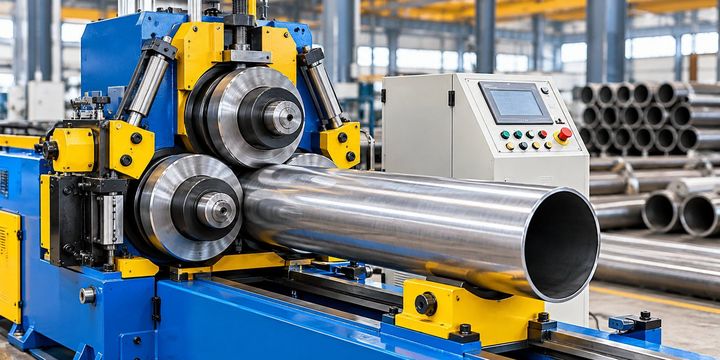
A pipe rounding machine generally uses rollers, segmented dies, clamping mechanisms, or adjustable forming components to apply pressure around a pipe. The pressure redistributes the material sufficiently to correct deformation while keeping the pipe within the required dimensional limits.
The operating method depends on the machine configuration. Some models work on the outer surface of a pipe, while others use internal expanding mechanisms or specialized tooling to correct pipe ends.
A typical operating sequence includes:
Inspection of the pipe for dents, ovality, cracks, and other defects.
Selection of suitable tooling according to pipe diameter and material.
Positioning and securing the pipe in the machine.
Application of controlled pressure to correct its shape.
Measurement of the resulting diameter and roundness.
Final inspection before welding, fitting, or another manufacturing stage.
The amount of pressure must suit the material and wall thickness. Excessive force can create unwanted deformation, surface marks, or damage that requires further examination.
Main Types of Pipe Rounding Machines
Different production requirements call for different machine configurations.
Manual pipe rounding machines rely on operator-controlled adjustment and are often suitable for occasional work or smaller production volumes. Hydraulic machines use fluid pressure to generate forming force, making them suitable for applications requiring substantial and controlled pressure.
Mechanical machines use components such as screws, levers, rollers, or geared mechanisms to apply force. CNC-controlled systems can automate positioning and forming parameters when supported by the machine design.
Some equipment is specifically designed for pipe-end rounding, while other systems handle longer sections or integrate rounding with additional tube-processing operations. The appropriate configuration depends on the dimensions, material, production volume, and required tolerances.
Importance
Maintaining Pipe Dimensions and Joint Quality
Pipe geometry affects how accurately components fit together. An oval or deformed pipe end may create uneven gaps during welding or cause alignment difficulties when connecting flanges, fittings, and other components.
Pipe Rounding Machines help restore dimensional consistency before these operations. However, rounding alone does not correct every defect; cracks, severe dents, material thinning, and other structural problems may require separate assessment or rejection.
Applications Across Industrial Sectors
Pipe rounding equipment supports several manufacturing and infrastructure activities.
Pipe manufacturing: Correcting pipe ends before inspection, cutting, joining, or further forming.
Construction: Preparing tubular components used in structural frameworks and building systems.
Automotive manufacturing: Supporting the processing of selected tubular parts used in frames, exhaust assemblies, and other components.
Oil and gas equipment: Preparing suitable pipe sections for joining and fabrication, subject to applicable specifications.
HVAC production: Helping maintain pipe-end geometry in compatible ducting and tubing applications.
Industrial machinery: Preparing tubular components used in equipment frames, fluid systems, and fabricated assemblies.
Not every machine is suitable for all these applications. Material specifications, pressure requirements, dimensions, and the intended function of the finished component determine the acceptable process.
Factors Affecting Machine Selection
Selecting pipe rounding equipment involves more than considering pipe diameter alone. Operators and production planners need to evaluate several technical requirements.
Important factors include:
Diameter range: The minimum and maximum pipe sizes supported by the machine.
Wall thickness: The amount of material that can be formed without damage.
Material type: Differences in strength, ductility, and resistance to deformation.
Roundness tolerance: The permitted variation from a circular cross-section.
Production volume: The number of components processed during a shift.
Tooling flexibility: The ability to accommodate different dimensions and profiles.
Control system: The level of manual adjustment, hydraulic control, or automation required.
These factors influence processing consistency, operator workload, equipment integration, and inspection requirements.
Recent Updates
Automation and Digital Process Control
During 2024–2026, industrial forming equipment continued to follow broader manufacturing trends involving automation, digital monitoring, and more consistent process control. Developments vary by manufacturer and machine category, so not every pipe rounding machine includes advanced electronic controls.
Modern industrial systems may use programmable settings, digital measurement devices, sensors, and automated handling equipment. These features can help operators repeat established forming sequences and monitor important process parameters.
Integration With Tube Processing Lines
Pipe rounding machines may be incorporated into production lines that also include cutting, deburring, end forming, welding, or inspection equipment. Integration can reduce repeated handling when the machines and workflow are designed to operate together.
For example, a pipe may pass through cutting equipment, undergo end rounding, and then move to a welding or fitting station. The order depends on the manufacturing process and whether later operations could change the pipe's geometry.
Energy Efficiency and Equipment Monitoring
Manufacturers are also examining energy consumption, hydraulic system performance, maintenance intervals, and equipment downtime. Hydraulic machines may use improved pump controls or other efficiency measures, while mechanically driven equipment may focus on reducing unnecessary movement and wear.
Monitoring pressure, operating cycles, tooling condition, and dimensional results can help identify process variation. These measures support maintenance planning, although their actual benefits depend on machine design, operating conditions, and implementation.
Laws or Policies
Industrial Machinery Safety
Pipe rounding machines must be operated according to applicable workplace safety requirements and the equipment manufacturer's instructions. Depending on the jurisdiction, relevant rules may address machine guarding, emergency stops, electrical safety, operator training, maintenance, and hazardous energy isolation.
Moving rollers, clamps, dies, and hydraulic mechanisms can create crushing or entanglement hazards. Operators should keep hands away from forming zones and use approved handling equipment when pipes are heavy or difficult to position.
Before maintenance or tooling changes, the machine should be placed in a safe condition. Electrical, hydraulic, and other stored energy sources may need to be isolated according to the relevant safety procedure.
Product Quality and Technical Standards
Industrial pipes may be subject to dimensional specifications, material requirements, welding procedures, and inspection criteria determined by their intended application. Construction, pressure systems, transportation equipment, and pipeline projects can have different requirements.
A pipe rounding machine does not independently establish compliance with these specifications. Finished components may need dimensional checks, material verification, weld inspection, or other testing under the applicable production and engineering requirements.
Environmental and Workplace Considerations
Industrial facilities may also need to manage hydraulic fluids, metal waste, noise, and energy use under local environmental and workplace rules. Proper storage, spill prevention, waste handling, and equipment maintenance help control these operational risks.
Requirements vary by location and application. Manufacturers should identify the standards relevant to their equipment, facility, and finished products rather than assuming one set of rules applies universally.
Tools and Resources
Measurement and Inspection Equipment
Accurate inspection is essential when evaluating pipe roundness. Common tools include outside calipers, micrometers, diameter gauges, bore gauges for suitable internal measurements, and dedicated roundness measurement systems.
A simple way to estimate ovality is to measure the largest and smallest outside diameters at the same cross-section.
Measurement | Meaning | Example |
|---|---|---|
Maximum diameter | Largest measured diameter | 102 mm |
Minimum diameter | Smallest measured diameter | 98 mm |
Diameter difference | Maximum minus minimum | 4 mm |
Average diameter | Mean of the two measurements | 100 mm |
Ovality ratio | Diameter difference divided by average diameter, multiplied by 100 | 4% |
This example illustrates a basic calculation, not an acceptable tolerance for every pipe. Actual acceptance limits depend on the relevant product specification and measurement procedure.
Machine Selection and Process Planning
Technical data sheets and equipment manuals help determine whether a machine can accommodate a particular pipe. Useful information includes supported diameters, maximum wall thickness, forming force, tooling arrangements, power requirements, cycle settings, and maintenance instructions.
Production planners may also use inspection sheets to record incoming pipe dimensions, machine settings, post-forming measurements, and final acceptance results. Consistent records make it easier to investigate recurring deformation or identify changes in tooling performance.
Maintenance and Operator Training
Routine maintenance can include checking rollers and dies for wear, inspecting hydraulic lines, confirming that guards function correctly, and reviewing emergency-stop operation. Maintenance intervals should follow the equipment manufacturer's guidance and the actual operating environment.
Operator training should cover correct pipe positioning, tooling selection, safe handling, pressure adjustment, measurement techniques, and abnormal operating conditions. These practices support repeatable processing and help reduce avoidable equipment damage.
FAQs
What is a Pipe Rounding Machine used for?
A Pipe Rounding Machine corrects ovality or deformation in compatible pipes and tubes. It is commonly used before welding, fitting, assembly, or other manufacturing operations that require accurate pipe geometry.
What types of Pipe Rounding Machines are available?
Common types include manual, mechanical, hydraulic, and CNC-controlled machines. Their capabilities differ in forming force, adjustment method, automation, and supported pipe dimensions.
Which materials can a pipe rounding machine process?
Depending on its tooling and specifications, a machine may process carbon steel, stainless steel, aluminum, and other suitable metals. Material strength, wall thickness, and diameter influence the forming method.
How is pipe roundness measured after forming?
Operators can measure the maximum and minimum diameters at the same cross-section and calculate the difference. More demanding applications may require dedicated measurement equipment or compliance checks against a specified tolerance.
What safety precautions are important when operating pipe rounding equipment?
Operators should use appropriate machine guarding, follow training procedures, secure the pipe correctly, and keep hands away from moving components. Maintenance and tooling changes require suitable energy-isolation procedures.
Conclusion
Pipe Rounding Machines help maintain pipe geometry for manufacturing, construction, fabrication, and other industrial applications. Their operating methods range from manual adjustment to hydraulic forming and automated process control. Machine selection depends on pipe dimensions, material properties, production requirements, and specified tolerances. Accurate inspection, appropriate maintenance, and compliance with relevant safety and product standards remain important throughout the forming process.