China Industrial Robot Factory: Basics of Manufacturing and Robotic Integration
Industrial robots are reshaping modern factory operations. China has developed a significant industrial robotics manufacturing sector, supporting automation across multiple industries.
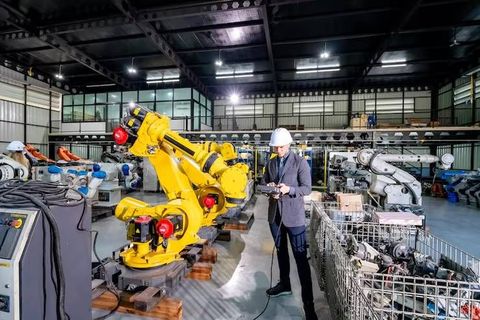
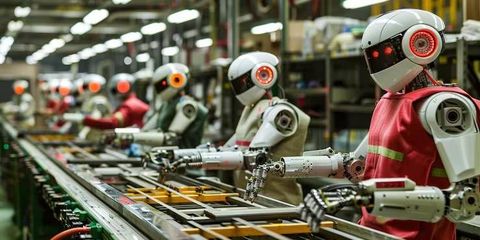
A China industrial robot factory typically produces robotic arms, automated handling equipment, welding robots, and integrated manufacturing systems. These facilities combine mechanical engineering, electronics, software, and precision manufacturing to develop equipment for industrial applications.
Understanding China's Industrial Robot Manufacturing Industry
China's industrial robot industry includes manufacturers specializing in robotic arms, automated production equipment, control systems, and complete robotic workstations. These products support factories that require consistent movements, repetitive operations, and improved production coordination.
Industrial robot manufacturers China operate across different manufacturing categories. Some concentrate on producing individual robot components, while others develop complete automation systems for industrial environments.
Major Types of Industrial Robots
Common industrial robot categories include:
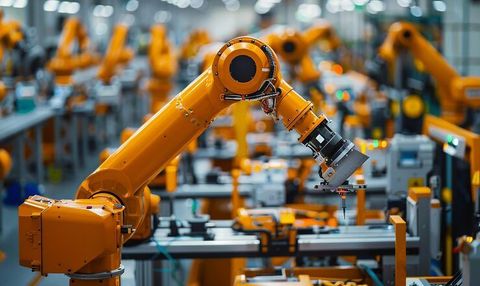
Articulated robots: These robots use multiple rotating joints to perform complex movements in different directions.
SCARA robots: Designed for horizontal movement, they are frequently used in assembly and component placement.
Cartesian robots: These systems move along linear axes and support applications requiring structured positioning.
Collaborative robots: Designed for specific human-robot interaction environments, subject to appropriate safety assessments.
Delta robots: These robots support high-speed picking, sorting, and lightweight packaging operations.
The type of equipment depends on production requirements, workspace dimensions, payload capacity, and movement accuracy.
Why China Industrial Robot Factories Matter
China has developed an extensive industrial manufacturing ecosystem. Access to component manufacturers, engineering facilities, electronics production, and automation research supports the development of industrial robotics.
A China robot arm manufacturer may produce equipment for automotive assembly, electronics manufacturing, metal processing, and logistics operations.
Important Manufacturing Capabilities
Industrial robot factories generally focus on several technical areas:
Mechanical engineering: Designing robot structures, joints, gear systems, and supporting components.
Electronic integration: Connecting motors, sensors, controllers, and electrical systems.
Software development: Programming movement sequences, operational instructions, and communication protocols.
Quality testing: Evaluating movement accuracy, repeatability, payload performance, and operational reliability.
System integration: Connecting robots with conveyors, machine tools, sensors, and other factory equipment.
These capabilities help determine whether a manufacturer can meet the technical requirements of a particular industrial application.
Industrial Robot Production Processes
Industrial robot production involves multiple stages. Each stage contributes to the equipment's mechanical performance, control accuracy, and operational consistency.
Main Production Stages
Design and engineering: Engineers establish robot dimensions, movement ranges, payload requirements, and operating specifications.
Component manufacturing: Mechanical parts, joints, housings, and structural components are produced or sourced.
Assembly: Technicians integrate motors, reducers, wiring, sensors, and control units.
Programming: Software configures movement patterns, operating sequences, and communication functions.
Testing: Equipment undergoes mechanical, electrical, and operational inspections.
Packaging and distribution: Completed equipment is prepared for transportation and installation.
An industrial robot production line may include automated machinery, precision assembly stations, inspection equipment, and testing facilities.
Industrial Robot Applications Across Different Industries
Industrial robots are used in manufacturing environments where repetitive movements, controlled positioning, and automated processes are important.
Common Industrial Applications
Automotive manufacturing: Welding, painting, component handling, and vehicle assembly.
Electronics production: Circuit board handling, component placement, and product inspection.
Metal processing: Cutting assistance, material handling, and robotic welding.
Food manufacturing: Packaging, sorting, palletizing, and product handling.
Warehousing: Loading, unloading, sorting, and automated material transportation.
China robotic welding systems, for example, are developed for applications involving metal fabrication, automotive components, and industrial structures.
Comparing Industrial Robot Factory Capabilities
When evaluating an industrial robot supplier China, understanding technical specifications is important. Different manufacturers may specialize in different robot categories and production requirements.
The following table explains several common evaluation factors.
Evaluation Factor | What to Examine |
|---|---|
Payload capacity | Maximum supported load |
Reach | Working distance of the robot |
Repeatability | Consistency of repeated positioning |
Axis configuration | Number of movement axes |
Controller | Hardware and software compatibility |
Production capacity | Manufacturing volume and delivery capability |
Quality testing | Inspection and performance procedures |
An industrial robot quotation China may include equipment specifications, controller details, accessories, installation requirements, and transportation arrangements. Comparing these details provides a clearer understanding of the equipment being evaluated.
Factors to Consider When Evaluating Manufacturers
Choosing an industrial robot manufacturer requires more than comparing technical specifications. The production environment and intended application should guide the evaluation.
Important Considerations
Manufacturing experience: Examine the manufacturer's experience with specific robot categories and industrial applications.
Technical documentation: Review product specifications, operating manuals, maintenance instructions, and safety documentation.
Production capacity: Understand manufacturing facilities, component sourcing arrangements, and production capabilities.
Quality management: Examine inspection procedures, testing methods, and relevant quality certifications.
Integration compatibility: Confirm whether the equipment can communicate with existing machinery, controllers, and production systems.
A six axis robot manufacturer China may have different technical capabilities from a producer specializing in Cartesian or SCARA robots. Therefore, comparisons should consider the actual application rather than manufacturer descriptions alone.
Recent Developments in Industrial Robotics
Industrial robotics continues to evolve through developments in artificial intelligence, machine vision, sensors, and digital manufacturing.
Modern robotic systems increasingly incorporate vision technology to identify objects, monitor production activities, and support automated inspection. Improved control software also helps coordinate multiple machines within connected manufacturing environments.
These developments are influencing how industrial automation robot factory operations are designed. However, implementation requirements vary according to production complexity, workplace conditions, and available infrastructure.
Frequently Asked Questions
What does a China industrial robot factory manufacture?
These factories manufacture robotic arms, welding robots, assembly equipment, material handling systems, controllers, and integrated automation equipment.
How can industrial robot manufacturers China be evaluated?
Consider manufacturing experience, technical specifications, production capacity, quality testing, documentation, and compatibility with existing equipment.
What is a six-axis industrial robot?
A six-axis robot has six independent movement axes, allowing it to perform complex positioning and orientation tasks.
Which industries use Chinese industrial robots?
Automotive, electronics, metal fabrication, food processing, packaging, and logistics industries use industrial robots for various manufacturing activities.
What information is included in an industrial robot quotation?
A quotation may include robot specifications, payload capacity, reach, controller configuration, accessories, installation requirements, and transportation details.
Conclusion
China's industrial robot factories contribute to manufacturing automation through robotic arms, welding systems, assembly equipment, and integrated production technologies. Their capabilities cover several industrial applications, from automotive manufacturing to electronics and logistics.
Understanding production processes, technical specifications, quality management, and equipment compatibility helps readers evaluate industrial robot manufacturers more effectively. As automation technologies continue developing, industrial robotics is expected to remain an important part of modern manufacturing.