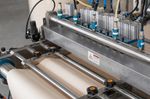
Wave Soldering Machines Information With Features, Benefits, and Technical Details
Wave soldering machines are industrial systems used to connect electronic components to printed circuit boards (PCBs) through molten solder.
The process is widely used in electronics manufacturing, particularly for circuit boards containing through-hole components, which have metal leads inserted into holes in the board. A controlled wave of liquid solder makes contact with the exposed metal connections and creates electrical and mechanical joints.
The development of wave soldering technology followed the growth of electronic manufacturing and the need for repeatable assembly methods. Earlier electronic products often required extensive manual soldering, which could take considerable time and produce inconsistent results. Automated soldering equipment helped manufacturers process multiple connections in a controlled and organized manner.
Wave soldering machines are now used in the production of electronic control boards, household appliances, automotive electronics, power supplies, industrial equipment, and telecommunications devices. Their operation combines temperature control, conveyor movement, flux application, and solder management to create consistent connections across suitable circuit board designs.
What Is a Wave Soldering Machine?
A wave soldering machine moves a printed circuit board over a controlled wave of molten solder. Before reaching the solder wave, the board typically passes through flux application and preheating stages. These stages prepare the metal surfaces and reduce the temperature difference between the circuit board and the molten solder.
The machine generally contains several integrated sections:
Fluxing unit: Applies a chemical preparation to improve solder wetting and remove surface oxides.
Preheating zone: Raises the board temperature gradually before solder contact.
Solder pot: Holds molten solder at a controlled temperature.
Pump and nozzle assembly: Produces the solder wave that contacts the board.
Conveyor system: Moves circuit boards through each processing stage.
Cooling section: Allows solder joints to solidify after the soldering process.
How the Wave Soldering Process Works
The process begins when a prepared circuit board enters the conveyor system. Flux is applied to the underside or designated soldering areas, depending on the machine configuration and production requirements.
The board then passes through a preheating zone. Controlled heating activates the flux and prepares the board for soldering. Next, the underside of the board contacts a wave of molten solder, allowing solder to flow around exposed component leads and plated holes.
After leaving the solder wave, the board moves into a cooling section. The solder solidifies and forms electrical connections. Operators or automated inspection systems subsequently examine the joints for defects such as insufficient solder, bridging, or incomplete hole filling.
Importance
Wave soldering machines remain important because many electronic products continue to use through-hole components. These components are valued in applications where mechanical strength, electrical connections, heat tolerance, or specific component designs make through-hole mounting appropriate.
The technology also supports repeatable production. Instead of soldering each connection individually, a machine can process many compatible joints during a single pass. This helps manufacturers maintain a consistent production sequence while reducing the amount of repetitive manual handling.
Industries That Use Wave Soldering Equipment
Wave soldering equipment serves several manufacturing sectors, including:
Consumer electronics: Circuit boards for appliances, audio equipment, and household control systems.
Automotive electronics: Suitable electronic modules, power control boards, and other through-hole assemblies.
Industrial automation: Control panels, power electronics, sensor interfaces, and equipment controllers.
Telecommunications: Selected electronic assemblies used in communications hardware.
Electrical equipment: Power supplies, transformers with electronic control circuits, and distribution-related electronic modules.
Medical electronics: Appropriate electronic assemblies manufactured under applicable quality and regulatory controls.
The specific applications depend on the circuit board design, component types, soldering requirements, and production standards.
Main Features of Wave Soldering Machines
Wave soldering machine specifications vary according to production capacity, board dimensions, process requirements, and automation level. Common features include the following.
Adjustable conveyor speed: Controls how quickly boards move through the machine.
Temperature monitoring: Measures conditions in preheating zones and the solder pot.
Multiple heating zones: Supports gradual and controlled board heating.
Wave height adjustment: Helps control solder contact with the underside of the circuit board.
Nitrogen compatibility: Some systems use nitrogen to reduce oxidation during soldering.
Programmable controls: Store process settings for different board designs.
Exhaust extraction: Helps manage fumes generated during fluxing and soldering.
Safety controls: Include protective covers, emergency stops, and temperature-related safeguards.
These features influence process stability, operator requirements, maintenance planning, and the range of boards a machine can handle.
Benefits and Practical Limitations
Wave soldering can process numerous through-hole connections in a single pass, making it suitable for repeated production runs. Automated conveyor movement also reduces the need to position every board manually during soldering.
Other practical benefits include consistent process sequencing, compatibility with several industrial solder alloys, and integration with broader electronics assembly lines.
However, wave soldering is not suitable for every circuit board. Dense surface-mount assemblies may require selective soldering or other methods because molten solder can unintentionally contact components that should not be soldered. Thermal-sensitive parts, closely spaced connections, and mixed-technology boards may also require careful process design.
Recent Updates
Recent developments in wave soldering technology reflect broader changes in electronics manufacturing, including energy management, process monitoring, environmental controls, and the increasing use of mixed-technology circuit boards.
Automation and Process Monitoring
Modern equipment increasingly uses programmable controllers, digital temperature displays, sensors, and stored process recipes. These features help operators monitor operating conditions and reproduce settings across different production runs.
Some systems also support production data collection and integration with factory monitoring platforms. Recorded information can help identify temperature variations, conveyor interruptions, or changes in soldering performance.
Nitrogen-Assisted Soldering
Nitrogen-assisted wave soldering is used in certain production environments to reduce oxidation around the solder wave. Lower oxidation can help improve solder wetting and reduce the formation of dross, although the results depend on process settings, solder chemistry, and equipment design.
Nitrogen systems require appropriate gas supply arrangements and monitoring. Their suitability depends on production requirements and the overall operating environment.
Lead-Free Soldering and Energy Management
Lead-free solder alloys are widely used in many electronics manufacturing applications. Some lead-free formulations operate at higher temperatures than traditional tin-lead solder, so equipment must accommodate the thermal requirements of the selected alloy and the circuit board.
Manufacturers are also paying attention to heating efficiency, standby energy use, insulation, and exhaust management. These developments reflect the broader effort to manage energy consumption and improve process control rather than a single universal change across all machines.
Selective Soldering and Mixed-Technology Boards
As circuit boards combine surface-mount and through-hole components, manufacturers increasingly evaluate wave soldering alongside selective soldering. Selective systems apply solder to chosen areas, while wave soldering exposes a larger portion of the board underside to the solder wave.
The appropriate method depends on component placement, board geometry, throughput requirements, and acceptable defect levels. Both technologies may be used within the same manufacturing facility.
Laws or Policies
Wave soldering machine operations are influenced by environmental, occupational safety, and electronic product requirements. Applicable rules depend on the country, the manufacturing location, the solder alloy, and the intended use of the finished electronic product.
Environmental and Material Requirements
Restrictions on hazardous substances in electronic equipment may limit the use of lead and certain other materials in products covered by the relevant rules. These requirements influence solder alloy selection, component specifications, and manufacturing documentation.
Lead-free soldering does not automatically establish compliance with every environmental requirement. Manufacturers must evaluate the finished product, its materials, intended market, and any applicable exemptions.
Workplace Safety and Equipment Operation
Wave soldering involves molten metal, heated surfaces, electrical equipment, flux chemicals, and potentially harmful fumes. Manufacturing facilities therefore need suitable controls for worker protection and equipment operation.
Common safety measures include:
Local exhaust ventilation near soldering and fluxing areas.
Protective equipment appropriate to the process.
Training for operators who handle hot solder and chemical materials.
Emergency stops and safeguards for moving equipment.
Procedures for handling flux, solder residues, and maintenance activities.
Temperature monitoring and preventive equipment inspections.
Product Quality and Manufacturing Standards
Electronics manufacturers may follow documented quality management systems and soldering workmanship standards. These can define process controls, inspection criteria, training expectations, and documentation practices.
The applicable requirements depend on the product and customer specifications. A machine's technical specifications alone do not establish that the resulting circuit board complies with every relevant standard.
Tools and Resources
Selecting and operating wave soldering equipment involves several technical considerations. Manufacturers can use equipment documentation, process monitoring tools, inspection methods, and engineering calculations to understand production requirements.
Wave Soldering Machine Specifications
A technical specification sheet helps compare equipment capabilities. Important parameters include:
Maximum and minimum PCB width.
Conveyor speed range.
Preheating temperature range and heating capacity.
Solder pot capacity and temperature range.
Wave height and pump adjustment.
Power requirements and compressed-air needs.
Nitrogen compatibility, where applicable.
Exhaust extraction requirements.
Overall machine dimensions and maintenance access.
These details help determine whether the equipment fits the circuit boards and the available production space.
Process Monitoring and Inspection Tools
Temperature profilers measure the thermal conditions experienced by a circuit board as it passes through the machine. Their readings help operators evaluate preheating performance and the board's exposure to the solder wave.
Other useful tools include thermocouples, solder pot temperature sensors, conveyor speed measurement devices, optical inspection systems, and magnification equipment. Inspection methods may include visual examination, automated optical inspection, and X-ray inspection when internal joint characteristics need to be assessed.
Technical Comparison Table
The following table summarizes common equipment characteristics. Actual specifications vary by manufacturer and machine configuration.
Parameter | Typical consideration | Why it matters |
|---|---|---|
Conveyor width | Supported PCB dimensions | Determines board compatibility |
Conveyor speed | Adjustable travel rate | Influences solder contact time |
Preheating zones | Number and heating capacity | Supports controlled thermal preparation |
Solder pot | Capacity and temperature control | Maintains a stable solder supply |
Wave system | Single or multiple wave configurations | Affects solder contact and process flexibility |
Atmosphere | Air or nitrogen-assisted operation | Influences oxidation and solder behavior |
Control system | Manual, programmable, or connected controls | Supports repeatability and monitoring |
Extraction system | Ventilation and fume capture | Supports workplace safety |
Operating and Maintenance Resources
Equipment manuals provide information about startup, shutdown, cleaning, temperature settings, and scheduled inspections. Maintenance logs can record nozzle cleaning, pump performance, conveyor condition, sensor calibration, and solder pot maintenance.
Process recipes should be established for the actual circuit board, solder alloy, flux, and component arrangement. General temperature values should not replace equipment-specific instructions or validated process settings.
FAQs
What Is a Wave Soldering Machine Used For?
A wave soldering machine joins through-hole electronic components to printed circuit boards. It uses a controlled wave of molten solder to form electrical and mechanical connections across multiple joints during one production pass.
How Does a Wave Soldering Machine Work?
The circuit board passes through flux application, preheating, molten solder contact, and cooling. Conveyor speed, temperature, flux application, and solder wave conditions must be controlled to achieve suitable joints.
What Is the Difference Between Wave Soldering and Selective Soldering?
Wave soldering generally exposes a broad section of the board underside to molten solder. Selective soldering applies solder to specific locations, making it useful for boards with components that cannot be exposed to a conventional solder wave.
Which Solder Is Used in Wave Soldering Machines?
Common options include lead-free tin-based alloys and, where permitted and appropriate, tin-lead alloys. The selection depends on product requirements, material compatibility, applicable regulations, and the machine's operating capabilities.
What Factors Affect Wave Soldering Machine Performance?
Important factors include solder temperature, conveyor speed, flux application, preheating conditions, wave height, board design, and component placement. Regular maintenance and inspection also help identify process variation and equipment problems.
Conclusion
Wave soldering machines are established tools for joining through-hole electronic components to printed circuit boards in industrial manufacturing. Their main operating features include flux application, preheating, controlled solder waves, conveyor movement, and cooling. Automation, nitrogen-assisted processing, lead-free soldering, and digital monitoring influence how modern equipment is configured and operated. Machine suitability depends on board design, material selection, production requirements, workplace safety, and applicable environmental and quality standards.