Ultimate Guide to Family Vacation Villas
Discover essential features, amenities, and selection criteria for choosing the perfect family vacation villa for your next getaway.
Family vacation villas represent a fundamentally different accommodation model compared to hotels, offering private residences with full amenities designed specifically for group travel. Unlike hotel rooms with limited space and shared facilities, villas provide dedicated kitchens, multiple bathrooms, separate living areas, and outdoor spaces where families can gather without constraints. This guide examines the practical features, selection criteria, and operational aspects that define successful family villa experiences, enabling you to make informed decisions when planning multi-generational or extended family vacations.
Core Benefits and Practical Limitations of Family Vacation Villas
Family vacation villas deliver specific advantages for group travel dynamics. The private kitchen eliminates reliance on restaurant dining, allowing families to prepare meals according to dietary preferences, reduce food costs, and maintain familiar eating schedules with young children. Separate bedrooms accommodate privacy needs across generations—grandparents can rest while teenagers enjoy independent spaces, and parents can establish consistent bedtimes for younger children without disturbing others.
The dedicated living and entertainment areas enable activities impossible in hotel settings. Families can host game nights, watch movies together on large screens, and manage children's activities during downtime without disturbing neighbors. Multiple bathrooms reduce morning congestion, particularly significant for families with school-age children requiring simultaneous preparation time.
However, villa accommodations present operational realities. Housekeeping responsibilities typically fall to guests—kitchens require cleaning, dishes need washing, and common areas demand tidying. Properties are often located outside city centers, requiring transportation planning and rental vehicles. Check-in and check-out procedures are more complex than hotels, with key collection, property orientation, and utility management required. Some villas lack on-site staff for immediate assistance, and maintenance issues require coordination with property managers rather than immediate hotel-style service.
Architectural Types and Layout Variations
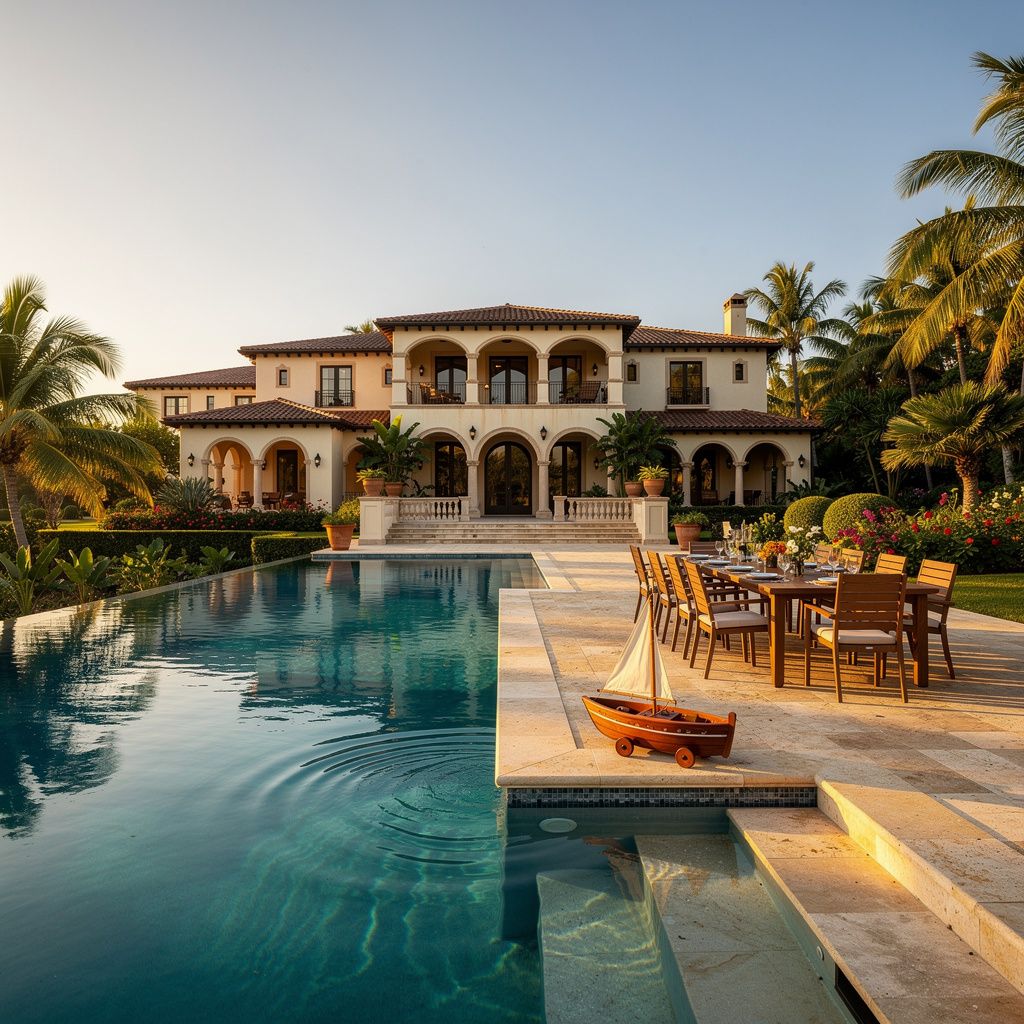
Family vacation villas exist in distinct architectural categories, each serving different group compositions and location preferences. Mediterranean-style villas, common in coastal regions, feature open floor plans with high ceilings, outdoor courtyards, and terrace dining areas. These designs prioritize indoor-outdoor living, ideal for warm climates and families valuing entertainment spaces.
Modern contemporary villas emphasize clean lines, minimalist design, and integrated technology. These properties typically feature floor-to-ceiling windows, smart home systems, and efficient spatial layouts. They appeal to families seeking contemporary comfort and technological convenience.
Traditional colonial and plantation-style villas, prevalent in Caribbean and tropical destinations, offer wraparound porches, ceiling fans, and natural ventilation designed for humid climates. These properties often feature heritage charm with modern updates.
Mountain and countryside villas prioritize views and natural integration, with large windows, fireplaces, and outdoor decks designed for seasonal activities. These properties serve families seeking retreat experiences and outdoor recreation access.
Urban villas, located in city centers or residential neighborhoods, maximize compact spaces with multi-level designs and efficient layouts. These accommodate families prioritizing walkable access to attractions and urban amenities.

Current Trends in Villa Design and Guest Experience
Contemporary family vacation villas increasingly incorporate sustainability features including solar power systems, rainwater collection, energy-efficient appliances, and eco-friendly materials. These features appeal to environmentally conscious families and reduce operational costs.
Smart home integration has become standard in modern properties, with app-controlled lighting, climate systems, entertainment centers, and security features. Families can adjust settings remotely before arrival, enhancing convenience and comfort.
Wellness amenities represent growing differentiation, with properties featuring home gyms, yoga studios, sauna facilities, and outdoor meditation spaces. These accommodate families maintaining fitness routines during vacations.
Flexible workspace integration addresses the growing trend of remote work during vacations. Dedicated office areas with high-speed internet, ergonomic furniture, and quiet environments enable parents to manage professional responsibilities while traveling.
Multi-generational design has become explicit, with properties featuring separate guest suites, accessible bathrooms, grab bars, and ground-floor bedrooms accommodating elderly family members. This intentional design recognizes the prevalence of three-generation family travel.
Essential Features and Specifications for Evaluation
Bedroom configuration directly impacts family comfort. Properties should provide private bedrooms matching group composition—families with young children benefit from master suites with en-suite bathrooms, while teenagers appreciate separate sleeping areas. Bed types matter significantly: queen and king beds suit couples, while twin and bunk beds serve children and teenagers. Properties with flexible sleeping arrangements accommodate unexpected guests.
Kitchen specifications determine meal preparation capability. Full kitchens with separate stove, oven, refrigerator, dishwasher, and counter space enable comprehensive cooking. Families should verify equipment quality—professional-grade appliances indicate serious cooking capability, while basic setups limit meal options. Adequate cookware, utensils, and serving dishes must be present; many villas lack sufficient items for group meal preparation.
Bathroom quantity and configuration significantly affect daily routines. Families of 8-10 people require minimum 3-4 bathrooms. Ensuite bathrooms in bedrooms reduce morning congestion. Half-baths in common areas serve guests without requiring bedroom access. Shower and tub combinations accommodate different preferences.
Climate control systems must handle group occupancy and regional conditions. Central air conditioning with zone control allows temperature customization across spaces. Ceiling fans supplement cooling and reduce energy consumption. Heating systems prove essential in cold-weather destinations.
Entertainment infrastructure includes television systems with streaming capabilities, board game collections, outdoor recreation equipment, and children's activity supplies. Properties should specify available entertainment options clearly, as this significantly impacts rainy-day activities.
Outdoor spaces determine recreation possibilities. Pools provide obvious recreation value but require safety considerations for young children. Patios with dining tables enable outdoor meals. Hot tubs appeal to families valuing relaxation. Gardens and landscaping create aesthetic value. Proximity to beaches or hiking trails determines activity access.
Comparison of Villa Categories and Typical Features
| Villa Type | Typical Capacity | Primary Location | Key Features | Best For |
|---|---|---|---|---|
| Beachfront Tropical | 6-12 guests | Caribbean, Southeast Asia | Ocean views, pools, water sports access | Families prioritizing beach recreation |
| Mountain Retreat | 4-10 guests | Alpine regions, highlands | Scenic views, fireplaces, hiking access | Families seeking nature immersion |
| Urban Contemporary | 4-8 guests | City centers | Modern design, walkable neighborhoods | Families preferring urban attractions |
| Countryside Manor | 8-16 guests | Rural regions | Large grounds, privacy, heritage features | Extended families seeking seclusion |
| Mediterranean Estate | 6-14 guests | Southern Europe, Middle East | Courtyards, terraces, outdoor living | Families valuing entertainment spaces |
Industry Landscape and Notable Villa Developments
The vacation villa market has professionalized significantly over the past decade. Property management companies now operate portfolios of vetted villas, providing standardized quality assurance, 24/7 guest support, and professional cleaning services. These platforms reduce risk for families unfamiliar with individual property owners.
Luxury villa segments have expanded dramatically, with high-end properties featuring private chefs, concierge services, and staff accommodations. These properties cater to affluent families seeking hotel-level service within private villa settings.
Boutique villa communities have emerged, where multiple properties share amenities including community pools, fitness centers, and activity coordination. These developments provide villa privacy with resort-style convenience.
Destination-specific villa clusters have developed around popular family vacation regions—Mediterranean coast properties, Caribbean islands, Central American beach destinations, and European countryside locations now feature established villa communities with consistent quality standards.
Selection and Decision-Making Framework
Systematic villa selection begins with defining group parameters: exact guest count, age ranges, mobility considerations, and duration. These factors determine minimum bedroom quantity, bathroom requirements, and necessary accessibility features.
Location assessment requires evaluating proximity to desired activities. Families prioritizing beach recreation need waterfront or short-distance properties. Families seeking cultural experiences require city-adjacent locations. Families valuing seclusion prioritize remote countryside settings.
Budget establishment should encompass total costs: nightly villa rental, security deposits, cleaning fees, service charges, transportation, and activity expenses. Understanding all-inclusive pricing prevents surprises and enables accurate budget comparison.
Amenity prioritization involves ranking non-negotiable requirements versus nice-to-have features. Some families require pools; others prioritize kitchens or proximity to attractions. Explicit prioritization prevents compromising on essential features.
Review analysis should examine recent guest feedback specifically addressing family experiences. Comments about children's activities, kitchen functionality, cleanliness standards, and property manager responsiveness provide practical insights beyond marketing descriptions.
Property manager evaluation assesses communication responsiveness, damage policies, cancellation flexibility, and support availability. Reliable property management significantly impacts problem resolution during stays.
Actionable Tips and Practical Best Practices
Optimize Kitchen Efficiency: Arrive with a prepared meal plan and shopping list. Coordinate cooking responsibilities among adult family members to prevent kitchen congestion. Prepare simple breakfasts in bulk—overnight oats, fruit platters, and coffee service—to streamline mornings with young children.
Establish Space Boundaries: Designate quiet areas for napping children and adult relaxation. Create activity zones—gaming areas, craft spaces, and outdoor recreation zones—to distribute family members and reduce conflicts in compact spaces.
Manage Technology Intentionally: Set screen-time expectations before arrival. Designate device-free meal times and evening activities. Leverage streaming services and downloaded content for rainy-day entertainment.
Coordinate Activity Schedules: Plan daily activities accommodating different age groups and interests. Alternate between group activities and individual pursuits to maintain family cohesion while respecting individual preferences.
Prepare for Maintenance Issues: Document property condition upon arrival with photos. Report issues immediately to property managers. Understand policies regarding minor repairs and guest responsibility boundaries.
Implement Safety Protocols: Identify emergency exits, locate first aid supplies, and verify security systems. Establish rules for young children regarding pool access, neighborhood exploration, and stranger interaction.
Plan Grocery Shopping Strategically: Shop immediately upon arrival before fatigue sets in. Identify nearby markets and specialty stores for dietary requirements. Stock staple items enabling flexible meal planning.
Frequently Asked Questions About Family Vacation Villas
What is the minimum group size making villas cost-effective compared to hotels? Generally, families of 6-8 people find villas cost-competitive with mid-range hotels when considering total accommodation costs. Larger groups of 10+ people typically achieve significant per-person savings. Smaller groups of 4-5 may find hotels more economical unless prioritizing kitchen access and space for other reasons.
How far in advance should families book vacation villas? Peak season properties (summer months, holiday periods, school breaks) require 3-6 months advance booking. Shoulder season properties can be booked 6-8 weeks ahead. Off-season properties may be available with 2-3 weeks notice. Earlier booking provides superior property selection and pricing flexibility.
What cleaning and housekeeping responsibilities do guests typically manage? Most properties require guests to maintain daily tidiness—loading dishwashers, wiping counters, and managing trash. Final deep cleaning is typically handled by property staff after checkout, though some properties charge additional fees for excessive mess. Clarify expectations in property descriptions and rental agreements.
How do vacation villas accommodate families with young children and infants? Quality family villas provide cribs, high chairs, and childproofing features. Verify specific equipment availability before booking. Properties should offer safety gates, outlet covers, and secure furniture anchoring. Confirm whether properties provide changing tables and baby-friendly kitchen equipment.
What insurance and cancellation protections should families consider? Travel insurance protecting against cancellation, medical emergencies, and property damage provides financial security. Understand property cancellation policies—flexible cancellation costs more but protects against family illness or emergencies. Damage deposits are standard; clarify what constitutes normal wear versus guest responsibility.
How do families manage transportation and activity coordination across multiple generations? Establish transportation logistics before arrival—determine vehicle rental needs, public transit access, and walking distances to attractions. Schedule activities accommodating different energy levels and interests. Build rest days into itineraries, particularly with young children and elderly family members.
Conclusion and Key Takeaways
Family vacation villas provide distinct advantages for multi-generational and extended family travel, offering private spaces, full kitchens, and flexible accommodations impossible in hotel settings. Success requires systematic evaluation of group composition, location priorities, essential amenities, and property management quality.
Effective villa selection balances budget constraints with non-negotiable requirements, prioritizes recent guest feedback addressing family experiences, and assesses property manager responsiveness and support capabilities. Understanding typical responsibilities—kitchen management, daily tidiness, and activity coordination—enables realistic expectations and prevents disappointment.
Actionable practices including kitchen optimization, intentional technology management, space boundary establishment, and activity scheduling transform villa experiences into memorable family vacations. Proper planning, clear communication with property managers, and flexible expectations enable families to leverage villa accommodations' unique benefits while managing inherent operational responsibilities.