Smart Home Robots Guide With Modern Home Automation and Robotics Insights
Smart home robots are becoming an increasingly visible part of modern home automation and robotics. These devices combine sensors, software, motors, cameras, artificial intelligence, and wireless connectivity to perform practical household tasks or provide assistance around living spaces.
From robotic vacuum cleaners and lawn-mowing robots to emerging home assistant robots, the category reflects a broader shift toward homes that can respond to routines and environmental conditions. Understanding how smart home robots work helps everyday users evaluate their capabilities, limitations, privacy considerations, and role within connected homes.
Context
What Are Smart Home Robots
Smart home robots are machines designed to operate within residential environments with varying levels of autonomy. Unlike ordinary household appliances, many robotic devices can sense their surroundings, make basic decisions, move through physical spaces, and adjust their actions according to programmed instructions.
A smart home robot may use cameras, infrared sensors, ultrasonic sensors, lidar, touch sensors, microphones, or other detection technologies. These components help the robot identify obstacles, recognize room layouts, detect changes in its surroundings, or determine where an activity needs to take place.
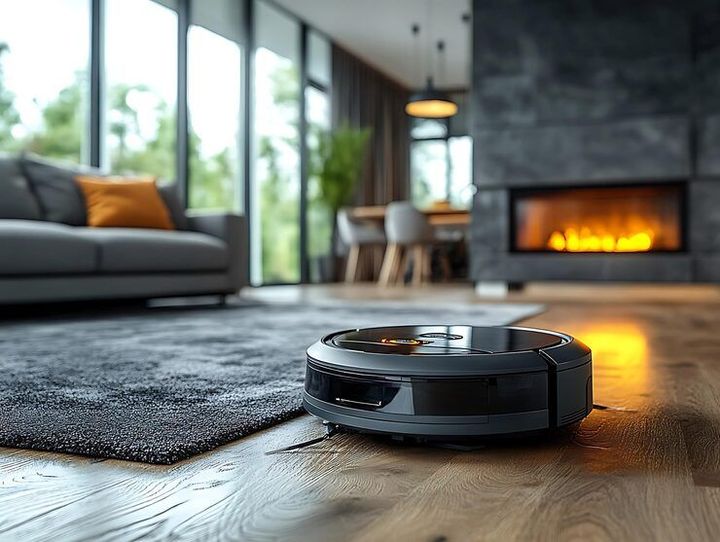
Common examples include robotic vacuum cleaners, robotic floor mops, window-cleaning robots, pool-cleaning robots, lawn-mowing robots, and experimental household assistant robots. Each category has a different purpose, operating environment, and level of autonomy.
How Home Robotics Developed
The concept of household robotics developed from earlier industrial and research robotics. Industrial robots demonstrated that machines could perform repeated physical actions with precision, while advances in computing, sensors, batteries, and wireless communication gradually made smaller robotic systems practical for residential environments.
Modern home automation added another important layer. Instead of operating as isolated machines, connected robots can communicate with smartphones, home networks, voice assistants, smart sensors, and other compatible devices. This creates a more integrated environment in which robotic activity can become part of household routines.
Core Technologies
Several technologies work together inside smart home robots.
- Sensors help detect objects, walls, furniture, stairs, people, and other environmental features.
- Navigation systems help a robot determine its location and plan movement.
- Artificial intelligence can support object recognition, pattern detection, and decision-making.
- Wireless connectivity allows communication with mobile applications and compatible smart-home equipment.
- Battery systems provide portable power for devices that move around a home.
- Mapping technology can create digital representations of rooms and movement areas.
The combination of these technologies determines how independently a robot can operate and how effectively it can respond to changes.
Importance
Why Smart Home Robots Matter
Smart home robots address several everyday challenges, particularly repetitive household activities. Cleaning floors, maintaining outdoor areas, and monitoring certain household conditions can require regular attention. Robotics can automate portions of these activities while reducing the amount of direct interaction required from the user.
The technology also demonstrates how home automation is moving beyond simple remote controls. Earlier connected-home systems primarily allowed users to switch lights, adjust temperatures, or manage appliances through an application. Smart home robots introduce physical movement and task execution into that connected environment.
Who Uses Home Robotics
Smart home robots can be relevant to households with different needs and routines. People with busy schedules may use automated cleaning equipment to manage recurring household activities. Older adults may find certain forms of automation useful for reducing repetitive physical tasks, although the suitability of a particular robot depends on individual circumstances.
Families and households with pets can also encounter practical applications for robotic cleaning equipment. However, robots still have limitations when dealing with clutter, stairs, delicate objects, unusual floor layouts, or unexpected obstacles.
Practical Challenges
Home robotics does not eliminate household responsibilities entirely. Robots need charging, maintenance, software updates, physical cleaning, and occasional human intervention. Their performance can also vary depending on floor surfaces, room arrangements, lighting conditions, connectivity, and the type of sensors used.
Privacy is another important consideration. Some smart home robots use cameras or microphones, while others create maps of indoor spaces. Users therefore need to understand what information a device collects, where it is processed, how long it is retained, and which permissions are required.
Smart Home Robot Categories
| Robot Category | Common Function | Typical Technology |
|---|---|---|
| Robotic Vacuum | Floor cleaning | Sensors, mapping, navigation |
| Robotic Mop | Floor mopping | Sensors, navigation, water controls |
| Lawn Robot | Outdoor grass maintenance | Navigation, boundary detection |
| Window Robot | Glass surface cleaning | Suction, sensors, movement controls |
| Pool Robot | Pool surface cleaning | Motors, sensors, filtration |
| Home Assistant Robot | Interaction and household assistance | AI, cameras, microphones, mobility |
Recent Updates
Artificial Intelligence and Robotics
From 2024 through 2026, artificial intelligence has become increasingly important in discussions about household robotics. Improvements in computer vision and machine learning allow some devices to identify objects and distinguish between different types of household environments.
Traditional robotic cleaners generally followed mapped routes and obstacle rules. Newer systems can use more advanced recognition techniques to classify objects, identify areas of a room, and adapt movement patterns. The exact capabilities vary considerably between devices.
More Connected Homes
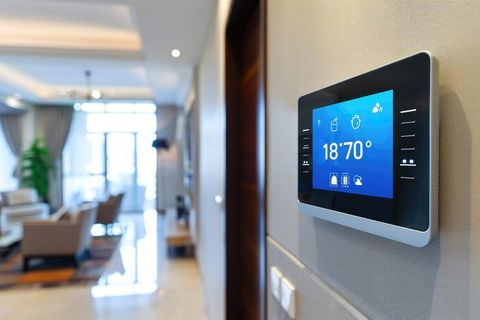
Another notable trend is greater integration between robotics and broader home automation systems. Smart home robots can increasingly interact with connected platforms through wireless networks, mobile applications, voice interfaces, and automation routines.
For example, a household system may coordinate a robotic cleaning routine with other connected devices. Such integration depends on compatibility, network reliability, supported communication standards, and software configuration.
Improvements in Navigation
Navigation technology has also continued to develop. Earlier robotic cleaners often relied on relatively simple movement patterns or basic sensors. Modern systems may combine cameras, lidar, inertial measurements, and other sensors to create more detailed maps.
Better navigation can help robots move around furniture, recognize boundaries, return to charging stations, and resume activities after interruptions. However, no navigation system is completely independent of environmental conditions.
Emerging General-Purpose Robots
A significant area of robotics research involves general-purpose home robots capable of handling multiple physical tasks. These systems are considerably more complex than single-purpose cleaning robots because they must understand varied environments, manipulate objects, navigate safely, and interact with people.
Research and demonstrations in this area have increased attention toward household robotics as a broader field. Practical availability, reliability, safety, affordability, and household acceptance remain important factors in determining how quickly general-purpose robots become common.
Laws or Policies
Privacy and Data Protection
Smart home robots can collect information that has privacy implications. Cameras may capture images, microphones may process speech, and mapping systems may record information about the physical layout of a home.
Privacy laws differ across jurisdictions, but many regulatory frameworks place requirements on organizations that collect, process, store, or share personal information. Users should review the privacy controls and data-handling information associated with connected robotic devices.
Product and Electrical Safety
Robotic household equipment is also influenced by general product safety, electrical safety, battery safety, and wireless communication requirements. Specific rules differ between jurisdictions and product categories.
Manufacturers may need to meet applicable technical requirements before equipment can be distributed in a particular market. Consumers should therefore pay attention to recognized safety markings, operating instructions, electrical requirements, and manufacturer documentation relevant to their region.
Children and Household Safety
Robots that move around living areas can create physical safety considerations. Moving mechanisms, rotating brushes, batteries, charging equipment, and automated movement can present hazards if devices are used incorrectly.
Household policies should therefore account for children, pets, stairs, wet areas, fragile objects, and restricted spaces. Safety guidance provided with the specific device is important because operating limitations vary between models.
Tools and Resources
Mobile Applications
Many smart home robots are managed through mobile applications. These applications may provide mapping controls, cleaning schedules, status information, notifications, maintenance reminders, and software configuration.
The available functions depend on the robot and its connected platform. Users should check application permissions and network requirements before connecting a robot to a household network.
Smart Home Platforms
Smart home platforms can help coordinate compatible devices. Depending on the ecosystem, users may be able to create routines involving lighting, environmental controls, security equipment, and robotic devices.
Compatibility remains important because not every robot communicates with every home automation platform. Supported standards and integrations should be checked before configuring an interconnected system.
Robot Mapping and Planning Tools
Mapping tools help users understand how a robotic device interprets its environment. Some systems allow rooms or restricted areas to be identified within a digital map.
These tools can improve control over where a robot operates, although maps may change when furniture or household layouts change. Regular inspection can help users identify navigation errors or unexpected areas.
Maintenance Resources
Maintenance information is another important resource. Manuals, troubleshooting guides, software update tools, replacement-part documentation, and technical support channels can help users understand routine care.
Common maintenance activities may include cleaning sensors, emptying collection containers, inspecting brushes, checking wheels, maintaining filters, and keeping charging areas clear. The exact requirements depend on the robot category.
FAQs
What are smart home robots?
Smart home robots are connected machines designed to perform household tasks with varying levels of automation. They can use sensors, software, navigation systems, and artificial intelligence to interact with their surroundings.
How do smart home robots work with home automation?
Smart home robots can connect with compatible home automation platforms through wireless networks or supported communication standards. This can allow scheduling, notifications, device coordination, and other automated routines.
Are smart home robots safe around children and pets?
Safety depends on the specific robot, its operating environment, and how it is used. Moving parts, batteries, stairs, water, and small objects can create risks, so household users should follow the device's safety instructions.
Do smart home robots collect personal data?
Some smart home robots can collect information through cameras, microphones, sensors, maps, or connected applications. The type of information varies by device, making privacy settings and data-handling policies important considerations.
What is the future of home robotics?
Home robotics is moving toward greater autonomy, improved navigation, stronger artificial intelligence, and broader integration with connected homes. General-purpose household robots remain an evolving area, while specialized robots are already used for specific tasks.
Conclusion
Smart home robots combine robotics, artificial intelligence, sensors, connectivity, and home automation to perform selected household activities. Their development has progressed from simple task-focused machines toward systems with more advanced navigation, environmental recognition, and connected functionality. Privacy, safety, compatibility, maintenance, and operating limitations remain important parts of understanding household robotics. As technology develops, smart home robots are likely to remain an important area of modern home automation and robotics research.