PVC Pipe Manufacturing Process: Machinery, Technology & Applications
PVC, or polyvinyl chloride, is one of the widely used thermoplastics for pipe production. PVC pipes are manufactured in different sizes, pressure classes, and formulations to support applications such as water distribution, drainage, irrigation, electrical conduits, and building systems.
The PVC pipe manufacturing process converts PVC resin and selected additives into a controlled pipe profile. Modern production lines combine material preparation, extrusion, sizing, cooling, haul-off, cutting, and inspection.
The process exists because infrastructure projects need consistent pipe dimensions, mechanical performance, chemical resistance, and predictable installation characteristics. Manufacturing technology helps producers maintain these properties while producing different pipe specifications.
Context: Understanding PVC Pipe Manufacturing
What Is PVC Pipe Manufacturing?
PVC pipe manufacturing is a thermoplastic processing operation in which a prepared PVC compound is heated and shaped through an extrusion die.
A typical production sequence includes:
- PVC resin and additives are prepared into a compound.
- The material is mixed and conditioned.
- The compound enters an extrusion machine.
- A screw conveys and melts the material.
- The molten PVC passes through a pipe die.
- Vacuum sizing establishes the required dimensions.
- Cooling tanks reduce the pipe temperature.
- Haul-off equipment moves the pipe through the line.
- Cutting equipment produces specified lengths.
- Printing or marking equipment identifies product information.
- Quality-control equipment checks dimensions and performance.
PVC-U, also called unplasticized PVC, is commonly used where rigid pipe characteristics are required. CPVC is another related material used for particular hot- and cold-water applications.
Main Materials Used
The primary material is PVC resin. Manufacturers may combine it with stabilizers, pigments, processing aids, impact modifiers, lubricants, and other formulation components depending on the intended application.
The formulation affects characteristics such as:
- Rigidity
- Impact resistance
- Thermal stability
- Surface finish
- Colour
- Long-term performance
- Processing behavior
Material selection needs to match the applicable pipe specification rather than relying only on general PVC properties.
Importance: Why PVC Pipe Manufacturing Matters Today
Infrastructure and Water Management
Pipes are fundamental to modern infrastructure. They transport water, remove wastewater, support drainage networks, and provide conduits for utilities.
PVC pipes can be manufactured in many diameters and configurations, allowing production systems to serve residential, commercial, agricultural, municipal, and industrial applications.
Consistent Manufacturing
A controlled extrusion process helps maintain dimensions across long production runs. Diameter, wall thickness, roundness, length, and surface quality are important because variations can affect installation and system performance.
Automated monitoring can also help identify process changes earlier. This is particularly relevant for high-volume production where small variations can become significant over time.
Applications Across Different Industries
Common PVC pipe applications include:
| Application | Typical Purpose |
|---|---|
| Potable water | Water distribution systems |
| Drainage | Removal of wastewater and rainwater |
| Sewerage | Underground wastewater networks |
| Irrigation | Agricultural water distribution |
| Construction | Building plumbing and drainage |
| Electrical | Cable and wire protection |
| Industrial systems | Selected fluid and process applications |
The appropriate PVC formulation and pipe specification depend on the operating environment and applicable standards.
Recent Updates: Manufacturing Technology and Industry Trends
Greater Process Automation
During 2025 and 2026, manufacturing discussions have increasingly focused on automation, process monitoring, energy efficiency, and improved quality control.
Modern PVC extrusion lines can integrate sensors and programmable control systems to monitor variables such as temperature, pressure, screw speed, haul-off speed, and cooling conditions.
These technologies support more consistent process control and can help operators identify deviations before they affect large quantities of production.
Advanced PVC Pipe Types
PVC technology has also expanded beyond conventional rigid PVC pipes. PVC-O, or oriented PVC, uses molecular orientation to achieve different mechanical characteristics.
Indian standards resources currently include IS 16647:2017 for oriented unplasticized PVC pipes for water supply, with testing activities recorded in 2025 and 2026.
PVC-U continues to be covered by multiple application-specific standards. For example, the Bureau of Indian Standards lists IS 4985:2021 for unplasticized PVC pipes for potable water supplies and IS 13592:2013 for PVC-U soil and waste discharge systems.
Improved Quality Monitoring
Recent laboratory and testing developments also show continued attention to pipe dimensions, hydrostatic pressure, impact resistance, material characteristics, and other performance requirements.
For example, BIS laboratory information published in 2025 and 2026 records testing activities associated with PVC pipe standards, including IS 4985 and IS 15328.
These developments indicate that manufacturing quality is increasingly connected with documented testing and standard-specific requirements.
Laws or Policies: Standards and Compliance
PVC pipe manufacturing is affected by technical standards, building requirements, drinking-water requirements, environmental regulations, and waste-management rules. Exact requirements vary by country and application.
Indian Standards
In India, the Bureau of Indian Standards maintains specifications covering different PVC pipe categories.
Examples include:
- IS 4985:2021 — unplasticized PVC pipes for potable water supplies.
- IS 13592:2013 — PVC-U pipes for soil and waste discharge systems.
- IS 15328:2003 — PVC-U pipes for underground drainage and sewerage.
- IS 15778:2007 — CPVC pipes for potable hot- and cold-water distribution.
- IS 12818:2010 — PVC-U screen and casing pipes for bore and tubewells.
The applicable standard should be checked according to the pipe's intended use, dimensions, material classification, and installation environment.
BIS also provides a Know Your Standard platform where users can search standards by number or product keyword and access related documents and testing information. The platform was updated on May 8, 2026.
Product Testing
Testing can cover characteristics such as dimensions, wall thickness, hydrostatic pressure resistance, impact resistance, material properties, and effects on water, depending on the relevant specification.
For potable-water applications, material safety and water-contact requirements are particularly important. BIS testing information for IS 4985 includes parameters related to PVC resin, VCM content, dimensions, hydrostatic pressure, impact resistance, and effects on water.
Manufacturers and project stakeholders should therefore consult the current national standard and applicable regulatory requirements rather than applying one general specification to every PVC pipe.
Tools and Resources for PVC Pipe Manufacturing
Extrusion Machinery
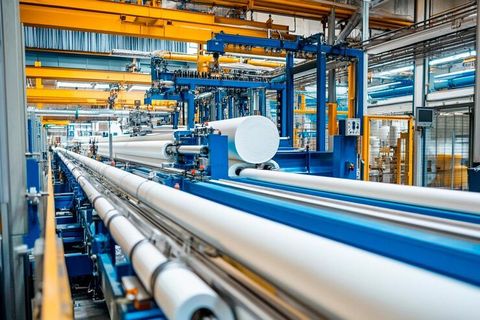
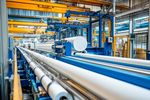
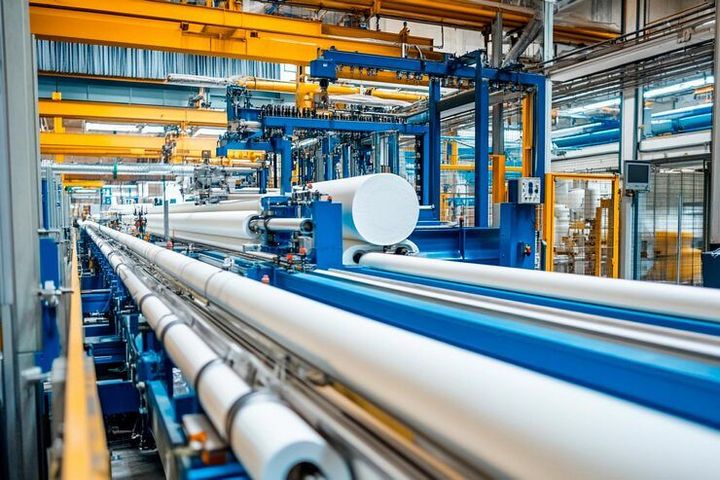
A standard PVC pipe extrusion line may contain:
- High-speed or conical twin-screw extruder
- Feeding system
- Pipe extrusion die
- Vacuum calibration tank
- Cooling tank
- Haul-off unit
- Cutting machine
- Printing or marking unit
- Pipe stacking system
Quality-Control Equipment
Common testing and measurement equipment includes:
- Digital diameter gauges
- Wall-thickness measurement tools
- Vernier and dimensional gauges
- Hydrostatic pressure testing equipment
- Impact testing equipment
- Vicat softening temperature equipment
- Density and material testing instruments
- Visual inspection systems
Digital Tools
Manufacturing teams may also use:
- Production monitoring dashboards
- Process-data logging systems
- Preventive-maintenance templates
- Material traceability records
- Quality inspection checklists
- Energy monitoring tools
- Pipe dimension calculators
- Pressure and flow calculation tools
These resources help connect production parameters with quality-control records and maintenance planning.
FAQs
What is the main machine used for PVC pipe manufacturing?
The extruder is the central machine in a PVC pipe production line. It heats, mixes, and pushes the PVC compound through a specially designed die to create the pipe profile.
What are the main stages of PVC pipe extrusion?
The main stages generally include material preparation, extrusion, die forming, vacuum sizing, cooling, haul-off, cutting, marking, and quality inspection.
What is the difference between PVC-U and CPVC?
PVC-U is unplasticized PVC and is widely used for rigid pipe applications. CPVC is chlorinated PVC with different temperature characteristics and is used in applications such as hot- and cold-water distribution where the relevant specification permits it.
How is PVC pipe quality checked?
Quality can be evaluated through dimensional inspection, wall-thickness measurement, visual checks, hydrostatic pressure testing, impact testing, and material-related tests. The exact tests depend on the applicable standard.
What factors affect PVC pipe extrusion quality?
Important factors include material formulation, moisture and material preparation, barrel temperature, screw speed, extrusion pressure, die condition, vacuum sizing, cooling temperature, haul-off speed, and cutting accuracy.
Conclusion
PVC pipe manufacturing combines polymer science, extrusion technology, mechanical equipment, process control, and quality testing. The basic production principle is straightforward, but achieving consistent pipe performance requires careful control of material preparation, temperature, pressure, sizing, cooling, and dimensional accuracy.