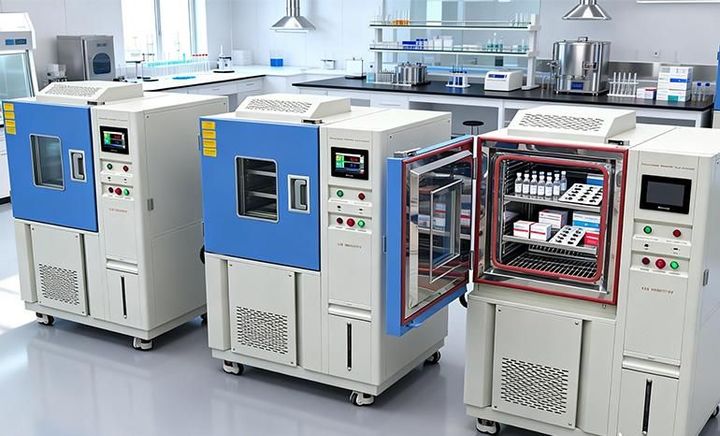
Precision Temperature Control: Explore Pharmaceutical Research, Biotechnology and Thermal Stability
Precision temperature control is an important part of pharmaceutical research, biotechnology, laboratory testing, and thermal stability studies.
It involves maintaining a selected temperature within a defined range while limiting unwanted fluctuations during an experiment or process. Temperature can influence chemical reactions, biological activity, material properties, sample integrity, and measurement results, making accurate thermal control important across many scientific environments.
Modern laboratories use temperature-controlled chambers, water baths, dry blocks, incubators, circulating systems, refrigerators, freezers, and programmable controllers to establish appropriate conditions. The required approach depends on the sample, temperature range, duration, stability requirement, and purpose of the study.
Context
What Is Precision Temperature Control?
Precision temperature control is the measurement and regulation of temperature around a defined set point. A sensor continuously or periodically measures temperature, while a controller adjusts heating or cooling equipment to maintain the selected condition.
A temperature-control system commonly contains a sensor, controller, heating or cooling mechanism, insulation, and monitoring interface. More complex systems can include data logging, alarms, multiple sensors, circulation pumps, and programmable temperature profiles.
The basic process involves:
Measuring the current temperature
Comparing it with the selected set point
Applying heating or cooling when needed
Monitoring the response
Recording the temperature history
Identifying deviations from predefined limits
The term precision can refer to several related characteristics. Stability describes how much the temperature changes over time, while uniformity describes differences between locations within a controlled area. Accuracy describes how closely the measured temperature corresponds to a reference value.
Temperature Control in Pharmaceutical Research
Temperature can influence the physical and chemical characteristics of pharmaceutical materials and formulations. Laboratory studies may therefore use controlled environments when evaluating stability, formulation behavior, processing conditions, analytical methods, or storage characteristics.
Research environments can involve samples that require controlled temperatures for extended periods. A small thermal variation may become relevant when a study compares samples under carefully defined conditions.
Temperature Control in Biotechnology
Biotechnology laboratories frequently work with biological materials, cultures, enzymes, proteins, cells, and other temperature-sensitive systems. These materials can respond to changes in their environment, making temperature regulation an important experimental variable.
Different procedures may require different temperature conditions. Some processes use moderate temperatures, while others require refrigerated or frozen environments. The appropriate range depends on the biological system and experimental protocol.
Thermal Stability Studies
Thermal stability refers to how a material, formulation, or biological system behaves when exposed to defined temperature conditions over a period of time.
A stability study may examine physical appearance, chemical characteristics, biological activity, moisture, particle behavior, or other measurable attributes. Controlled temperature chambers allow researchers to establish repeatable environmental conditions while collecting observations over time.
| Control characteristic | Meaning | Relevance |
|---|---|---|
| Accuracy | Difference from a reference temperature | Measurement reliability |
| Stability | Variation over time | Consistent exposure |
| Uniformity | Temperature variation by location | Sample comparability |
| Response time | Speed of temperature adjustment | Process control |
| Range | Minimum and maximum operating temperatures | Application suitability |
Importance
Protecting Sample Integrity
Temperature can affect the structure and behavior of sensitive materials. Excessive heat may accelerate unwanted chemical changes, while unsuitable low temperatures can alter physical characteristics or create freezing-related effects.
Maintaining the intended temperature can reduce uncontrolled environmental variation during research and testing. The required level of control depends on the material and the purpose of the study.
Improving Experimental Reproducibility
Scientific experiments often require repeated measurements under comparable conditions. Differences in temperature between experimental runs can influence results even when other variables remain unchanged.
A documented temperature profile makes it easier to compare experiments and identify whether observed changes are related to the tested material or environmental conditions.
Supporting Thermal Stability Testing
Controlled chambers are frequently used for studies that examine how samples behave under specified environmental conditions. Temperature may be maintained continuously for a defined period while samples are evaluated at selected intervals.
Researchers can combine temperature records with analytical results to understand how thermal exposure relates to observed changes.
Maintaining Biological Conditions
Biological systems can be particularly sensitive to temperature. Cell-based work, microbiological procedures, biotechnology experiments, and enzyme studies often require defined thermal environments.
Temperature control alone does not determine experimental results, but maintaining the appropriate thermal condition helps keep one important variable within its intended range.
Managing Laboratory Variability
Laboratory rooms can experience changes caused by weather, equipment operation, ventilation, door opening, and other factors. A controlled chamber separates sensitive experiments from some of these environmental changes.
This becomes particularly relevant for long-duration experiments and studies that require repeated conditions.
Recent Updates
Digital Temperature Monitoring
Current laboratory systems increasingly use digital controllers, electronic sensors, data logging, and automated alarms. These features allow temperature histories to be reviewed rather than relying only on a single displayed reading.
Digital records can also help identify temporary deviations that may not be visible during routine observation.
Programmable Thermal Profiles
Programmable temperature systems can create sequences involving gradual heating, holding periods, cooling, and repeated cycles. Such profiles are useful when an experiment requires several defined conditions.
Programming can reduce variation between repeated runs because the same sequence can be applied under controlled settings.
Multi-Sensor Systems
Some temperature-controlled environments use multiple sensors to evaluate temperature at different locations. This can provide information about spatial variation within a chamber, bath, or storage area.
Multi-point monitoring can be particularly useful when sample placement or chamber loading may influence temperature distribution.
Integrated Data Systems
Temperature equipment can increasingly be connected to digital laboratory systems for data storage and review. Recorded parameters may include actual temperature, set point, alarms, door status, humidity, and other environmental information.
The extent of integration varies according to equipment configuration and laboratory information systems.
Improved Thermal Stability Monitoring
Research laboratories increasingly combine controlled temperature environments with analytical measurements. A temperature record can be examined alongside physical, chemical, or biological test results to identify relationships between thermal exposure and sample changes.
This approach can provide a more complete view of sample behavior during stability investigations.
Laws or Policies
Pharmaceutical Research Requirements in India
Pharmaceutical research and manufacturing activities in India operate within a regulated framework that includes oversight by the Central Drugs Standard Control Organisation and applicable national requirements.
Temperature-controlled studies may form part of research, quality assessment, stability work, or manufacturing development. Documentation and laboratory procedures should follow the applicable institutional and regulatory framework.
Good Manufacturing Practices
Good Manufacturing Practice principles are relevant where temperature-controlled processes form part of regulated pharmaceutical manufacturing or quality activities.
Such controls can include equipment qualification, calibration, monitoring, maintenance, documentation, deviation handling, and defined operating procedures.
Biotechnology Research
Biotechnology laboratories may also work under institutional biosafety procedures, environmental requirements, and research guidelines depending on the materials and activities involved.
Requirements can vary according to whether work involves microorganisms, cell systems, recombinant materials, biological samples, or other regulated materials.
Calibration and Records
Temperature measuring instruments should be checked and calibrated according to the laboratory's quality system and intended use. Calibration records provide information about measurement performance against an appropriate reference.
For controlled studies, laboratories may also maintain records covering set points, measured temperatures, alarms, equipment identification, maintenance, and environmental conditions.
Tools and Resources
Temperature-Controlled Chambers
Environmental chambers and stability chambers are designed to maintain specified temperature conditions over extended periods. Some systems also regulate humidity and light exposure when required by the study.
The chamber configuration should correspond to the required temperature range, sample quantity, monitoring approach, and study duration.
Laboratory Water Baths
Water baths provide controlled liquid temperature around immersed containers. They are commonly used for sample warming, incubation, reaction studies, and other laboratory procedures.
Temperature uniformity depends on circulation, bath volume, sensor placement, and heating configuration.
Dry-Block Systems
Dry-block heaters use metal blocks containing wells for tubes, vials, or similar containers. They can provide controlled heating without requiring a liquid bath.
Interchangeable blocks may accommodate different vessel sizes, depending on the equipment design.
Temperature Data Loggers
Data loggers record temperature at defined intervals for later examination. They can be used inside chambers, storage areas, transport containers, or laboratory environments.
Recorded data can help identify excursions, compare conditions, and document temperature history during an experiment.
Monitoring and Calibration Tools
Useful tools can include:
Reference thermometers
Resistance temperature detectors
Thermocouples
Temperature calibrators
Data acquisition systems
Chamber mapping equipment
Alarm monitoring systems
The appropriate instrument depends on the temperature range, measurement uncertainty, response requirements, and laboratory procedure.
FAQs
Why is precision temperature control important in pharmaceutical research?
Precision temperature control helps maintain defined environmental conditions during formulation research, analytical studies, stability investigations, and other laboratory activities. Controlled conditions can reduce temperature-related variation between experiments.
How does precision temperature control support biotechnology?
Biotechnology procedures may involve temperature-sensitive biological materials and processes. Controlled environments help maintain the temperature range specified for a particular experimental protocol.
What is thermal stability testing?
Thermal stability testing examines how a material or sample behaves when maintained under defined temperature conditions for a specified period. Measurements may be taken at planned intervals to identify changes in relevant characteristics.
What equipment is used for precision temperature control?
Common equipment includes stability chambers, incubators, water baths, dry-block heaters, circulating temperature systems, refrigerators, freezers, and programmable environmental chambers.
How is laboratory temperature accuracy verified?
Temperature can be checked against an appropriate calibrated reference instrument. Laboratories may also perform temperature mapping to determine how conditions vary across different locations within a controlled environment.
Conclusion
Precision temperature control provides a controlled thermal environment for pharmaceutical research, biotechnology, stability investigations, and laboratory testing. Accuracy, stability, uniformity, response time, and operating range are distinct characteristics that influence how a temperature-control system performs. Recent laboratory practices increasingly incorporate digital monitoring, programmable profiles, multiple sensors, and electronic records. Calibration, documented procedures, equipment qualification, and appropriate laboratory safety controls remain important elements of reliable thermal management.