Pickle Mixing Machines Guide With Industrial Food Processing and Production Solutions
Pickle mixing machines are industrial food processing machines designed to combine vegetables, fruits, spices, salt, oils, sauces, and other ingredients used in pickle production. They provide controlled mixing so that ingredients can be distributed throughout a batch while reducing the need for repeated manual handling.
Pickle mixing machines can be used in small production environments as well as larger food processing facilities, depending on their capacity and configuration.
Pickle preparation has traditionally involved manual cutting, seasoning, mixing, and batch handling. As food production expanded, manufacturers developed mechanical equipment that could handle larger quantities while maintaining a controlled mixing process. Industrial pickle production may now use equipment for washing, cutting, mixing, seasoning, filling, sealing, and storage.
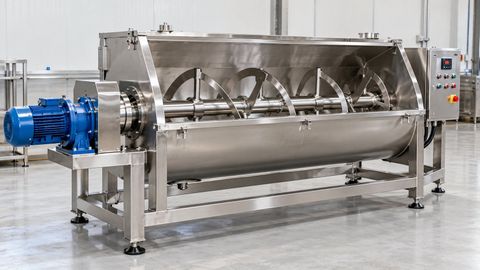
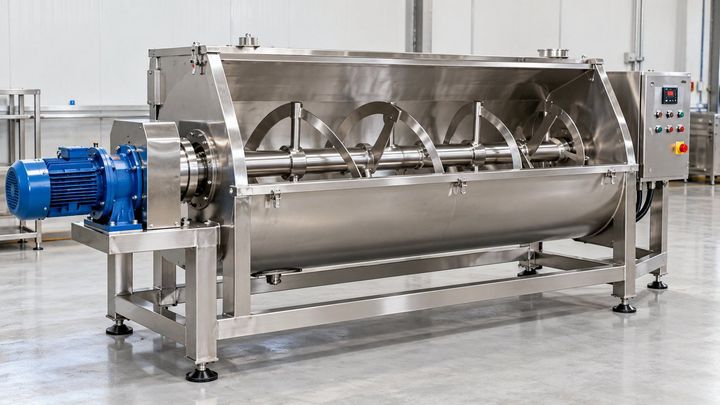
A pickle mixing machine generally consists of a mixing chamber, rotating blades or paddles, a drive system, a frame, and controls. Some designs use horizontal mixing chambers, while others use vertical arrangements. The internal mixing mechanism is selected according to the type, size, moisture level, and texture of the ingredients.
The machine is normally part of a wider production line. Raw vegetables or fruits may first pass through washing and preparation stages before entering the mixer. After mixing, the prepared product may move toward fermentation containers, filling equipment, packaging equipment, or controlled storage, depending on the recipe and production process.
How Pickle Mixing Machines Work
The basic process begins with prepared ingredients being placed into the mixing chamber. The machine rotates its mixing elements at a defined speed, moving the ingredients through the chamber and distributing seasonings or other components.
Mixing speed and duration depend on the formulation and physical characteristics of the ingredients. Excessive mechanical action may damage softer vegetables, while insufficient movement may result in uneven distribution.
Some industrial systems include variable-speed drives that allow operators to adjust the movement of the mixing mechanism. Controls may also monitor operating time and equipment status.
Main Components
A typical pickle mixing machine can include:
Stainless-steel mixing chamber
Rotating paddles, blades, or agitators
Electric motor and drive assembly
Variable-speed control
Loading and discharge openings
Control panel
Safety guards
Supporting frame
Cleaning and drainage arrangements
Food-contact surfaces are commonly designed with materials suitable for the intended food-processing environment. The precise construction depends on the product, cleaning process, operating conditions, and applicable regulations.
Importance
Pickle mixing machines are important because consistent ingredient distribution is a central part of batch food production. When vegetables, spices, salt, oil, and other ingredients are mixed, the process needs to account for different particle sizes, densities, moisture levels, and textures.
Industrial mixing equipment can also reduce repetitive manual movement. Operators can load measured ingredients into the machine, configure the required operating sequence, monitor the process, and transfer the completed mixture to the next stage.
Production Consistency
A controlled mixing process can help manufacturers reproduce a defined processing sequence across multiple batches. Factors such as mixing time, rotational speed, ingredient loading order, and batch quantity can be documented as part of production records.
Consistency does not depend on the mixer alone. Ingredient preparation, weighing, recipe control, storage conditions, cleaning procedures, and subsequent processing stages can all influence the final product.
Hygiene and Cleaning
Food processing equipment needs appropriate cleaning and sanitation procedures. Pickle production can involve acidic ingredients, salt, oils, spices, vegetable residues, and moisture, which may accumulate on equipment surfaces if cleaning is not properly managed.
Equipment design can therefore include smooth food-contact surfaces, accessible areas, drainage points, removable components, and suitable cleaning arrangements. The actual cleaning procedure depends on the equipment design and food safety program.
Production Workflow
A pickle processing line can include several stages:
Raw material receiving
Washing and inspection
Cutting or preparation
Ingredient weighing
Mixing
Seasoning or formulation
Fermentation or maturation where applicable
Filling
Sealing
Labeling
Storage
The arrangement depends on the type of pickle and production method. Some products may require fermentation, while others may follow a different preservation process.
Capacity Planning
Machine capacity is an important consideration in industrial food processing. A mixer that is too small for the required batch volume can create additional production cycles, while a machine with substantially greater capacity may require more floor space and supporting infrastructure.
Capacity planning should consider the actual working volume rather than only the physical volume of the mixing chamber. Ingredient density, product characteristics, loading method, and mixing behavior can affect the usable batch size.
Recent Updates
From 2024 through 2026, food processing equipment has continued moving toward automation, digital controls, improved hygiene design, energy monitoring, and greater process visibility. Pickle mixing equipment follows the broader development of connected food processing machinery.
Automated Mixing Controls
Modern pickle mixing machines may include programmable controls for mixing duration, rotational speed, batch sequences, and other operating parameters. Automated controls can reduce variation caused by manually repeating the same machine settings.
Some systems can record operating information that can later be reviewed as part of production documentation. More advanced processing lines can connect mixers with weighing, filling, conveyor, and packaging equipment.
Improved Material Handling
Automated conveyors and transfer equipment can reduce the amount of manual movement between preparation and mixing stages. Hopper systems can also support controlled ingredient loading where appropriate.
Material handling must be designed around the physical characteristics of the ingredients. Soft vegetables, liquid ingredients, powders, and coarse spices may require different transfer methods.
Digital Monitoring
Industrial food processing is increasingly incorporating sensors and monitoring systems. Depending on the equipment, sensors can track motor status, operating time, temperature, load conditions, or other selected parameters.
Digital records can support production analysis and maintenance planning. However, automated measurements still need suitable calibration, inspection, and human review.
Energy Management
Electric motors, pumps, conveyors, refrigeration systems, and other equipment contribute to overall energy consumption in a food processing facility. Variable-speed drives can regulate motor operation in suitable applications.
Facility operators may also monitor electricity use across different processing stages. This information can help identify equipment loads and support broader infrastructure planning.
Flexible Production
Food manufacturers may process multiple pickle varieties or different batch sizes. Flexible equipment configurations can allow production lines to accommodate defined changes in ingredients, mixing parameters, or batch quantities.
Recipe management systems can store process parameters for different products. Any such system still requires appropriate controls to prevent incorrect recipe selection or unintended changes.
Laws or Policies
Pickle mixing machines and industrial pickle production are affected by food safety, machinery safety, hygiene, electrical, labeling, environmental, and workplace requirements. The specific rules depend on the country, product type, facility activities, and applicable regulatory authorities.
Food Safety Requirements
Food processing facilities generally need controls covering hygiene, contamination prevention, cleaning, ingredient handling, storage, and production practices. HACCP-based food safety systems may be used to identify hazards and establish controls at relevant stages.
Food-contact equipment should be appropriate for its intended use. Cleaning procedures and production records may also form part of the facility's food safety management system.
Equipment Safety
A pickle mixing machine contains rotating mechanical components that can create hazards if accessed while operating. Guards, covers, emergency controls, and appropriate access arrangements can help manage these risks.
Maintenance may require isolation of electrical or mechanical energy before workers access internal components. The specific safety requirements depend on machine design and local workplace rules.
Environmental and Waste Requirements
Pickle production can generate vegetable residues, wastewater, packaging waste, and other materials. Facilities may need procedures for collection, treatment, storage, and disposal according to applicable environmental requirements.
Wastewater characteristics can vary according to ingredients and cleaning practices. Facilities should therefore assess their own wastewater streams rather than assuming that every pickle production process produces the same type of discharge.
Tools and Resources
Planning pickle mixing operations involves several types of technical and production resources. Equipment specification sheets can provide information about mixing capacity, motor power, dimensions, operating speed, materials of construction, discharge arrangements, and cleaning requirements.
Production worksheets can document ingredient quantities, batch sizes, mixing times, and process parameters. Facility-layout software can also help determine equipment placement, material movement, operator access, and cleaning areas.
Useful resources include:
Batch production worksheets
Ingredient weighing records
Mixing parameter tables
Equipment specification sheets
Facility layout drawings
Cleaning checklists
Preventive maintenance schedules
Food safety planning templates
Production monitoring dashboards
Inventory management systems
Energy monitoring platforms
Equipment inspection records
A simplified comparison of pickle mixing equipment configurations is shown below:
| Mixer Configuration | Typical Use | Main Planning Factor |
|---|---|---|
| Horizontal Mixer | Vegetable and seasoning batches | Chamber dimensions |
| Paddle Mixer | Gentle ingredient movement | Paddle configuration |
| Ribbon Mixer | Mixed dry and semi-moist ingredients | Product characteristics |
| Batch Mixer | Defined quantities per cycle | Batch size |
| Automated Mixer | Repeated programmed sequences | Control architecture |
| Integrated Mixing System | Connected production line | Equipment coordination |
Facility planning should also account for ingredient storage, weighing areas, washing zones, drainage, cleaning access, finished-product movement, and packaging equipment. Adequate space around the mixer is important for inspection and maintenance activities.
FAQs
What is a pickle mixing machine?
A pickle mixing machine is food processing equipment used to combine prepared vegetables or fruits with ingredients such as spices, salt, oil, and other components. It uses mechanical movement to distribute ingredients throughout a batch.
How does an industrial pickle mixing machine work?
Prepared ingredients are loaded into a mixing chamber, where rotating paddles, blades, or agitators move the materials through the chamber. Mixing time and speed can be controlled according to the product and equipment configuration.
What features are important in pickle mixing machines?
Important features can include suitable food-contact construction, mixing speed control, accessible cleaning areas, appropriate batch capacity, safety guards, controlled discharge, and programmable operating controls.
Can pickle mixing machines be automated?
Yes. Automated pickle mixing systems can use programmable controls, sensors, variable-speed drives, and production data systems. Automation may coordinate mixing sequences and connect the mixer with conveyors, weighing systems, filling equipment, or packaging machinery.
What factors affect pickle mixing machine selection?
Important factors include ingredient type, moisture level, particle size, batch quantity, desired mixing action, cleaning requirements, production layout, automation level, motor requirements, and applicable food-processing regulations.
Conclusion
Pickle mixing machines provide controlled mechanical mixing for vegetables, fruits, spices, salt, oils, and other ingredients used in industrial pickle production. Their design can range from simple batch mixers to automated systems connected with weighing, conveying, filling, and packaging equipment. Recent developments have emphasized programmable controls, digital monitoring, flexible production, hygiene-focused construction, and resource management. The appropriate processing arrangement depends on the ingredients, batch requirements, production workflow, cleaning procedures, facility layout, and applicable regulations.