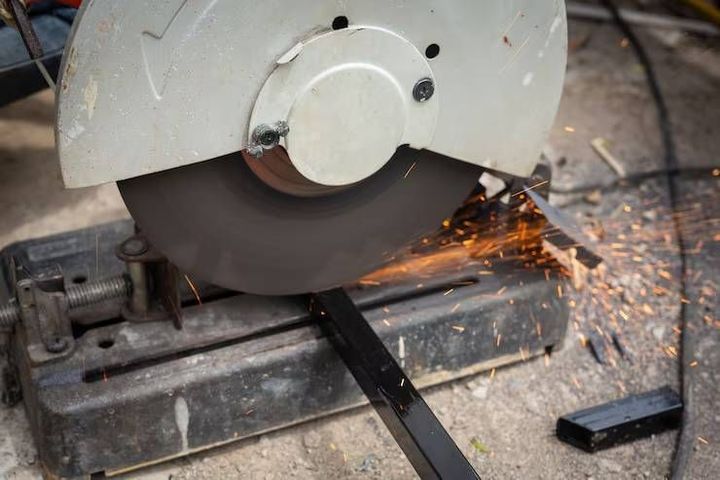
Metal Cutting Machine Overview: Cutting Processes, Machine Types, Components and Industry Applications
A metal cutting machine is equipment designed to separate, shape, or remove metal material according to a required size, profile, or geometry. Metal cutting has been part of manufacturing for centuries, beginning with manually operated tools and gradually developing into powered mechanical equipment, thermal cutting systems, laser machines, and computer-controlled production systems.
Context
Modern metal cutting machines use several different processes. Mechanical cutting may use blades, saws, or rotating tools, while thermal processes use heat to separate metal. Laser cutting uses a concentrated beam of light, plasma cutting uses an electrically generated plasma arc, and waterjet cutting uses a high-pressure stream of water, often with an abrasive material, to cut through suitable materials.
The appropriate process depends on factors such as material type, thickness, geometry, required edge characteristics, production requirements, and machine configuration. A machine used for thin sheet metal can therefore be quite different from equipment designed to process thick plate or complex three-dimensional components.
Main metal cutting processes
Metal cutting processes can be grouped according to how material is removed or separated.
Mechanical cutting physically separates the material using a blade, saw, punch, or cutting tool. This group includes band saws, circular saws, shearing machines, and CNC machining equipment.
Thermal cutting changes or removes material through heat. Common examples include oxy-fuel cutting, plasma cutting, and laser cutting. These processes are widely associated with sheet and plate processing.
Non-thermal cutting processes can reduce heat-related effects in certain applications. Waterjet cutting is one example. A high-pressure water stream, with abrasive particles when required, can cut various materials without using the same heat-based mechanism found in thermal cutting.
Importance
Metal cutting is a fundamental stage in many manufacturing processes because components often begin as sheets, plates, bars, tubes, profiles, or other stock forms. Cutting transforms these materials into dimensions and shapes that can subsequently be bent, welded, machined, assembled, or finished.
The process also affects material utilization, production planning, edge quality, and downstream operations. Selecting an unsuitable cutting method can create problems such as excessive heat-affected areas, unwanted deformation, rough edges, slower processing, or additional finishing requirements.
Common machine types
Different metal cutting machines are designed around different operating principles.
- Laser cutting machines use a focused laser beam to process suitable metals.
- Plasma cutting machines use an electrically generated plasma arc to cut conductive metals.
- Oxy-fuel machines use a fuel gas and oxygen-based thermal cutting process and are commonly associated with thicker steel applications.
- Waterjet machines use high-pressure water, with abrasive particles where required, for cold cutting applications.
- Band saws use a continuous toothed blade moving around wheels.
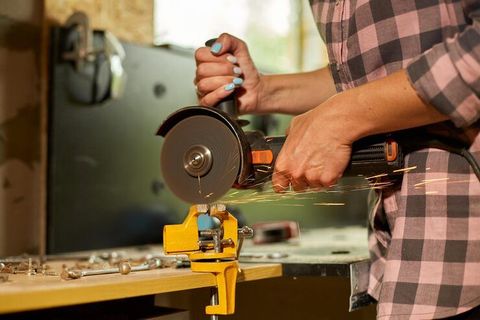
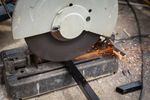
- Circular saws use a rotating disc with cutting teeth.
- Shearing machines use opposing blades to separate sheet or plate.
- CNC cutting machines use computer-controlled movement to follow programmed cutting paths.
These categories can overlap with broader machine-tool systems. For example, CNC equipment may control laser, plasma, routing, milling, or other cutting operations.
Metal cutting and textile machinery
Metal cutting should not be confused with textile weaving equipment, although both are important areas of industrial machinery. Looms are designed to interlace warp and weft yarns to produce fabric rather than cut metal.
Weaving looms include several configurations. Air jet looms use air to carry the weft yarn through the shed, while waterjet looms use a water stream for weft insertion. Rapier looms use mechanical rapiers to transport the weft yarn, and Jacquard looms use a control mechanism that allows individual warp yarns or groups of yarns to be raised according to the required pattern.
These loom types belong in the broader discussion of industrial machinery and manufacturing applications, but they are not types of metal cutting machines. Keeping the two categories separate helps avoid confusion when comparing machinery by process and function.
| Machine or process | Main operating principle | Typical material/application context |
|---|---|---|
| Laser cutting | Focused laser energy | Sheet and plate processing |
| Plasma cutting | Plasma arc | Electrically conductive metals |
| Oxy-fuel cutting | Thermal oxidation and heat | Suitable steel plate applications |
| Waterjet cutting | High-pressure water, often abrasive | Materials requiring limited thermal exposure |
| Band saw | Continuous toothed blade | Bars, tubes, profiles and stock |
| Shearing | Opposing cutting blades | Sheet and plate separation |
| CNC milling | Rotating cutting tools | Machined metal components |
| Circular saw | Rotating toothed disc | Bars, tubes and profiles |
Recent Updates
Recent developments in metal cutting have increasingly focused on automation, digital controls, process monitoring, energy management, and integration with wider manufacturing systems. CNC controls are becoming more closely connected with production planning and digital workflows, allowing cutting instructions to be generated and transferred electronically.
Laser cutting technology has also continued to develop through improvements in beam control, cutting heads, automation, material handling, and process monitoring. These developments are intended to improve consistency and simplify the management of increasingly complex production requirements.
Waterjet systems continue to have a role where thermal cutting may not be appropriate. Because waterjet cutting does not depend on a heat source in the same way as laser or plasma cutting, it can be relevant for applications where thermal effects need to be limited.
Automation is another significant trend. Material loading and unloading, part sorting, nozzle or tool management, inspection, and production tracking can be integrated with cutting equipment. Such systems can reduce the amount of manual handling required between individual production stages.
Digital control and machine integration
Modern CNC systems can interpret programmed geometry and control movement across several axes. CAD and CAM software can be used to prepare cutting patterns, toolpaths, nesting layouts, and machine instructions.
Sensors and monitoring systems can also provide information about machine operation. Depending on the equipment, monitoring may include cutting conditions, machine status, temperature, pressure, power consumption, or other process parameters.
These technologies do not eliminate the need for appropriate setup, maintenance, material selection, and operator knowledge. They instead provide additional methods for controlling and documenting production processes.
Laws or Policies
Metal cutting equipment is influenced by machinery-safety requirements, workplace rules, electrical requirements, environmental controls, and industry-specific regulations. The exact requirements depend on the location, machine design, process, and workplace conditions.
International standards provide technical references for several categories of machinery. ISO 17916 addresses safety requirements for thermal cutting machines, including machinery using oxy-fuel and plasma-arc processes.
Laser processing machines are covered by ISO 11553-1, which addresses hazards associated with laser radiation and related safety requirements. The standard was reviewed and confirmed as current in 2025. A newer 2026 edition, ISO 11553-2:2026, addresses safety requirements for hand-held or hand-operated laser processing machines.
Other machine-tool standards address particular equipment categories. ISO 16090-1:2022, for example, covers safety requirements for machining centres, milling machines, and transfer machines used for cutting cold metal and certain other materials.
Workplaces may also have requirements covering machine guarding, emergency stopping, electrical isolation, ventilation, fumes, noise, personal protective equipment, operator training, and maintenance procedures. These requirements should be interpreted according to the applicable rules where the machinery is installed.
Tools and Resources
Several technical resources can help readers understand metal cutting equipment and compare process characteristics.
CAD and CAM software
CAD software is commonly used to create or modify component geometry. CAM software can then translate geometry into machine instructions, cutting paths, nesting layouts, or other production data.
For sheet processing, nesting software can arrange multiple parts within a sheet layout. The objective is generally to organize the cutting pattern while considering part geometry, material dimensions, machine limitations, and required spacing.
Cutting parameter references
Machine manuals and process tables commonly provide information about parameters such as material type, thickness, cutting speed, power settings, gas requirements, nozzle selection, and other machine-specific conditions. These references should be used together with the specifications of the particular equipment.
Measurement and inspection tools
After cutting, measurement equipment can be used to check dimensions and geometry. Depending on the application, resources may include calipers, micrometers, gauges, coordinate measurement equipment, optical inspection systems, and digital measurement software.
Maintenance documentation
Maintenance logs can record inspections, consumable changes, lubrication, cleaning, alignment checks, filter replacement, and other machine activities. Digital maintenance systems may also associate records with individual machines and production equipment.
FAQs
What is a metal cutting machine?
A metal cutting machine is equipment used to separate, shape, or remove metal material. Examples include laser cutters, plasma cutters, waterjet machines, saws, shears, and CNC machine tools.
How does a waterjet metal cutting machine work?
A waterjet metal cutting machine directs a high-pressure stream of water toward the workpiece. Abrasive particles may be added when greater cutting capability is required. The process does not depend on the same heat-based cutting mechanism used by laser or plasma equipment.
What are the main types of metal cutting machines?
Common types include laser, plasma, oxy-fuel, waterjet, band saw, circular saw, shearing, and CNC machine tools. Each uses a different cutting principle and has different material and thickness considerations.
Are weaving looms used for metal cutting?
No. Weaving looms are textile machines used to interlace yarns into fabric. Air jet looms, waterjet looms, rapier looms, and Jacquard looms are examples of weaving machinery, while metal cutting machines process metal through mechanical, thermal, laser, or other cutting methods.
What components are found in a CNC metal cutting machine?
Depending on the machine, major components may include a machine frame, cutting head or tool, drive system, motors, linear guides, worktable, control system, sensors, power source, and material-handling equipment. The exact configuration varies according to the cutting process.
Conclusion
Metal cutting machines use mechanical, thermal, laser, waterjet, and other processes to transform metal stock into required shapes and dimensions. Machine selection is influenced by material characteristics, thickness, geometry, production requirements, and the desired cutting result. Recent developments have increased the use of CNC control, automation, monitoring, and digitally connected production systems. Weaving equipment such as air jet, waterjet, rapier, and Jacquard looms belongs to textile manufacturing rather than metal cutting, although these machines are relevant when examining industrial machinery as a wider category.