Label Printing Machine Guide: Printing Technologies, Machine Types, Materials and Application
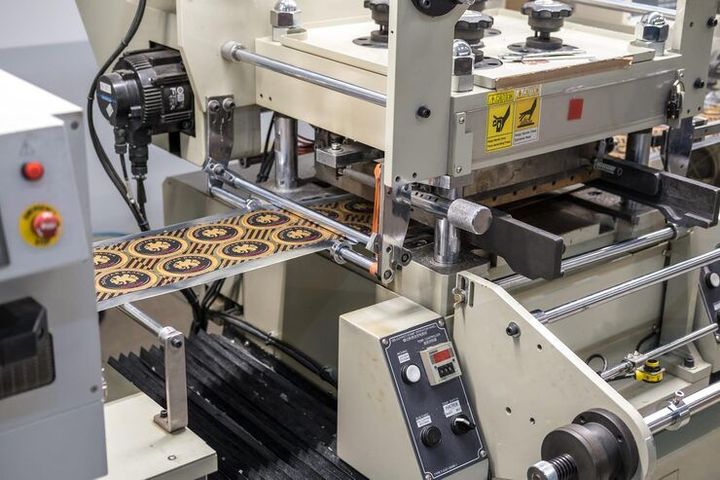
A label printing machine is equipment designed to print text, numbers, graphics, barcodes, QR codes, symbols, and other information onto label materials. Labels can be produced on paper, synthetic films, fabric-based materials, transparent substrates, and other surfaces depending on the intended application.
Context
Label printing developed alongside the wider growth of packaging, manufacturing, inventory management, logistics, retail identification, and product documentation. As products became more varied, manufacturers needed practical ways to place information directly on containers, packages, equipment, components, and individual items.
Today, label printing machines range from compact desktop units to industrial printing systems. The technology used can include thermal printing, inkjet printing, laser printing, flexographic printing, and digital label printing. Each approach uses different mechanisms and is suited to different production requirements.
Labels are not limited to packaged goods. They can also be used for equipment identification, component tracking, storage organization, educational materials, and musical instruments. A guitar, violin, veena, sitar, flute, drum, cello, keyboard, harmonium, ukulele, trumpet, or saxophone may have labels containing identification information, care instructions, model details, or other relevant information.
How a label printing machine works
A typical system moves label material through a printing area where text or graphics are transferred onto the substrate. Depending on the technology, the printing process may use heat, ink droplets, toner, printing plates, or digitally controlled printheads.
After printing, some systems can perform additional operations such as cutting, rewinding, laminating, perforating, or applying a protective layer. The exact configuration depends on the label format and intended application.
Common label printing technologies
| Printing technology | Basic method | Common applications |
|---|---|---|
| Direct thermal | Heat-sensitive material creates the image | Receipts, temporary identification labels |
| Thermal transfer | Heated ribbon transfers material to the label | Durable identification and inventory labels |
| Inkjet | Tiny ink droplets form text and graphics | Variable-data and color labels |
| Laser | Toner is transferred and fused to the substrate | Short-run and office-oriented labels |
| Flexographic | Flexible printing plates transfer ink | High-volume label production |
| Digital label printing | Digital files control the printing process | Variable graphics, short and changing runs |
The choice of technology depends on factors such as label material, print volume, required durability, image complexity, and whether information changes from one label to another.
Importance
Labels help organize information in environments where products, components, instruments, or packages need to be identified quickly. A clear label can communicate information without requiring a person to inspect an entire item or search through separate records.
For manufacturers, labels can contain product codes, serial references, batch information, handling instructions, or machine-readable data. In warehouses and other organized environments, barcode and QR-code labels can connect physical objects with digital records.
Labels for musical instruments
Musical instruments provide an interesting application because labels may need to fit small or curved surfaces while remaining readable. The information can vary according to the instrument and its intended use.
Examples include:
- Guitars may have identification, model, serial, material, or care-related labels.
- Violins may contain identification information placed in locations that do not interfere with normal handling.
- Veenas may use labels for identification, construction details, or care information.
- Sitars can use labels to distinguish instruments or record relevant specifications.
- Flutes may have small labels or markings for identification.
- Drums can use labels for model or component identification.
- Cellos and other string instruments may have identification information associated with the instrument.
- Keyboards and electronic musical instruments can use labels for model information, controls, or equipment identification.
- Harmoniums may use identification or care-related labels.
- Brass instruments such as trumpets, trombones, and saxophones can use labels or markings for identification and documentation.
The label material and adhesive should be compatible with the instrument surface. Wood, painted surfaces, metal, plastic, lacquered finishes, and textured materials can respond differently to adhesives and printing methods.
Information commonly printed on labels
A label may contain one or several information categories:
- Product or model identification
- Serial or reference numbers
- Barcodes
- QR codes
- Manufacturer information
- Material information
- Handling instructions
- Care instructions
- Size or specification details
- Production references
- Safety symbols where applicable
The information required depends on the application. A label used on a warehouse container can have different requirements from one attached to a guitar, violin, veena, or electronic keyboard.
Recent Updates
Label printing technology has increasingly moved toward digital workflows, variable-data printing, improved automation, and machine-readable information. Digital systems can change text, graphics, numbers, and codes between individual labels without requiring a conventional printing plate for every variation.
The printing industry is also placing greater attention on workflow consistency and color management. ISO 12647 standards provide process-control principles for several printing processes, while current guidance from ISO's graphic-technology work emphasizes standardized workflows for consistent print production.
Growth of digital and variable-data printing
Digital printing is useful when label content changes frequently. For example, a series of musical instruments can have different model references, serial numbers, specifications, or QR codes while using the same general label design.
Inkjet technology has also continued to develop, with industry discussions during 2025 highlighting improvements in digital label production, variable content, personalization, and finishing capabilities.
Expansion of 2D codes
Another notable development is the wider use of two-dimensional barcodes. GS1 describes QR Codes and GS1 DataMatrix as examples of 2D data carriers capable of containing more information than traditional linear barcodes within a compact printed area.
GS1's Ambition 2027 initiative is encouraging retail systems to develop the ability to read defined 2D barcodes alongside existing linear barcodes. The transition is expected to occur progressively rather than as an immediate replacement of traditional barcodes.
For label printing, this means modern systems increasingly need to handle machine-readable codes with sufficient clarity and positioning for reliable scanning.
Laws or Policies
Label printing is influenced by different regulatory and industry requirements depending on the product, application, and jurisdiction. Requirements may address product identification, consumer information, traceability, packaging information, environmental information, electrical equipment, chemicals, or safety-related communication.
Because requirements differ across regions and product categories, a label printing machine itself does not determine whether a particular label is legally sufficient. The content placed on the label must correspond to the rules applicable to the specific product and market.
Standards and printing controls
International printing standards can help define technical aspects of print production. ISO 12647 covers process-control principles for several printing methods, including offset, flexographic, gravure, and other processes. ISO 12647-6, for example, addresses process control for flexographic printing.
Barcode standards are another relevant area. GS1 publishes specifications covering barcode structures and identification systems, including 1D and 2D formats.
For musical instruments, requirements can vary according to whether a label is merely identifying an instrument or communicates information required under a particular regulation. Therefore, label content should be determined from the applicable product requirements rather than from the printing machine alone.
Tools and Resources
Several tools can help with label design, preparation, printing, and verification.
Label design software
Label-design applications allow users to create layouts containing text, graphics, barcodes, QR codes, serial references, and other variable information. Templates can help maintain consistent dimensions when many labels use the same basic structure.
Barcode and QR-code generators
Barcode and QR-code generation tools can convert structured information into machine-readable formats. When a code is intended for a specific supply-chain or identification system, the relevant specification should be followed rather than using an arbitrary format.
Measurement tools
A ruler, digital caliper, or label-dimension template can help determine the available printing area. This can be particularly useful for musical instruments, where curved surfaces and limited spaces may affect label dimensions.
Print-quality verification
Barcode scanners and verification systems can help check whether printed codes can be read correctly. For color printing, standardized proofing and process-control methods can help compare expected and printed results. ISO guidance describes workflows intended to improve consistency between digital design data and physical print output.
Label templates for musical instruments
A structured template can contain fields such as:
- Instrument type
- Model reference
- Serial reference
- Instrument dimensions
- Material information
- Care instructions
- Production reference
- QR code or barcode
- Manufacturer identification
For guitars, violins, veenas, sitars, cellos, flutes, drums, keyboards, harmoniums, and other instruments, the template can be adjusted according to the available surface and information requirements.
FAQs
What is a label printing machine?
A label printing machine is equipment that prints text, graphics, barcodes, QR codes, and other information onto label materials. Different machines use technologies such as thermal transfer, inkjet, laser, flexographic, or digital printing.
Which label printing technology is suitable for musical instruments?
The appropriate technology depends on the label material, surface, required durability, print volume, and information being printed. Guitars, violins, veenas, sitars, and other instruments may require different label materials and formats because their surfaces and finishes vary.
Can a label printing machine print QR codes?
Many modern label printing machines can print QR codes and other machine-readable symbols. The printer must have sufficient resolution and the label design must provide appropriate dimensions, contrast, and spacing for reliable scanning.
What materials can label printing machines use?
Common label materials include paper, synthetic films, transparent films, and other specialized substrates. Material selection depends on the surface, environmental conditions, durability requirements, and printing technology.
What information can be printed on instrument labels?
Instrument labels can contain model references, serial information, identification details, care instructions, material information, barcodes, QR codes, and other relevant data. The exact information depends on the instrument and its intended documentation requirements.
Conclusion
Label printing machines combine different printing technologies with label materials and digital workflows to produce identification and information labels for many applications. Digital, thermal, inkjet, laser, and flexographic systems differ in their operating methods and typical uses. Musical instruments such as guitars, violins, veenas, sitars, flutes, drums, and keyboards can use appropriately designed labels for identification and documentation. Recent developments in digital printing and 2D codes are also expanding the types of information that labels can communicate.