Industrial Robotics Guide: Robot Types, Automation Processes, Functions and Industrial Uses
An Industrial Robotics Guide explains the types of industrial robots, their functions, automation processes, and uses across manufacturing and other industrial environments. Industrial robots are programmable machines designed to perform physical tasks such as moving materials, welding metal, assembling components, inspecting products, and handling repetitive operations.
Context
An Industrial Robotics Guide explains the types of industrial robots, their functions, automation processes, and uses across manufacturing and other industrial environments. Industrial robots are programmable machines designed to perform physical tasks such as moving materials, welding metal, assembling components, inspecting products, and handling repetitive operations. Their development grew from advances in mechanical engineering, electrical control, and computer programming, which made it possible to automate tasks previously carried out mainly by human workers.
Industrial robotics became increasingly important as factories sought more consistent production processes and ways to handle repetitive, heavy, or hazardous work. Modern industrial robots can operate as individual machines or as part of a connected production line containing sensors, conveyors, machine tools, and computer-controlled equipment.
Main Types of Industrial Robots
Industrial robots differ in their structure, movement, working range, and intended applications. The main categories include:
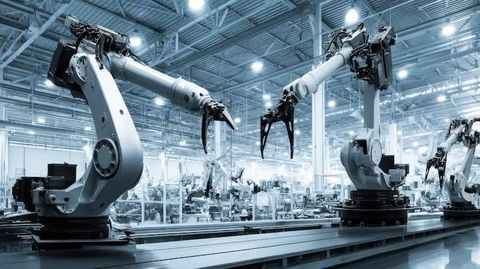
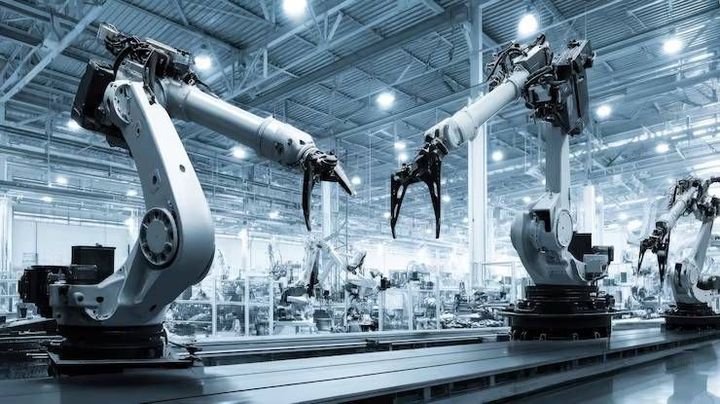
Articulated robots: Robots with several rotary joints, similar in movement to a human arm. They are commonly used for welding, painting, material handling, and assembly.
SCARA robots: Machines designed for fast movements across a horizontal working plane, often used in small-part assembly and packaging.
Cartesian robots: Systems that move along straight linear axes. They are used for machine loading, material positioning, and precision movement.
Delta robots: Lightweight parallel-link robots often used for sorting, picking, and placing small objects at high speeds.
Cylindrical robots: Machines that combine rotary movement with linear motion, making them suitable for certain handling and assembly tasks.
Collaborative robots: Often called cobots, these are designed to support applications where people and robots may work in the same general area, subject to appropriate safety measures.
Each category has different capabilities. Robot selection depends on the task, required reach, payload, movement accuracy, operating speed, and conditions in the surrounding workplace.
How Industrial Robots Work
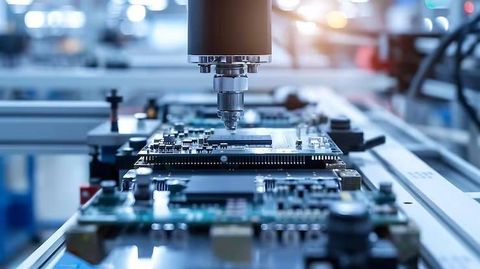
An industrial robot typically combines a mechanical structure, motors, sensors, a controller, and an end effector. The controller executes programmed movements, while sensors may provide information about position, force, distance, temperature, or the presence of an object.
The end effector is the component that interacts with the workpiece. It may be a gripping tool, welding torch, suction device, screwdriver, or specialized inspection instrument. Changing the end effector can allow a robot to perform different operations, provided its mechanical capacity and control system support the application.
Importance
Industrial robotics matters because it affects how products are manufactured, assembled, inspected, packaged, and moved. Industries such as automotive manufacturing, electronics, food processing, pharmaceuticals, metal fabrication, and logistics use robotic systems for different purposes. The exact level of automation varies according to production volume, product complexity, safety requirements, and available infrastructure.
Robots can perform repeated movements with consistent programmed parameters and can handle some operations that involve heat, sharp materials, heavy loads, or exposure to hazardous environments. However, automation does not eliminate every production problem. Equipment still requires maintenance, process monitoring, suitable programming, and trained personnel.
Industrial Automation Processes
Industrial automation combines machinery, control software, sensors, and communication systems to manage production activities. Robots may operate within several connected stages:
Material handling: Moving raw materials, components, or finished products between work areas.
Assembly: Positioning and joining components according to programmed instructions.
Welding and cutting: Following controlled paths to join or separate materials.
Machine tending: Loading and unloading equipment such as CNC machine tools.
Inspection: Using cameras, sensors, or measurement tools to identify selected product defects.
Packaging and palletizing: Placing products into containers or arranging packages for transport.
A production cell may contain one robot or several robots working alongside conveyors and automated inspection equipment. Its design must account for how materials enter and leave the cell, how faults are detected, and how workers can access the equipment safely.
Benefits and Practical Limitations
Industrial robotics can support repeatable processes, production continuity, and improved control over certain tasks. It may also reduce direct human involvement in particular hazardous or physically demanding operations.
Nevertheless, robotics introduces technical and organizational challenges. Equipment integration, programming, maintenance, staff training, workspace design, and production interruptions all require planning. Robots may also struggle with irregular objects, changing product designs, or tasks that depend on complex judgment unless additional sensing and control capabilities are provided.
The following table summarizes common robot categories and their industrial applications.
| Robot type | Typical movement | Common industrial uses |
|---|---|---|
| Articulated | Multiple rotary joints | Welding, painting, assembly |
| SCARA | Horizontal-plane movement | Small-part assembly, packaging |
| Cartesian | Linear-axis movement | Positioning, machine loading |
| Delta | Parallel-link movement | Picking, sorting, placing |
| Cylindrical | Rotary and linear movement | Handling, selected assembly tasks |
| Collaborative | Varies by design | Assembly, inspection, assisted handling |
These applications are examples rather than strict limits. A robot's actual capabilities depend on its configuration, tooling, controller, and operating environment.
Recent Updates
Industrial robotics continues to develop through improvements in sensing, artificial intelligence, machine vision, connectivity, and programming tools. Across 2024–2026, industry trends have included greater attention to flexible automation, easier robot deployment, digital monitoring, and the integration of robotics with wider manufacturing systems. Adoption differs across industries and depends on technical requirements and investment priorities.
Artificial Intelligence and Machine Vision
Machine vision uses cameras and image-processing software to help robots identify objects, locate components, inspect surfaces, or guide movements. Newer vision systems increasingly incorporate AI techniques that can interpret more varied visual information than conventional rule-based systems in some applications.
AI-enabled robotics may help with tasks involving different object positions or product variations. However, reliability depends on the quality of training data, lighting, sensor placement, the environment, and the consequences of an incorrect decision. Safety-critical functions require appropriate safeguards rather than reliance on AI interpretation alone.
Flexible Robotics and Digital Monitoring
Flexible robotic systems can be reconfigured for different products or production tasks. Improved interfaces, simulation software, and reusable programming components can simplify parts of the setup process, although complex applications may still require specialist integration.
Digital monitoring can combine robot data with information from production machines and factory networks. Manufacturers may use these systems to observe operating status, track cycle times, identify recurring faults, and plan maintenance. Connected equipment also introduces cybersecurity concerns, including unauthorized access, insecure remote connections, and disruption to production networks.
Human-Robot Collaboration
Collaborative robotics remains an area of interest for applications requiring adaptable equipment or shared work areas. A collaborative robot is not automatically safe for every task or workplace. The robot, tooling, workpiece, movement speed, surrounding machinery, and possible contact hazards must all be considered when assessing the complete application.
Laws or Policies
Industrial robotics is affected by workplace safety legislation, machinery requirements, electrical safety standards, and regulations concerning particular industries. The applicable rules depend on the country, equipment type, installation, and intended use. International standards can provide technical guidance, but their legal status varies by jurisdiction.
Industrial Robot Safety in India
In India, industrial robot installations must be considered within the relevant occupational safety, factory, electrical, and machinery requirements applicable to the workplace. The Occupational Safety, Health and Working Conditions Code, 2020, forms part of the country's labour-law framework, while implementation and applicable requirements depend on commencement notifications and relevant rules.
Factories may also be subject to applicable state rules, electrical requirements, fire safety provisions, and industry-specific obligations. Employers and system integrators need to consider risks arising from robot movement, crushing points, unexpected startup, electrical hazards, and maintenance work.
Technical Standards and Risk Assessment
International standards provide guidance for the design and safe integration of industrial robots. ISO 10218 addresses industrial robot safety, including requirements relevant to robots and their integration into industrial applications. ISO/TS 15066 provides additional guidance for collaborative robot applications.
Standards should be interpreted according to the relevant edition, scope, and local legal requirements. A safe installation may require physical guards, interlocked access points, presence-detection equipment, emergency-stop controls, restricted operating zones, and procedures for isolating energy during maintenance.
Cybersecurity is another consideration when robots connect to factory networks or remote monitoring systems. Access controls, network separation, software updates, and incident-response procedures can help address risks to production systems. The appropriate controls depend on the installation and its operational requirements.
Tools and Resources
Several technical resources help manufacturers understand industrial robotics, plan automation cells, and evaluate system performance. Their suitability depends on the user's experience, equipment, and production requirements.
Robot Simulation and Programming Software
Robot simulation software allows engineers to model robot movements, check reach, estimate cycle times, and identify possible collisions before physical installation. Examples include ABB RobotStudio, FANUC ROBOGUIDE, and Siemens Process Simulate. Features vary by software version, supported robot models, and licensing arrangements.
Robot programming environments are used to create movement instructions, coordinate tools, and connect equipment with production controls. Simulation results depend on how accurately the virtual model represents the actual robot, tooling, materials, and work area.
Technical Information and Standards
Manufacturer documentation can provide payload limits, working envelopes, controller specifications, maintenance procedures, and programming instructions. The International Organization for Standardization (ISO) publishes information about relevant technical standards, while India's Directorate General Factory Advice Service and Labour Institutes (DGFASLI) provides occupational safety and industrial health resources.
Industrial Robotics Planning Checklist
An initial automation assessment commonly considers:
Task definition: The operation, required output, and expected product variation.
Robot capacity: Payload, reach, movement range, and positioning requirements.
Tooling: Grippers, welding equipment, cameras, or other end effectors.
Integration: Connections with conveyors, machine tools, sensors, and controllers.
Safety: Risk assessment, protective measures, access control, and maintenance procedures.
Monitoring: Fault detection, production records, and maintenance planning.
A clear assessment helps explain how the robot will fit into the complete production process rather than treating it as an isolated machine.
FAQs
What are the main types of industrial robots?
The main types include articulated, SCARA, Cartesian, delta, cylindrical, and collaborative robots. They differ in movement, reach, payload capacity, and typical applications.
How are industrial robots used in manufacturing?
Industrial robots are used for welding, assembly, machine tending, material handling, inspection, painting, packaging, and palletizing. Their functions depend on the robot configuration and installed tooling.
What is the difference between industrial robotics and industrial automation?
Industrial robotics focuses on programmable machines that perform physical tasks. Industrial automation is broader and can include robots, sensors, conveyors, control systems, software, and automated production equipment.
How does AI improve industrial robotics?
AI can help robots interpret camera images, recognize objects, adapt to some variations, and analyze operating data. Performance depends on the application, available data, and the safeguards used.
What safety standards apply to industrial robots in India?
Applicable requirements may include Indian workplace safety and factory regulations, electrical rules, and relevant technical standards such as ISO 10218. Specific obligations depend on the installation, workplace, and rules in force.
Conclusion
Industrial robotics combines programmable machinery, control systems, sensors, and specialized tools to perform tasks across manufacturing and industrial operations. Different robot types support different movement patterns and production requirements, while AI, machine vision, and digital monitoring are expanding some applications. Safe implementation depends on risk assessment, correct integration, maintenance, and compliance with applicable regulations. Understanding these factors provides a foundation for evaluating industrial robot systems and their role in modern production.