Industrial Drilling & Boring Machines: Precision Buyer Guide
Choosing the right metalworking equipment defines the accuracy, production speed, and profitability of any modern machine shop or heavy manufacturing facility. Whether your operation requires creating clean initial holes or enlarging existing bores to tight aerospace tolerances, understanding the capabilities of industrial drilling and boring machines ensures a high-return capital investment.
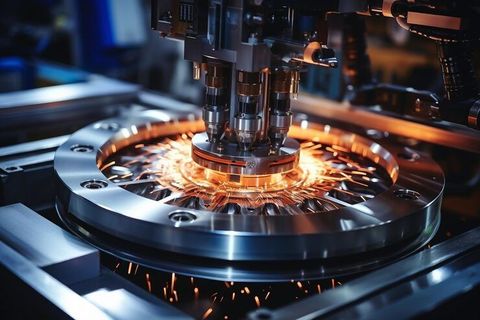
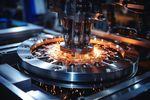
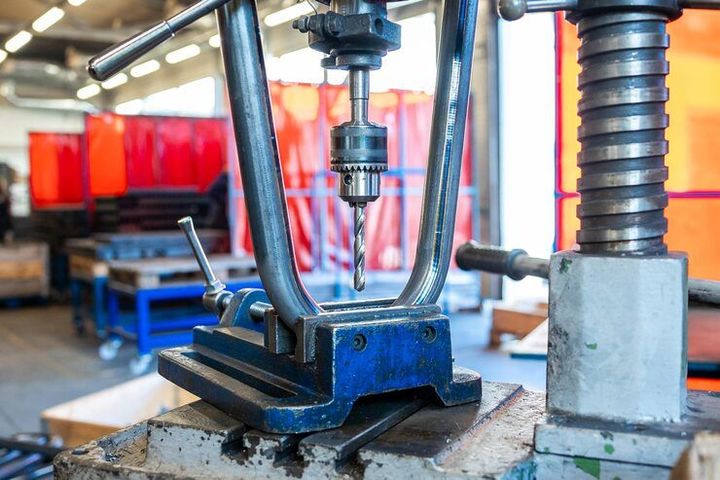
Drilling and boring are fundamental machining operations, yet they serve distinct stages in metal fabrication and component manufacturing. Drilling is a primary cutting process that uses a multi-point rotating drill bit to create a brand-new cylindrical hole in a solid workpiece. While modern heavy-duty drill presses and CNC drilling centers deliver rapid material removal and high throughput, standard drilling inherently leaves slight variations in surface finish and geometric straightness due to tool deflection.
Boring is a secondary precision finishing operation performed on an already existing hole that was previously drilled, cast, or forged. Utilizing a single-point cutting tool mounted on a rigid boring bar, a boring machine enlarges the internal diameter, corrects alignment errors, and achieves ultra-fine surface finishes. Facilities producing engine blocks, hydraulic cylinders, turbine housings, and heavy structural frames rely on precision boring mills when tolerances must stay within microns.
Major Types of Industrial Drilling Machines
Selecting the correct drilling equipment depends heavily on workpiece size, batch volume, and material hardness. Different structural designs offer specific advantages for workshop floor layouts and production workflows.
Heavy Duty Radial Arm Drill Presses
A radial arm drill press is engineered for large, heavy, or awkwardly shaped workpieces that cannot be easily repositioned under a stationary spindle. The drill head slides along a horizontal radial arm that swings around a sturdy vertical column, allowing operators to position the cutting tool directly over multiple hole locations without moving the clamped part. This design makes radial drilling machines indispensable in structural steel fabrication, shipbuilding, and heavy equipment repair shops.
Multi-Spindle and Gang Drilling Centers
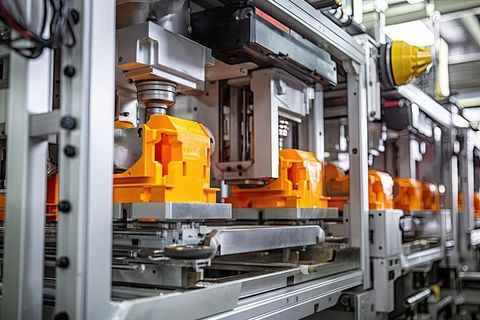
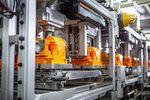
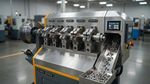
When high-volume manufacturing demands drilling multiple holes simultaneously or performing sequential operations like drilling, countersinking, and tapping in one setup, multi-spindle and gang drilling machines provide unmatched efficiency. Gang drills place several independent drill heads side-by-side over a single long worktable, enabling a single operator to slide fixtures smoothly from one station to the next. Automated CNC drilling centers take this productivity further by integrating high-speed tool changers and programmable coolant systems for continuous unmanned production runs.
Essential Categories of Industrial Boring Mills
Boring machinery is built with massive cast-iron frames and precision linear guideways to eliminate vibration during deep or large-diameter internal cuts. Depending on part geometry, buyers typically evaluate horizontal or vertical configurations.
Horizontal Boring Mills
A horizontal boring mill features a spindle oriented parallel to the shop floor, combined with a heavy-duty rotary worktable that moves along multiple axes. This configuration excels at machining massive, boxy components such as gearbox casings, pump housings, and locomotive frames from multiple sides in a single clamping setup. Modern CNC horizontal boring and milling machines often integrate extendable quills and facing heads, allowing shops to perform milling, drilling, threading, and deep line boring on one versatile platform.
Vertical Boring and Turning Mills
For exceptionally large, heavy, and symmetrical round components—such as wind turbine bearings, flywheel rings, valve bodies, and aerospace rings—a vertical boring mill offers superior stability. In this setup, the workpiece is clamped securely onto a massive horizontal rotating chuck while the cutting tools move vertically and horizontally on an overhead cross-rail. Gravity naturally assists in seating the heavy part onto the table, preventing distortion and ensuring concentric accuracy across large diameters.
Key Buying Factors and Commercial Evaluation
Investing in capital metalworking machinery requires balancing upfront equipment expenditure with long-term operational reliability, tooling compatibility, and after-sales service support. Procurement teams and shop owners should evaluate several technical specifications before requesting formal quotes from industrial machinery suppliers.
Spindle Power, Torque, and Taper Standards
Motor horsepower and low-end spindle torque determine how effectively a machine cuts tough alloys like stainless steel, titanium, and cast iron without stalling. Buyers must verify that the spindle taper standard—such as ISO, BT, CAT, or HSK—matches their existing tool holder inventory to avoid unexpected tooling replacement expenses. High-pressure through-spindle coolant capability is another critical feature that extends carbide insert life and clears metal chips during deep-hole drilling and boring.
CNC Control Systems and Structural Rigidity
The CNC controller acts as the operational brain of modern machining equipment, directly impacting programming speed, operator training time, and diagnostic capabilities. Evaluating user-friendly interfaces alongside reliable servo drives ensures smooth interpolation and repeatable positioning accuracy over years of multi-shift operation. Equally important is examining machine weight, box-way versus linear-guide construction, and thermal compensation features, as heavier ribbed castings absorb cutting vibrations and protect finished part quality.
Total Cost of Ownership and Maintenance Support
Beyond the initial purchase price, freight, foundation installation, and electrical commissioning represent significant project costs for large horizontal and vertical boring mills. Smart buyers prioritize machinery suppliers offering local spare parts availability, preventive maintenance contracts, and rapid field service technicians to minimize costly production downtime. Reviewing warranty terms on critical assemblies like ball screws, spindle bearings, and rotary encoders protects your manufacturing budget well after installation.
Disclaimer
The technical specifications, machining capabilities, and commercial purchasing insights provided in this article are intended strictly for general informational and educational purposes. Machinery pricing, power requirements, and tolerance capabilities vary significantly based on manufacturer configurations, custom tooling packages, and regional industrial standards. Always consult qualified mechanical engineers, certified industrial machinery dealers, and official equipment manuals before making capital equipment investments or operating heavy metalworking machinery.