Ice Cream Making Machines Guide With Automated Processing and Food Industry Solutions
Ice cream making machines are food-processing systems designed to mix, freeze, aerate, and dispense or package ice cream and related frozen desserts. Depending on their configuration, these machines can support individual batches, continuous production, or integrated industrial processing lines.
Ice cream making machines are used in restaurants, dessert production facilities, dairy processing plants, food factories, and other environments where frozen products are prepared.
Traditional ice cream production involved manually mixing ingredients and using mechanical freezing equipment. As production volumes increased, specialized machinery was developed to control temperature, mixing, freezing, and air incorporation more consistently. Modern equipment can combine refrigeration systems, mixing mechanisms, pumps, sensors, programmable controls, and automated cleaning features.
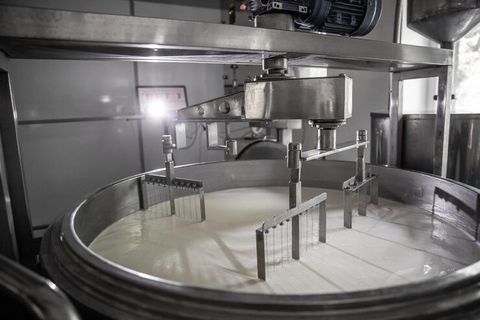
A complete ice cream processing line may contain several machines rather than one unit. Ingredient preparation can be followed by pasteurization, homogenization, aging, freezing, flavor or inclusion addition, filling, hardening, and cold storage. The configuration depends on the product formulation, production volume, packaging format, and required processing controls.
How Ice Cream Making Machines Work
The process generally begins with a prepared liquid mix containing ingredients such as dairy components or suitable alternatives, sweeteners, stabilizers, flavoring ingredients, and other permitted food ingredients. The mix may undergo heat treatment and homogenization before entering a controlled cooling or aging stage.
The freezing stage is central to ice cream production. A freezing machine removes heat from the mix while incorporating a controlled amount of air. Mechanical agitation helps create the desired texture while the mixture becomes partially frozen.
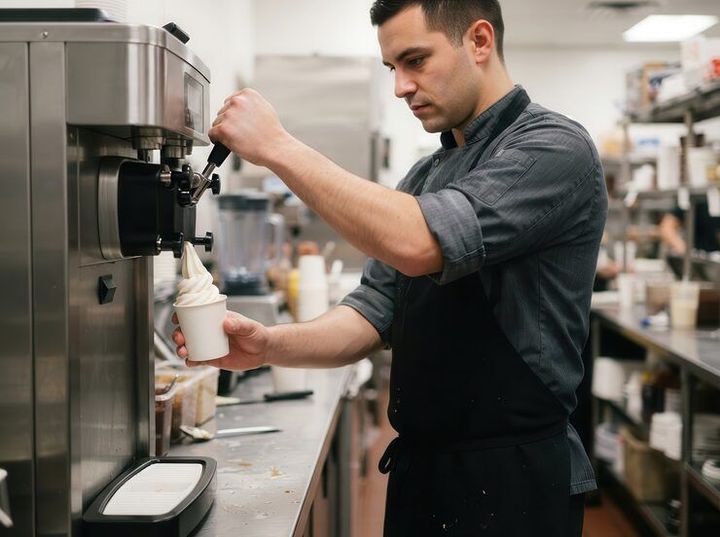
After freezing, the product can be dispensed directly for immediate consumption or transferred to filling and packaging equipment. Packaged products may then undergo hardening at lower temperatures before entering frozen storage.
Main Equipment Components
An automated ice cream processing system may include:
Mixing tanks for ingredient preparation
Pasteurization equipment for controlled heat treatment
Homogenizers for reducing fat globule size
Aging tanks for controlled holding and cooling
Continuous freezers for freezing and aeration
Flavor dosing equipment
Filling machines for containers
Hardening tunnels or chambers
Refrigeration systems
Temperature and pressure sensors
Programmable control systems
Cleaning and sanitation equipment
Not every production facility requires every component. Small batch operations may use a compact machine, while larger food-processing facilities can integrate multiple stages into one automated line.
Importance
Ice cream making machines matter because frozen dessert production requires controlled temperature, mixing, freezing, and handling conditions. Small changes in processing can influence texture, air content, melting behavior, and product consistency.
Automation can also reduce repetitive manual activities and provide operators with information about process conditions. Sensors can monitor temperature, pressure, flow, and equipment status, while control systems coordinate defined processing sequences.
Applications in the Food Industry
Ice cream processing equipment is used for a wide range of frozen products. Applications can include traditional ice cream, soft-serve products, gelato-style products, frozen yogurt, dairy-free frozen desserts, sorbets, and other formulated frozen foods.
Different products require different processing conditions. A high-fat formulation may behave differently from a fruit-based frozen dessert, while products containing nuts, chocolate pieces, fruit pieces, or other inclusions may require additional dosing and mixing equipment.
Batch and Continuous Processing
Batch ice cream machines process a defined quantity at a time. They can be appropriate for facilities producing several formulations or relatively small quantities. Operators can prepare one batch, clean or change the system as required, and then process another formulation.
Continuous ice cream machines maintain a more constant flow of mix through the freezing system. They are generally integrated into larger production lines where ingredients, freezing, filling, and packaging need to operate in a coordinated sequence.
The choice between batch and continuous processing depends on factors such as:
Production volume
Product variety
Formulation
Equipment layout
Cleaning requirements
Packaging format
Temperature control requirements
Automation level
Temperature and Texture
Temperature control is one of the central factors in frozen dessert processing. The mix needs to move through different temperature stages during preparation, freezing, hardening, and storage.
Freezing rate can influence the size of ice crystals formed during processing. Agitation and air incorporation also affect the final structure. These variables are controlled differently according to the product formulation and equipment design.
Ice cream making machines therefore combine refrigeration with mechanical movement. The refrigeration system removes heat while the dasher, scraper, or other internal mechanism keeps the mixture moving and helps prevent excessive ice formation on heat-transfer surfaces.
Recent Updates
From 2024 through 2026, ice cream processing equipment has continued to incorporate automation, digital monitoring, energy management, improved refrigeration controls, and more flexible production configurations. Food manufacturers are also examining equipment designs that can handle different formulations and packaging formats.
Automated Processing
Modern ice cream production lines can use programmable controls to coordinate mixing, heating, cooling, freezing, filling, and cleaning sequences. Operators can monitor selected process conditions through control panels or digital interfaces.
Automated dosing systems can also measure defined quantities of ingredients or inclusions. This can help maintain consistent formulation parameters when the equipment is properly calibrated and operated according to its specifications.
Digital Monitoring
Sensors can collect information about temperature, pressure, flow, motor conditions, and refrigeration performance. This information can be displayed through local interfaces or connected industrial monitoring systems.
Digital records can support production documentation and maintenance planning. They may also help identify unusual operating conditions that require inspection.
Refrigeration Efficiency
Refrigeration is a major part of ice cream processing. Current equipment development includes improved compressors, heat exchangers, variable-speed drives, electronic controls, and refrigeration monitoring.
Some facilities are also examining heat recovery and improved insulation. The practical value of these approaches depends on facility design, operating schedules, equipment configuration, and local environmental conditions.
Flexible Product Processing
Food producers may process multiple flavors, formulations, package sizes, and inclusion types. Equipment manufacturers have therefore developed systems with adjustable controls, interchangeable components, and automated recipe management.
Recipe-based controls can store defined processing parameters for different products. Operators can select an appropriate programmed sequence while still following the facility's established food-safety procedures.
Automated Cleaning
Cleaning and sanitation are increasingly integrated into food-processing equipment. Some industrial systems use automated cleaning-in-place processes that circulate cleaning and rinsing liquids through designated equipment pathways.
Automated cleaning can reduce the need to dismantle certain closed processing systems. However, equipment still needs appropriate inspection and sanitation verification according to the facility's food-safety program.
Laws or Policies
Ice cream production is shaped by food-safety, hygiene, labeling, equipment, environmental, and workplace requirements. Exact rules vary by country and may also differ according to the ingredients, production scale, facility type, and distribution arrangements.
Food Safety Requirements
Food-processing facilities generally need procedures covering ingredient handling, temperature control, sanitation, contamination prevention, equipment hygiene, storage, and personnel practices.
HACCP-based food-safety systems may identify important processing hazards and establish monitoring procedures. For ice cream production, relevant controls can include heat-treatment conditions, cooling, storage temperatures, cleaning procedures, and prevention of cross-contamination.
Ingredient and Labeling Requirements
Packaged frozen desserts may be subject to requirements covering ingredient declarations, allergen information, net quantity, product identity, storage instructions, and other label information.
Requirements vary according to jurisdiction. Facilities processing dairy ingredients, nuts, eggs, or other recognized allergens may need additional controls to prevent unintended cross-contact.
Machinery and Workplace Safety
Ice cream processing equipment contains electrical systems, refrigeration components, moving mechanisms, pressurized systems, heated surfaces, and cleaning equipment. Machine safety requirements may address guarding, emergency controls, electrical protection, access, and maintenance procedures.
Refrigeration systems can also be subject to requirements concerning refrigerants, pressure equipment, ventilation, and environmental protection. The applicable rules depend on the refrigerant and equipment configuration.
Tools and Resources
Several tools can support ice cream production planning and equipment management. Recipe calculation worksheets can help organize ingredient proportions, while temperature data loggers can record conditions during processing, storage, and transportation.
Production planning software can help coordinate batches, ingredient inventories, cleaning cycles, and packaging schedules. Equipment monitoring platforms can record machine status, alarms, temperature readings, and maintenance information.
Useful resources include:
Recipe formulation worksheets
Temperature data loggers
Batch production records
Refrigeration monitoring systems
Equipment specification sheets
Cleaning-in-place procedures
Preventive maintenance schedules
Food-safety checklists
Allergen-control plans
Production planning software
Inventory management systems
Packaging specification documents
A simplified equipment comparison is shown below:
| Equipment Type | Main Function | Typical Processing Role |
|---|---|---|
| Batch Freezer | Freezes a defined quantity | Small or varied production |
| Continuous Freezer | Freezes a continuous flow | Higher-volume processing |
| Mix Tank | Holds and blends ingredients | Formulation preparation |
| Pasteurizer | Applies controlled heat | Food-safety processing |
| Homogenizer | Reduces fat globule size | Mix structure control |
| Aging Tank | Holds cooled mix | Pre-freezing preparation |
| Filling Machine | Places product into containers | Packaging |
| Hardening System | Rapidly lowers product temperature | Post-filling processing |
Equipment Selection Factors
The physical layout of an ice cream production facility needs to accommodate ingredient movement, processing equipment, refrigeration, packaging, cleaning, storage, and personnel access.
Important planning factors include equipment dimensions, electrical requirements, water connections, drainage, ventilation, refrigeration capacity, cleaning access, maintenance clearance, and cold-storage arrangements.
Product characteristics also influence equipment selection. A formulation containing solid inclusions may require specialized pumps or dosing equipment, while products with different viscosities may require different mixing and filling arrangements.
FAQs
What are ice cream making machines used for?
Ice cream making machines are used to mix, freeze, aerate, and process frozen dessert formulations. Industrial systems can also include pasteurization, homogenization, aging, filling, hardening, and automated cleaning stages.
How do automated ice cream processing systems work?
Automated systems use sensors, pumps, refrigeration equipment, controllers, and programmed sequences to coordinate processing stages. Depending on the system, operators can monitor temperature, pressure, flow, and machine status through a control interface.
What is the difference between batch and continuous ice cream machines?
Batch machines process a defined quantity during each cycle, while continuous machines process a steady flow of mix. Batch equipment can accommodate varied production runs, whereas continuous systems are commonly integrated into larger production lines.
What features are important in industrial ice cream machines?
Important features can include temperature control, refrigeration capacity, mixing mechanisms, controlled air incorporation, automated dosing, digital monitoring, cleaning arrangements, and compatibility with the intended formulation.
What regulations apply to ice cream production equipment?
Ice cream production can be subject to food-safety, hygiene, labeling, machinery-safety, refrigeration, environmental, and workplace requirements. The exact requirements depend on the country, ingredients, equipment, facility, and production process.
Conclusion
Ice cream making machines combine mixing, temperature control, refrigeration, freezing, aeration, and product handling into equipment designed for frozen dessert production. Industrial systems can incorporate pasteurization, homogenization, aging, continuous freezing, filling, hardening, digital monitoring, and automated cleaning. Recent equipment development has focused on connected controls, refrigeration management, flexible processing, and resource monitoring. Food-safety procedures, equipment protection, refrigeration requirements, sanitation, and applicable regulations remain important parts of an ice cream production environment.