Hydraulic Filtration Systems Explained: Types, Components, Functions and Industrial Applications
Hydraulic filtration systems are important components in industrial machinery that uses pressurized fluid to transmit power. These systems remove or control contaminants in hydraulic oil, helping protect pumps, valves, cylinders, and other parts from damage. Hydraulic filtration systems are commonly found in manufacturing equipment, construction machinery, agricultural vehicles, material-handling systems, and industrial production facilities.
Context
Hydraulic filtration systems are important components in industrial machinery that uses pressurized fluid to transmit power. These systems remove or control contaminants in hydraulic oil, helping protect pumps, valves, cylinders, and other parts from damage. Hydraulic filtration systems are commonly found in manufacturing equipment, construction machinery, agricultural vehicles, material-handling systems, and industrial production facilities.
Hydraulic technology developed as industries needed reliable ways to transfer force through liquids. As hydraulic machines became more widely used, controlling contamination became an important part of equipment design and maintenance. Dust, metal particles, water, and degraded fluid can enter a hydraulic circuit during operation, manufacturing, maintenance, or storage.
A hydraulic filtration system uses filters and related components to capture unwanted particles and, in some designs, separate water or other contaminants. Its configuration depends on the equipment, operating pressure, fluid type, cleanliness requirements, and working environment.
How Hydraulic Filtration Works
Hydraulic systems use a pump to move fluid through pipes, hoses, valves, and actuators. The fluid transfers energy to components such as hydraulic cylinders and motors, allowing machinery to lift loads, rotate equipment, or control movement.
As the fluid circulates, contaminants may enter or develop within the system. Filters pass the fluid through a porous material that captures particles while allowing the fluid to continue moving. Different filters target different particle sizes, and some specialized units use additional methods to remove water or other unwanted substances.
Importance
Hydraulic filtration matters because contamination can interfere with the close clearances and moving surfaces inside hydraulic components. Small particles may contribute to abrasion, sticking valves, leakage, and premature wear. Water and unsuitable fluid conditions can also contribute to corrosion, reduced lubrication performance, or changes in fluid properties.
These problems can affect factories, construction sites, farms, warehouses, and other workplaces that depend on hydraulic equipment. Unexpected equipment interruptions may delay production, complicate maintenance schedules, and create operational risks. Effective filtration supports fluid cleanliness, although it cannot eliminate every cause of equipment failure.
Main Components of a Hydraulic Filtration System
A hydraulic filtration system can contain several components, depending on the machine and its design.
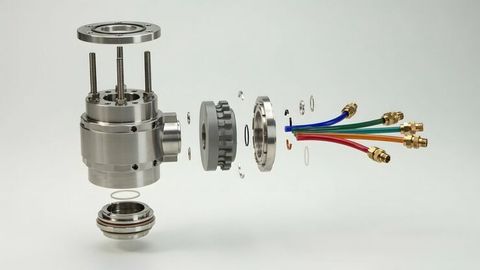
Filter element: The porous material that captures particles from the fluid.
Filter housing: The enclosure that holds the filter element and directs fluid through it.
Bypass valve: A valve that allows fluid to pass around a filter element under specified pressure conditions in systems designed with this feature.
Differential pressure indicator: A device that measures the pressure difference across a filter and may indicate increasing restriction.
Seals and connections: Components that help prevent leakage and maintain a controlled fluid path.
Fluid reservoir: A tank that stores hydraulic fluid and may allow air and some contaminants to settle, depending on its design.
Sampling points: Access locations used to collect fluid for cleanliness and condition testing.
Not every system contains all these components. Their arrangement depends on factors such as flow rate, pressure, fluid viscosity, and the equipment manufacturer's design requirements.
Common Types of Hydraulic Filters
Hydraulic filtration systems use different filter locations and designs to protect equipment at various stages of operation.
Suction filters are installed between the reservoir and the pump inlet in some systems. They help prevent larger contaminants from entering the pump, but excessive restriction can interfere with pump inlet conditions. Their filtration level must therefore match the pump manufacturer's requirements.
Pressure-line filters are positioned downstream of the pump, where they can protect sensitive components from particles carried by pressurized fluid. Their housings and elements must be rated for the relevant operating pressure and flow conditions.
Return-line filters capture contaminants as fluid flows back toward the reservoir. They are commonly used to reduce the amount of contamination returning to the tank, although their ability to protect individual components depends on their position within the circuit.
Offline or kidney-loop filters use a separate circulation circuit to clean fluid independently of the main machine's operating flow. They can support fluid cleanliness in reservoirs and larger hydraulic installations.
Breather filters control particles entering a reservoir as air moves in and out during fluid-level changes. Some designs also help manage moisture, depending on the filter material and construction.
Comparing Hydraulic Filter Types
| Filter type | Typical location | Main function | Important consideration |
|---|---|---|---|
| Suction filter | Pump inlet line | Capture larger particles before the pump | Avoid excessive inlet restriction |
| Pressure filter | Pressurized circuit | Protect downstream components | Pressure rating and flow capacity |
| Return filter | Return line | Capture particles returning to the tank | Return flow and pressure limits |
| Offline filter | Separate circulation loop | Clean stored fluid independently | Circulation rate and system compatibility |
| Breather filter | Reservoir air opening | Reduce airborne contamination entering the tank | Airflow and moisture conditions |
The appropriate configuration depends on the hydraulic circuit and its contamination-control requirements. Some machines use multiple filters to protect different components rather than relying on a single filter.
Recent Updates
From 2024 through 2026, industrial filtration has continued to develop alongside condition monitoring, predictive maintenance, and efforts to improve equipment reliability. Many current approaches combine conventional filter elements with sensors, fluid analysis, and maintenance records. The specific technologies available vary by equipment type, manufacturer, and industrial application.
Smart Monitoring and Predictive Maintenance
Some modern hydraulic systems use electronic sensors to monitor filter restriction, fluid temperature, pressure, or other operating conditions. When connected to suitable monitoring equipment, these measurements can help maintenance teams identify changes that may require inspection.
Predictive maintenance uses operating data and equipment history to estimate when maintenance may be needed. However, a pressure indicator alone does not confirm the exact cleanliness of hydraulic fluid. Particle analysis, fluid sampling, and inspection may still be necessary to understand the system's condition.
Improved Filtration Materials and Fluid Management
Filter manufacturers use different combinations of cellulose, synthetic fibers, and layered materials to achieve particular filtration characteristics. Some designs aim to capture smaller particles while maintaining suitable fluid flow. Selection depends on the fluid, operating pressure, temperature, and the cleanliness level required by the equipment.
Fluid management also includes controlling water contamination, monitoring fluid degradation, and preventing dirt from entering during storage or maintenance. These practices complement filtration because a conventional particle filter may not remove dissolved contaminants or reverse chemical changes in the hydraulic fluid.
Laws or Policies
Hydraulic filtration systems are influenced by workplace safety rules, machinery standards, environmental requirements, and equipment specifications. In India, the exact obligations depend on the industrial activity, workplace, machine design, and applicable national or state requirements.
Industrial Safety and Machinery Requirements in India
The Occupational Safety, Health and Working Conditions Code, 2020, forms part of India's workplace safety framework, alongside applicable rules and implementation arrangements. Requirements relevant to a particular facility depend on the provisions in force, the type of establishment, and applicable state rules.
Hydraulic systems can contain pressurized fluid that may cause serious injury if a hose, fitting, or component fails. Safe maintenance practices include isolating the equipment, releasing stored pressure according to approved procedures, and following the manufacturer's instructions. Filter housings should not be opened while they remain under unsafe pressure.
Technical standards may also help manufacturers and maintenance teams specify hydraulic fluid cleanliness, filter performance, and test methods. ISO 4406 is widely used to express solid-particle contamination levels in hydraulic fluids, while ISO 16889 describes a multipass test method for evaluating hydraulic filter performance. These standards provide technical frameworks; their use depends on the relevant specification or contract.
Environmental and Fluid-Handling Considerations
Used hydraulic oil, contaminated filter elements, and oily cleaning materials may require controlled handling and disposal. Applicable Indian waste-management and environmental requirements depend on the material, source, and facility. Businesses should follow the relevant pollution-control requirements and authorized disposal arrangements rather than releasing hydraulic fluids into drains or soil.
Tools and Resources
Several technical resources help engineers, operators, and maintenance teams select and evaluate hydraulic filtration systems. The correct resource depends on whether the task involves selecting a filter, checking fluid cleanliness, diagnosing a restriction, or planning routine maintenance.
Filter Selection and Technical Documentation
Filter manufacturers commonly provide selection guides, product catalogs, technical datasheets, and compatibility information. These documents can specify filtration ratings, pressure limits, flow capacity, fluid compatibility, and recommended replacement elements.
Hydraulic circuit diagrams and equipment manuals are also useful because they show filter locations and identify components that need particular levels of contamination control. Filter ratings should be interpreted using the manufacturer's stated test method rather than comparing numbers without context.
Fluid Analysis and Monitoring Tools
Particle counters measure the number and distribution of solid particles in a fluid sample. Laboratory fluid analysis can assess contamination and, depending on the test, water content, viscosity, or signs of fluid degradation.
Differential pressure gauges and electronic indicators help identify increasing restriction across a filter element. Maintenance software or a spreadsheet can record inspection dates, filter changes, fluid test results, machine hours, and observed operating problems.
Practical Maintenance Considerations
Routine hydraulic filtration maintenance may include:
Checking filter indicators according to the equipment manual.
Inspecting housings, seals, hoses, and connections for leakage.
Replacing elements according to specified conditions and procedures.
Using clean fluid and suitable transfer equipment during filling.
Recording fluid analysis results and unusual pressure changes.
Confirming that replacement elements match the system's technical requirements.
Maintenance intervals vary with operating conditions, contamination levels, fluid type, and equipment design. A filter should not be replaced or bypassed solely on an arbitrary schedule without considering the manufacturer's instructions and the system's condition.
FAQs
What is a hydraulic filtration system?
A hydraulic filtration system removes or controls contaminants in hydraulic fluid. It uses filters and related components to help protect pumps, valves, cylinders, and other machinery parts.
What are the main types of hydraulic filters?
Common types include suction filters, pressure-line filters, return-line filters, offline filters, and reservoir breather filters. Each has a different position and role in contamination control.
How does a hydraulic filter protect industrial machinery?
A hydraulic filter captures particles that could cause abrasion, sticking valves, or component wear. Its effectiveness depends on the filter rating, installation, fluid conditions, and maintenance.
How often should hydraulic filters be replaced?
Replacement intervals depend on the equipment manufacturer's guidance, operating conditions, filter restriction, and fluid cleanliness. Pressure indicators and fluid analysis can provide additional information when assessing maintenance needs.
What standards are used for hydraulic filtration systems?
ISO 4406 is used to classify solid-particle contamination in hydraulic fluids, while ISO 16889 specifies a multipass method for evaluating hydraulic filter performance. Equipment specifications may identify other applicable standards.
Conclusion
Hydraulic filtration systems help control fluid contamination in industrial machinery by using different filter types, housings, indicators, and monitoring methods. Their design depends on the hydraulic circuit, operating conditions, and cleanliness requirements of the equipment. Current industrial practices increasingly combine filtration with fluid analysis and condition monitoring. Safety procedures, technical standards, and appropriate fluid handling also play important roles in maintaining hydraulic equipment.