Fruit Cleaning Machine Guide: Technology, Capacity & Applications Explained
A fruit cleaning machine is equipment designed to remove soil, dust, plant residue, surface debris, and other unwanted material from the outer surface of fruits. Depending on the fruit and processing requirement, cleaning can involve dry brushing, water spraying, immersion, air movement, or a combination of these methods.
Context
Fruit cleaning is an important stage between harvesting and later handling activities such as grading, sorting, packing, cutting, juicing, or processing. While small quantities can be cleaned manually, larger operations need controlled methods that can handle a continuous flow of produce.
The technology used in a fruit cleaning machine varies according to fruit type, surface condition, required capacity, and the subsequent processing stage. Soft fruits may require gentler handling, while fruits with firm surfaces can generally tolerate more mechanical contact.
Modern systems can combine conveyors, rotating brushes, water nozzles, pumps, filters, drying units, and control systems. The objective is to clean the produce while limiting unnecessary physical damage and maintaining a consistent processing flow.
Basic working principle
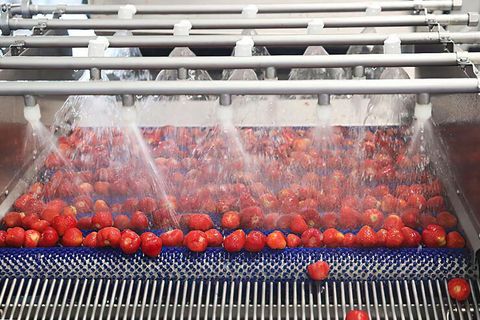
A typical fruit cleaning machine moves produce through one or more cleaning stages. Fruits may first enter a conveyor or feeding section, followed by brushing, spraying, washing, rinsing, and drying.
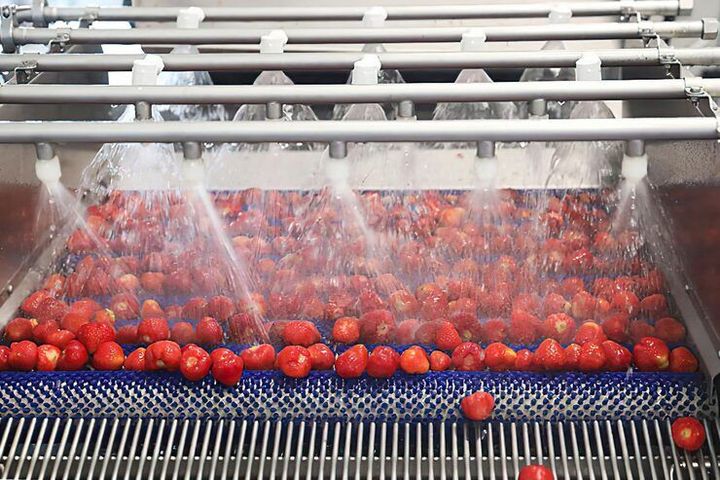
The cleaning action depends on the system design. Rotating brushes can loosen surface particles, while water sprays can wash away material released from the fruit surface. Air systems may then reduce surface moisture before the fruit moves to another processing stage.
The overall process can include:
- Feeding and conveying
- Preliminary removal of loose debris
- Brushing or mechanical cleaning
- Water spraying or washing
- Rinsing
- Surface drying
- Transfer to sorting, grading, or packing
Not every machine includes all these stages. The configuration depends on the intended application.
Importance
Fruit cleaning matters because harvested produce can carry soil, dust, leaves, stems, and other surface material from fields, orchards, transportation, and handling areas. Cleaning provides a controlled preparation stage before fruits move into subsequent processing or packing operations.
The process also helps create more consistent handling conditions. When fruit enters later equipment with excessive loose material or surface debris, it can complicate sorting, grading, cutting, or packing operations.
Applications across fruit processing
Fruit cleaning machines are used in different parts of the food-processing sector. Applications can include fresh-produce preparation, juice production, fruit pulping, canning, drying, freezing, and other processing activities.
The appropriate cleaning method depends heavily on the physical characteristics of the produce.
| Fruit characteristic | Relevant cleaning consideration |
|---|---|
| Firm skin | Can generally tolerate controlled brushing or spraying |
| Soft surface | Requires reduced mechanical contact |
| Irregular shape | May require flexible brushes or multiple cleaning angles |
| Delicate outer layer | Requires controlled handling and water pressure |
| Heavy surface soil | May require preliminary washing or stronger cleaning stages |
| Small fruit | Conveyor spacing and handling need careful adjustment |
| Large fruit | Machine dimensions and roller spacing become important |
Hygiene and process control
Cleaning equipment is part of a broader food-handling environment. Machine surfaces, water-contact areas, drains, conveyors, brushes, and collection points need to be considered as part of routine sanitation and maintenance procedures.
Water quality and water management are also relevant in systems that use recirculated water. Depending on the application, filtration, water replacement, monitoring, and sanitation procedures may be incorporated into the processing system.
A cleaning machine does not replace overall food hygiene practices. The surrounding facility, workers, equipment, storage conditions, and handling procedures also affect the cleanliness of processed produce.
Recent Updates
Recent developments in fruit cleaning equipment have generally focused on automation, water management, gentler handling, and integration with other processing stages. Equipment manufacturers and food processors are increasingly considering how cleaning can be incorporated into continuous production lines rather than treated as an isolated operation.
Automation and sensor integration
Automated controls can regulate conveyor movement, brush rotation, water flow, and other operating parameters. Depending on the machine design, sensors may monitor product movement, water conditions, equipment status, or other process variables.
Digital control systems can also provide information about operating conditions. This can make process monitoring more structured, particularly in facilities where cleaning equipment is integrated with grading and packing systems.
Water management
Water use has become an important consideration in produce-processing equipment. Systems may incorporate spray nozzles, filtration, recirculation arrangements, or controlled water delivery to manage how water moves through the cleaning process.
However, water recirculation requires appropriate management. Reusing water without suitable treatment and monitoring can create hygiene concerns, so water-management practices need to correspond with the processing environment and applicable food-safety requirements.
Gentler fruit handling
Another area of development is reducing unnecessary impact on fruit. Adjustable brushes, variable conveyor speeds, soft contact materials, controlled drops, and improved product transfer arrangements can help accommodate different fruit characteristics.
This is particularly relevant for produce that bruises easily. A machine designed for firm fruits may not be appropriate for delicate produce without changes to contact pressure, speed, and handling arrangements.
Laws or Policies
Fruit cleaning machines are used within the broader framework of food safety, machinery safety, workplace practices, water management, and environmental requirements. The exact rules depend on the country, processing activity, facility, and intended use of the equipment.
Food-processing facilities generally need to maintain hygienic conditions and prevent contamination during handling. Requirements can cover equipment design, cleaning procedures, water quality, employee hygiene, facility conditions, and recordkeeping.
Food-contact equipment considerations
Parts of a fruit cleaning machine that directly contact produce or process water may need to be made from materials suitable for the intended food-processing environment. Equipment design can also affect how easily surfaces can be cleaned and inspected.
Where a machine uses water, the quality and management of that water can become an important regulatory consideration. Requirements may differ depending on whether water is used once, recirculated, or treated as part of the process.
Machinery and workplace requirements
Industrial equipment can also be subject to machinery-safety requirements. Guards, emergency controls, electrical protection, moving-part protection, operator access, and maintenance procedures are examples of areas that may fall under applicable workplace or machinery rules.
Because requirements vary between jurisdictions and applications, regulatory information should be checked with the relevant national or regional authorities before equipment is installed or operated.
Tools and Resources
Several resources can help readers understand fruit cleaning technology and evaluate processing requirements.
Equipment specifications
A technical specification sheet can provide information about:
- Processing capacity
- Conveyor dimensions
- Machine footprint
- Brush configuration
- Water requirements
- Pump specifications
- Electrical requirements
- Construction materials
- Control-system features
- Fruit-size range
Capacity should be examined carefully because stated throughput can depend on fruit size, loading pattern, cleaning intensity, and machine configuration.
Capacity calculations
A basic throughput calculation can help explain machine capacity:
Throughput per hour = Number of fruits processed ÷ Processing time in hours
For weight-based processing:
Throughput per hour = Processed weight ÷ Processing time in hours
These calculations provide a simple way to compare actual operating requirements with the nominal capacity stated for equipment.
Food-safety resources
Government food-safety authorities, international food standards organizations, agricultural extension resources, and technical food-processing publications can provide information about produce handling, hygiene, water management, and processing practices.
The Codex Alimentarius food-hygiene framework is one international reference used for understanding general principles of food hygiene and contamination control. (fao.org)
Maintenance records
A maintenance template can document brush inspection, conveyor condition, nozzle cleaning, pump checks, water-system inspection, electrical checks, and other routine activities. Such records can help organize equipment maintenance and identify recurring operating issues.
FAQs
What is a fruit cleaning machine?
A fruit cleaning machine is equipment used to remove surface dirt, dust, plant residue, and other unwanted material from fruits. Depending on the design, it may use brushes, water sprays, air, conveyors, or several cleaning methods together.
How does a fruit cleaning machine work?
A fruit cleaning machine typically moves fruit through controlled cleaning stages. These may include feeding, brushing, spraying, washing, rinsing, and drying, depending on the equipment configuration and type of fruit being processed.
What capacity can a fruit cleaning machine handle?
Capacity varies considerably between machines. It can be expressed as kilograms or tonnes per hour, or sometimes as the number of pieces processed during a specific period. Fruit size, loading density, cleaning method, conveyor speed, and machine configuration can all affect actual throughput.
Which fruits can be processed in a fruit cleaning machine?
The suitable fruit depends on the machine's design. Firm fruits can generally tolerate more mechanical contact, while delicate fruits may require softer brushes, lower pressure, slower movement, or reduced contact. Equipment specifications should identify the intended produce range.
Does a fruit cleaning machine use water?
Some fruit cleaning machines use water sprays, immersion, or rinsing systems, while others rely primarily on brushes or dry cleaning methods. Water requirements depend on the cleaning technology, fruit characteristics, and processing configuration.
Conclusion
A fruit cleaning machine combines mechanical, water-based, or air-based techniques to remove unwanted material from fruit surfaces before further handling or processing. Technology, capacity, fruit characteristics, water management, and machine configuration all influence how a system operates. Recent equipment developments have placed greater attention on automation, controlled water use, and gentler product handling. Applicable food-safety and machinery requirements also need to be considered according to the processing environment and jurisdiction.