Friction Stir Welding Machines Guide With Advanced Welding Technology and Engineering Insights
Friction stir welding machines are industrial systems designed to join metals without melting the main materials in the same way as conventional fusion welding. The process uses a rotating tool that travels along the meeting line of two materials.
Friction stir welding was developed to address limitations associated with some conventional welding processes, particularly when joining lightweight alloys. The technology is now associated with aerospace structures, transportation equipment, shipbuilding, railway components, electronics, automotive parts, and other engineered products.
A friction stir welding machine normally contains a rigid frame, a spindle or rotating tool system, a tool holder, workholding equipment, motion controls, and monitoring systems. Depending on the design, the machine may operate along several controlled axes to maintain accurate tool movement.
How Friction Stir Welding Works
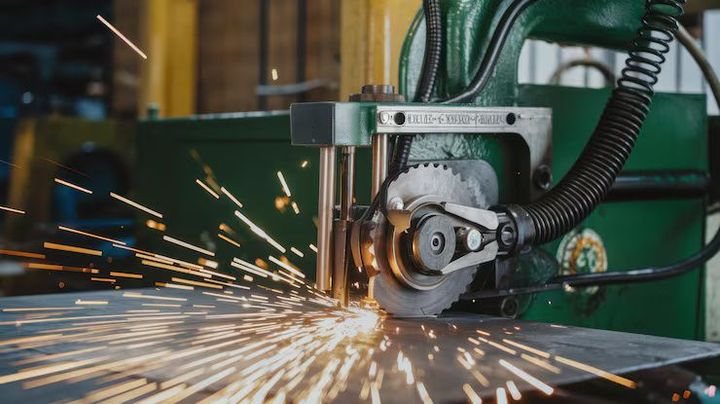
The process begins when a rotating tool is positioned over the joint between two workpieces. The tool usually has a shoulder and a specially shaped probe, sometimes called a pin. As the tool rotates and moves along the joint, friction generates heat and softens the surrounding material.
The softened material is mechanically stirred around the probe. The tool shoulder applies downward pressure and helps contain the softened material. As the tool moves forward, the material behind it consolidates and forms a continuous joint.
Unlike many fusion welding methods, friction stir welding does not normally require the base materials to reach their melting point. This solid-state characteristic can reduce some problems associated with solidification, such as certain forms of porosity and distortion.
Main Machine Components
A typical friction stir welding machine can include:
- Rotating spindle for controlled tool movement
- Welding tool with shoulder and probe
- High-rigidity machine frame
- Workholding or clamping system
- Linear or multi-axis motion system
- Force and position monitoring
- Temperature monitoring equipment
- Computerized process controls
- Safety enclosure and interlocking systems
The exact configuration depends on the material, component dimensions, joint design, production requirements, and level of automation.
Importance
Friction stir welding machines matter because manufacturers increasingly work with lightweight materials that can be challenging to join using conventional techniques. Aluminum alloys are particularly important because they are widely used where lower weight and structural performance are required.
The process can also support consistent joining when machine parameters are properly controlled. Factors such as tool rotation speed, travel speed, axial force, tool geometry, material thickness, and joint configuration influence the resulting weld.
Problems Addressed by the Technology
Conventional fusion welding can introduce thermal effects that influence the surrounding material. Friction stir welding approaches the joining process differently by using mechanical stirring and localized heat.
Important areas of interest include:
- Reduced melting-related defects
- Lower thermal distortion in suitable applications
- Joining of selected aluminum alloys
- Repeatable automated movement
- Compatibility with certain dissimilar material combinations
- Reduced dependence on consumable filler material in many applications
- Potential integration with robotic or CNC-controlled systems
The process does not eliminate all welding challenges. Tool wear, incorrect parameters, insufficient material support, joint preparation, and inadequate clamping can still affect joint quality.
Who Uses Friction Stir Welding Machines
The technology is relevant to several industries where engineered metal structures require controlled joining. Common application areas include:
| Industry | Typical Application |
|---|---|
| Aerospace | Structural panels and lightweight assemblies |
| Automotive | Aluminum structural components |
| Rail transportation | Car bodies and structural sections |
| Shipbuilding | Marine aluminum structures |
| Electronics | Thermal management components |
| General manufacturing | Panels, frames, and fabricated assemblies |
| Energy equipment | Selected lightweight metal structures |
The suitability of friction stir welding depends on the material combination and engineering requirements rather than the industry alone.
Material Compatibility
Aluminum and its alloys remain strongly associated with friction stir welding. Research and industrial development have also examined materials such as magnesium, copper, titanium, steels, and selected dissimilar material combinations.
Material hardness, thermal conductivity, melting behavior, thickness, and mechanical characteristics influence process design. Harder materials may require specialized tools and higher machine rigidity.
Recent Updates
Recent developments in friction stir welding machines have focused on automation, process monitoring, improved tool design, and integration with digital manufacturing systems. Modern equipment increasingly combines controlled motion with sensors that can monitor forces, temperatures, spindle behavior, and other process variables.
Automation and Process Monitoring
Computer-controlled welding systems can maintain defined movement paths and process parameters. This is particularly useful when components contain long joints or repeated weld patterns.
Machine monitoring can also help identify changes during production. Data from force sensors, position systems, temperature sensors, and spindle controls may be recorded for quality analysis and process development.
Advanced Tool Technology
Tool geometry continues to receive significant engineering attention. Shoulder diameter, probe profile, probe length, and tool material can influence heat generation, material flow, and joint formation.
Specialized tools are being developed for different materials and thickness ranges. Tool selection is especially important when processing harder alloys because the tool must withstand mechanical and thermal stresses.
Robotics and Flexible Manufacturing
Robotic friction stir welding is another area of development. Robotic systems can provide flexible tool movement and may be useful for components with complex geometries.
Large-format machines are also being developed for structures that exceed the working envelope of conventional equipment. These systems can incorporate high-force spindles and advanced motion control to maintain stable processing.
Digital Process Control
Digital manufacturing technologies are increasingly connected with welding equipment. Process records can include spindle speed, travel speed, force measurements, temperature information, and position data.
Such information can support process development and quality documentation. However, collected data still requires appropriate engineering interpretation and validation.
Laws or Policies
Friction stir welding machines are subject to workplace safety, machinery, electrical, environmental, and manufacturing requirements that vary according to the country and application. There is no single global rule covering every machine configuration.
Manufacturers and industrial operators generally need to consider machinery safety requirements, electrical protection, guarding, emergency controls, operator access, noise exposure, and workplace risk assessment.
Welding Standards
Technical standards can also influence how friction stir welding is qualified and inspected. Depending on the industry, organizations may use standards covering welding procedures, personnel competence, inspection methods, material specifications, and quality management.
Aerospace, transportation, pressure-related, and other safety-sensitive industries may have additional qualification requirements. The applicable rules depend on the component, material, intended use, and jurisdiction.
Environmental Considerations
Friction stir welding can have different environmental characteristics from processes that rely heavily on shielding gases or filler materials. Nevertheless, machine electricity consumption, tool production, cooling requirements, metal preparation, and manufacturing waste remain relevant considerations.
Environmental requirements should therefore be evaluated as part of the complete production process rather than from the welding operation alone.
Tools and Resources
Several tools can help engineers, students, technicians, and general readers understand friction stir welding machines and their applications.
Engineering Calculation Tools
Welding process calculators can assist with basic relationships involving rotational speed, travel speed, heat input concepts, material thickness, and machine movement. These calculations should be treated as preliminary engineering information rather than a substitute for validated procedures.
CAD and Simulation Software
Computer-aided design platforms can help visualize joint geometry and machine movement. Simulation software can also be used to investigate thermal behavior, material flow, stresses, and deformation.
For complex applications, simulation results normally need comparison with physical testing because friction stir welding involves complicated interactions between heat, pressure, rotation, and material flow.
Technical Standards and Templates
Useful resources can include:
- Welding procedure specification templates
- Inspection checklists
- Machine maintenance records
- Process parameter sheets
- Material compatibility tables
- Welding qualification documentation
- Quality-control forms
- Engineering drawings and joint-design references
Educational platforms, technical libraries, manufacturer documentation, and engineering databases can provide additional background information about machine configurations and process principles.
FAQs
What are friction stir welding machines?
Friction stir welding machines are controlled industrial systems that use a rotating tool to soften and mechanically stir materials along a joint. The process normally occurs in the solid state rather than by completely melting the workpieces.
How does a friction stir welding machine work?
A rotating tool moves along the joint while applying pressure. Friction generates localized heat, the material becomes softer, and the rotating probe mixes the material. The material then consolidates behind the tool to form the joint.
What materials can friction stir welding machines join?
Friction stir welding machines are commonly associated with aluminum alloys. Depending on machine capability and tool design, the process can also be applied to materials such as magnesium, copper, titanium, steels, and selected dissimilar combinations.
What factors affect friction stir welding quality?
Important factors include tool geometry, rotational speed, travel speed, axial force, material thickness, joint design, clamping, temperature, and machine rigidity. Correct coordination of these parameters is important for producing a consistent joint.
Are friction stir welding machines automated?
Many modern friction stir welding machines use CNC controls, sensors, computerized monitoring, or robotic movement. The degree of automation varies according to machine configuration and production requirements.
Conclusion
Friction stir welding machines use controlled rotation, pressure, and material movement to create solid-state metal joints. The technology is particularly relevant to lightweight structures and engineered components where thermal distortion and material behavior require careful control. Recent developments include greater automation, process monitoring, advanced tools, robotics, and digital data collection. Applicable safety rules, technical standards, and qualification requirements vary according to the machine, industry, material, and jurisdiction.