Fiber Laser Cutting Machine Information With Automation, Accuracy, and Process Insights
A fiber laser cutting machine is an industrial system that uses a concentrated beam of light to cut, shape, and process metal materials with controlled accuracy.
Fiber laser technology has become an important part of modern manufacturing because it supports automated production, precise material processing, and consistent cutting results. These machines are commonly used for stainless steel, carbon steel, aluminum, copper, brass, and other compatible metals.
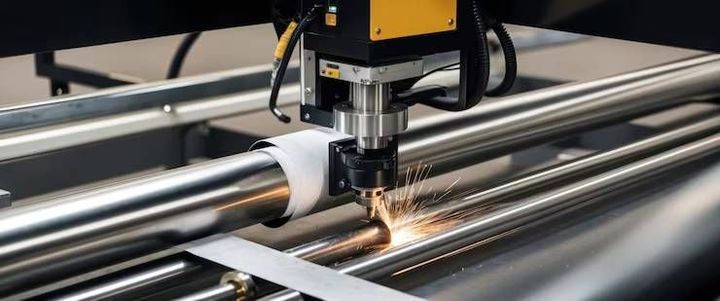
The technology developed from advances in solid-state laser engineering and optical fiber systems. Unlike traditional cutting methods that depend on mechanical blades or direct physical contact, a fiber laser cutting machine transfers concentrated light energy through an optical fiber to a cutting head. The focused beam heats the material until it melts or vaporizes, while an assist gas helps remove the molten material from the cutting area.
How Fiber Laser Technology Works
A fiber laser system generates light inside an optical fiber containing specially selected materials. The light travels through the fiber and reaches a cutting head, where lenses focus it into a small, concentrated point.
The cutting process generally involves several stages:
Material positioning: A metal sheet or workpiece is placed on the machine table.
Laser generation: The fiber laser source produces a concentrated light beam.
Beam focusing: Optical components direct the beam toward the required cutting location.
Material separation: Heat melts or vaporizes the metal along the programmed cutting path.
Assist gas application: Gas helps remove molten material and supports the cutting process.
Part completion: The machine follows the programmed design to produce the required shape.
Computer numerical control (CNC) systems coordinate the cutting head, movement, speed, and cutting sequence. This allows operators to process complex shapes without manually controlling every movement.
Main Components of a Fiber Laser Cutting Machine
A typical industrial fiber laser cutting machine includes several interconnected components.
Component | Primary Function |
|---|---|
Fiber laser source | Generates concentrated laser energy |
Cutting head | Focuses and directs the laser beam |
CNC controller | Controls cutting movements and sequences |
Machine bed | Supports metal sheets during processing |
Servo motors | Control machine-axis movements |
Cooling system | Maintains suitable operating temperatures |
Assist gas system | Removes molten material from the cutting area |
Extraction system | Collects smoke, dust, and cutting particles |
Automatic loading system | Moves materials into the processing area |
Each component contributes to machine performance, cutting consistency, and operational safety.
Importance
Why Fiber Laser Cutting Machines Matter in Modern Manufacturing
Fiber laser cutting machines play an important role in industries that require accurate metal components and repeatable production processes. Their ability to process different shapes and thicknesses makes them relevant to manufacturing operations involving complex designs and multiple product specifications.
Traditional cutting methods may involve physical tool contact, tool wear, or additional processing stages. Fiber laser technology reduces dependence on mechanical cutting tools and supports digitally controlled production.
Several industries use this technology, including:
Automotive manufacturing: Producing metal brackets, body components, structural parts, and precision panels.
Aerospace manufacturing: Processing selected metal components that require controlled dimensions.
Construction equipment: Cutting structural metal sections, plates, and equipment enclosures.
Electrical manufacturing: Producing electrical cabinets, control panels, and metal housings.
Furniture manufacturing: Creating decorative metal panels, frames, and structural elements.
Industrial machinery: Manufacturing machine covers, mechanical components, and fabricated parts.
Accuracy and Production Consistency
Cutting accuracy is one of the main reasons manufacturers use fiber laser technology. A focused laser beam can create narrow cutting paths, allowing manufacturers to produce detailed shapes and closely spaced components.
CNC programming also helps maintain consistency between repeated production cycles. Once the cutting design and machine parameters are configured, the system can follow the same programmed instructions for multiple workpieces.
However, actual accuracy depends on several factors, including machine calibration, material quality, cutting-head condition, beam alignment, and processing parameters.
Automation and Operational Efficiency
Automation has changed how fiber laser cutting machines operate within manufacturing facilities. Modern systems can connect material handling equipment, cutting software, production monitoring tools, and quality inspection processes.
Automated loading and unloading systems reduce the need for repeated manual material movement. In larger facilities, robotic equipment can transfer sheets, organize finished components, and coordinate different production stages.
These capabilities help manufacturers manage production schedules, reduce handling interruptions, and maintain more organized workflows.
Recent Updates
Developments in Fiber Laser Cutting Technology
Recent developments across the 2024–2026 period reflect growing interest in intelligent manufacturing, automated material handling, and improved process monitoring.
Fiber laser equipment is increasingly being integrated with digital manufacturing systems. These developments focus on improving production visibility, reducing unnecessary machine interruptions, and maintaining consistent processing conditions.
AI-Based Process Monitoring
Artificial intelligence and machine learning are becoming more relevant to industrial laser processing. Monitoring systems can analyze operating information such as cutting speed, laser output, temperature, and process signals.
Depending on the machine configuration, these systems may help identify unusual operating conditions and support adjustments to processing parameters.
AI-based monitoring does not automatically eliminate cutting defects. Material differences, machine condition, and operator supervision remain important factors.
Advanced Beam Control
Beam shaping and optical control technologies are receiving attention in industrial laser applications. These technologies help manufacturers manage how laser energy is distributed across the processing area.
Improved beam control can support different cutting requirements, including changes in material thickness, edge quality, and cutting geometry.
Automated Production Integration
Manufacturers are increasingly connecting fiber laser cutting machines with automated production lines.
Common developments include:
Automatic sheet loading and unloading.
Robotic part sorting and material movement.
Integrated cutting and production planning software.
Real-time machine condition monitoring.
Digital production records and performance reporting.
Comparison of Traditional and Modern Cutting Approaches
Feature | Traditional Mechanical Cutting | Fiber Laser Cutting |
|---|---|---|
Cutting method | Physical cutting tools | Concentrated laser beam |
Tool contact | Usually required | No direct cutting-tool contact |
Design flexibility | Depends on tooling | CNC-programmed designs |
Tool wear | Mechanical tool wear occurs | No conventional cutting blade |
Automation | Depends on equipment | Supports advanced CNC automation |
Material range | Depends on cutting equipment | Compatible metals and configurations |
Maintenance needs | Mechanical tooling maintenance | Optical, cooling, and mechanical maintenance |
The comparison is general because actual performance depends on the machine, material, and production requirements.
Laws or Policies
Industrial Machinery Safety Requirements
Fiber laser cutting machines operate with concentrated optical energy, electrical systems, moving mechanical components, and high-temperature materials. These features create workplace risks that must be addressed through suitable safety procedures.
There is no single worldwide regulation covering every aspect of fiber laser cutting machine operation. Requirements depend on the country, machine classification, workplace environment, and applicable industrial standards.
International Standard ISO 11553-1:2020 addresses laser radiation hazards associated with laser processing machinery. It covers safety requirements, protective measures, and information that manufacturers should provide. The standard was reviewed and confirmed in 2025.
Workplace Protection and Operator Safety
Manufacturing facilities generally need to consider several safety areas:
Laser radiation protection: Suitable machine enclosures, protective barriers, and interlocking systems.
Electrical safety: Proper grounding, electrical protection, and equipment inspection.
Fire prevention: Appropriate controls for sparks, hot materials, and combustible substances.
Air quality: Effective extraction and filtration for smoke and airborne particles.
Operator training: Instructions covering machine operation, emergency procedures, and protective equipment.
Equipment maintenance: Regular inspection of optical components, cooling equipment, and safety systems.
Environmental and Machinery Compliance
Industrial facilities may also need to follow local environmental requirements concerning air emissions, waste management, energy consumption, and workplace noise.
In India, manufacturers and industrial operators should consider applicable factory safety requirements, state-level workplace rules, electrical safety provisions, and environmental permissions where relevant. Other countries may apply different machinery conformity and occupational safety frameworks.
Compliance should be evaluated according to the installation location and the machine's intended application.
Tools and Resources
Fiber Laser Cutting Software
Software plays an important role in controlling cutting operations and preparing production designs.
Common software functions include:
CAD design: Creates two-dimensional and three-dimensional engineering drawings.
CAM programming: Converts designs into machine-readable cutting instructions.
Nesting software: Arranges multiple components on metal sheets to manage material utilization.
CNC control software: Coordinates cutting movements, speed, and processing sequences.
Production monitoring software: Records machine activity, production progress, and operating conditions.
Machine Selection and Performance Evaluation Tools
Manufacturers can use technical calculators and planning tools to understand machine requirements before establishing a production process.
Tool or Resource | Purpose |
|---|---|
Laser power calculator | Helps evaluate laser power requirements |
Cutting speed calculator | Estimates processing speed under selected conditions |
Material thickness chart | Identifies machine compatibility with different metals |
Sheet nesting software | Plans component arrangements on metal sheets |
CNC simulation software | Checks programmed cutting paths |
Maintenance checklist | Tracks equipment inspections |
Energy monitoring tools | Records electrical consumption |
Important Technical Parameters
Understanding machine specifications helps explain differences between fiber laser cutting systems.
Important parameters include:
Laser power: Determines the available laser output.
Maximum material thickness: Indicates the stated processing capacity for particular materials.
Cutting speed: Represents the movement rate during a cutting operation.
Positioning accuracy: Describes how accurately the machine positions its cutting head.
Repeatability: Measures its ability to return to the same position across repeated movements.
Working area: Defines the maximum sheet dimensions the machine can accommodate.
Cooling capacity: Supports stable operation of the laser source and related equipment.
These specifications should be evaluated together because one parameter cannot independently determine overall machine performance.
FAQs
What Is a Fiber Laser Cutting Machine Used For?
A fiber laser cutting machine is used to cut and shape compatible metal materials, including stainless steel, carbon steel, aluminum, brass, and copper. It is commonly used in automotive, construction, electrical, and industrial manufacturing.
How Does a Fiber Laser Cutting Machine Work?
It generates concentrated laser energy inside an optical fiber and directs the beam through a cutting head. The focused energy melts or vaporizes the material along a programmed path, while assist gas helps remove molten material.
What Materials Can Fiber Laser Cutting Machines Process?
These machines can process various metals, including stainless steel, mild steel, aluminum, copper, and brass. Material thickness and cutting quality depend on laser power, material properties, machine configuration, and processing parameters.
How Does Automation Improve Fiber Laser Cutting?
Automation connects CNC controls, material handling equipment, robotic systems, and production software. These technologies help coordinate material movement, cutting sequences, and production monitoring while reducing repeated manual handling.
What Safety Standards Apply to Fiber Laser Cutting Machines?
ISO 11553-1 addresses laser radiation safety in laser processing machinery. Depending on the installation location, additional electrical, machinery, environmental, and occupational safety requirements may also apply.
Conclusion
Fiber laser cutting machines have become an important technology in modern metal manufacturing because they combine concentrated laser energy, CNC control, and automated production capabilities. Their applications extend across automotive, aerospace, construction, electrical, and general industrial manufacturing. Developments in AI monitoring, beam control, and robotic material handling continue to influence manufacturing processes. Understanding machine components, processing parameters, and applicable safety standards provides a useful foundation for evaluating this technology.