Fabric Manufacturing Guide: Weaving, Knitting, Dyeing, Finishing and Quality Control
Fabric manufacturing is the process of converting textile fibers into usable materials through stages such as yarn preparation, weaving, knitting, dyeing, finishing, and quality control. These processes transform natural fibers, including cotton and wool, and manufactured fibers, such as polyester and nylon, into fabrics used for clothing, household products, industrial equipment, and medical textiles. A fabric manufacturing guide explains how these stages work together and how manufacturers select appropriate methods for different applications.
Context
Fabric manufacturing is the process of converting textile fibers into usable materials through stages such as yarn preparation, weaving, knitting, dyeing, finishing, and quality control. These processes transform natural fibers, including cotton and wool, and manufactured fibers, such as polyester and nylon, into fabrics used for clothing, household products, industrial equipment, and medical textiles. A fabric manufacturing guide explains how these stages work together and how manufacturers select appropriate methods for different applications.
Textile production has a long history, beginning with hand spinning, weaving, and knitting. Industrial machinery later increased production capacity and made it possible to produce fabrics with more consistent structures and specialized properties. Modern textile manufacturing combines mechanical equipment, chemical processing, digital monitoring, and laboratory testing to meet different material requirements.
Understanding the Fabric Manufacturing Process
The manufacturing process depends on the fiber type, fabric structure, intended use, and required performance. Some fabrics require only a few processing stages, while others undergo several treatments to achieve a particular appearance, texture, or functional property.
A typical production sequence includes fiber preparation, yarn formation, fabric construction, dyeing or printing, finishing, and final inspection. Not every textile follows the same sequence. For example, some fibers are dyed before yarn formation, while other materials are colored after the fabric has been constructed.
Importance
Fabric manufacturing affects industries that depend on reliable textile materials, including clothing, furniture, automotive interiors, construction, healthcare, and industrial filtration. The structure and treatment of a fabric influence its strength, flexibility, appearance, comfort, and resistance to environmental conditions.
Understanding textile production also helps explain common problems such as uneven coloring, fabric shrinkage, surface defects, weak seams, and inconsistent dimensions. These problems may arise from raw material variation, incorrect machine settings, unsuitable processing conditions, or insufficient quality checks.
Major Stages of Textile Production
The main stages of fabric manufacturing serve different purposes:
Fiber preparation: Raw fibers are cleaned, separated, blended, or arranged for further processing.
Spinning: Fibers are converted into yarn suitable for weaving, knitting, or other fabric construction methods.
Fabric formation: Yarn is interlaced or formed into loops to create the required structure.
Dyeing and printing: Color or patterns are applied using methods appropriate to the material.
Finishing: Physical or chemical treatments modify properties such as softness, appearance, dimensional stability, or water resistance.
Quality control: Samples and finished materials are inspected and tested against defined specifications.
The sequence and intensity of these stages depend on the final product. Lightweight clothing fabrics, heavy upholstery textiles, and industrial materials require different combinations of equipment and processing controls.
Weaving and Knitting in Fabric Manufacturing
Weaving and knitting are two principal methods of fabric construction, but they produce different structures.
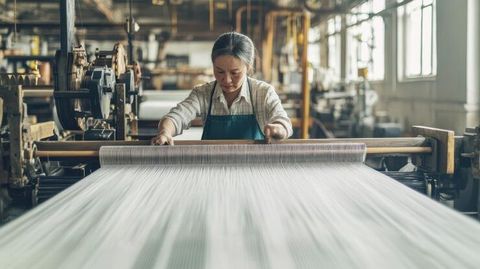
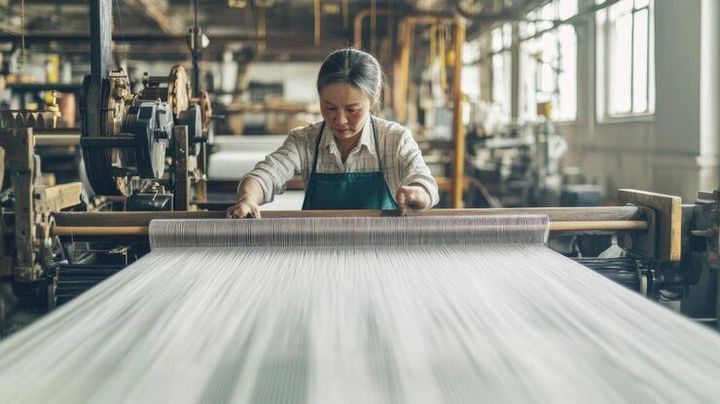
Weaving uses two yarn systems. Warp yarns run lengthwise through the fabric, while weft yarns pass across them. A loom interlaces these yarns according to a selected pattern. Plain weave, twill, and satin are common woven structures, each producing different surface characteristics and behavior.
Knitting forms fabric by connecting loops of yarn. Weft knitting generally forms rows of loops across the fabric, while warp knitting uses yarns arranged lengthwise. Knitted fabrics often provide greater stretch than comparable woven structures, although their properties depend on the yarn, loop arrangement, and finishing treatments.
| Feature | Weaving | Knitting |
|---|---|---|
| Construction | Interlaced warp and weft yarns | Connected yarn loops |
| Typical behavior | Often dimensionally stable | Often more stretchable |
| Common applications | Shirts, denim, upholstery | T-shirts, sweaters, sportswear |
| Main equipment | Looms | Knitting machines |
| Quality concerns | Yarn breaks, uneven density | Dropped stitches, loop variation |
Neither method is suitable for every application. Fabric designers select the construction method according to the required structure, flexibility, durability, and appearance.
Recent Updates
Fabric manufacturing continues to develop through automation, digital monitoring, improved resource management, and specialized textile engineering. Developments across 2024–2026 reflect wider industry efforts to improve process consistency, manage environmental impacts, and provide clearer information about textile materials. The extent of adoption differs by manufacturer, production scale, and country.
Automation and Digital Textile Production
Modern textile facilities may use automated looms, computerized knitting machines, digital pattern systems, and sensors that monitor operating conditions. These technologies can help identify production interruptions, track machine performance, and maintain more consistent fabric specifications.
Digital printing has also expanded the range of patterns that can be applied to textiles without using traditional screen-based methods for every design. However, printing performance depends on the fabric composition, ink chemistry, pretreatment, and required color fastness.
Manufacturers may use production software to record material batches, machine settings, inspection results, and processing history. These records help identify the source of defects and support traceability throughout the production process.
Resource Efficiency and Alternative Materials
Dyeing and finishing can require substantial amounts of water, heat, and processing chemicals, depending on the material and method. Some facilities are adopting water-reuse systems, improved wastewater treatment, heat recovery, and more controlled chemical dosing to manage resource use.
Research and industrial development also include recycled fibers, alternative dyeing techniques, and textile-to-textile recycling. Recycled material performance depends on fiber quality, contamination, blend composition, and processing methods. These developments do not eliminate every environmental impact, and their suitability must be evaluated for each application.
Laws or Policies
Fabric manufacturing is shaped by workplace safety requirements, environmental regulations, chemical controls, product standards, and rules governing textile labeling. Applicable obligations depend on the manufacturing location, the products being produced, and the markets in which they are sold or distributed.
Textile Manufacturing Regulations in India
In India, textile factories may be subject to applicable central and state legislation concerning occupational safety, industrial operations, pollution control, water use, and waste management. The specific requirements depend on the facility and the laws in force.
The Environment (Protection) Act, 1986, provides a broad framework for environmental protection. The Water (Prevention and Control of Pollution) Act, 1974, and relevant pollution-control requirements can also apply to textile facilities, particularly where dyeing, washing, or finishing generates wastewater. Manufacturers may need approvals from the relevant State Pollution Control Board or Pollution Control Committee, depending on their location and activities.
Workplace requirements can include machinery safeguards, appropriate ventilation, worker training, protective equipment, and procedures for handling chemicals. Textile facilities must determine which occupational safety and factory requirements apply to their operations.
Chemical Safety and Textile Quality
Dyes, bleaching agents, finishing chemicals, and cleaning substances must be handled according to applicable safety requirements. Proper storage, labeling, ventilation, wastewater treatment, and worker protection help reduce exposure and environmental risks.
Textile quality standards may address characteristics such as tensile strength, color fastness, dimensional stability, and flammability. India's Bureau of Indian Standards publishes standards for various textile materials and testing methods. Whether a particular standard or certification is mandatory depends on the product and the relevant regulatory provisions.
Manufacturers supplying international markets may also need to meet destination-specific chemical restrictions, labeling rules, and product safety requirements. Requirements should be checked for the relevant material and intended market rather than assumed to be identical worldwide.
Tools and Resources
Fabric manufacturers use specialized machinery, testing instruments, reference standards, and production software to manage textile processing. The appropriate tools depend on the fabric structure, fiber composition, production scale, and final application.
Textile Machinery and Processing Equipment
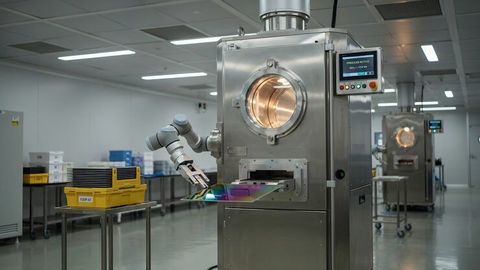
Common equipment includes spinning frames, winding machines, looms, circular and flat knitting machines, dyeing vessels, printing systems, stenters, and fabric inspection machines. Each machine performs a defined task, and its settings influence the resulting material.
A stenter, for example, helps control fabric width and may be used during drying or heat treatment. Fabric inspection systems help identify holes, stains, weaving faults, and other visible defects before the material proceeds to later stages or shipment.
Quality Testing Instruments
Laboratories use different instruments to evaluate textile properties. Common examples include tensile testing machines for measuring strength, abrasion testers for assessing surface wear, and color fastness testing equipment for evaluating resistance to washing, rubbing, or light exposure.
Other tests examine fabric weight, thickness, air permeability, pilling, shrinkage, and dimensional stability. Test methods should match the material and its intended application, with consistent sample preparation and documented results.
Useful Technical Resources
The Bureau of Indian Standards provides information on Indian standards and textile testing requirements. The International Organization for Standardization publishes standards relevant to textile testing and quality management, while technical publications from textile research institutes explain fibers, machinery, processing methods, and laboratory procedures.
Manufacturers may also use production tracking spreadsheets or textile management software to record batch numbers, yarn specifications, dye recipes, machine settings, inspection results, and rejected material. Organized records support process review and help identify recurring quality issues.
FAQs
What are the main stages of fabric manufacturing?
The main stages typically include fiber preparation, spinning, weaving or knitting, dyeing or printing, finishing, and quality control. The exact sequence varies according to the material and intended application.
What is the difference between weaving and knitting?
Weaving interlaces lengthwise and crosswise yarns, while knitting connects loops of yarn. Woven fabrics are often more dimensionally stable, whereas knitted fabrics commonly provide greater stretch.
Why are dyeing and finishing important in textile production?
Dyeing introduces color into the fiber, yarn, or fabric. Finishing modifies characteristics such as softness, appearance, shrinkage, wrinkle behavior, or resistance to water, depending on the treatment.
How does quality control work in fabric manufacturing?
Quality control involves inspecting materials and testing properties such as strength, weight, color consistency, shrinkage, and surface defects. Results are compared with defined specifications to determine whether the fabric meets its intended requirements.
Which laws affect fabric manufacturing in India?
Applicable requirements may include environmental legislation, workplace safety rules, chemical-handling provisions, and relevant textile standards. The precise obligations depend on the facility, product, location, and current regulations.
Conclusion
Fabric manufacturing combines fiber preparation, yarn production, weaving or knitting, dyeing, finishing, and quality control to create materials for many applications. Machinery, digital monitoring, and laboratory testing help manufacturers manage production consistency and identify defects. Environmental rules, workplace safety requirements, and textile standards influence how production facilities operate. Understanding these processes provides a clear foundation for evaluating fabric properties, manufacturing methods, and quality requirements.