Industrial Coating Machines Guide: Technologies, Materials, Processes and Key Features
Industrial coating machines are used to apply protective or decorative layers to materials such as metal, plastic, wood, glass, and manufactured components. These machines support industrial coating processes by controlling how paints, powders, resins, and other coating materials are distributed across a surface. Their development has followed the growth of manufacturing, where consistent surface protection and appearance became important for products used in construction, transportation, electronics, and industrial equipment.
Context
Industrial coating machines are used to apply protective or decorative layers to materials such as metal, plastic, wood, glass, and manufactured components. These machines support industrial coating processes by controlling how paints, powders, resins, and other coating materials are distributed across a surface. Their development has followed the growth of manufacturing, where consistent surface protection and appearance became important for products used in construction, transportation, electronics, and industrial equipment.
Traditional coating methods often relied on manual brushing, dipping, or spraying. As production requirements changed, manufacturers introduced mechanized application equipment, automated spray systems, powder coating lines, and precision coating machines. Modern systems may combine material delivery, surface preparation, controlled application, drying, curing, and inspection within one production line.
Understanding Industrial Coating Technologies
Industrial coating technology refers to the equipment and methods used to apply a layer to a product or component. The appropriate technology depends on the material being coated, the coating formulation, the required thickness, the shape of the object, and the intended operating environment.
Common industrial coating machines include:
Spray coating machines: Use spray guns or nozzles to distribute liquid coatings over surfaces.
Powder coating systems: Apply electrically charged powder to suitable surfaces, commonly metal, before a curing stage.
Dip coating equipment: Submerges components in a coating material and withdraws them under controlled conditions.
Roll coating machines: Transfer a controlled layer of coating onto flat or continuous materials such as sheet metal, paper, and film.
Electrostatic coating systems: Use electrical charges to improve coating transfer onto compatible workpieces.
Automated coating lines: Coordinate several operations, potentially including cleaning, application, curing, and inspection.
Each technology has different equipment requirements and operating limits. A system designed for flat panels, for example, may not suit complex components with narrow openings or irregular shapes.
Importance
Industrial coating machines play an important role in manufacturing because surface layers can help protect products from corrosion, moisture, abrasion, chemicals, and environmental exposure. Coatings may also provide color, texture, electrical insulation, reflectivity, or other properties required for a particular application. Their performance depends on the coating material, the surface underneath it, application conditions, and the environment in which the finished product operates.
Industries using coating equipment include automotive manufacturing, construction, furniture production, packaging, electronics, aerospace, and general metal fabrication. Everyday products such as appliances, building panels, vehicle components, and protective metal enclosures may pass through industrial coating processes during production.
Key Factors in Machine Selection
Choosing suitable industrial coating equipment involves evaluating several technical factors:
Substrate material: Metal, wood, plastic, and glass may require different preparation methods and coating formulations.
Product geometry: Flat sheets, pipes, small components, and complex assemblies need different application arrangements.
Coating characteristics: Viscosity, electrical properties, curing requirements, and chemical composition influence equipment compatibility.
Production volume: Batch systems may suit varied products, while continuous lines can support repeated high-volume production.
Coating thickness: The required layer thickness affects material delivery, application speed, and inspection methods.
Environmental conditions: Ventilation, temperature, humidity, dust, and airborne contaminants can influence coating quality.
Maintenance requirements: Filters, spray nozzles, pumps, conveyors, and application heads may need regular inspection.
A mismatch between coating material and equipment can result in uneven coverage, poor adhesion, excessive overspray, or surface defects. Equipment selection therefore involves the complete coating process rather than the application machine alone.
Comparing Industrial Coating Machine Types
| Machine type | Typical application | Important consideration |
|---|---|---|
| Spray coating machine | Liquid paints and protective finishes | Overspray control and uniform coverage |
| Powder coating system | Metal components and suitable substrates | Electrical grounding and curing conditions |
| Dip coating equipment | Small or complex components | Drainage, film thickness, and material recovery |
| Roll coating machine | Flat sheets, films, and continuous materials | Roller alignment and coating thickness |
| Electrostatic system | Compatible parts and coating materials | Electrical safety and surface geometry |
| Automated coating line | Repeated production operations | Process integration and control settings |
These categories can overlap. Some industrial production lines combine multiple technologies to meet different surface requirements.
Recent Updates
Industrial coating technology continues to develop through automation, improved process monitoring, material innovation, and greater attention to environmental performance. Across 2024–2026, manufacturing trends have included more connected production equipment, data-based process adjustments, and efforts to reduce material waste and energy consumption. The availability of these capabilities varies by equipment design, industry, and production scale.
Automation and Smart Coating Systems
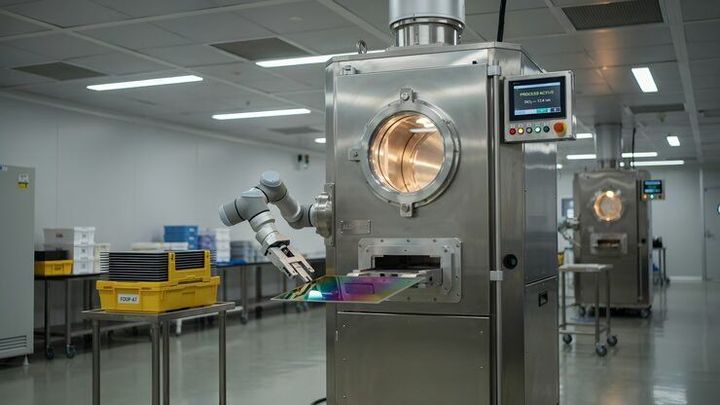
Automated coating machines can control spray movement, conveyor speed, material flow, and selected process settings. Robotic arms may apply coatings to complex components using programmed movement patterns, helping maintain repeatable application paths across production runs.
Some connected systems use sensors to monitor temperature, pressure, humidity, or material flow. Process data can help operators identify variations and investigate defects. However, automation does not eliminate the need for suitable surface preparation, correct formulation, calibration, and regular quality checks.
Advances in Coating Materials and Curing
Manufacturers continue to investigate water-based coatings, lower-solvent formulations, powder coatings, and other materials intended to reduce particular environmental or workplace impacts. Suitability depends on the application, substrate, durability requirements, and relevant chemical properties.
Curing technology is also evolving. Depending on the coating formulation, production systems may use heated ovens, infrared energy, ultraviolet light, or other controlled methods to harden or set the applied layer. Each method has different energy requirements, operating conditions, and compatibility limits.
Process Monitoring and Material Efficiency
Modern coating operations may use thickness gauges, optical inspection equipment, and automated defect detection to assess the finished surface. Some systems also track material consumption and production data to identify application losses or inconsistent results.
Improving material transfer and controlling overspray can reduce waste in suitable processes. Nevertheless, actual efficiency depends on equipment design, product geometry, operator practices, and the coating material being used.
Laws or Policies
Industrial coating equipment is affected by workplace safety rules, environmental requirements, chemical handling regulations, electrical standards, and product-specific specifications. In India, applicable obligations depend on the facility, the coating materials used, the equipment design, and the nature of the manufacturing activity.
Environmental and Industrial Safety Requirements in India
The Environment (Protection) Act, 1986, provides a broad framework for environmental protection in India. Industrial facilities may also need to comply with applicable rules concerning emissions, hazardous waste, wastewater, and chemical handling, along with conditions imposed by relevant pollution control authorities.
The Air (Prevention and Control of Pollution) Act, 1981, is relevant to industrial air pollution. Coating operations involving solvent vapors, particulate emissions, or other pollutants may be subject to applicable consent requirements and emission controls. Specific obligations depend on the process and the facility's regulatory classification.
Workplace safety requirements may address ventilation, personal protective equipment, fire prevention, electrical hazards, machinery guarding, and employee training. The applicable legal framework can depend on the establishment and the provisions in force, including relevant occupational safety legislation and rules.
Chemical Handling and Equipment Standards
Coating materials may contain solvents, pigments, resins, hardeners, or other substances requiring controlled storage and handling. Safety data sheets provide information about hazards, protective measures, storage conditions, and emergency procedures. Employers and operators should follow applicable chemical safety requirements and the instructions relevant to each material.
Equipment may also need to meet relevant electrical, machinery, and fire-safety standards. Powder coating systems require attention to combustible dust risks where applicable, while solvent-based processes may require controls for flammable vapors. The correct safeguards depend on the coating process and facility conditions.
Tools and Resources
Several technical resources help manufacturers understand industrial coating machines, compare processes, and assess production requirements. Their usefulness depends on the type of coating, substrate, and manufacturing environment.
Equipment and Process Information
Manufacturer technical documentation can explain machine capacity, compatible coating materials, operating ranges, maintenance schedules, and installation requirements. Industry organizations such as the American Coatings Association and the Powder Coating Institute publish educational material on coating technologies, terminology, and industry practices.
For Indian regulatory information, the Central Pollution Control Board and relevant State Pollution Control Boards provide information about environmental requirements and applicable industrial controls. The Bureau of Indian Standards provides information on Indian standards relevant to industrial products and processes.
Measurement and Planning Tools
Common tools used in coating operations include:
Dry film thickness gauges: Measure the thickness of a cured coating using methods suitable for the substrate and coating.
Wet film thickness gauges: Help assess the thickness of a newly applied liquid coating.
Viscosity measurement instruments: Evaluate the flow characteristics of compatible liquid coating materials.
Environmental monitoring instruments: Measure conditions such as temperature and relative humidity.
Production planning spreadsheets: Record throughput, material usage, downtime, maintenance, and inspection results.
Inspection checklists: Document surface preparation, application settings, curing conditions, and defects.
Measurement methods must match the coating system and applicable specification. A single reading does not necessarily establish overall coating quality, since adhesion, coverage, curing, and surface condition may also require evaluation.
FAQs
What are industrial coating machines used for?
Industrial coating machines apply protective or decorative layers to materials and manufactured components. Applications include corrosion protection, surface finishing, electrical insulation, and improving resistance to wear or environmental exposure.
What types of industrial coating machines are available?
Common types include spray coating machines, powder coating systems, dip coating equipment, roll coating machines, electrostatic systems, and automated coating lines. The appropriate type depends on the substrate, coating material, product shape, and production process.
How do powder coating machines differ from spray coating machines?
Powder coating systems apply dry powder that generally requires curing to form a continuous layer. Conventional liquid spray machines atomize liquid coating material, which then dries or cures according to its formulation.
Which factors affect industrial coating machine performance?
Performance can depend on surface preparation, coating viscosity, material flow, application distance, temperature, humidity, curing conditions, and equipment maintenance. Product geometry and operator settings can also influence coating uniformity.
What safety rules apply to industrial coating equipment in India?
Relevant requirements may cover air pollution, chemical handling, ventilation, fire prevention, machinery safety, and hazardous waste management. Applicable rules depend on the facility, the coating process, and the materials used.
Conclusion
Industrial coating machines support manufacturing by applying functional and decorative layers to a wide range of materials. Spray, powder, dip, roll, and automated coating technologies serve different production needs and require appropriate process controls. Automation, improved monitoring, and evolving coating formulations are influencing equipment development, while environmental and workplace rules shape how coating operations are managed. Understanding material compatibility, machine capabilities, quality measurements, and applicable regulations provides a foundation for evaluating industrial coating processes.