Explore Robotic Welding Systems With Modern Factory Automation and Process Details
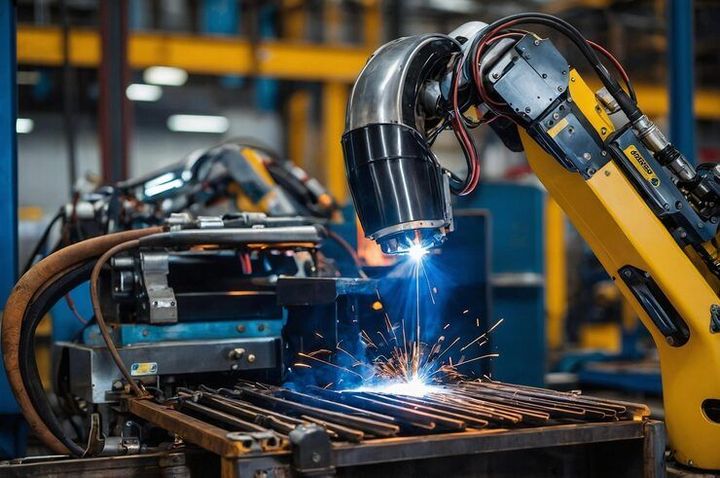
Robotic welding systems are automated production setups that use industrial robots to perform welding operations with programmed movements. A typical system combines a robotic arm, welding equipment, a workholding fixture, sensors, a controller, and safety equipment. Together, these components create a controlled process for joining metal parts.
Traditional welding depends heavily on a person guiding a welding tool across a joint. Robotic welding systems instead follow programmed paths and repeat defined movements. This makes them particularly useful for factories producing many similar components, such as vehicle parts, frames, machinery structures, metal cabinets, pipes, and fabricated assemblies.
How Robotic Welding Developed
Industrial welding automation developed as manufacturers looked for more consistent production methods. Early automated systems were relatively simple and focused on repeating predetermined movements. Modern systems can combine robotics, digital controls, sensors, machine vision, data collection, and adaptive welding technologies.
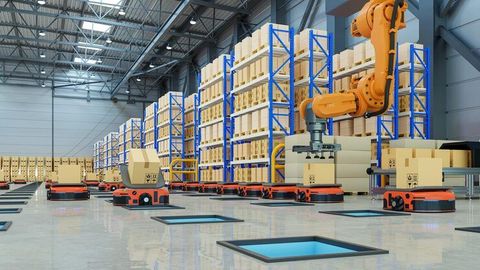
Factory automation has also expanded beyond individual robotic arms. A modern robotic welding cell can include automatic part positioning, wire feeding, torch cleaning, fixture changes, inspection equipment, and communication with production-management software.
The basic process normally follows these stages:
- A component is positioned in a fixture.
- Sensors or programmed coordinates identify the working position.
- The robot moves the welding torch along the programmed path.
- Welding equipment controls the electrical and material parameters.
- Sensors can monitor selected process conditions.
- The completed assembly moves to inspection or another production stage.
This arrangement allows welding operations to become part of a connected manufacturing workflow rather than functioning as an isolated activity.
Main Components
A robotic welding system normally contains several major elements.
The robot arm provides controlled movement across multiple axes. The welding power source creates the electrical conditions needed for the selected welding process. A torch, wire feeder, gas system, and control unit work together to maintain the welding operation.
Fixtures hold components in the required position. Sensors can monitor location, temperature, weld conditions, or other process variables. A safety enclosure, interlocking system, emergency controls, and protective equipment help separate people from hazardous robot movements, heat, sparks, fumes, and electrical energy.
Importance
Why Automated Welding Matters
Robotic welding systems matter because welding quality can be influenced by movement, joint preparation, material condition, welding parameters, and operator technique. Automation provides a way to control many of these variables through programmed processes.
For factories producing repeated assemblies, consistent movement can help reduce variation between individual components. Robots can also perform repetitive welding movements for extended production periods while people concentrate on setup, inspection, maintenance, programming, and other activities.
The technology can address several common manufacturing challenges:
- Repetitive welding movements
- Variation in weld positioning
- Difficult access to certain joints
- Production requirements involving repeated components
- Exposure to welding heat, fumes, sparks, and arc radiation
- Need for digital process records
- Coordination between welding and other automated operations
Automation does not remove the need for skilled human oversight. Instead, it changes the types of tasks people perform around the production system.
Industries Using Robotic Welding
Robotic welding systems are used across many manufacturing environments. Automotive production is a major application because vehicle structures contain numerous repeated welded components. Heavy equipment, metal fabrication, agricultural machinery, construction equipment, energy equipment, and industrial manufacturing can also use robotic welding.
The suitability of automation depends on factors such as production volume, component geometry, material type, weld complexity, fixture design, and the required level of process control.
Robotic Welding Compared With Manual Welding
| Factor | Manual Welding | Robotic Welding Systems |
|---|---|---|
| Movement | Human controlled | Programmed robot movement |
| Repeatability | Depends on operator technique | Based on programmed paths |
| Production pattern | Flexible for changing work | Particularly useful for repeated assemblies |
| Process monitoring | Often manual | Can use sensors and digital controls |
| Part positioning | Human or fixture-based | Fixture and automated positioning |
| Programming | Not normally required | Robot programming required |
| Human involvement | Direct welding | Setup, supervision, inspection, maintenance |
| Safety controls | Personal protective equipment and workplace controls | Includes guarding, interlocks, controls, and protective equipment |
Recent Updates
Greater Use of Vision and Sensors
Recent developments in robotic welding have focused on improving the robot's ability to detect variations in components and welding conditions. Vision systems can help identify part positions, while sensors can detect changes that may affect the welding path.
Machine vision and sensing technologies are also being combined with artificial intelligence and machine-learning techniques. These technologies can support detection of changes in weld position, joint location, or production conditions.
Collaborative robots, commonly called cobots, are another development. These systems are designed for applications where robots and people may operate in closer proximity, although appropriate risk assessment and protective measures remain necessary. Welding is among the applications being explored for collaborative robotics.
More Connected Factory Automation
Modern robotic welding cells increasingly connect with factory information systems. Production data can be collected from controllers and sensors and used for process monitoring, maintenance planning, quality analysis, and production tracking.
Digital programming tools can also allow engineers to simulate robot movements before physical production begins. This can help identify possible collisions, reach limitations, fixture problems, and inefficient movements during planning.
Current Technology Direction
The broader direction from 2024 through 2026 has been toward more connected, sensor-based, and flexible automation. Manufacturers are increasingly combining robotics with machine vision, digital monitoring, simulation, data analysis, and adaptive process control.
These developments are particularly relevant where factories need to handle changing product designs while maintaining controlled welding processes.
Laws or Policies
Industrial Safety Requirements in India
In India, robotic welding installations are affected by workplace safety requirements, machinery safety considerations, electrical requirements, and applicable standards. The Occupational Safety, Health and Working Conditions Code, 2020 became effective as part of India's four Labour Codes from November 2025. The framework includes provisions related to safe and healthy working conditions, workplace risk management, training, protective equipment, and emergency arrangements.
For robotic welding environments, safety planning can include identifying hazards from robot movement, welding arcs, hot surfaces, electrical systems, compressed gases, fumes, and unexpected machine movement.
Machinery and Electrical Equipment
India has also been developing a regulatory framework covering machinery and electrical equipment safety. The Ministry of Heavy Industries has issued amendments and subsequent changes concerning the Machinery and Electrical Equipment Safety framework during 2025 and 2026. Manufacturers and industrial users should therefore check the latest applicable requirements for particular equipment categories rather than relying on older regulatory information.
Applicable Indian Standards and workplace rules may vary according to the machinery, industry, installation, and location. Factory operators should verify current requirements with the appropriate authorities and qualified safety professionals.
Tools and Resources
Robot Programming Software
Robot programming platforms allow engineers to create welding paths, configure movement parameters, manage programs, and test sequences. Simulation software can also create a virtual production environment for checking robot reach and movement.
Welding Parameter Guides
Technical welding references can help users understand parameters such as current, voltage, travel speed, shielding gas, wire feed rate, and material characteristics. These references are useful when developing controlled welding procedures.
Machine Vision Systems
Vision equipment can identify component positions and support automated inspection. Depending on the application, cameras may be used before welding, during production, or after welding.
Maintenance and Monitoring Tools
Condition-monitoring systems can track selected equipment variables and help identify changes that may require inspection. Digital maintenance records can also help factories organize inspection schedules and document equipment history.
Training Resources
Manufacturers, technical institutions, standards organizations, and industrial training platforms provide educational material covering robotics, welding processes, industrial automation, electrical safety, and machine operation.
FAQs
What are robotic welding systems?
Robotic welding systems are automated setups in which an industrial robot moves a welding tool along programmed paths. They can include fixtures, welding equipment, sensors, controllers, and protective systems.
How does a robotic welding system work?
A component is positioned in a fixture, after which the robot follows a programmed movement path. The welding equipment applies the selected welding process while controllers manage robot movement and operating parameters.
What industries use robotic welding systems?
Automotive manufacturing, metal fabrication, heavy equipment, machinery production, construction equipment, energy-related manufacturing, and other industries with repeated metal assemblies can use robotic welding systems.
Are robotic welding systems safer than manual welding?
Robotic welding can move people away from direct exposure to some welding hazards, but the equipment introduces robot-motion and automated-machine hazards. Proper guarding, interlocks, risk assessment, training, protective equipment, and emergency controls remain important.
What is the role of factory automation in robotic welding?
Factory automation connects welding robots with fixtures, material handling, sensors, inspection equipment, production controls, and digital monitoring. This can create a coordinated manufacturing process rather than an isolated welding operation.
Conclusion
Robotic welding systems combine industrial robots, welding equipment, fixtures, sensors, controllers, and safety technologies to automate repeated metal-joining processes. Their development is increasingly connected with machine vision, digital monitoring, simulation, artificial intelligence, and flexible factory automation. Safety requirements remain an important part of system design, particularly as automated equipment becomes more integrated into manufacturing environments. Understanding the components, process stages, recent technology developments, and applicable regulations provides a useful foundation for understanding modern robotic welding.