Explore Precision Grinding Equipment With High-Accuracy Manufacturing and Process Details
Precision grinding equipment is used to remove very small amounts of material from a workpiece while producing controlled dimensions, surface finishes, and geometric accuracy. These machines are widely associated with metalworking, tool production, automotive components, aerospace parts, bearings, medical devices, molds, and other manufactured products.
Modern precision grinding combines abrasive wheels, controlled machine movements, measurement systems, coolant management, and computer-based controls to achieve repeatable results.
The basic principle is straightforward: an abrasive wheel rotates at high speed while its cutting grains gradually remove material from the workpiece. Unlike many conventional cutting processes, grinding can work with hardened materials and can produce very fine dimensional adjustments. Precision grinding equipment therefore plays an important role when ordinary machining processes cannot achieve the required surface or dimensional characteristics.
Context
What Is Precision Grinding Equipment?
Precision grinding equipment refers to machines designed to remove material through controlled abrasive action. The equipment can be configured for different operations depending on the shape, size, material, and required finish of a component.
Common machine categories include:
- Surface grinding machines for producing flat and parallel surfaces
- Cylindrical grinding machines for external round surfaces
- Internal grinding machines for holes and internal diameters
- Centerless grinding machines for continuous external cylindrical grinding
- Tool and cutter grinders for cutting tools and specialized components
- Jig grinding machines for highly accurate holes and profiles
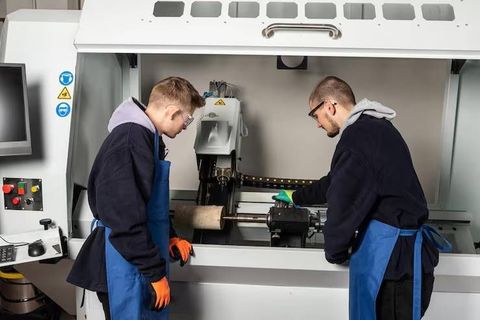
- CNC grinding machines for computer-controlled multi-axis operations
The grinding wheel contains abrasive grains that act as very small cutting edges. As the wheel rotates, these grains interact with the workpiece and remove small quantities of material. Wheel composition, grain size, hardness, bonding method, speed, feed rate, and coolant conditions influence the resulting process.
How Precision Grinding Developed
Grinding is an old manufacturing process that originally relied on relatively simple abrasive stones. Industrial development introduced engineered abrasive materials, stronger machine structures, improved spindle systems, and more accurate measurement methods.
The introduction of numerical control and later CNC systems changed precision grinding significantly. Machine movements could be programmed and repeated with greater consistency, while electronic measurement systems could monitor dimensions during or after grinding.
Today, precision grinding equipment can combine CNC control, automated loading, in-process measurement, wheel dressing, temperature management, and production data collection. These features help manufacturers manage increasingly complex component geometries and tighter dimensional requirements.
Importance
Why High-Accuracy Grinding Matters
Many manufactured components must fit together within controlled dimensional limits. A small variation in a shaft, bearing surface, mold component, or precision tool can influence assembly, movement, vibration, sealing, or operating performance.
Precision grinding provides a controlled finishing stage after processes such as turning, milling, forging, casting, or heat treatment. It can correct small dimensional variations and produce a smoother surface without removing large quantities of material.
For general manufacturing, the important characteristics include:
| Grinding characteristic | Typical purpose |
|---|---|
| Dimensional control | Maintaining specified component dimensions |
| Surface finish | Producing a smoother functional surface |
| Roundness | Controlling cylindrical geometry |
| Flatness | Producing accurately flat surfaces |
| Parallelism | Keeping opposing surfaces aligned |
| Profile accuracy | Producing controlled shapes and contours |
| Repeatability | Producing consistent results across components |
Industries Using Precision Grinding
Precision grinding equipment is used across many manufacturing environments. Automotive production uses grinding for shafts, gears, bearing components, and other rotating parts. Aerospace manufacturing uses controlled grinding for components where dimensional accuracy and surface condition are important.
Toolmaking is another major application. Cutting tools, dies, punches, molds, and forming components may require accurate edges, profiles, holes, or surfaces. Medical-device manufacturing and precision engineering also use grinding processes for components manufactured from difficult or hardened materials.
The process is particularly useful when a component has already undergone heat treatment. Hardened materials can be difficult to shape through conventional cutting, while abrasive grinding can remove small amounts of material in a controlled manner.
Factors Affecting Grinding Accuracy
Accuracy depends on more than the machine itself. Workholding, wheel condition, spindle stability, thermal behavior, machine alignment, coolant flow, dressing parameters, and measurement techniques can all influence results.
Operators and engineers commonly consider:
- Workpiece material and hardness
- Grinding wheel specification
- Wheel dressing frequency
- Spindle speed
- Feed rate and depth of cut
- Coolant temperature and flow
- Machine vibration
- Workholding stability
- Measurement equipment
- Ambient temperature
Managing these factors helps reduce dimensional variation and unwanted surface defects.
Recent Updates
Automation and CNC Integration
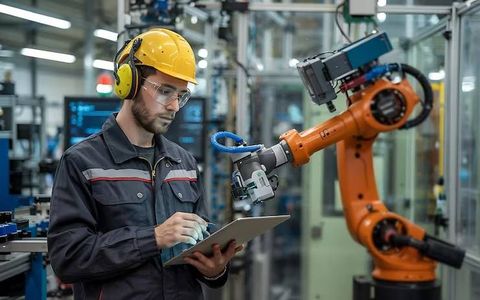
Recent developments in precision grinding equipment have increasingly focused on automation, CNC control, digital measurement, and integration with wider manufacturing systems. Machines can combine programmed grinding cycles with automated tool changes, wheel dressing, component loading, and measurement.
Digital controls also allow process parameters to be stored and repeated across production batches. This supports traceability and helps production teams identify differences between individual process cycles.
In-Process Measurement
Measurement technology is becoming increasingly integrated into grinding operations. Sensors and measuring probes can check dimensions during production rather than relying entirely on measurements after machining.
This approach can help identify dimensional drift associated with wheel wear or thermal changes. When combined with CNC control, measurement information can be used to adjust grinding parameters within defined process limits.
Advanced Abrasive Technology
Abrasive technology continues to develop through engineered grain structures, improved bonding systems, and specialized wheel compositions. Materials such as ceramic abrasives and superabrasives can be selected for particular workpiece materials and grinding conditions.
Modern grinding research also focuses on reducing thermal damage, controlling grinding forces, improving wheel life, and managing material removal more efficiently.
Digital Manufacturing
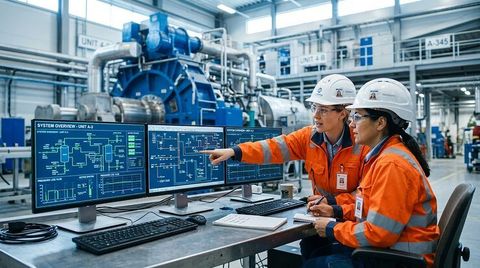
Precision grinding is increasingly connected with digital manufacturing systems. Production data can be collected from machine controls and sensors, allowing manufacturers to monitor machine conditions, cycle information, measurements, and maintenance requirements.
The broader trend is toward connected equipment in which grinding becomes part of a coordinated manufacturing workflow rather than an isolated machining operation.
Laws or Policies
Machine Safety Requirements
Grinding equipment is subject to workplace safety requirements that vary according to the country, industry, and type of installation. Common regulatory areas include machine guarding, abrasive-wheel safety, electrical safety, personal protective equipment, hazardous-energy control, and workplace training.
For example, OSHA's general-industry requirements address abrasive-wheel machinery and require appropriate guarding for covered grinding equipment. The requirements also address matters such as wheel mounting, work rests, wheel speed, and guard construction.
OSHA also specifies general machine-guarding requirements intended to protect workers from hazards such as rotating parts, flying chips, sparks, and points of operation.
Abrasive Wheel Handling
Safety rules commonly emphasize inspection and correct installation of grinding wheels. OSHA construction requirements, for example, state that abrasive wheels should be inspected and ring-tested before mounting, and that the wheel's rated speed should not be exceeded.
Other jurisdictions have their own machinery and workplace-safety frameworks. In the European Union, the Machinery Regulation establishes requirements for machinery placed on the market and is scheduled to apply broadly from January 2027, with certain provisions applying earlier.
Because regulatory requirements differ by location and application, manufacturers and machine operators need to follow the rules applicable to their particular workplace.
Tools and Resources
Measurement Equipment
Precision grinding depends heavily on accurate measurement. Common equipment includes micrometers, dial indicators, coordinate measuring machines, optical measurement systems, roundness testers, surface-finish instruments, and electronic gauges.
The appropriate measuring method depends on the component geometry and the tolerance being evaluated. Measurement equipment should also be maintained and calibrated according to applicable quality procedures.
Grinding Process Calculators
Grinding calculators can help engineers evaluate relationships among wheel speed, workpiece speed, feed rate, material removal, and other process variables. These tools are useful for understanding how changes in one parameter can affect the grinding process.
CNC Programming Resources
CNC programming software and machine-control documentation help production teams develop grinding cycles. Modern systems may include simulation functions that allow programmed movements to be checked before machining.
Digital Maintenance Platforms
Manufacturing monitoring platforms can collect information about machine utilization, alarms, maintenance intervals, and production cycles. These systems can support preventive maintenance and help identify recurring equipment conditions.
Technical Standards and Manuals
Machine manuals, abrasive-wheel specifications, workplace safety standards, measurement procedures, and engineering references provide important technical information. They help users understand machine limitations, wheel requirements, maintenance procedures, and safe operating conditions.
FAQs
What is precision grinding equipment used for?
Precision grinding equipment is used to remove small amounts of material while controlling dimensions, surface finish, flatness, roundness, or profiles. It is commonly used for hardened metal components and precision-manufactured parts.
How does a CNC grinding machine improve process control?
A CNC grinding machine uses programmed movements to control grinding operations. It can coordinate multiple axes, repeat defined machining cycles, and integrate measurement or dressing functions depending on the machine configuration.
What types of precision grinding machines are available?
Common types include surface grinders, cylindrical grinders, internal grinders, centerless grinders, tool and cutter grinders, jig grinders, and CNC grinding machines. Each type is designed around particular component geometries and process requirements.
Why is grinding wheel selection important?
Grinding wheel selection affects material removal, surface condition, heat generation, wheel wear, and process stability. Grain type, grain size, bond, hardness, and wheel structure are selected according to the workpiece and grinding application.
What safety measures are associated with precision grinding equipment?
Important measures include suitable machine guarding, correct wheel installation, compatible wheel and spindle speeds, appropriate eye protection, proper workholding, inspection of abrasive wheels, and adherence to applicable workplace safety requirements.
Conclusion
Precision grinding equipment provides controlled abrasive machining for components requiring accurate dimensions, surfaces, and geometries. Modern systems increasingly combine CNC control, automated measurement, advanced abrasives, and digital monitoring with established grinding principles. Safety requirements continue to emphasize guarding, correct wheel installation, speed control, and protection from grinding hazards. The overall development of precision grinding reflects the broader movement toward accurate, connected, and highly controlled manufacturing processes.