Explore Precision Cutting Machines With Automated Cutting Systems and Process Details
Precision cutting machines are industrial systems designed to cut materials into specific shapes and dimensions with controlled accuracy. They are used across manufacturing, fabrication, packaging, construction, electronics, textiles, and many other fields where consistent cutting is important.
The development of precision cutting machines comes from the need to produce repeatable components while reducing variation between individual pieces. Earlier cutting processes often depended heavily on manual measurement and operator control. As production requirements became more complex, computer numerical control, digital design files, motion control, and automated cutting systems became increasingly common.
Today, an automated cutting machine can follow programmed instructions to move a cutting head along a planned path. Depending on the material and application, the cutting method may involve a blade, laser, plasma, water jet, rotary tool, or another specialized mechanism.
What Precision Cutting Means
Precision cutting refers to controlling the dimensions, position, shape, and edge characteristics of a cut. The required level of precision depends on the material, product design, and manufacturing process.
Important factors include:
- Dimensional accuracy, which describes how closely the finished part matches its intended measurements.
- Repeatability, which describes how consistently a machine can reproduce the same result.
- Cutting speed, which affects production throughput and process planning.
- Edge quality, which determines the appearance and condition of the cut surface.
- Material thickness, which influences the appropriate cutting technology.
- Tool condition, because worn cutting components can affect accuracy.
Precision does not depend on the machine alone. Material properties, machine calibration, software settings, environmental conditions, and operator procedures can all influence the final result.
How Automated Cutting Systems Developed
Automated cutting systems evolved alongside computer-controlled manufacturing. Digital drawings made it possible to convert product designs into machine instructions, while programmable motion systems enabled cutting equipment to follow precise paths.
Modern CNC cutting machines commonly use numerical coordinates to control movement. A computer can interpret a digital design and translate it into instructions for motors, cutting heads, and other machine components.
Automation can also extend beyond the cutting action. Material loading, positioning, measurement, part identification, waste separation, and production monitoring may be integrated into a larger system.
Importance
Precision cutting machines matter because many products require consistent dimensions and repeatable shapes. Small differences in a component can affect how it fits with other parts, how it moves through later production stages, or how the finished product performs.
Automated cutting systems also address challenges associated with repetitive manual cutting. Digital controls can reduce the amount of repeated measurement and manual positioning required for standardized production tasks.
Industries Using Precision Cutting Machines
These systems can be found in many manufacturing environments. Common applications include:
- Metal fabrication for plates, sheets, brackets, panels, and structural components.
- Automotive manufacturing for body components, interior parts, and metal assemblies.
- Aerospace production for carefully shaped structural and interior components.
- Electronics manufacturing for enclosures, panels, films, and specialized materials.
- Textile production for fabrics, leather, technical textiles, and layered materials.
- Packaging production for cardboard, foam, plastics, and other packaging materials.
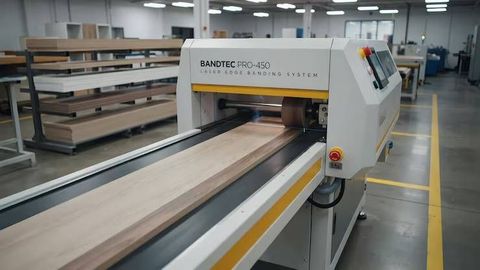
- Wood processing for panels, decorative components, and engineered wood products.
- Construction manufacturing for architectural panels, profiles, and fabricated components.
Problems Addressed by Automation
Manual cutting can involve repeated measuring, positioning, marking, and inspection. These activities can become difficult to maintain consistently when production involves many similar components.
Automated cutting machines can help organize these processes through programmable instructions. A digital workflow can store cutting patterns, define dimensions, and coordinate machine movement.
However, automation does not remove the need for human oversight. Operators may still need to verify material placement, inspect finished pieces, adjust settings, maintain equipment, and respond to unusual conditions.
Precision Cutting Process
A typical automated cutting process can be divided into several stages:
- Design preparation involves creating or importing a digital drawing.
- Toolpath generation converts the design into movement instructions.
- Material preparation ensures the correct material is positioned on the cutting surface.
- Machine setup establishes the cutting method, tool settings, and reference position.
- Cutting follows the programmed path.
- Inspection checks dimensions, edges, and overall part quality.
- Material handling moves completed pieces and manages remaining material.
The exact sequence varies according to the machine type and manufacturing environment.
Recent Updates
From 2024 through 2026, the general direction of precision cutting technology has continued toward greater automation, digital integration, monitoring, and data-based process control. Manufacturers increasingly connect cutting equipment with production software and digital design workflows.
Smarter Machine Controls
Newer equipment increasingly combines motion control with sensors and software. Sensors can monitor factors such as position, temperature, pressure, material presence, or tool conditions, depending on the machine.
Machine interfaces are also becoming more accessible to operators. Touchscreen controls, visual status information, programmable recipes, and diagnostic functions can simplify routine setup and monitoring.
Integration With Digital Manufacturing
Precision cutting machines can increasingly operate as part of connected production environments. Digital design information can move from engineering software toward manufacturing equipment with fewer manual transcription steps.
Some systems also collect production information for later analysis. Data may include machine operating conditions, cutting cycles, material usage, alarms, and maintenance indicators.
Artificial Intelligence and Vision Technology
Machine vision is becoming more relevant to automated cutting applications. Cameras can identify material edges, printed patterns, reference marks, or component positions.
Artificial intelligence can also be applied to pattern recognition, process monitoring, and production analysis. These applications vary considerably, and their usefulness depends on the material, machine configuration, data quality, and manufacturing requirements.
Comparison of Cutting Technologies
| Cutting Technology | Common Materials | Main Characteristic | Typical Application |
|---|---|---|---|
| Laser Cutting | Metals, plastics, composites | Concentrated heat source | Detailed sheet and component cutting |
| Plasma Cutting | Conductive metals | High-temperature cutting | Metal plates and fabrication |
| Water Jet Cutting | Metals, stone, composites | High-pressure water stream | Heat-sensitive materials |
| Blade Cutting | Textiles, foam, films, paper | Mechanical cutting | Flexible and layered materials |
| CNC Routing | Wood, plastics, composites | Rotating cutting tool | Panels and shaped components |
| Ultrasonic Cutting | Films, textiles, specialized materials | High-frequency vibration | Delicate or layered materials |
No single technology is suitable for every material or application. Selection depends on thickness, geometry, edge requirements, production volume, machine configuration, and material characteristics.
Laws or Policies
Precision cutting equipment is influenced by machinery safety requirements, workplace rules, electrical safety provisions, environmental requirements, and manufacturer documentation. The exact legal framework varies by country and industry.
Machinery Safety Requirements
Many regulatory systems require machinery to incorporate measures that reduce foreseeable risks. These may include physical guarding, emergency stopping mechanisms, warning systems, safe access procedures, and protective controls.
Automated cutting systems can contain moving components, sharp tools, high temperatures, high-pressure systems, electrical equipment, or concentrated energy sources. Appropriate safeguards therefore form an important part of machine design and operation.
Workplace Procedures
Organizations using industrial cutting equipment generally need documented procedures covering areas such as:
- Operator training and authorization.
- Machine inspection and maintenance.
- Personal protective equipment where applicable.
- Emergency procedures.
- Material handling.
- Electrical and mechanical safety.
- Safe access to cutting areas.
Applicable requirements should be checked against the regulations and standards governing the specific workplace and equipment.
Environmental Considerations
Some cutting processes can generate dust, fumes, noise, wastewater, heat, or material waste. Facilities may therefore need controls for ventilation, waste handling, noise exposure, and other environmental or workplace factors.
Tools and Resources
Several digital and physical resources can help people understand or manage precision cutting processes.
Design and CAD Software
Computer-aided design software is commonly used to create accurate digital drawings. These files can define dimensions, curves, holes, profiles, and other geometric features before manufacturing begins.
CNC Programming Tools
Computer-aided manufacturing software can convert digital designs into machine-readable cutting instructions. Depending on the equipment, these tools may help generate toolpaths, nesting layouts, cutting sequences, and machine parameters.
Material Calculators
Material utilization calculators can estimate sheet or panel requirements and help compare different nesting arrangements. Such calculations are useful when planning production layouts and minimizing unused material.
Machine Manuals and Technical Documentation
Machine manuals provide information about operating procedures, maintenance intervals, compatible materials, machine limitations, and safety functions. Technical documentation should be considered alongside applicable workplace requirements.
Inspection Equipment
Measurement tools such as calipers, micrometers, gauges, optical inspection systems, and coordinate measurement equipment can be used to verify dimensions. The appropriate instrument depends on the required measurement range and accuracy.
FAQs
What are precision cutting machines?
Precision cutting machines are controlled equipment used to cut materials according to defined dimensions and shapes. They can use blades, lasers, plasma, water jets, routers, or other cutting technologies.
How do automated cutting systems work?
Automated cutting systems generally use digital design information and programmed machine instructions. Motors and control systems guide the cutting tool along a specified path while sensors and software may monitor the process.
What materials can automated cutting machines process?
The suitable material depends on the cutting technology. Metals, plastics, wood, textiles, foam, composites, paper, stone, and specialized materials can be processed by different machine types.
Are CNC cutting machines difficult to operate?
Modern CNC cutting machines are designed with computerized controls, but operators still need appropriate training. Understanding material behavior, machine settings, safety procedures, digital files, and inspection methods is important.
What is the difference between laser cutting machines and water jet systems?
Laser cutting machines use a concentrated energy beam to process material, while water jet systems use a high-pressure stream, often with an abrasive medium. Their suitability depends on material type, thickness, heat sensitivity, geometry, and required edge characteristics.
Conclusion
Precision cutting machines combine controlled movement, specialized cutting technologies, digital designs, and automated processes to produce accurately shaped components. Automated cutting systems are increasingly connected with software, sensors, machine vision, and digital production workflows. Different technologies, including CNC cutting machines, laser cutting machines, plasma systems, water jets, and blade cutters, are suited to different materials and applications. Safety requirements, machine documentation, operator training, inspection, and environmental controls remain important parts of responsible equipment use.