EV Battery Manufacturing Machines Resources: Production Systems and Tools
Electric vehicle batteries are complex energy-storage systems made through a series of carefully controlled manufacturing steps. Behind every battery pack is a production system that converts raw materials into cells, combines cells into modules, and assembles modules into complete battery packs.
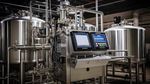
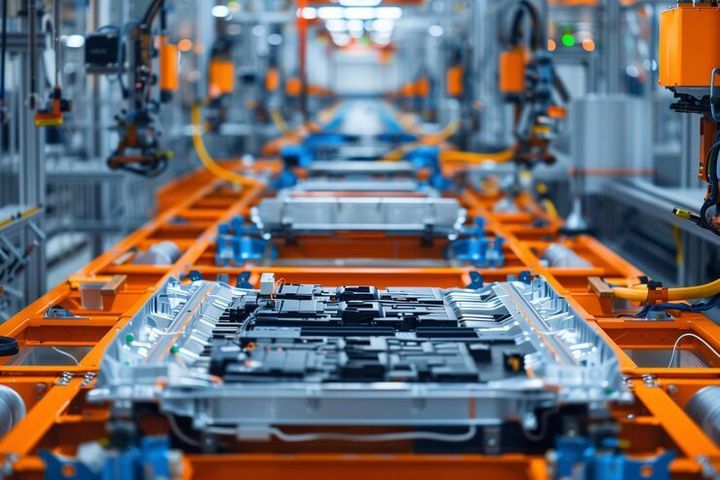
EV battery manufacturing machines are the equipment used throughout these stages. They can include material mixing systems, electrode coating machines, drying equipment, calendering machines, slitting systems, cell assembly equipment, electrolyte filling systems, formation and aging equipment, welding machines, battery testing systems, and automated inspection tools.
The exact production sequence depends on the battery chemistry and cell format. The three common cell formats are cylindrical, pouch, and prismatic. Each requires different equipment configurations and manufacturing controls.
A typical production flow can be summarized as follows:
| Manufacturing Stage | Common Equipment | Main Purpose |
|---|---|---|
| Material preparation | Mixing systems | Prepare electrode materials |
| Electrode production | Coating and drying machines | Apply and dry electrode layers |
| Electrode finishing | Calendering and slitting machines | Control thickness and dimensions |
| Cell assembly | Stacking or winding equipment | Build the cell structure |
| Cell processing | Filling and sealing systems | Add electrolyte and close cells |
| Formation | Charging and testing systems | Activate and evaluate cells |
| Module assembly | Welding and fastening equipment | Connect multiple cells |
| Pack assembly | Pack integration systems | Build complete battery packs |
| Inspection | Vision and testing systems | Identify manufacturing defects |
Global battery manufacturing capacity has expanded rapidly. According to the International Energy Agency's 2026 Global EV Outlook, worldwide lithium-ion battery manufacturing capacity exceeded 4 TWh at the end of 2025, around 30% higher than in 2024. China remained the largest production center, accounting for more than 80% of global capacity.
Importance
Battery manufacturing machines matter because EV battery production requires repeatable conditions and precise process control. Small variations in electrode thickness, moisture, alignment, welding, or cell formation can affect battery performance and reliability.
For manufacturers, production equipment is therefore closely connected with battery quality control, automated manufacturing, industrial robotics, battery testing, and energy storage technology.
Several areas make these machines particularly important.
Improving production consistency
Automated equipment can maintain consistent pressure, speed, temperature, coating thickness, and alignment. This helps reduce variation between individual cells.
Supporting different battery chemistries
Lithium iron phosphate (LFP), nickel-manganese-cobalt (NMC), and emerging battery chemistries can require different processing conditions. Manufacturing systems need to accommodate the material characteristics of the selected chemistry.
Increasing process monitoring
Modern battery plants increasingly use sensors, machine vision, data collection, and automated inspection. These systems can monitor production parameters and identify abnormalities earlier in the manufacturing process.
Supporting battery safety
Battery safety begins during manufacturing. Contamination, moisture, damaged separators, poor welds, or incorrect assembly can create risks. Controlled production environments and inspection equipment therefore have an important role in battery quality.
Enabling large-scale production
The global EV market requires substantial quantities of battery cells. The IEA reports that China, Europe, and North America together represented about 95% of global battery output between 2023 and 2025.
This concentration also highlights the importance of specialized production equipment, trained technical teams, reliable process controls, and well-developed supply chains.
Recent Updates
Battery manufacturing technology has continued to change during 2025 and 2026. One major trend is the expansion of production capacity outside traditional manufacturing centers.
The IEA reported in 2026 that battery manufacturing capacity outside the largest production regions nearly doubled between 2024 and 2025. Capacity growth in the European Union and United States was also faster than in China during that period, although China continued to dominate total global capacity.
Another important development is the growing attention to manufacturing ramp-up. Building a battery factory does not immediately mean it will operate at full production capability. The IEA notes that many facilities can take more than five years from the beginning of operations to approach nominal output. Specialized equipment knowledge and technical expertise can influence this ramp-up period.
Automation is also becoming more important. Battery production increasingly combines robotics, machine vision, sensors, manufacturing execution systems, digital quality records, and process analytics.
Battery recycling is another growing part of the manufacturing ecosystem. Recovering lithium, nickel, cobalt, copper, and other materials can support resource efficiency and reduce pressure on primary material supply. Recent industry developments are placing greater emphasis on connecting battery manufacturing with recycling and material recovery.
In India, battery manufacturing has also progressed under the Advanced Chemistry Cell programme. In February 2026, the Ministry of Heavy Industries reported that 40 GWh of the targeted 50 GWh domestic ACC capacity had been awarded under the national PLI programme.
In July 2026, India also published agreements and related documents concerning an additional 10 GWh of Advanced Chemistry Cell capacity intended for grid-scale stationary storage applications.
Laws or Policies
Battery manufacturing is influenced by environmental, safety, transportation, recycling, energy, and industrial policies. Requirements differ by country and can change as battery technology develops.
European Union
The European Union Batteries Regulation, Regulation (EU) 2023/1542, establishes requirements covering batteries and waste batteries, including sustainability, information, collection, recycling, and producer responsibilities.
One important development is the Digital Battery Passport. In August 2026, the European Commission published updated guidance to help battery-sector participants prepare for the passport requirements. The guidance identifies data points relevant to EV batteries and explains their applicability as the requirements approach implementation.
From 18 February 2027, covered EV batteries placed on the EU market or put into service will require a battery passport under the applicable framework.
This makes digital traceability increasingly relevant to battery manufacturing systems. Production data, material information, testing records, and other required information may need to connect with broader battery data systems.
India
India's National Programme on Advanced Chemistry Cell Battery Storage was approved with an outlay of ₹18,100 crore and a target of 50 GWh of domestic ACC manufacturing capacity. The programme emphasizes domestic value addition and large-scale battery manufacturing.
The programme also establishes requirements for domestic value addition over time. The Ministry of Heavy Industries states that beneficiaries must achieve at least 25% domestic value addition within the specified initial period and raise it to 60% within five years under the programme framework.
These policies show how government programmes can influence battery production equipment, factory planning, domestic manufacturing capability, and technology development.
United States and other markets
The United States has also developed policies affecting battery manufacturing, domestic supply chains, clean-energy production, and critical minerals. However, specific eligibility and sourcing requirements can change through legislative and regulatory updates.
For any battery manufacturing project, applicable national and regional rules should be checked before equipment specifications, production processes, and compliance systems are finalized.
Tools and Resources
A battery manufacturing facility normally uses a combination of physical equipment and digital production tools.
Production equipment
Common categories include:
- Powder and material mixing systems
- Electrode coating machines
- Industrial drying systems
- Calendering machines
- Electrode slitting equipment
- Cell stacking and winding systems
- Electrolyte filling equipment
- Cell sealing systems
- Formation and aging equipment
- Laser or ultrasonic welding systems
- Module assembly equipment
- Battery pack assembly systems
- Thermal management testing equipment
- Battery inspection and testing systems
Digital resources
Manufacturing teams may also use:
- Battery process-control software
- Manufacturing execution systems
- Production data dashboards
- Statistical process control tools
- Machine-vision inspection platforms
- Digital maintenance records
- Energy monitoring systems
- Battery performance calculators
- Material traceability templates
- Safety and risk assessment templates
A useful production dashboard can track electrode thickness, humidity, temperature, machine speed, defect rates, cell capacity, electrical resistance, and equipment downtime.
For engineers and students, battery chemistry references, manufacturing-process diagrams, laboratory testing guides, safety documentation, and government regulatory portals can provide useful learning resources.
FAQs
What machines are used to manufacture EV batteries?
Common machines include mixing systems, coating equipment, drying systems, calendering machines, slitting equipment, cell assembly machines, electrolyte filling systems, formation equipment, welding systems, inspection equipment, and battery testing systems.
What are the main stages of EV battery manufacturing?
The major stages include material preparation, electrode production, electrode finishing, cell assembly, electrolyte filling, sealing, formation, aging, testing, module assembly, and battery pack integration.
Why is battery manufacturing automation important?
Automation helps maintain consistent production conditions, monitor processes, improve inspection, collect production data, and reduce variation between battery cells. It can also support traceability and repeatable quality-control procedures.
What battery cell formats are commonly manufactured?
The main lithium-ion cell formats are cylindrical, pouch, and prismatic. Their physical designs differ, so manufacturing equipment and assembly methods also vary.
How are battery manufacturing machines changing?
Modern equipment is increasingly connected with machine vision, sensors, robotics, process analytics, digital traceability, and automated testing. Battery recycling and data requirements are also influencing future production systems.
Conclusion
EV battery manufacturing machines form the physical and digital foundation of modern battery production. From material preparation and electrode coating to cell formation, testing, module assembly, and pack integration, each stage requires controlled processes and appropriate equipment.