Commercial Shredders Guide: Types, Functions, Industrial Uses and Key Features
A Commercial Shredders Guide explains the types, functions, industrial uses, and key features of machines designed to reduce materials into smaller pieces. Commercial shredders are used in manufacturing plants, recycling facilities, warehouses, offices, and waste-processing operations. They developed from mechanical cutting and size-reduction equipment used in industrial production, where managing discarded materials and preparing raw materials for further processing became important tasks.
Context
A Commercial Shredders Guide explains the types, functions, industrial uses, and key features of machines designed to reduce materials into smaller pieces. Commercial shredders are used in manufacturing plants, recycling facilities, warehouses, offices, and waste-processing operations. They developed from mechanical cutting and size-reduction equipment used in industrial production, where managing discarded materials and preparing raw materials for further processing became important tasks.
Modern commercial shredders use rotating blades, cutters, or shafts to tear, cut, or break materials into smaller fragments. Depending on their design, they can process paper, cardboard, plastics, wood, rubber, electronic waste, and certain types of metal. The appropriate machine depends on the material, its dimensions, the required output size, and the amount of material processed during a typical operating period.
Understanding Commercial Shredder Systems
Commercial shredders are mechanical machines that reduce the size of materials through cutting, shearing, tearing, or crushing actions. Some systems use one rotating shaft, while others use two or more shafts that work together to pull material through cutting components.
These machines differ from small office paper shredders in their capacity, construction, and intended applications. Industrial models may include automatic feeding systems, conveyor belts, control panels, protective enclosures, and equipment for collecting or transporting shredded material.
Main Types of Commercial Shredders
Commercial shredders are available in several configurations, each suited to particular materials and processing requirements.
Single-shaft shredders: Use one rotating shaft and a stationary screen or counter-blade arrangement to reduce material size. They are commonly used for plastics, wood, and manufacturing waste.
Dual-shaft shredders: Use two rotating shafts that pull and tear material into smaller pieces. They are often applied to bulky waste, packaging, and selected industrial materials.
Four-shaft shredders: Use multiple cutting shafts to provide additional size reduction and control over the output, depending on the design.
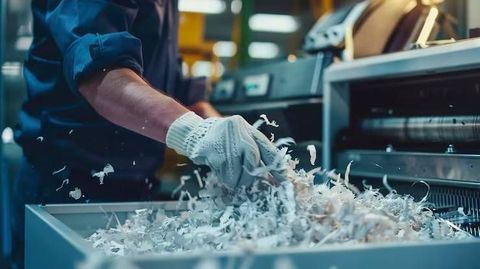
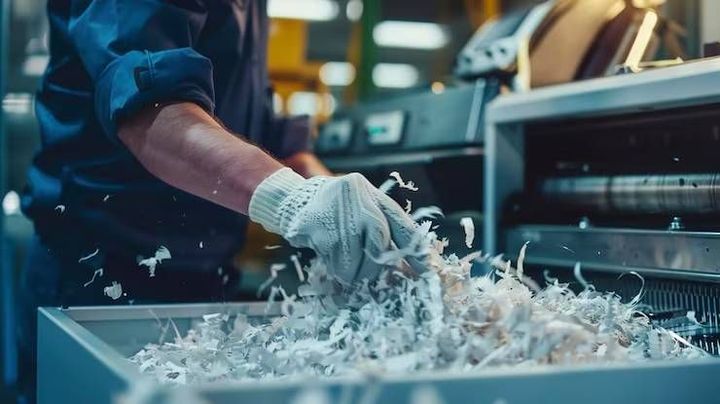
Industrial paper shredders: Process documents, paper sheets, cardboard, and similar cellulose-based materials.
Plastic shredders: Reduce plastic containers, rejected molded parts, films, and production scraps for subsequent handling or recycling.
Metal shredders: Process suitable metal scrap using heavy-duty cutting or impact mechanisms designed for the material concerned.
Not every shredder can handle every material. Items containing hazardous substances, pressurized components, batteries, or incompatible metals may require separate handling procedures and equipment.
Importance
Commercial shredders help organizations manage waste, prepare materials for recycling, and reduce the physical volume of certain discarded items. Manufacturing facilities may use them to process production rejects, while recycling centers use shredding as one stage in separating and preparing recoverable materials.
Without appropriate size-reduction equipment, bulky materials can be difficult to transport, store, or process further. However, shredding alone does not make a material recyclable or safe to dispose of. The result depends on material composition, contamination, output size, and the capabilities of downstream processing facilities.
Industrial Applications of Commercial Shredders
Commercial shredders serve different purposes across industrial and commercial settings.
Manufacturing: Processes plastic offcuts, packaging waste, rubber components, and selected production rejects.
Recycling facilities: Prepares materials for sorting, washing, separation, or further mechanical processing.
Packaging and distribution: Reduces cardboard, plastic packaging, and certain bulky discarded materials.
Wood processing: Handles suitable wood scraps, pallets, and manufacturing residues.
Electronic waste processing: Reduces selected electronic equipment as part of a controlled dismantling and material-recovery process.
Document management: Destroys confidential paper records according to organizational information-handling requirements.
Waste management: Reduces the dimensions of appropriate waste streams before transport or further treatment.
Industrial shredders are also used in tire processing and the preparation of certain rubber materials. These applications require equipment designed for the material's strength, elasticity, and physical characteristics.
Key Features to Evaluate
Several technical features determine how a commercial shredder performs in a particular operation. These include motor power, shaft configuration, cutting geometry, feeding arrangement, screen size, throughput, and maintenance access.
The required output size is especially important. Smaller fragments may be necessary for a particular recycling process, while another application may only require bulky material to be reduced to manageable pieces. The screen or cutting arrangement influences the resulting particle dimensions, although actual output also depends on the material and operating conditions.
Recent Updates
Commercial shredding technology continues to develop alongside industrial automation, resource recovery, and waste-management requirements. Trends visible from 2024 through 2026 include greater attention to energy use, machine monitoring, automated feeding, and integration with sorting and material-handling systems. The availability of these features varies by equipment type, manufacturer, and application.
Automation and Smart Monitoring
Some modern industrial shredders incorporate sensors, programmable controls, and automated operating sequences. These systems can monitor operating conditions, detect certain overload situations, and adjust machine operation according to defined parameters.
Load monitoring can help identify when material is difficult to process or when a machine is approaching its operating limits. Automated reversing systems may help clear some jams, but they do not remove the need for safe shutdown procedures and operator training.
Energy Efficiency and Material Recovery
Energy use is an important consideration when shredders operate for extended periods or process large volumes of material. Machine selection, motor control, cutting design, feed consistency, and preventive maintenance can all affect energy consumption.
Material recovery is another area of attention. Shredding is increasingly integrated with magnetic separation, screening, air classification, and other processing stages. These combinations can help separate material fractions, but recovery results depend on the incoming waste and the design of the complete processing line.
Manufacturers and facility operators also consider noise reduction, dust control, access for maintenance, and protection against mechanical hazards. These features are particularly relevant in facilities where shredders operate near workers or other production equipment.
Laws or Policies
Commercial shredder operations may be affected by machinery safety requirements, workplace regulations, waste-management rules, environmental controls, and material-specific laws. The applicable requirements depend on the country, industry, material being processed, and operating conditions.
Industrial Safety and Environmental Requirements in India
In India, industrial facilities must consider applicable occupational safety, factory, environmental, and state-level requirements. The Occupational Safety, Health and Working Conditions Code, 2020, forms part of India's occupational safety framework, while its practical application depends on commencement notifications, implementing rules, and relevant jurisdictional provisions.
Equipment operators may need safeguards against moving blades, access to emergency stops, appropriate isolation procedures, and training for feeding, clearing, cleaning, and maintenance tasks. Risk controls should account for entanglement, flying fragments, noise, dust, and unexpected machine movement.
Waste-processing facilities may also be subject to requirements under environmental legislation and relevant rules administered by the Ministry of Environment, Forest and Climate Change and the Central Pollution Control Board. Depending on the material and activity, relevant frameworks may include the Plastic Waste Management Rules, E-Waste (Management) Rules, and applicable hazardous-waste requirements.
Data Security and Material Handling
Organizations that destroy confidential documents should consider internal information-security procedures and any legal obligations concerning records or personal information. The shred size and handling method may depend on the sensitivity of the information and the organization's applicable policies.
Electronic waste requires particular care because equipment may contain batteries, circuit boards, hazardous substances, or components that need specialized treatment. Shredding should form part of an appropriate processing arrangement rather than replace required collection, dismantling, or environmentally sound handling procedures.
Tools and Resources
Several technical resources can help organizations understand commercial shredder specifications, estimate processing requirements, and plan safe operations.
Equipment Specifications and Selection Tools
Manufacturer specification sheets typically describe motor power, shaft configuration, cutting width, feed opening, screen dimensions, rated throughput, and accepted material types. These details help establish whether a machine is suitable for a particular waste stream.
Throughput figures should be interpreted carefully because actual performance varies with material density, moisture, feeding consistency, output size, and operating conditions. A rating for one material may not apply to another.
Planning and Maintenance Resources
A basic equipment assessment spreadsheet can record material type, daily processing volume, required output size, operating hours, energy use, maintenance intervals, and downtime. These records can help facilities compare operational requirements and identify changes in machine performance.
Useful resources include:
Central Pollution Control Board (CPCB): Environmental guidance and applicable waste-management information in India.
Ministry of Environment, Forest and Climate Change (MoEFCC): Environmental legislation, notifications, and waste-management rules.
Bureau of Indian Standards (BIS): Relevant Indian standards and technical publications where applicable.
Manufacturer operating manuals: Machine-specific instructions for operation, inspection, maintenance, and troubleshooting.
Maintenance checklists: Records of blade condition, lubrication, fasteners, safety interlocks, and inspection findings.
Maintenance must follow the equipment manufacturer's instructions. Before cleaning, inspecting, or clearing a blockage, the machine should be isolated from its energy sources according to the applicable lockout and safety procedures.
FAQs
What are commercial shredders used for?
Commercial shredders reduce the size of materials such as paper, plastic, wood, rubber, and selected metal scrap. Their applications include manufacturing, recycling, packaging, document destruction, and waste processing.
What is the difference between single-shaft and dual-shaft industrial shredders?
A single-shaft shredder typically works with a rotating cutter and a counter-surface or screen. A dual-shaft shredder uses two rotating shafts to pull and tear material. Their suitability depends on the material, required output size, and processing conditions.
How do industrial shredder machines support recycling?
Industrial shredders prepare materials for subsequent stages such as screening, sorting, washing, and separation. Shredding can make materials easier to handle, but recycling depends on material quality and the capabilities of downstream facilities.
Which key features matter when selecting a commercial shredder?
Important features include motor power, cutting configuration, feed opening, output size, throughput, safety controls, maintenance access, and compatibility with the intended material. Operating conditions and downstream processing requirements also matter.
What safety precautions apply to commercial shredders?
Operators should receive suitable training, use required protective equipment, keep guards in place, and follow established shutdown and energy-isolation procedures. Hands and tools must remain clear of moving cutting components, and blockages should never be cleared while the equipment is operating.
Conclusion
Commercial shredders reduce materials into smaller pieces for industrial processing, waste management, and resource recovery. Different shaft designs and cutting systems suit different materials and output requirements. Automation, monitoring, and integration with recycling equipment are important developments, while machine guarding, maintenance, and environmental compliance remain essential considerations. Equipment selection and operation depend on the material, intended application, and applicable safety and waste-management requirements.