Collaborative Robotic Systems Guide With Automation and Manufacturing Insights
Collaborative robotic systems are automation technologies designed to work alongside people in shared industrial environments. Unlike traditional industrial robots that often operate inside dedicated safety areas, collaborative robots, commonly called cobots, are developed with sensing, control, and monitoring features that can support closer interaction with human workers.
The concept developed from the broader growth of industrial automation. Manufacturers wanted machines that could handle repetitive physical activities while people continued to manage tasks requiring judgment, flexibility, inspection, and decision-making. Collaborative robotic systems became part of this transition by combining robotic movement with human participation.
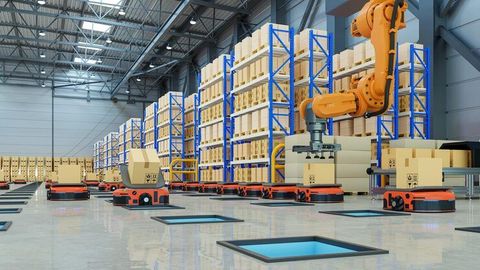
A typical collaborative robotic system includes a robotic arm, controller, end-of-arm tooling, sensors, software, and a supporting structure. Depending on the application, the system may handle assembly, material movement, machine tending, packaging, inspection, fastening, or other repetitive processes.
How Collaborative Robots Work
A collaborative robot receives programmed instructions through a controller or software interface. The controller coordinates the movement of the robotic arm and communicates with sensors that can detect conditions around the system.
Force and torque sensing can help identify unexpected contact or changes in resistance. Vision systems can provide information about object position, orientation, size, or surface characteristics. Safety monitoring can also help determine whether the robot should slow down, stop, or continue operating.
The exact capabilities vary between systems. A collaborative robot should therefore be evaluated according to its intended application, surrounding equipment, tooling, operating speed, and workplace conditions.
Main Components
Several components work together to create a collaborative robotic system:
- Robotic arm: Provides controlled movement across multiple axes.
- Controller: Processes programmed instructions and coordinates robotic movement.
- End-effector: Holds, moves, grips, welds, fastens, or manipulates an object.
- Sensors: Detect force, position, proximity, or other operating conditions.
- Vision equipment: Helps identify objects and their locations.
- Software: Controls programming, monitoring, configuration, and system behavior.
- Safety equipment: May include scanners, protective devices, emergency stops, and monitored access systems.
Importance
Why Collaborative Automation Matters
Manufacturing environments contain many repetitive activities that can create physical strain and process variation. Collaborative automation can help shift repetitive movements to robotic equipment while allowing people to concentrate on activities that require observation, adjustment, quality decisions, and problem solving.
The technology can also be useful where production requirements change frequently. Conventional automation may require substantial physical changes when a process changes, while some collaborative robotic systems can be reconfigured through software and tooling adjustments.
However, collaboration does not mean that a robot can automatically operate safely in every environment. A proper assessment of the complete application remains important because tooling, materials, movement patterns, speed, surrounding machinery, and human interaction all influence risk.
Who Uses Collaborative Robotic Systems
Collaborative robotic systems are used across a wide range of manufacturing activities. Their applications can include electronics assembly, automotive component production, packaging, machine tending, laboratory equipment production, metalworking, food processing, and general manufacturing.
Small and medium-sized production environments can also use collaborative robots where production volumes or product variations make some forms of conventional automation difficult to configure.
Common applications include:
- Pick-and-place operations
- Machine loading and unloading
- Assembly assistance
- Packaging and palletizing
- Screwdriving and fastening
- Surface inspection
- Quality checking
- Material handling
- Dispensing and controlled application
- Machine tending
Human and Robot Collaboration
The central idea behind collaborative robotics is not simply replacing people with machines. Instead, the system can divide activities according to the strengths of each participant.
Robots are suited to consistent, repetitive movement and precise positioning. People can handle visual interpretation, unexpected conditions, product variation, and decisions that are difficult to encode into a fixed sequence.
A collaborative workstation may therefore place a person and robot in the same general production area while assigning different responsibilities. The actual level of interaction depends on the risk assessment and the technical configuration.
Key Benefits and Considerations
| Area | Potential Role of Collaborative Robotics | Important Consideration |
|---|---|---|
| Repetitive handling | Performs repeated movement sequences | Gripper and payload must match the application |
| Assembly | Supports positioning and fastening | Product variation may require flexible programming |
| Inspection | Moves cameras or components consistently | Vision accuracy depends on lighting and setup |
| Machine tending | Loads and unloads production equipment | Machine interfaces require suitable integration |
| Packaging | Handles repeated packing movements | Product shape and packaging material affect tooling |
| Human collaboration | Shares a workstation under defined conditions | Risk assessment remains necessary |
Recent Updates
Advances in Collaborative Robot Technology
Recent developments in collaborative robotic systems have focused on easier programming, improved sensing, greater integration, and expanded application flexibility. Modern platforms increasingly use graphical interfaces that allow production personnel to configure movement sequences without relying entirely on traditional programming methods.
Artificial intelligence and machine vision are also becoming more relevant. Vision-guided systems can identify objects and adapt robotic movements based on their location or orientation. AI-based techniques can assist with pattern recognition, inspection, planning, and process analysis, although their suitability depends on the application and data quality.
Growth of Integrated Automation
Another trend is the integration of collaborative robots with other manufacturing technologies. A robotic arm can work as one component within a larger system involving conveyors, cameras, programmable logic controllers, machine tools, sensors, and manufacturing software.
This approach allows manufacturers to collect more information from production activities. Data may be used to monitor cycle times, detect process changes, identify equipment conditions, and understand production patterns.
More Flexible Programming
Programming methods have also become more accessible. Hand-guiding, graphical programming, reusable routines, simulation tools, and digital configuration environments can reduce the complexity involved in setting up certain applications.
This flexibility is particularly relevant to production environments that manufacture multiple product variants. Instead of designing a completely separate robotic arrangement for every product, some systems can use configurable programs and interchangeable tooling.
Energy and Workspace Considerations
Manufacturers are also paying greater attention to equipment footprint and energy consumption. Compact collaborative robotic cells can fit into work areas where larger automation systems may be difficult to install.
Energy requirements vary significantly according to robotic payload, movement speed, operating pattern, peripheral equipment, and duty cycle. These factors should be considered when comparing automation configurations.
Laws or Policies
Workplace Safety Requirements
Collaborative robotic systems are influenced by workplace safety rules and machinery requirements. Because robots can operate close to people, risk assessment is an important part of system design and deployment.
Requirements vary by jurisdiction. Common safety considerations include emergency stopping, protective separation where necessary, speed limitations, force and power limitations, safeguarding, system validation, electrical safety, and procedures for abnormal operating conditions.
International standards are also widely used as technical references for robot safety. Standards associated with industrial robots and collaborative robot applications provide frameworks for evaluating hazards and determining suitable protective measures.
Risk Assessment
A collaborative robot should not be considered safe solely because it is classified as a collaborative model. The complete application must be assessed.
For example, a robot arm may have controlled force characteristics, but the attached gripper, sharp tooling, workpiece, fixture, or surrounding machinery could introduce additional hazards. The assessment should consider normal operation, foreseeable misuse, maintenance, setup, programming, and recovery from faults.
Training and Workplace Procedures
Organizations using collaborative robotic systems generally need suitable procedures for operation, programming, maintenance, inspection, and emergency situations. Personnel should understand the operating limits of the equipment and the protective measures used in the workstation.
Because regulatory requirements differ between regions, organizations should consult the applicable machinery and workplace safety framework for their location and application.
Tools and Resources
Robot Simulation Software
Simulation platforms can create virtual production environments before physical equipment is configured. These tools can help evaluate robotic reach, movement paths, cycle sequences, workspace requirements, and possible interference.
Simulation can also help users understand whether a robotic arm can access required positions without unnecessary movement.
Robot Programming Platforms
Programming environments allow users to create and modify movement sequences. Depending on the platform, programming can involve graphical blocks, teach points, scripts, hand-guided movements, or combinations of these methods.
Reusable programs can be particularly useful for production environments with multiple product configurations.
Vision and Sensor Tools
Machine vision software and industrial sensors provide information that robotic systems can use for positioning and process monitoring. Cameras can identify objects, while sensors can detect distance, force, presence, temperature, or other process conditions.
The selection of sensors depends on the physical environment and the information required by the robotic application.
Planning and Evaluation Resources
Useful planning resources include:
- Robotic reach and payload calculators
- Workspace layout tools
- Cycle-time analysis tools
- Robot simulation platforms
- Risk assessment templates
- Equipment integration documentation
- Maintenance planning templates
- Industrial automation training materials
These resources can help users understand system requirements before implementation.
FAQs
What are collaborative robotic systems?
Collaborative robotic systems combine robotic equipment, sensors, software, tooling, and safety controls to support tasks performed near or alongside people. Their applications include assembly, handling, inspection, packaging, and machine tending.
How are collaborative robots different from traditional industrial robots?
Traditional industrial robots often operate within dedicated safeguarded areas, while collaborative robots are designed with features that can support certain forms of human-robot interaction. The distinction depends on the complete application and its safety assessment rather than the robot arm alone.
What industries use collaborative robotic systems?
Collaborative robotic systems are used in manufacturing areas such as automotive components, electronics, packaging, metalworking, equipment production, and general assembly. Their flexibility can be useful for processes involving repetitive activities and changing product configurations.
Are collaborative robots safe to work around people?
Collaborative robots are designed with safety-related capabilities, but safe operation depends on the complete system. Tooling, payload, speed, workspace, programming, surrounding equipment, and human interaction must all be considered through an appropriate risk assessment.
What tasks can collaborative robots perform?
Common tasks include pick-and-place operations, assembly, machine tending, packaging, fastening, inspection, material handling, and repetitive positioning. The suitable task depends on payload, reach, tooling, accuracy, cycle requirements, and workplace conditions.
Conclusion
Collaborative robotic systems combine robotic movement, sensing, software, and safety controls to support people in a variety of manufacturing activities. Their development reflects the broader movement toward flexible automation, machine vision, connected equipment, and adaptable production systems. Recent technology trends have expanded programming flexibility and integration with digital manufacturing platforms. Effective use still depends on application-specific engineering, risk assessment, appropriate equipment selection, and suitable workplace procedures.