CNC Laser Cutting Machines Guide With Precision Cutting and Manufacturing Insights
CNC laser cutting machines combine computer numerical control with focused laser technology to cut and shape materials with programmed movements. CNC refers to a computerized system that controls machine movement, while laser cutting uses concentrated light energy to create a narrow cutting path.
The development of CNC laser cutting machines grew from the wider adoption of computer-controlled manufacturing. Earlier cutting processes depended more heavily on manual positioning, mechanical tools, and physical templates. As digital design systems became more common, manufacturers needed equipment capable of transferring computer-generated drawings into accurately shaped components.
A typical CNC laser cutting machine includes a laser source, cutting head, motion system, control software, material support structure, and extraction equipment. Depending on the machine configuration, the laser may be generated using fiber, CO2, or other laser technologies.
Fiber laser systems are widely associated with metal processing because they can efficiently work with materials such as steel, stainless steel, aluminum, brass, and copper. CO2 laser systems can process a wider selection of nonmetallic materials, although their suitability depends on the material composition and machine configuration.
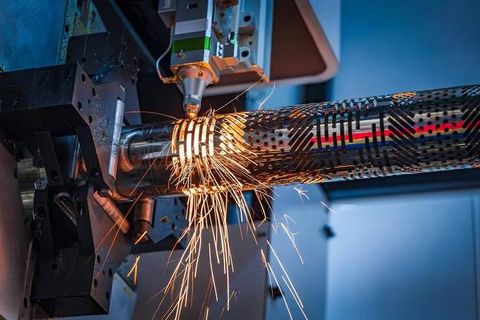
The cutting process generally begins with a digital drawing. Software converts the design into machine instructions, after which the CNC system controls the movement of the cutting head across the material. The laser heats a localized area, while an assist gas can help remove molten material from the cutting path.
Importance
Precision and Repeatability
Precision is one of the main reasons CNC laser cutting machines are used in modern manufacturing. Computer-controlled movement can follow complex patterns repeatedly, reducing variations associated with manual cutting.
Repeatability is particularly useful when multiple components need similar dimensions. The machine can process programmed shapes according to the selected parameters, while operators monitor material positioning, machine condition, and cutting results.
Applications Across Industries
CNC laser cutting machines are used across numerous manufacturing and fabrication activities. Common applications include:
- Sheet metal component production
- Automotive component manufacturing
- Electrical enclosure fabrication
- Machinery component production
- Architectural metalwork
- Appliance manufacturing
- Sign and display fabrication
- Aerospace component processing
- General metal fabrication
- Prototype development
The technology can create straight cuts, curves, openings, slots, and intricate profiles. Its flexibility allows one machine to process different digital designs without requiring a separate physical template for every shape.
Material Utilization
Material efficiency is another important consideration. CNC programming can arrange multiple components within a sheet according to a planned cutting layout. This process, commonly known as nesting, can help reduce unused areas between components.
Actual material utilization depends on part geometry, sheet dimensions, cutting allowances, edge requirements, and production planning. Software-assisted nesting can analyze these factors before processing begins.
Production Planning
CNC laser cutting machines also influence production planning. Digital files can be organized according to component requirements, material types, thicknesses, and processing sequences.
A simplified workflow can include:
- Creating or importing a digital design.
- Checking dimensions and material requirements.
- Preparing the cutting path.
- Arranging components through nesting.
- Selecting laser and assist-gas parameters.
- Positioning and securing the material.
- Running the programmed cutting process.
- Inspecting finished components.
This digital workflow connects design, machine operation, inspection, and manufacturing records.
Recent Updates
Fiber Laser Development
Recent CNC laser cutting machines have increasingly incorporated fiber laser technology, particularly for metal processing. Improvements in laser sources, motion control, cutting heads, and software have supported faster processing and more automated operation.
Higher laser power is also available across industrial equipment categories. However, higher power does not automatically mean better results for every application. Material type, thickness, part geometry, cutting speed, gas selection, and thermal behavior all influence the final result.
Automation and Smart Controls
Automation has become a major development area between 2024 and 2026. Modern systems can integrate functions such as automatic focusing, nozzle monitoring, material detection, sheet positioning, and cutting-parameter management.
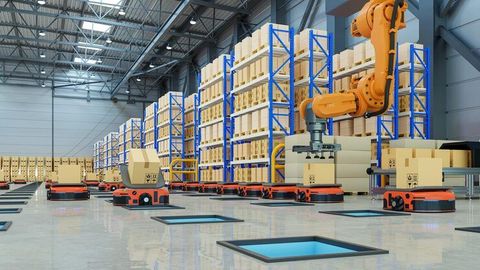
Some manufacturing environments also connect CNC laser cutting machines with automated loading and unloading equipment. These systems can reduce manual material handling and support more continuous production processes.
Software Integration
Manufacturing software has become increasingly connected with CNC equipment. CAD and CAM systems can prepare digital drawings, generate cutting paths, simulate operations, and transfer machine instructions.
Production monitoring platforms can also collect information about machine operation, production status, material usage, and maintenance requirements. The exact capabilities depend on the machine, software architecture, and factory environment.
Improved Cutting Control
Modern cutting heads can automatically adjust focus and other parameters according to material conditions. Sensors and control systems can help detect changes during processing, although operators still need to verify results and maintain appropriate machine settings.
The broader trend is toward connected manufacturing in which CNC laser cutting machines operate as part of a larger digital production system rather than as isolated pieces of equipment.
Laws or Policies
Workplace Safety Requirements
In India, CNC laser cutting machines are subject to workplace safety considerations covering machinery operation, electrical systems, protective equipment, ventilation, and worker training. Requirements can vary according to the workplace, industry, machine configuration, and applicable state or national rules.
Laser equipment can present hazards involving intense optical radiation, heat, fumes, moving machine components, and electrical systems. Enclosed laser systems, protective interlocks, appropriate ventilation, and controlled operating procedures are therefore important considerations.
Environmental and Electrical Considerations
Manufacturing facilities may also need to address environmental requirements related to air emissions, waste handling, noise, and industrial operations. Cutting processes can generate smoke, particulates, and material residues, particularly when processing coated or treated materials.
Electrical installations should follow applicable safety requirements for industrial equipment. Machine grounding, electrical protection, emergency controls, and installation procedures should be handled according to relevant technical requirements.
Because regulations can change and requirements vary by facility, industry, and location, organizations should verify the rules applicable to their specific operation with qualified regulatory or safety professionals.
Tools and Resources
CAD and CAM Software
CAD software is commonly used to create two-dimensional or three-dimensional designs, while CAM software can convert designs into machine-readable cutting instructions. Together, these systems form an important part of a CNC laser cutting workflow.
Nesting Software
Nesting tools arrange multiple parts on a sheet to improve material planning. They can consider part dimensions, spacing, rotation, sheet boundaries, and cutting paths.
Laser Parameter Calculators
Laser parameter calculators can help users understand relationships between material thickness, laser power, cutting speed, focal position, and assist gas. These tools should be treated as planning aids because actual machine performance varies.
Maintenance Checklists
Maintenance templates can help operators track cleaning, lens inspection, nozzle condition, lubrication requirements, cooling systems, filters, and other machine components. Regular records can also help identify recurring operational issues.
Digital Manufacturing Platforms
Manufacturing management platforms can connect production planning with CAD files, machine information, inventory records, inspection data, and production reporting. Integration levels differ among platforms and machine manufacturers.
CNC Laser Cutting Machine Comparison
| Machine Feature | Fiber Laser | CO2 Laser | Main Consideration |
|---|---|---|---|
| Common materials | Metals | Metals and selected nonmetals | Material compatibility |
| Typical metal applications | Steel, aluminum, copper, brass | Steel and other suitable materials | Machine configuration |
| Beam generation | Fiber-based | Gas-based | Laser architecture |
| Maintenance profile | Generally simpler optical path | More optical components | Equipment design |
| Software control | CNC and CAM integration | CNC and CAM integration | Control system |
| Automation | Loading, focusing, monitoring | Loading and monitoring options | Production setup |
| Suitable thickness | Depends on power and material | Depends on power and material | Cutting parameters |
No single configuration is appropriate for every material or production requirement. Machine selection depends on the material range, thickness, component geometry, production volume, available workspace, automation requirements, and facility infrastructure.
FAQs
What are CNC laser cutting machines?
CNC laser cutting machines are computer-controlled systems that use a focused laser beam to cut or shape materials according to digital designs. The CNC controller manages movement while the laser performs the cutting process.
How do CNC laser cutting machines work?
A digital design is converted into machine instructions. The CNC system moves the cutting head along programmed paths while the laser heats and removes material from the designated cutting area.
What materials can CNC laser cutting machines process?
Many systems process metals such as mild steel, stainless steel, aluminum, brass, and copper. Some laser configurations can also process selected nonmetallic materials. Compatibility depends on laser type, material composition, thickness, and machine specifications.
What affects CNC laser cutting precision?
Precision can be affected by machine mechanics, laser characteristics, material thickness, focusing, cutting parameters, thermal behavior, nozzle condition, calibration, and software settings. Regular inspection and appropriate parameter selection are important for consistent results.
Is CNC laser cutting suitable for automated manufacturing?
Yes. CNC laser cutting machines can be integrated with automated material loading, unloading, nesting software, production monitoring, and other manufacturing systems. The appropriate level of automation depends on production requirements and facility design.
Conclusion
CNC laser cutting machines combine digital control, focused laser technology, and automated movement to produce accurately shaped components from suitable materials. Fiber laser systems have become increasingly important in metal processing, while software integration and automation continue to expand across manufacturing environments. Safety controls, material compatibility, machine parameters, and regulatory requirements remain important parts of responsible operation. Understanding these elements provides a practical foundation for evaluating precision cutting and modern manufacturing processes.