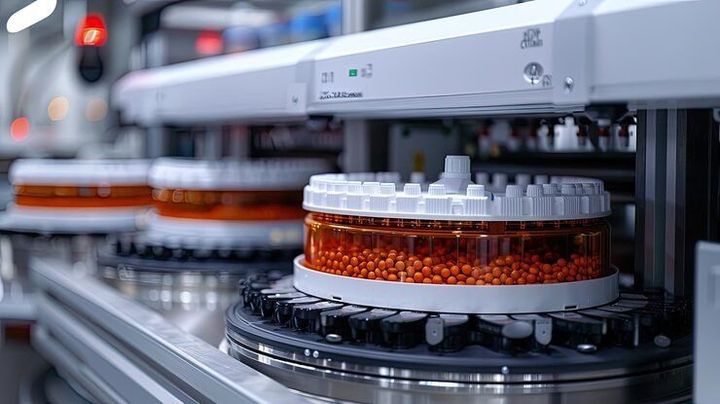
Capsule Polishing Machine Guide: Designs, Components, Applications, Performance and Maintenance
Capsule polishing machines are used in pharmaceutical production to remove loose powder and dust from the outside of filled capsules and help prepare them for later inspection or packaging. A capsule polishing machine is generally placed after capsule filling, where rotating brushes or similar contact elements gently clean the outer surface while the capsules move through the equipment. The process connects mechanical handling with pharmaceutical cleanliness and production control.
The basic idea is simple. Filled capsules can carry small amounts of powder on their exterior after filling, and those particles may affect visual appearance, downstream handling, or the cleanliness of equipment. A capsule polisher therefore focuses on controlled movement, surface cleaning, dust removal, and consistent product flow.
Context
How capsule polishing developed
Capsule polishing developed as pharmaceutical production moved from small manual operations toward larger, more controlled manufacturing systems. Earlier processes could depend heavily on manual handling and simple cleaning steps. As capsule filling became more automated, dedicated polishing equipment became useful for creating a repeatable cleaning stage between filling and subsequent operations.
A modern capsule polishing machine may combine a rotating polishing chamber, soft brushes, a product inlet and outlet, a dust extraction connection, and adjustable controls. Designs vary according to capsule dimensions, production layout, material selection, and the level of automation required.
Where it fits in production
A typical capsule process can include powder preparation, capsule filling, polishing, inspection, metal detection where applicable, and packaging. The polishing stage does not replace quality testing or inspection. Instead, it forms one part of the overall handling process.
The main operating sequence usually involves these steps:
- Filled capsules enter the machine through a controlled inlet.
- The capsules move through a polishing section using rotation, vibration, airflow, or mechanical conveying.
- Brushes or other contact surfaces remove loose particles from the exterior.
- Dust is directed toward a collection or extraction system.
- Cleaned capsules leave through the outlet for the next production stage.
Importance
Why exterior cleaning matters
Powder left on a capsule surface can create visible residue and may interfere with handling equipment. Excess loose material can also contribute to dust in the surrounding production area. A controlled polishing stage helps separate exterior residue from the capsule before later processing.
Factors that affect performance
Performance depends on several interacting factors. Capsule material, capsule size, fill characteristics, brush condition, machine speed, airflow, feed rate, and dust extraction can all influence results.
Common factors include:
- Capsule size and shape
- Powder characteristics
- Feed rate
- Brush material and condition
- Rotor or conveyor speed
- Airflow and dust extraction
- Contact time
- Cleaning frequency
- Equipment alignment
An incorrect setting can create problems in either direction. Insufficient contact may leave residue, while excessive mechanical action may increase capsule scuffing or handling stress.
Recent Updates
Movement toward automated control
From 2024 through 2026, pharmaceutical equipment development has continued to emphasize automation, process monitoring, and data collection. Industry analysis has described growing use of sensors, real-time monitoring, predictive maintenance, and interconnected production systems in capsule polishing equipment. These developments are part of a broader move toward more measurable and repeatable manufacturing processes.
Greater attention to hygiene and documentation
Another continuing trend is stronger attention to equipment cleanliness, documentation, and risk control. Modern pharmaceutical manufacturing increasingly connects equipment design with documented procedures, controlled environments, and quality systems.
The revised Indian Schedule M framework specifically describes pharmaceutical quality systems, quality risk management, documented procedures, and requirements for premises, plant, and equipment.
Typical design differences
Capsule polishing machines can differ in their degree of automation. Basic systems may focus mainly on mechanical polishing and dust extraction, while more integrated systems can include sensors, variable-speed controls, enclosed pathways, and connections with other production equipment.
| Feature | Basic design | More automated design |
|---|---|---|
| Speed control | Manual or limited | Variable electronic control |
| Dust handling | External extraction connection | Integrated monitoring or controlled extraction |
| Product movement | Mechanical | Controlled mechanical or automated |
| Monitoring | Operator observation | Sensors and digital indicators |
| Cleaning access | Manual access points | Designed access with easier inspection |
| Data handling | Manual records | Digital production records where configured |
Laws or Policies
Indian pharmaceutical manufacturing rules
In India, pharmaceutical manufacturing is regulated through the Drugs and Cosmetics Act and Drugs Rules framework, including Schedule M requirements for Good Manufacturing Practices and pharmaceutical premises, plant, and equipment. The revised Schedule M was notified in late 2023 and introduced expanded requirements covering pharmaceutical quality systems, quality risk management, documentation, and manufacturing controls.
The Central Drugs Standard Control Organization issued a 2024 circular concerning implementation of revised Schedule M and related WHO technical guidance, asking manufacturers to take steps toward compliance following gap analysis.
During 2025, the Indian government also issued notifications extending certain implementation timelines for revised Schedule M requirements. The February 2025 notification provided a process for eligible manufacturers to seek additional time, with the stated extension not going beyond the end of 2025.
For a capsule polishing machine, these rules matter because equipment forms part of the manufacturing environment. Cleanability, suitable construction, maintenance, documented procedures, and control of contamination can therefore be relevant when a pharmaceutical facility evaluates equipment and production practices. Specific compliance requirements depend on the facility, product, licence, and applicable regulatory provisions.
Quality and documentation considerations
Schedule M places emphasis on documented pharmaceutical quality systems and risk management.
Tools and Resources
Equipment references
Useful resources for understanding a capsule polishing machine include manufacturer technical manuals, equipment qualification documents, operating instructions, maintenance schedules, and pharmaceutical engineering references. These materials can explain machine capacity, capsule-size compatibility, cleaning methods, electrical requirements, and recommended operating ranges.
Regulatory resources
For Indian pharmaceutical requirements, the CDSCO website provides government notifications, circulars, regulatory documents, and information related to GMP. The revised Schedule M notification and subsequent implementation circulars are useful references when studying equipment requirements.
Maintenance records and checklists
A practical equipment checklist can track:
- Machine cleanliness after production
- Brush condition
- Dust extraction condition
- Fasteners and guards
- Moving-part inspection
- Electrical and control checks
- Lubrication points where applicable
- Unusual noise or vibration
- Cleaning records
- Maintenance completion records
These records help create a traceable history of equipment condition and routine activities.
FAQs
What is a capsule polishing machine?
A capsule polishing machine is equipment used after capsule filling to remove loose powder and dust from the outside of filled capsules. It normally uses controlled mechanical movement, brushes, airflow, or a combination of these methods.
How does a capsule polishing machine work?
Filled capsules enter a controlled polishing area where contact elements or airflow help remove exterior particles. A dust extraction arrangement can collect loose powder, while the cleaned capsules continue toward the next production stage.
What components are found in a capsule polishing machine?
Common components include a product inlet, polishing chamber, brushes or contact elements, drive system, product outlet, dust extraction connection, guards, and control system. Automated models may also include sensors and variable-speed controls.
How is capsule polishing machine maintenance performed?
Maintenance generally involves cleaning, inspection of brushes and moving parts, checking dust extraction, examining electrical and mechanical components, and recording completed activities. The exact procedure should follow the equipment documentation and the pharmaceutical facility’s approved procedures.
What regulations affect capsule polishing machines in India?
Indian pharmaceutical manufacturing is subject to the Drugs Rules and revised Schedule M requirements covering GMP, pharmaceutical quality systems, premises, plant, equipment, documentation, and risk management. The specific requirements applicable to a facility depend on its manufacturing activities and regulatory status.
Conclusion
A capsule polishing machine is a production-stage device used to remove loose material from the exterior of filled capsules before later handling, inspection, or packaging. Its design can include brushes, controlled movement, dust extraction, speed controls, and monitoring features. From 2024 through 2026, equipment development has increasingly focused on automation, monitoring, documentation, and integration with broader pharmaceutical quality systems. In India, revised Schedule M provides an important regulatory framework for pharmaceutical manufacturing premises, plant, equipment, quality systems, and documented controls.