Cable Stripping Machines Insights: Manual and Automatic, Applications and Selection Factors
Cable stripping machines are mechanical or powered devices used to remove insulation and outer coverings from electrical cables and wires. The process exposes the conductive material inside a cable while helping keep the underlying conductor intact. Depending on the machine design, stripping can be performed manually, semi-automatically, or through an automated feeding and cutting process.
Context
The basic idea behind cable stripping has existed for a long time because electrical wires need their protective coverings removed before certain processing, termination, joining, or material-recovery operations. Simple hand tools can handle individual wires, while cable stripping machines are designed for repeated processing of wires with consistent dimensions.
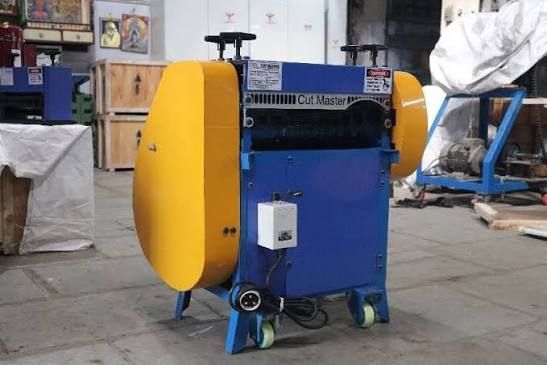
A typical cable stripping machine uses a feed mechanism, cutting or stripping blade, adjustment system, and material outlet. More advanced designs may include multiple blades, adjustable stripping depths, automatic feeding, digital controls, or systems that accommodate different cable diameters.
The machine does not usually remove the entire cable covering in one operation. Instead, it is generally adjusted to cut through the insulation to a controlled depth so that the conductor underneath remains substantially unaffected.
Main operating principle
Cable stripping generally involves three basic stages: feeding, cutting, and separation. The cable enters the machine, a blade or cutting mechanism penetrates the outer insulation, and the covering is separated from the conductor as the cable moves through the machine.
Different cable constructions require different settings. A thin single-core wire may need a different blade position and feeding arrangement from a thick multi-layer cable. Some machines can process several cable sizes, while others are designed around a narrower range.
Common machine categories
The main categories can be summarized as follows:
| Machine type | Typical operating method | Common application |
|---|---|---|
| Manual cable stripper | Operator feeds and adjusts the cable | Small-volume processing |
| Semi-automatic stripper | Powered cutting with manual feeding | Repeated workshop tasks |
| Automatic cable stripping machine | Powered feeding and stripping | Repetitive production |
| Multi-function wire processor | Cutting, stripping, and related operations | Wire-processing environments |
| Heavy-cable stripper | Designed for larger cable sizes | Thick or layered cables |
The appropriate category depends on cable dimensions, processing frequency, required cut patterns, available workspace, and the level of operator involvement.
Importance
Cable stripping machines matter because the quality of the stripping process can affect subsequent cable handling. If insulation is not removed deeply enough, the conductor may remain partly covered. If the blade penetrates too far, the conductor can be damaged.
This makes controlled stripping important in electrical assembly, cable preparation, maintenance activities, wire-processing operations, and material recovery. The machine is particularly useful when many similar cables need to be processed repeatedly.
Applications across different operations
Cable stripping machines are used in several areas of industrial and workshop activity. Common applications include:
- Preparing wires for electrical connections and termination
- Processing cables before further manufacturing operations
- Separating insulation from conductive material during material recovery
- Preparing different cable lengths for assembly processes
- Processing discarded or surplus cable materials
- Handling repeated wire-stripping tasks in production environments
The machine's application depends heavily on the cable construction. Copper and aluminium conductors, for example, can have different physical characteristics, while insulation may be made from PVC, polyethylene, rubber, or other materials.
Manual versus automatic operation
Manual cable stripping machines rely more heavily on the operator to position the cable and control the stripping action. They can be appropriate where cable quantities are limited or where cable types change frequently.
Automatic machines generally integrate powered feeding and stripping mechanisms. They can reduce repetitive manual handling when the same type of cable must be processed repeatedly, although correct setup remains important.
Neither approach is suitable for every application. A manual machine may provide greater hands-on control for varied work, while an automatic system may be more appropriate for repetitive processing with established dimensions.
Factors affecting stripping quality
Several factors can influence the resulting strip:
- Cable diameter
- Insulation thickness
- Number of insulation layers
- Conductor material and construction
- Blade condition
- Blade depth
- Feed speed
- Cable flexibility
- Operator setup
- Machine adjustment range
A machine that is appropriate for one cable construction may not produce the same result with another. For this reason, cable specifications should be considered before determining machine settings.
Recent Updates
From 2024 through 2026, the broader machinery sector has continued moving toward automation, electronic controls, improved machine monitoring, and greater integration between individual processing stages. Cable-processing equipment follows this wider industrial direction, particularly where repetitive wire preparation is part of a larger manufacturing workflow.
Modern equipment can increasingly combine feeding, measuring, cutting, stripping, and related wire-processing functions within one production sequence. Digital interfaces can also make machine parameters easier to configure and repeat across production batches.
Another development is greater attention to machine safety and electrical-system design. IEC 60204-1 addresses electrical equipment used on machinery and includes requirements relating to areas such as emergency stop functions, control circuits, protective bonding, documentation, and power-drive systems.
Automation and control features
Automatic cable stripping machines may include programmable settings for cable length, stripping length, feed speed, or processing sequences. Some systems can retain parameters for repeated production tasks, reducing the need to manually reset every setting.
However, automation does not remove the need for verification. Cable dimensions can vary, blades can wear, and insulation characteristics can change between materials. Operators still need to confirm that the selected settings correspond with the cable being processed.
Equipment safety developments
Machine guarding continues to receive attention in industrial safety frameworks. For example, OSHA's machinery guidance addresses hazards associated with points of operation, moving parts, power-transmission components, and other machine motions.
For cable stripping equipment, relevant protective measures can include guards around moving mechanisms, suitable emergency stopping arrangements, secure machine placement, and procedures that prevent access to hazardous areas during operation.
Laws or Policies
Cable stripping machines can be affected by machinery-safety, electrical-safety, workplace-safety, environmental, and waste-management requirements. The exact legal requirements depend on the country, region, machine configuration, intended application, and whether the equipment is used in a workplace or another environment.
Because no target country has been specified, it would be inaccurate to present one national regulation as universally applicable. Manufacturers and users generally need to identify the machinery and workplace rules that apply in their own jurisdiction.
International technical standards can also provide useful reference points. IEC 60204-1 covers electrical equipment of machines and applies to electrical, electronic, and programmable electronic equipment used on machinery that is not portable by hand while working.
Machine guarding requirements are another important area. OSHA's general machine-guarding requirements state that hazardous points of operation and moving machine parts should be protected through appropriate guarding methods.
The European Union is also updating its machinery regulatory framework. Regulation (EU) 2023/1230 replaces the earlier Machinery Directive framework and is scheduled to apply from January 2027, with certain provisions applying earlier.
These examples illustrate why regulatory compliance should be checked according to the actual location and intended use of the machine rather than assumed from a general equipment description.
Tools and Resources
Several resources can help users understand cable stripping machines and evaluate whether a particular configuration fits their processing requirements.
Cable specification sheets
Cable datasheets can provide information such as conductor size, outer diameter, insulation material, number of layers, and construction. These details are useful when determining whether a machine's operating range is compatible with the cable.
Measurement tools
Basic measuring equipment can help verify cable dimensions before machine setup. Calipers, measuring gauges, and length-measuring devices can be used to check outer diameter and stripping dimensions.
Machine manuals
A machine manual normally contains information about adjustment procedures, compatible cable ranges, blade positioning, maintenance intervals, electrical requirements, and operating precautions. It should be treated as an important reference for the specific machine model.
Maintenance records
A simple maintenance record can document blade inspections, cleaning, adjustments, component replacement, and observed stripping quality. Regular records can make it easier to identify changes in machine performance over time.
Safety standards and regulatory resources
Official machinery-safety authorities and recognized standards organizations provide information about machine guarding, electrical equipment, risk reduction, and workplace requirements. IEC publications and national workplace-safety authorities are examples of resources that can help users understand the applicable technical framework.
FAQs
What is a cable stripping machine?
A cable stripping machine is equipment designed to remove insulation or outer coverings from electrical wires and cables. Depending on its design, it may use manual adjustment, powered feeding, mechanical blades, or automated controls.
What is the difference between manual and automatic cable stripping machines?
A manual cable stripping machine generally requires the operator to feed and position the cable and control the stripping process. An automatic cable stripping machine can use powered feeding and programmed settings to perform repeated stripping operations with less manual handling.
How do I select a cable stripping machine?
Selection normally depends on cable diameter, insulation thickness, conductor construction, stripping length, processing volume, required accuracy, and the degree of automation needed. The machine's stated operating range should correspond with the cables being processed.
Can cable stripping machines process different wire sizes?
Some machines are designed to accommodate a range of wire and cable diameters, while others have a narrower operating range. Adjustable blades, feeding systems, and programmable controls can affect the range that a particular machine can handle.
What safety factors matter when using a cable stripping machine?
Important factors include guarding around moving parts, emergency stopping arrangements, secure positioning, electrical protection, appropriate operating procedures, and access control around hazardous areas. Applicable workplace rules and the machine manufacturer's instructions should also be considered.
Conclusion
Cable stripping machines are used to remove insulation from wires and cables for preparation, assembly, processing, and material recovery applications. Manual, semi-automatic, and automatic designs differ mainly in operator involvement, processing method, and control features. Cable diameter, insulation construction, stripping requirements, machine adjustment range, and safety features are important factors when evaluating equipment. Applicable machinery, electrical, and workplace regulations vary by jurisdiction and should be considered alongside recognized technical standards.