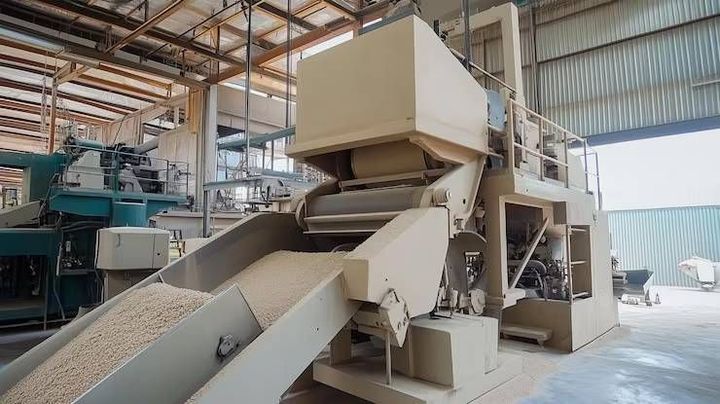
Automatic Carton Erecting Machines Explained: Types, Components, Functions and Industrial Applications
Automatic carton erecting machines are industrial packaging systems designed to transform flat cardboard blanks into open cartons ready for filling. These machines are used in manufacturing plants, warehouses, food processing facilities, pharmaceutical packaging operations, and distribution centers. They reduce the need to form every carton manually and help maintain a consistent packaging process.
Context
Automatic carton erecting machines are industrial packaging systems designed to transform flat cardboard blanks into open cartons ready for filling. These machines are used in manufacturing plants, warehouses, food processing facilities, pharmaceutical packaging operations, and distribution centers. They reduce the need to form every carton manually and help maintain a consistent packaging process.
Carton erecting developed alongside the growth of mass production and standardized packaging. As manufacturers began handling larger product volumes, manual carton preparation became difficult to coordinate with continuous production lines. Mechanical and automated equipment emerged to fold carton panels, shape boxes, and secure their bases before products were placed inside.
Today, automatic carton erecting machines are available in different configurations, from compact units for smaller packaging areas to integrated systems connected with conveyors and filling equipment. Their design depends on carton dimensions, cardboard material, production requirements, and the method used to close the carton bottom.
Understanding Automatic Carton Erecting Machines
A carton erecting machine receives flat carton blanks, separates individual blanks from a stack or magazine, folds them into a box shape, and secures the bottom when required. The resulting carton can then move to a filling station or another packaging stage.
The terms carton erector and case erector are sometimes used interchangeably, although equipment terminology varies by manufacturer and industry. Some machines form smaller retail cartons, while others handle larger corrugated shipping cases.
Main Types of Carton Erecting Machines
Automatic carton erecting equipment can be classified according to its operating method and carton design.
Fully automatic carton erectors: Perform blank feeding, carton forming, and bottom closure with limited routine manual intervention.
Semi-automatic carton erectors: Automate selected forming operations but require an operator to position blanks or complete part of the process.
Random-size carton erectors: Adjust to different carton dimensions within a specified operating range, often using sensors and automated adjustments.
Fixed-size carton erectors: Handle a defined carton format and are configured for a particular package size or a limited group of sizes.
Wraparound carton forming systems: Fold a flat sheet around products or a group of products to create a carton, depending on the system design.
These categories describe different capabilities rather than a single universal classification. Equipment specifications determine which carton styles, materials, and dimensions a particular machine can process.
Importance
Automatic carton erecting machines matter because packaging is an essential stage between manufacturing and distribution. Cartons provide a structure for products during handling, storage, transportation, and retail preparation. In high-volume operations, preparing cartons consistently can help coordinate packaging with upstream production and downstream case packing.
Manual carton formation may involve repetitive movements, frequent handling of cardboard blanks, and variation in folding accuracy. Automation can reduce these repetitive tasks and help maintain a more predictable flow of cartons. However, the actual effect depends on machine settings, operator training, material quality, and production conditions.
Industrial Applications
Automatic carton erecting machines are used in several industries, although carton styles and hygiene requirements vary.
Food and beverage: Preparing cartons for packaged foods, bottled products, and multipacks.
Pharmaceutical packaging: Forming cartons used for secondary packaging, subject to applicable packaging and traceability requirements.
Consumer goods: Preparing cartons for household products, personal care items, and small appliances.
Electronics: Forming packaging used for devices, accessories, and related components.
E-commerce and distribution: Preparing shipping cases for products that require organized packing and transportation.
Industrial manufacturing: Forming corrugated cases for spare parts, components, tools, and other manufactured goods.
Not every carton erector is suitable for every application. Product weight, carton strength, dust levels, cleanability, and the required packaging format influence equipment selection.
Benefits and Operational Challenges
Automation can support consistent carton dimensions, reduce repetitive manual work, and improve coordination with packaging lines. Some systems can also monitor operating conditions and identify interruptions, depending on their controls and sensors.
Several challenges remain important. Poor-quality blanks may stick together or feed incorrectly, while incorrect folding settings can produce misaligned cartons. Adhesive application, tape placement, compressed air supply, machine maintenance, and operator training can also influence performance.
Recent Updates
Developments in automatic carton erecting machines from 2024 through 2026 reflect broader industrial trends toward flexible manufacturing, digital monitoring, material efficiency, and improved integration between packaging stages. Specific features vary by equipment manufacturer, and not every new capability is available on every machine.
Automation and Digital Monitoring
Modern carton erectors may use programmable logic controllers, touch-screen interfaces, sensors, and electronically controlled drives. These components coordinate carton feeding, folding, and closure while allowing operators to monitor machine status and adjust supported settings.
Some systems incorporate fault messages, production counters, remote diagnostics, and connections to plant monitoring software. These functions can help identify stoppages or recurring faults, but their usefulness depends on sensor coverage, software configuration, and the accuracy of the collected information.
Flexible Carton Sizes and Packaging Materials
Manufacturers increasingly use packaging lines that handle multiple product formats. In response, some carton erecting systems support recipe-based settings, guided changeovers, or automatic adjustment within defined dimensional limits. These features can reduce the number of manual adjustments needed when switching between compatible carton sizes.
Packaging material choices are also changing as businesses examine cardboard consumption, recyclability, and packaging dimensions. Recycled fiber content and lightweight board can affect stiffness, folding behavior, and carton strength. Equipment settings therefore need to match the material specifications rather than assuming that all cardboard blanks behave identically.
Integration with Packaging Lines
Carton erectors can operate as individual machines or as part of a connected packaging line. Conveyors may transfer formed cartons to loading, sealing, labeling, or palletizing equipment. Communication between machines can coordinate carton availability with the speed of adjacent operations and help prevent unnecessary accumulation.
Laws or Policies
Automatic carton erecting machines are affected by machinery safety requirements, workplace regulations, electrical standards, and packaging rules applicable to the country and industry where they operate. Requirements differ according to machine design, installation, product type, and intended use.
Machinery Safety in India
In India, factories and industrial equipment operations are subject to applicable workplace safety requirements, including provisions under the Occupational Safety, Health and Working Conditions Code, 2020, and related rules as brought into force and applicable to the establishment. State-level requirements, factory rules, and other relevant legislation may also apply.
Important safety considerations include guarding moving parts, preventing unexpected machine starts, maintaining emergency-stop functions where required, and training operators in safe procedures. Equipment installation and maintenance should account for electrical hazards, pneumatic pressure, pinch points, and access to moving folding mechanisms.
Packaging and Material Requirements
Packaging requirements depend on the product being packed. Food-contact packaging may need to comply with relevant Food Safety and Standards Authority of India requirements, while pharmaceutical packaging must follow applicable product-specific rules. A carton used only as an outer shipping case may have different requirements from packaging that directly contacts a product.
Environmental requirements may also influence packaging materials and waste handling. India's Plastic Waste Management Rules and related extended producer responsibility provisions concern specified plastic packaging and applicable obligated entities; they should not be interpreted as applying identically to every cardboard carton. Businesses need to assess the materials and rules relevant to their packaging operations.
Tools and Resources
Several technical resources help businesses understand automatic carton erecting machines, evaluate operating requirements, and organize maintenance activities.
Equipment Specifications and Engineering Tools
Manufacturer documentation typically provides supported carton dimensions, machine speed ranges, electrical requirements, air-pressure requirements, adjustment procedures, and maintenance instructions. These specifications help determine whether a machine is compatible with the intended carton design and production environment.
Computer-aided design (CAD) tools can be used to develop or review carton dimensions and folding layouts. Packaging design software may also help assess blank geometry, board usage, and the relationship between carton dimensions and product size.
Production and Maintenance Resources
A maintenance checklist can record cleaning, inspection, lubrication where applicable, sensor checks, and wear-part replacement. A production log can track cartons processed, downtime, rejected cartons, material changes, and recurring feeding issues.
Useful reference resources include:
Bureau of Indian Standards (BIS): Information on relevant Indian standards and technical requirements.
Food Safety and Standards Authority of India (FSSAI): Guidance on applicable food packaging requirements.
Ministry of Environment, Forest and Climate Change: Rules and information relating to waste management and packaging obligations.
Machine manuals and technical drawings: Equipment-specific operating limits, setup instructions, and troubleshooting procedures.
Technical documents should be matched to the exact machine model and the applicable rules for the operating location.
FAQs
How does an automatic carton erecting machine work?
The machine feeds a flat carton blank, opens it into a three-dimensional shape, folds the required panels, and secures the base using tape, adhesive, or another supported method. The formed carton is then transferred for filling or further packaging.
What are the main types of automatic carton erecting machines?
Common types include fully automatic, semi-automatic, fixed-size, random-size, and wraparound carton forming systems. Their capabilities differ according to carton design, adjustment range, and operating method.
Which industries use automatic carton erecting machines?
Food and beverage production, pharmaceuticals, consumer goods, electronics, e-commerce distribution, and industrial manufacturing all use carton forming equipment. The appropriate machine depends on packaging material, product characteristics, and operating requirements.
What factors affect automatic carton erecting machine performance?
Performance depends on carton dimensions, blank quality, material stiffness, feeding accuracy, folding settings, closure method, maintenance, and coordination with connected equipment.
What safety measures are important when operating a carton erector?
Operators need appropriate training, functioning guards, safe access procedures, and awareness of moving parts and stored pneumatic energy. Inspection and maintenance should follow the equipment manual and applicable workplace safety requirements.
Conclusion
Automatic carton erecting machines transform flat cardboard blanks into cartons for a wide range of industrial packaging applications. Their types and capabilities vary according to carton dimensions, forming methods, automation levels, and production requirements. Digital monitoring, flexible size adjustment, and packaging-line integration are important areas of ongoing development. Equipment safety, material compatibility, maintenance, and applicable regulations remain essential considerations for reliable operation.

You May Also Like