Commercial Water Chiller Explained: Types, Components, Cooling Capacity, Applications and Benefits
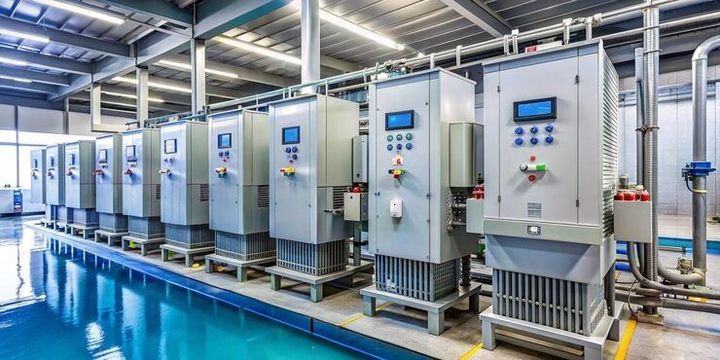
A commercial water chiller is a mechanical cooling system designed to remove heat from water and circulate the cooled water through a building or industrial process. The chilled water can then absorb heat from air-handling equipment, manufacturing equipment, storage areas, or other cooling loads before returning to the chiller for another cooling cycle.
Commercial water chillers developed from the broader field of refrigeration and mechanical cooling. As buildings and industrial facilities became larger, individual room air-conditioning systems became less practical for certain applications. Centralized chilled-water systems provided a way to manage cooling across multiple areas through a network of pipes, pumps, heat exchangers, and control equipment.
A typical chiller uses a refrigeration cycle involving a compressor, condenser, expansion device, and evaporator. In a water-cooled configuration, condenser water transfers heat from the refrigerant to a cooling tower or another heat-rejection system. In an air-cooled configuration, fans move outdoor air across condenser coils to release heat.
The main purpose of a commercial water chiller is not simply to produce cold water. It is part of a larger cooling system in which temperature, water flow, heat transfer, electrical consumption, operating conditions, and building demand all interact.
How a Commercial Water Chiller Works
The process generally begins when relatively warm return water reaches the evaporator. Heat moves from the water into the refrigerant, causing the refrigerant to change state as part of the refrigeration cycle.
The compressor then raises the refrigerant's pressure and temperature. The refrigerant releases this heat through the condenser before passing through an expansion device, where its pressure and temperature decrease. The cooled refrigerant returns to the evaporator and repeats the cycle.
The chilled water is circulated to cooling coils or process equipment. After absorbing heat, the water returns to the chiller, where the cycle begins again.
Importance
Commercial water chillers are important in buildings and industrial facilities where controlled cooling is needed over large areas or for specific processes. They can be found in offices, hospitals, hotels, shopping centers, educational buildings, manufacturing plants, data centers, laboratories, and other facilities.
Cooling requirements vary considerably between these applications. A commercial building may need chilled water mainly for indoor temperature control, while an industrial facility may use it to control the temperature of production equipment or a manufacturing process.
Chiller performance also matters because cooling can represent a significant portion of a building's electricity demand. The Bureau of Energy Efficiency includes chillers within its Standards and Labeling framework, while India's commercial building energy framework addresses energy performance of mechanical systems and HVAC equipment.
Main Applications
Common applications include:
- Central air-conditioning for commercial buildings
- Temperature control in manufacturing processes
- Cooling for data-center environments
- Cooling systems in hospitals and laboratories
- Food and beverage processing
- Plastic and packaging production
- Pharmaceutical and chemical manufacturing
- Large hospitality and institutional buildings
The required cooling conditions depend on factors such as outdoor temperature, indoor heat loads, operating schedules, water temperatures, equipment characteristics, and the type of process being cooled.
Types of Commercial Water Chillers
Commercial chillers can be classified in several ways. One common classification is based on how heat is rejected from the refrigerant.
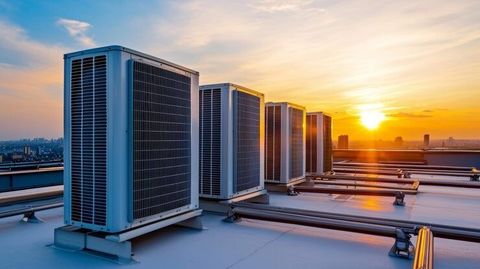
An air-cooled chiller uses fans and outdoor air to remove heat through condenser coils. It generally has a simpler heat-rejection arrangement because it does not require a cooling tower and condenser-water circuit.
A water-cooled chiller transfers condenser heat into a separate water circuit. That condenser water commonly moves through a cooling tower, where heat is released to the surrounding atmosphere. This arrangement is frequently associated with larger centralized cooling installations.
Chillers can also be categorized by compressor technology. Reciprocating, scroll, screw, and centrifugal compressors are used in different capacity ranges and applications. Variable-speed and magnetic-bearing compressor technologies are also used in some modern systems, particularly where partial-load operation is important.
Components and Cooling Capacity
Understanding the major components helps explain how a commercial water chiller operates and how its cooling capacity is determined.
Major Components
The compressor circulates refrigerant and increases its pressure. Its design influences the operating range, capacity, and electrical requirements of the chiller.
The evaporator transfers heat from the chilled-water circuit into the refrigerant. This is the part of the system where the water is cooled.
The condenser removes heat from the refrigerant. Depending on the design, this heat may be transferred to outdoor air or condenser water.
The expansion device reduces refrigerant pressure before the refrigerant enters the evaporator. It helps regulate refrigerant flow according to operating conditions.
Pumps move chilled water through the building or process circuit. Water-cooled systems also use condenser-water pumps to circulate water between the chiller and heat-rejection equipment.
Controls and sensors monitor temperatures, pressure, water flow, and other operating conditions. Modern systems may connect these controls with building-management systems for monitoring and automated operation.
Understanding Cooling Capacity
Cooling capacity describes how much heat a chiller can remove during a specified period under defined operating conditions. It is commonly expressed in kilowatts of refrigeration (kW), tons of refrigeration (TR), or similar engineering units.
A simplified relationship for a chilled-water system is:
Cooling capacity = water flow × specific heat × temperature difference
The actual calculation depends on the units used and the properties of the fluid. Chiller capacity should therefore be interpreted together with entering and leaving water temperatures, flow rate, ambient conditions, and load conditions.
The following table provides general terminology:
| Parameter | What It Describes |
|---|---|
| Cooling capacity | Heat removed by the chiller |
| TR | Traditional refrigeration-capacity unit |
| kW refrigeration | Cooling output expressed in kilowatts |
| COP | Ratio between cooling output and energy input |
| IPLV | Efficiency measure reflecting different load conditions |
| Chilled-water temperature | Temperature of water supplied to the cooling circuit |
| Flow rate | Quantity of water circulated through the system |
Actual performance can differ from rated values because operating conditions change throughout the day and across seasons. Energy-efficiency calculations therefore need to consider both full-load and partial-load operation.
Air-Cooled and Water-Cooled Systems
The choice between air-cooled and water-cooled equipment depends on building design, climate, available space, water conditions, cooling requirements, and operating considerations.
Air-cooled systems reject heat directly into outdoor air. Water-cooled systems use a condenser-water loop and commonly a cooling tower, creating additional equipment and water-management requirements.
India's building-energy guidance includes efficiency requirements for chillers and distinguishes between air-cooled and water-cooled configurations.
Recent Updates
From 2024 through 2026, commercial cooling has increasingly focused on energy performance, refrigerant selection, digital monitoring, and reducing the environmental impact of cooling systems.
One notable development is greater attention to low-global-warming-potential refrigerants. International refrigerant policies are encouraging transitions away from refrigerants with higher global warming potential, although the specific requirements vary by country and equipment category. In the United States, for example, federal rules have established restrictions affecting certain high-GWP chiller equipment.
Another trend is the use of variable-speed compressors, connected sensors, and digital controls. These technologies allow equipment operation to respond more closely to changing cooling demand. Connected chillers can also provide operating information for building-management systems.
India is also placing greater attention on efficient cooling. BEE's current commercial-building materials continue to address energy-efficient HVAC systems, while recent Indian district-cooling guidance discusses system-level energy performance, chilled-water pumping, cooling towers, water use, and refrigerant leakage as relevant performance indicators.
The general direction of the sector is toward measuring complete system performance rather than examining the chiller alone. Pumps, cooling towers, controls, operating schedules, and water temperatures can all influence the overall performance of a cooling plant.
Laws or Policies
In India, commercial water chillers can be affected by energy-efficiency rules, building-energy codes, environmental requirements, and refrigerant-related regulations. The exact requirements depend on the building type, capacity, location, equipment category, and applicable state or local rules.
The Energy Conservation Building Code, administered through the Bureau of Energy Efficiency framework, establishes energy-performance provisions for large commercial buildings. BEE states that ECBC applies to new commercial buildings meeting specified connected-load or contract-demand thresholds and includes mechanical systems and HVAC equipment.
BEE also lists chillers under its Standards and Labeling program. This means equipment covered by the applicable schedule can be subject to specified efficiency and labeling requirements.
Environmental rules can also become relevant when a cooling installation uses cooling towers, generates blowdown water, or discharges industrial wastewater. CPCB materials identify wastewater from cooling towers and cooling-recirculation processes within industrial water-pollution considerations.
For a particular project, applicable central, state, municipal, building, electrical, environmental, and refrigerant requirements should be checked separately because regulations can vary according to the installation and location.
Tools and Resources
Several technical resources can help readers understand commercial water chiller performance and planning.
Energy and Building Resources
The Bureau of Energy Efficiency provides information on commercial building energy efficiency, ECBC, equipment efficiency, and chiller-related programs. Its materials can help readers understand the Indian regulatory framework and energy-performance terminology.
Cooling Calculations
Cooling-load calculations can be used to estimate the amount of heat a building or process needs to remove. These calculations normally consider factors such as room size, outdoor conditions, occupancy, equipment heat, lighting, ventilation, insulation, and operating schedules.
Chiller-performance calculators can also compare cooling output with electrical input. COP, kW/TR, and IPLV are among the measures commonly used when examining efficiency.
Monitoring Platforms
Building-management systems can collect information from temperature sensors, flow meters, pressure sensors, electrical meters, and chiller controls. This information can help facility teams understand changes in cooling demand and equipment operation.
Manufacturers' technical manuals, engineering standards, BEE publications, and recognized HVAC references can also help explain equipment specifications and performance terminology.
FAQs
What is a commercial water chiller?
A commercial water chiller is a cooling machine that removes heat from water and circulates the chilled water through a building or industrial process. The chilled water can then absorb heat from air-conditioning coils or process equipment.
What are the main types of commercial water chillers?
The two common heat-rejection categories are air-cooled and water-cooled chillers. They can also be classified by compressor type, including scroll, screw, reciprocating, and centrifugal designs.
How is commercial water chiller cooling capacity measured?
Cooling capacity is commonly expressed in tons of refrigeration or kilowatts of refrigeration. Capacity depends on factors such as chilled-water flow, entering and leaving water temperatures, and operating conditions.
What components are found in a water chiller?
The main components usually include a compressor, evaporator, condenser, expansion device, heat exchangers, pumps, sensors, controls, and associated water circuits. Water-cooled systems commonly include a cooling tower and condenser-water loop.
Are commercial water chillers affected by energy regulations in India?
Yes. Depending on the building and equipment category, commercial water chillers can be affected by India's energy-efficiency framework, including ECBC provisions and BEE's chiller-related Standards and Labeling program.
Conclusion
Commercial water chillers are centralized cooling systems that remove heat from water for building air-conditioning or industrial processes. Their performance depends on the chiller type, compressor, heat exchangers, water flow, operating temperatures, controls, and heat-rejection arrangement. Recent developments have increased attention toward energy efficiency, lower-impact refrigerants, variable-speed operation, digital monitoring, and complete cooling-system performance. In India, building-energy requirements and environmental considerations can influence how commercial cooling systems are designed and operated.