Automated Storage and Retrieval Systems Guide With Robotics, Inventory, and Warehouse Technology
Automated Storage and Retrieval Systems, commonly called ASRS, are warehouse technologies designed to store materials and retrieve them using automated equipment, software, sensors, and controlled movement systems.
The development of Automated Storage and Retrieval Systems is closely connected with the growth of modern warehousing and industrial production. As warehouses became larger and inventory volumes increased, organizations needed ways to use available space efficiently while maintaining accurate records of stored materials.
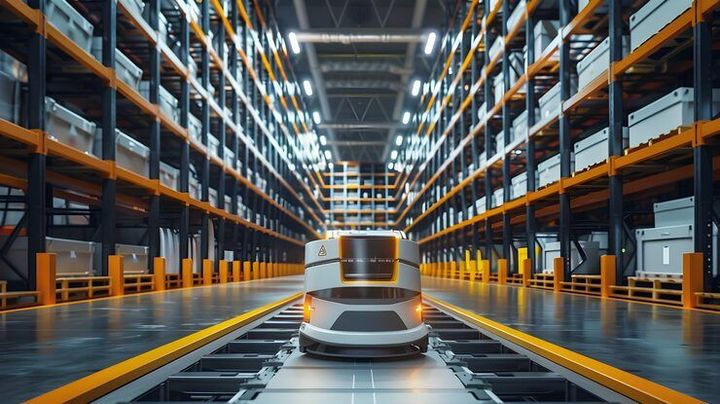
An ASRS can include storage racks, cranes, shuttles, conveyors, robotic equipment, barcode readers, sensors, and warehouse management software. Different configurations are designed for different materials, storage heights, load sizes, and operating requirements.
How Automated Storage and Retrieval Systems Work
The basic process begins when an item enters a warehouse or production facility. Identification information can be captured through barcodes, RFID technology, machine-readable labels, or other tracking methods.
The warehouse management system determines where the item should be stored according to programmed rules. Automated equipment then moves the item to the designated location, records the transaction, and updates inventory information.
When an item is requested, the system identifies its stored location and sends instructions to the appropriate equipment. A crane, shuttle, conveyor, robotic unit, or another mechanism retrieves the material and moves it toward the required destination.
Main Components of ASRS
Automated Storage and Retrieval Systems can contain several interconnected components:
- Storage structures provide organized locations for pallets, containers, cartons, trays, or individual items.
- Automated cranes move loads vertically and horizontally within storage aisles.
- Shuttle systems transport containers or pallets through storage channels.
- Conveyors transfer materials between storage areas, workstations, picking areas, and dispatch zones.
- Robotics can perform repetitive movement, picking, transportation, and handling activities.
- Sensors detect positions, movement, load conditions, and equipment status.
- Warehouse management software coordinates inventory records and material movement.
- Barcode and RFID systems help identify individual products or containers.
The exact combination depends on warehouse design, inventory characteristics, throughput requirements, and available space.
Importance
Modern warehouses must manage large amounts of inventory while maintaining organized storage and accurate movement records. Manual processes can become difficult to coordinate when facilities contain many storage locations, frequent material movements, or multiple operating areas.
Automated Storage and Retrieval Systems address several of these challenges by connecting physical storage equipment with digital inventory information. This creates a structured relationship between an item's identity, location, movement history, and retrieval instructions.
Who Uses Automated Storage and Retrieval Systems
ASRS technology is used across many industries and facility types. Manufacturing plants can use automated storage equipment for raw materials, components, work-in-progress items, and finished products.
Distribution facilities can use ASRS for cartons, containers, pallets, and individual inventory units. Other applications include temperature-controlled environments, laboratories, electronics production, food processing, retail distribution, and spare-parts storage.
Space Utilization and Inventory Accuracy
One important reason organizations investigate warehouse automation is the relationship between storage density and available floor space. Automated equipment can operate within tall storage structures and narrow aisles, allowing some facilities to use vertical space more effectively.
Inventory accuracy is another major consideration. When warehouse software records each movement and connects it with a defined storage location, inventory information can become easier to track and reconcile.
However, automation does not automatically eliminate inventory errors. Incorrect item identification, damaged labels, software configuration problems, sensor faults, and inaccurate input information can still affect records.
Common ASRS Types
Different Automated Storage and Retrieval Systems are suited to different warehouse requirements.
| ASRS Type | Typical Material | Main Function |
|---|---|---|
| Unit-load ASRS | Pallets and large loads | Automated pallet storage and retrieval |
| Mini-load ASRS | Totes, trays, cartons | Automated container handling |
| Shuttle ASRS | Containers or pallets | High-density channel storage |
| Vertical lift module | Small and medium items | Vertical storage and retrieval |
| Carousel system | Small items | Organized item presentation |
| Robotic storage system | Containers and individual units | Automated movement and picking |
The choice depends on factors such as item dimensions, load weight, storage density, retrieval frequency, building height, and integration requirements.
Recent Updates
From 2024 through 2026, warehouse automation has increasingly focused on combining ASRS with robotics, artificial intelligence, machine vision, connected sensors, and warehouse software. Rather than operating as isolated equipment, modern systems are increasingly designed as interconnected material-handling environments.
Robotics and Intelligent Warehouse Technology
Mobile robots can transport containers or goods between storage systems and work areas. Robotic arms can also handle selected picking and placement tasks when items have suitable shapes and characteristics.
Machine vision is becoming increasingly relevant for identifying objects, checking positions, reading labels, and supporting automated handling. Cameras and computer vision software can provide additional information alongside barcode and RFID technologies.
Artificial intelligence is also being explored for inventory forecasting, warehouse scheduling, route planning, equipment monitoring, and operational analysis. These applications can help software process larger amounts of warehouse data and identify patterns.
Connected Sensors and Predictive Monitoring
Internet-connected sensors can collect information about equipment movement, temperature, vibration, load conditions, and operating status. This information can be integrated into warehouse monitoring platforms.
Predictive maintenance approaches use equipment data to identify unusual operating patterns. The objective is to identify potential maintenance requirements earlier rather than relying only on fixed inspection intervals.
Integration With Warehouse Software
Another important development is deeper integration between ASRS equipment and warehouse management systems. Modern warehouses may connect inventory software, enterprise systems, transportation platforms, robotics, conveyors, scanners, and storage equipment.
This integration allows inventory information to move between different systems and can create a more consistent digital record of warehouse activity.
Laws or Policies
Automated Storage and Retrieval Systems are affected by several categories of workplace, machinery, electrical, building, and data-related rules. Exact requirements vary according to the country, region, facility type, and equipment configuration.
Workplace and Machinery Safety
Facilities using automated warehouse equipment generally need to address risks associated with moving machinery, elevated loads, restricted areas, electrical systems, and human interaction with robots.
Common safety measures can include physical guarding, emergency-stop systems, access controls, warning indicators, safety sensors, inspection procedures, and defined pedestrian routes.
Organizations should also consider applicable machinery safety standards, workplace regulations, electrical requirements, fire protection rules, and building requirements in their jurisdiction.
Robotics and Human Interaction
Robotic systems introduce additional considerations when people and automated equipment operate in the same environment. Risk assessments can examine collision hazards, unexpected movement, access to restricted areas, and equipment recovery procedures.
Training and documented operating procedures are also important parts of warehouse safety. Requirements can differ depending on the equipment and local regulatory framework.
Data and Digital Systems
ASRS platforms can generate substantial operational data, including inventory records, equipment status, transaction histories, and system events. Where personal or employee information is processed, applicable privacy and data protection requirements may also become relevant.
Government programs and industrial modernization initiatives in various regions may support automation, digital manufacturing, logistics efficiency, or advanced industrial technology. The specific eligibility conditions and requirements differ by jurisdiction.
Tools and Resources
Several types of digital tools can help people understand, plan, or analyze Automated Storage and Retrieval Systems.
Warehouse Planning Tools
Warehouse layout software can help visualize storage locations, aisles, conveyors, robotic paths, loading areas, and workstation positions. Simulation tools can model material movement before physical changes are implemented.
Inventory analysis spreadsheets can also help organize information such as item dimensions, storage quantities, movement frequency, load weights, and retrieval patterns.
Inventory and Warehouse Platforms
Warehouse management platforms commonly provide functions for inventory tracking, location management, order processing, barcode scanning, replenishment planning, and reporting.
Warehouse control systems can coordinate equipment such as conveyors, cranes, shuttles, and automated vehicles. In larger facilities, these systems may exchange information with enterprise resource planning platforms and other operational software.
Useful Planning Data
Before evaluating an ASRS configuration, planners generally examine:
- Number and type of inventory units
- Item dimensions and weight
- Storage capacity requirements
- Average and peak retrieval activity
- Required storage density
- Available building height and floor area
- Number of storage and retrieval points
- Human access requirements
- Existing warehouse software
- Equipment maintenance requirements
- Safety zones and emergency access
These factors provide a foundation for comparing different warehouse automation configurations.
FAQs
What is an Automated Storage and Retrieval System?
An Automated Storage and Retrieval System is a combination of storage equipment, automated movement technology, sensors, and software used to place materials into organized storage locations and retrieve them when required.
How do Automated Storage and Retrieval Systems improve inventory management?
ASRS technology can connect physical storage locations with digital inventory records. Automated identification and location tracking can make inventory movements easier to record and monitor, although system accuracy still depends on correct data and equipment operation.
What types of robotics are used with ASRS?
Robotics used with ASRS can include autonomous mobile robots, robotic arms, automated guided vehicles, and robotic picking equipment. Their functions may include transportation, picking, placement, and movement between warehouse areas.
What is the difference between ASRS and traditional warehouse storage?
Traditional storage generally relies more heavily on people and manually operated equipment to locate and move inventory. ASRS uses automated equipment and software to coordinate storage and retrieval activities.
Are Automated Storage and Retrieval Systems safe?
ASRS equipment can be designed with safety controls such as guarding, sensors, emergency stops, restricted access areas, and automated monitoring. Safe operation also depends on appropriate installation, maintenance, risk assessment, training, and compliance with applicable regulations.
Conclusion
Automated Storage and Retrieval Systems combine storage structures, robotics, sensors, software, and material-handling equipment to organize warehouse inventory. Their applications range from pallet storage to container handling, vertical storage, robotic movement, and integrated warehouse operations. Recent developments have placed greater emphasis on robotics, machine vision, connected sensors, artificial intelligence, and software integration. Safety, equipment configuration, inventory characteristics, building conditions, and applicable regulations all influence how an ASRS environment is designed and operated.