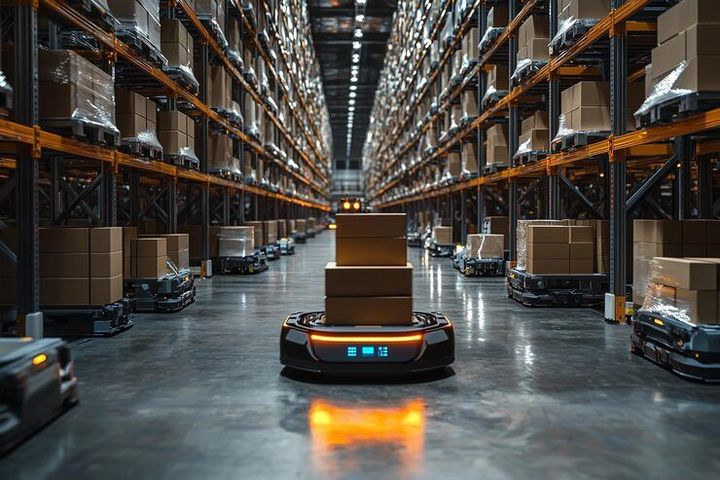
Automated Storage and Retrieval Systems Guide: Modern Warehouse Technology
Automated Storage and Retrieval Systems (ASRS) are warehouse automation technologies designed to store, locate, and retrieve materials with software-controlled equipment. They support inventory accuracy, space utilization, material handling, and modern warehouse operations.
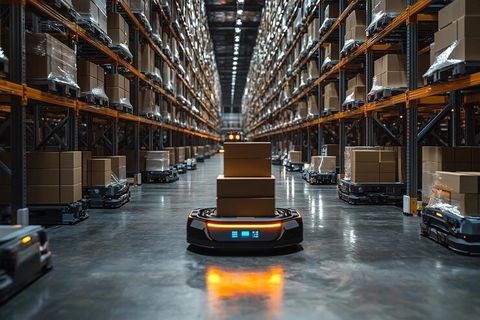
Automated Storage and Retrieval Systems, commonly called ASRS or AS/RS, are warehouse automation systems that use mechanical equipment, software, sensors, and storage structures to place and retrieve materials.
Traditional warehouses often depend heavily on manual movement and location tracking. ASRS introduces a more organized approach in which computer-controlled equipment can move items between storage locations and designated access points.
An ASRS can include several components:
- Storage racks or shelving
- Cranes or robotic retrieval equipment
- Conveyors
- Shuttle systems
- Lifts and vertical storage equipment
- Sensors and identification technology
- Warehouse Management System (WMS) integration
- Warehouse Control System (WCS)
- Barcode or RFID identification
The exact configuration depends on the type of inventory, available warehouse space, product dimensions, required throughput, and operating conditions.
ASRS technology exists because modern warehouses need better control over inventory and material movement. As product ranges become broader and supply chains become more data-driven, accurate storage and retrieval have become important parts of warehouse management.
Why ASRS Matters in Modern Warehousing
Warehouse automation has become an important part of supply chain management, inventory management, warehouse optimization, logistics technology, and industrial automation.
One major advantage of ASRS is better use of vertical warehouse space. Instead of depending only on floor-level storage, automated systems can use taller storage structures where building design and safety conditions allow.
ASRS can also create a more consistent process for locating inventory. When connected with warehouse software, the system can maintain digital records of storage locations and movements.
This can be particularly useful for:
- Distribution centers
- Manufacturing facilities
- E-commerce warehouses
- Cold-storage facilities
- Pharmaceutical warehouses
- Automotive parts warehouses
- Food and beverage storage
- Electronics distribution
- Retail inventory centers
A well-designed system may help reduce unnecessary travel inside a warehouse and provide more structured material handling.
Main Types of ASRS Technology
Different warehouse environments require different automation approaches.
| ASRS Type | Typical Application | Main Characteristic |
|---|---|---|
| Unit-load ASRS | Pallets and large loads | High-density pallet storage |
| Mini-load ASRS | Totes and cartons | Smaller inventory units |
| Shuttle ASRS | High-density storage | Automated shuttle movement |
| Vertical lift module | Small parts | Vertical space utilization |
| Carousel system | Small or medium items | Rotating storage locations |
| Crane-based ASRS | Pallets or containers | Automated crane movement |
| Robotic storage system | Totes and bins | Robotic item movement |
The selection process should consider load weight, dimensions, inventory turnover, warehouse height, temperature, access requirements, and software integration.
Importance for Inventory and Warehouse Management
Inventory accuracy is an important part of modern warehouse operations. Incorrect inventory records can create delays, misplaced products, picking errors, and unnecessary movement.
ASRS can connect physical storage activity with digital inventory records. This creates a clearer relationship between an item's identity and its storage location.
Another important factor is warehouse space optimization. In facilities where land or floor area is limited, vertical storage can become an important design consideration.
ASRS can also support:
- Automated inventory tracking
- Controlled material movement
- Better storage density
- Consistent retrieval processes
- Reduced manual travel
- Improved traceability
- Integration with warehouse software
- Data-driven warehouse planning
However, automation does not automatically solve every warehouse problem. Poor inventory data, unsuitable facility layouts, weak software integration, inadequate maintenance, or inappropriate equipment selection can reduce system performance.
ASRS and Warehouse Software
The software layer is just as important as the mechanical equipment.
A typical automated warehouse may use a Warehouse Management System, Warehouse Control System, inventory database, barcode platform, RFID technology, or enterprise resource planning integration.
The WMS can determine what inventory should be stored or retrieved. The control system can then coordinate equipment movement.
This creates a workflow such as:
Inventory request → Software decision → Equipment movement → Item retrieval → Identification → Inventory update
Such integration is becoming increasingly important as warehouses adopt IoT sensors, robotics, artificial intelligence, digital twins, and real-time analytics.
Recent Developments in ASRS and Warehouse Automation
Warehouse automation has continued to develop during 2025 and 2026, particularly through the integration of robotics, artificial intelligence, sensors, and warehouse software.
In India, a September 2025 government update on the National Logistics Policy reported continued progress in digital logistics infrastructure. The policy framework emphasizes digitization, technology adoption, supply-chain visibility, and modern warehousing.
A 2025 industry analysis also identified ASRS as a significant component of India's warehouse automation landscape, alongside conveyor and sortation systems, mobile robots, WMS technology, and automatic identification systems.
In November 2025, India's public distribution and warehousing ecosystem introduced a Smart EXIM Warehouse System using technologies including AI, IoT, digital-twin capabilities, OCR/ANPR, and integrated inventory management.
In June 2026, India's Department of Food and Public Distribution announced a Smart Warehousing System incorporating AI, IoT, automation, analytics, automated gate and weighbridge operations, inventory visibility, and real-time operational monitoring.
The wider ASRS industry is also focusing on areas such as AI, cybersecurity, flexible automation, shuttle systems, workforce safety, and upgrading existing warehouses rather than relying only on newly constructed facilities.
These developments show a broader shift from isolated warehouse machines toward connected smart warehouse automation systems.
Laws, Safety Rules, and Policies
ASRS installations are affected by workplace safety, building, electrical, fire protection, machinery, and warehouse regulations. The exact requirements depend on the country and facility.
In India, the National Logistics Policy provides a broad framework supporting digitization, automation, technology adoption, and more integrated logistics infrastructure.
India's warehousing framework also includes requirements and notifications administered through the Warehousing Development and Regulatory Authority. A 2025 notification addressed registration-related procedures for warehouses.
State-level policies can add requirements concerning building standards, fire safety, warehouse infrastructure, and technology adoption. For example, a 2025 logistics policy document from Chhattisgarh discusses warehouse compliance with applicable building codes, structural integrity, fire safety, and smart-warehouse technologies such as WMS, IoT, and RFID.
Safety requirements are particularly important because automated equipment can introduce hazards involving moving machinery, conveyors, robots, and restricted-access areas. In the United States, OSHA identifies robotics, conveyors, powered industrial trucks, ergonomics, and material-handling equipment among warehouse safety considerations. Its updated National Emphasis Program for warehousing and distribution operations began inspections under the program on July 31, 2026.
For facilities operating in the European Union, the Machinery Regulation provides health and safety requirements for machinery and related products. The consolidated regulation was updated in 2026.
Before implementing or modifying ASRS equipment, facility operators should verify applicable local requirements covering:
- Machinery safety
- Fire protection
- Electrical systems
- Emergency access
- Structural loading
- Worker training
- Guarding and restricted zones
- Maintenance procedures
- Building approvals
- Data and cybersecurity requirements
Tools and Resources for ASRS Planning
Several general tools can help organizations understand warehouse automation requirements.
Warehouse Capacity Calculators
Storage-density calculators can estimate available pallet positions, bin capacity, aisle requirements, and vertical utilization.
Warehouse Layout Templates
Warehouse layout templates can help planners map:
- Receiving areas
- Storage zones
- Automated equipment
- Picking areas
- Packing zones
- Dispatch areas
- Emergency routes
Inventory Analysis Tools
Inventory analysis spreadsheets can classify products according to movement frequency, dimensions, weight, and storage requirements.
Warehouse Management Software
A WMS can coordinate inventory locations, receiving, picking, replenishment, and dispatch processes. Integration capability should be evaluated before selecting an automation architecture.
Barcode and RFID Tools
Automatic identification technologies can improve inventory traceability and help connect physical goods with digital records.
Safety Assessment Checklists
Machine guarding, emergency-stop arrangements, pedestrian routes, restricted areas, and maintenance procedures should be reviewed as part of warehouse automation planning.
Simulation and Digital-Twin Tools
Simulation software can model warehouse flows before physical changes are introduced. Digital-twin technology can also help monitor and analyze warehouse environments in real time.
Frequently Asked Questions
What does ASRS mean?
ASRS stands for Automated Storage and Retrieval System. It is a combination of automated equipment and software used to store and retrieve materials within a warehouse or industrial facility.
What is the difference between ASRS and a WMS?
ASRS refers mainly to the automated storage and retrieval equipment and its control environment. A WMS is software used to manage warehouse inventory and operations. The two systems can work together.
Which industries use ASRS?
ASRS can be used in manufacturing, retail distribution, e-commerce, pharmaceuticals, food storage, automotive, electronics, cold storage, and other inventory-intensive environments.
Does ASRS eliminate the need for warehouse workers?
Not necessarily. ASRS changes how people interact with warehouse operations rather than automatically removing human involvement. Workers may still be needed for supervision, maintenance, exception handling, quality checks, system management, and other activities.
What should be considered before implementing ASRS?
Important considerations include inventory characteristics, storage density, warehouse dimensions, throughput requirements, software integration, safety requirements, maintenance planning, building conditions, and future expansion needs.
Conclusion
Automated Storage and Retrieval Systems are an important part of modern warehouse automation technology. By combining storage structures, automated movement equipment, sensors, identification systems, and warehouse software, ASRS can create a more structured approach to inventory storage and retrieval.