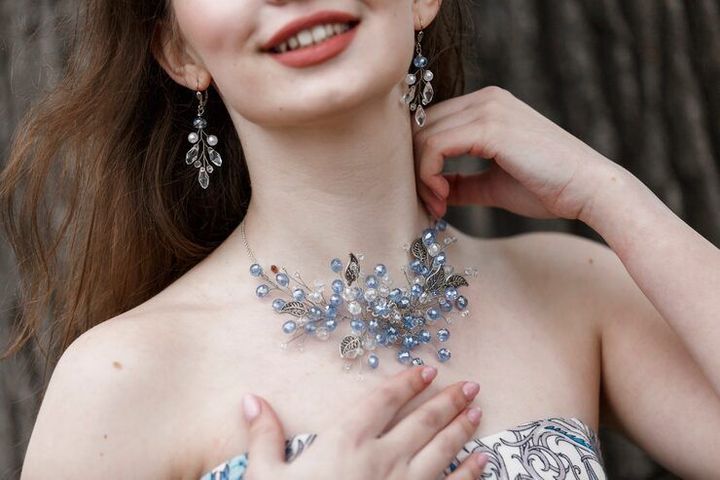
Aquamarine Jewelry Design Explore Elegant Styles, Shapes, and Modern Details
Aquamarine jewelry design centers on the blue to blue-green variety of beryl known as aquamarine. Its color can range from very light blue to deeper blue-green tones, while its transparent appearance makes it suitable for rings, necklaces, earrings, bracelets, and pendants.
Jewelry designers work with the gemstone's shape, dimensions, color, clarity, and setting when developing a finished piece.
Aquamarine has been used as a decorative gemstone for generations. Its name is associated with the appearance of seawater, reflecting the stone's characteristic blue and blue-green color range. Modern aquamarine jewelry combines traditional gemstone cutting with contemporary metalwork, digital design, and varied setting techniques.
The appearance of an aquamarine jewelry piece depends on more than the gemstone itself. The metal surrounding the stone, the cut, the setting, the proportions, and the overall design can change how the color and transparency are perceived.
Aquamarine is commonly fashioned into faceted gemstones because facets can influence how light interacts with the stone. Oval, emerald, cushion, pear, round, and rectangular shapes are among the forms used in jewelry design. Cabochon cutting can also be used for selected stones, although faceted designs are particularly common.
Main Elements of Aquamarine Jewelry
Several components contribute to an aquamarine jewelry design:
Aquamarine gemstone for the central visual element
Metal setting for holding the stone
Cut and shape for defining the gemstone's outline
Prongs, bezels, or other structures for securing the stone
Additional gemstones for accent or surrounding details
Clasp or fastening components on bracelets and necklaces
Surface finishing for the metal
The relationship between these components determines the overall appearance and physical structure of the jewelry.
Aquamarine Color and Appearance
Aquamarine belongs to the beryl mineral family. Its characteristic color is generally associated with iron within the crystal structure. Stones can display different levels of blue or blue-green coloration.
Color perception can change according to lighting, gemstone size, cut, surrounding metal, and background. A larger transparent stone can display its body color differently from a smaller stone, even when both belong to the same gemstone variety.
Clarity can also influence appearance. Transparent aquamarine with fewer visible inclusions may have a different visual character from material containing noticeable internal features.
Importance
Aquamarine jewelry design is useful to understand because gemstone selection and jewelry construction involve several interconnected decisions. The shape of a gemstone influences the setting, while the setting influences how much of the gemstone is visible.
For people learning about jewelry, understanding these relationships can make descriptions of aquamarine rings, earrings, necklaces, and bracelets easier to interpret. It also helps explain why pieces using the same gemstone can have very different visual styles.
Common Aquamarine Jewelry Styles
Aquamarine can be incorporated into many types of jewelry. Rings often use a central aquamarine with a surrounding metal structure or smaller accent stones. Earrings may use matching pairs of stones or individual gemstones in studs, drops, or elongated designs.
Necklaces and pendants can emphasize a single aquamarine gemstone, while bracelets can use multiple stones arranged along a chain or metal structure.
Common styles include:
Solitaire rings with one main gemstone
Halo designs surrounded by smaller stones
Three-stone arrangements
Pendant designs with a central aquamarine
Drop earrings with elongated gemstones
Stud earrings with compact stones
Tennis-style bracelets using repeated gemstones
Cluster designs combining several aquamarines or accent stones
The visual result depends on stone proportions, spacing, metal color, and setting structure.
Aquamarine Shapes
Gemstone shape is one of the most noticeable design elements. Oval aquamarines can create a soft, elongated appearance, while emerald-cut stones emphasize straight lines and broad geometric surfaces.
Cushion shapes combine curved corners with a generally rectangular or square outline. Pear shapes have one pointed end and one rounded end, while round stones create a symmetrical circular outline.
The choice of shape can influence the appearance of the finished jewelry:
| Gemstone Shape | General Appearance | Common Jewelry Applications |
|---|---|---|
| Oval | Elongated and rounded | Rings, pendants, earrings |
| Emerald | Rectangular and linear | Rings, pendants |
| Cushion | Soft corners with broad facets | Rings, earrings |
| Pear | Rounded with one point | Pendants, earrings |
| Round | Circular and symmetrical | Rings, earrings, pendants |
| Marquise | Long with pointed ends | Rings, earrings |
| Square | Balanced geometric outline | Rings, pendants |
Metal and Setting Choices
Aquamarine can be paired with different jewelry metals. White gold and platinum can create a relatively cool visual combination, while yellow gold provides stronger color contrast. Rose gold introduces a warmer surrounding tone.
Prong settings expose a larger portion of the gemstone, while bezel settings surround the edges with metal. Halo settings place smaller stones around a central aquamarine, creating an additional layer of visual detail.
The choice of setting also relates to gemstone protection. The edges and corners of a gemstone can be more exposed in some designs, so setting structure needs to correspond with the stone's shape and intended use.
Recent Updates
From 2024 through 2026, aquamarine jewelry design has continued to combine traditional gemstone shapes with modern proportions, mixed metals, personalized layouts, and digital design techniques. Contemporary jewelry also includes variations in stone arrangement, minimalist structures, and combinations of aquamarine with other gemstones.
Modern Aquamarine Styles
Contemporary designs may use a single large aquamarine with relatively simple metalwork, allowing the gemstone's color and transparency to remain the central feature. Other designs use multiple aquamarines arranged in graduated sizes or geometric patterns.
Minimalist settings can use narrow metal structures around the gemstone, while more decorative designs can include halos, engraving, accent stones, or layered metalwork.
Mixed-Metal Designs
Using different metal colors within one piece can create contrast around an aquamarine. A designer may combine white-colored and yellow-colored metals or use a contrasting metal detail within the setting.
Mixed-metal designs can also connect an aquamarine centerpiece with other jewelry worn at the same time. The visual effect depends on the proportions and placement of each metal.
Digital Jewelry Design
Computer-aided design has become an important part of contemporary jewelry development. Designers can create three-dimensional models showing gemstone dimensions, prong positions, metal thickness, and setting structures.
Digital models can also help examine proportions before physical production. This can be useful when creating customized rings, pendants, earrings, or other aquamarine jewelry formats.
Alternative Gemstone Arrangements
Modern aquamarine jewelry can include combinations of aquamarine with diamonds or other colored gemstones. Designers may use small accent stones around a larger aquamarine or create patterns using several gemstones of similar size.
The arrangement can range from symmetrical layouts to deliberately irregular compositions. Stone shape, color, spacing, and metal structure all influence the final appearance.
Laws or Policies
Aquamarine jewelry is affected by rules concerning gemstone descriptions, precious-metal purity, consumer information, trade documentation, and product labeling. Specific requirements vary by jurisdiction and by the materials used in a particular piece.
Gemstone Identification
Jewelry descriptions should accurately identify aquamarine and distinguish it from other blue gemstones or imitation materials. Treatments or laboratory-created materials, where relevant, may also need appropriate disclosure under applicable rules.
Gemstone reports can provide information about identity, measurements, color, treatments, and other characteristics. The terminology and testing methods used can vary among gemological laboratories.
Precious-Metal Requirements
Gold, platinum, and silver jewelry can be subject to fineness standards, hallmarking rules, or metal-content disclosures. A metal alloy may contain several elements to achieve particular color or physical characteristics.
Applicable markings can provide information about metal composition. The specific format and legal requirements depend on the jurisdiction where the jewelry is manufactured, distributed, or sold.
Trade and Documentation
International movement of gemstones and jewelry can involve customs declarations, material descriptions, origin documentation, and other trade requirements. These requirements can vary depending on the countries involved and the materials contained in the jewelry.
Claims concerning gemstone origin or responsible sourcing should be supported by appropriate documentation rather than inferred from appearance alone.
Tools and Resources
Several resources can help readers understand aquamarine jewelry design. Gemstone measurement charts can explain dimensions in millimeters, while shape references can help identify common gemstone outlines.
Digital jewelry design platforms can display three-dimensional models of rings, earrings, pendants, and other pieces. Gemstone identification references can also explain properties such as hardness, color, transparency, and crystal structure.
Useful resources include:
Aquamarine identification references
Gemstone shape charts
Jewelry measurement guides
Ring and bracelet sizing templates
Metal purity reference charts
Gemstone grading documentation
Computer-aided jewelry design platforms
Digital gemstone visualization tools
Jewelry care instructions
Gemstone treatment references
Jewelry design worksheets
Stone-setting diagrams
Aquamarine Design Planning
A design worksheet can record the gemstone's length, width, depth, shape, color description, setting type, metal selection, and accent-stone arrangement. This information helps create a consistent description of the finished piece.
A basic design comparison can be organized as follows:
| Design Element | Common Choices | Main Visual Effect |
|---|---|---|
| Center Stone | Single aquamarine | Focuses attention on one gemstone |
| Halo | Aquamarine with surrounding stones | Adds an outer layer |
| Metal | White, yellow, or rose tones | Changes color contrast |
| Setting | Prong or bezel | Changes stone exposure |
| Shape | Oval, emerald, cushion, pear | Defines overall outline |
| Accents | Diamonds or colored stones | Adds contrast and detail |
| Arrangement | Symmetrical or varied | Changes visual rhythm |
Care and Maintenance
Aquamarine jewelry should be handled according to the properties of both the gemstone and its setting. Sudden impacts can affect stones or metal structures, while certain cleaning methods may not be appropriate for every treatment or jewelry construction.
Periodic visual inspection can help identify loose stones, worn prongs, damaged clasps, or changes in the metal. Separate storage can also reduce contact with harder materials that may scratch surfaces.
FAQs
What is aquamarine jewelry design?
Aquamarine jewelry design involves creating rings, necklaces, earrings, bracelets, pendants, and other pieces using aquamarine gemstones with selected cuts, settings, metals, and decorative details.
What shapes are commonly used in aquamarine jewelry?
Oval, emerald, cushion, pear, round, marquise, and square shapes are commonly used. Each shape creates a different outline and affects how the gemstone interacts with the surrounding setting.
Which settings are used for aquamarine jewelry?
Prong, bezel, halo, channel, and cluster settings can be used depending on the design. The setting needs to correspond with the gemstone's shape, dimensions, structure, and intended use.
What metals are used with aquamarine jewelry?
Aquamarine can be paired with white gold, yellow gold, rose gold, platinum, and other jewelry metals. The metal color influences the contrast between the gemstone and its surrounding structure.
How should aquamarine jewelry be cared for?
Care depends on the gemstone, setting, metal, and any treatments. Gentle handling, appropriate cleaning methods, periodic inspection, and separate storage can help protect the piece from avoidable damage.
Conclusion
Aquamarine jewelry design combines a blue to blue-green beryl gemstone with different cuts, settings, metals, and decorative arrangements. Oval, emerald, cushion, pear, round, and other shapes create different visual effects, while prong, bezel, and halo settings change how the gemstone is displayed and protected. Recent design developments include mixed-metal structures, digital modeling, personalized proportions, and varied gemstone arrangements. Accurate gemstone descriptions, metal information, documentation, and appropriate care remain important parts of understanding aquamarine jewelry.